Spermatozoon
noun (n.)
Definition
A spermatozoon is a haploid cell constituting the male gamete required for animal reproduction. A spermatozoon can fertilize an ovum to form a zygote which, depending on the life cycle and organism, may develop into a new individual or undergo meiosis.
Spermatozoa meeting an ovum:

The spermatozoon is the mature, motile male sex cell of an animal, capable of fertilizing an ovum, typically possessing a compact head and one or more long flagella for motility. When a spermatozoon meets an ovum, fertilization can occur if the male gamete's antifertilisin is compatible with the female gamete's fertilisin.
Explanations
The spermatozoon is a motile haploid male gamete equipped with one or more eukaryotic flagella. This male reproductive cell generally consists of a head, a midpiece, and a locomotory flagellum.
A spermatozoon is one of the most highly differentiated cells, and its function is to form a totipotent zygote when its nucleus fuses with that of the female gamete, an event that subsequently gives rise to the embryo and fetus.
In human fertilization, spermatozoa determine the sex of the new diploid cell, because they can carry either an X or a Y sex chromosome, whereas the ovum carries only an X chromosome.
Generalities
Depending on the species' life cycle, spermatozoa are formed by haploid organisms via mitosis—as in mosses, ferns, and many algae within antheridia—or by diploid organisms via meiosis (reductional division)—as in animals within testes.
An androgamone is a substance (gamone) produced by male gametes. Androgamone I is sperm antifertilisin, which regulates sperm motility when binding to fertilisin, while androgamone II is an enzyme that lyses the oocyte membrane.
Androgamone contrasts with gynogamone. Androgamone is also an obsolete term for a male gamete, synonymous with spermatozoon and/or antherozoid.
Anatomy of a spermatozoon:

Spermatozoa have a distinct head, midpiece, and tail region. The head of the spermatozoon contains the extremely compact haploid nucleus with very little cytoplasm, contributing to the sperm's small overall size (the head measures only 5 μm / 0.2 mils in length). A structure called the acrosome covers most of the head like a cap filled with lysosomal enzymes essential for preparing the sperm to participate in fertilization. Tightly packed mitochondria fill the midpiece; ATP produced by these mitochondria powers the flagellum, which extends from the neck and midpiece through the tail, enabling the entire gamete to swim. The central core of the flagellum, the axial filament (axoneme), is formed from a centriole inside the maturing spermatid during the final stages of spermatogenesis.
Spermatozoa were first identified in 1677 by Antonie van Leeuwenhoek (1632–1723), inventor of the first high-powered microscope. Later, in 1697, Nicolaas Hartsoeker (1656–1725) proposed the homunculus theory, which posited the presence of a "microscopic big-headed man" inside the spermatozoon.
In certain species, the spermatozoon (which in others moves by amoeboid motion) is termed flagellated because it possesses a long flagellum responsible for gamete motility. Notably, newly formed spermatozoa emerging from spermiogenesis (the transformation of spermatids into spermatozoa) are non-motile and thus unable to fertilize an oocyte.
This capacity is acquired only after transit through the epididymis, where they gain motility, whereas in the female reproductive tract they undergo "capacitation"—further biochemical modifications enabling fertilization competence.
In these species, spermatozoa are characterized by the presence of a head and a tail.
In insects, a spermatodesm refers to a bundle of spermatozoa attached by their heads to a single nurse cell in the transformation zone of the testicular seminiferous tubules.
Androspermatozoon
An androspermatozoon denotes a spermatozoon whose genome determines the male sex of the zygote upon fertilization. It carries the Y chromosome in most mammals, though in certain taxa (such as birds) the male carries two sex chromosomes (ZZ) and the female is heterogametic.
Spermatogenesis
Spermatogenesis is the proliferation, growth, maturation, transformation, and release of spermatozoa beginning at puberty; it is male gametogenesis.
This process begins in the gonads, triggered by hypothalamic GnRH, which stimulates luteinizing hormone (LH) secretion by the pituitary gland, driving testosterone production and final sperm maturation in the epididymis.
Spermatogenesis lasts approximately 74 days in humans, during which primordial germ cells progress through the following stages:
- type A spermatogonia responsible for ongoing stem-cell division, marking the onset of spermatogenesis
- type B spermatogonia, precursors of primary spermatocytes
- primary spermatocytes, which enter a prolonged prophase (22 days) before dividing meiotically into secondary spermatocytes
- secondary spermatocytes, which undergo a second meiotic division to form spermatids, the direct precursors of spermatozoa.
Spermatids undergo no further cell division, instead passing through spermiogenesis—involving structural remodeling, cytoplasmic shedding, and acrosome formation.
Species-specific characteristics
An inverse relationship exists between ejaculate volume and sperm concentration across species:
- in humans, spermatozoa have a head 5 to 8 μm (0.2 to 0.3 mils) long and a tail 50 μm (2 mils) long, swimming at roughly 3 millimeters (0.12 in) per minute; a normal human ejaculate is 2 to 6 mL (0.07 to 0.2 fl oz) and contains between 60 and 300 million spermatozoa (depending on prior abstinence), with over 20 million spermatozoa per mL required for normal fertility
- in boars (pigs), ejaculate volume is about 200 mL (6.8 fl oz), with a concentration of 100,000 spermatozoa/mm3 and a sperm length of approximately 90 μm (3.5 mils).
In many mammals, including humans, spermatozoa must be produced at a temperature lower than core body temperature (2 °C / 3.6 °F cooler in humans), which is why the male gonads reside outside the body cavity.
Gynospermatozoon
A gynospermatozoon denotes a spermatozoon carrying a sex chromosome that determines female sex. In humans, the gynospermatozoon carries the X chromosome, determining the female sex of the zygote upon fertilization.
In birds, lepidopterans, and urodeles, because the female is heterogametic (carrying W and Z sex chromosomes), the Z- or W-bearing ovum determines the sex of the zygote.
In humans, as in all mammals, genetic sex is defined by the presence of a Y chromosome (male sex) or its absence (female sex).
Genetic sex is established at fertilization, when a spermatozoon carrying either an X chromosome (23,X = gynospermatozoon) or a Y chromosome (23,Y = androspermatozoon) fuses with an oocyte (always carrying an X chromosome; 23,X). In mammals, the male is heterogametic: therefore, the spermatozoon determines the genetic sex of the embryo.
Synonyms, antonyms
Spanish translation: espermatozoide
3 synonyms (similar meaning) for "spermatozoon":
- androgamone
- antherozoid
- male gamete
0 antonyms (opposite meaning).
Related words and expressions to SPERMATOZOON are directly connected by general or specific meaning.
The word SPERMATOZOON is listed on page 1 of words starting with S in the dictionary glossary.
Related to "spermatozoon"
gamete

A gamete is a male or female reproductive cell. This sexual cell is produced in the sex glands, or gonads. The male gamete is the spermatozoon, produced...
spermatocyte

A spermatocyte is a male gametocyte that produces one or more spermatozoa or a spermatium. It is a male germ cell in which meiosis takes place to generate...
spermatogonium
A spermatogonium is a primordial male germ cell, a diploid stem cell that produces male germ cells, spermatids, and spermatocytes.
saccharide
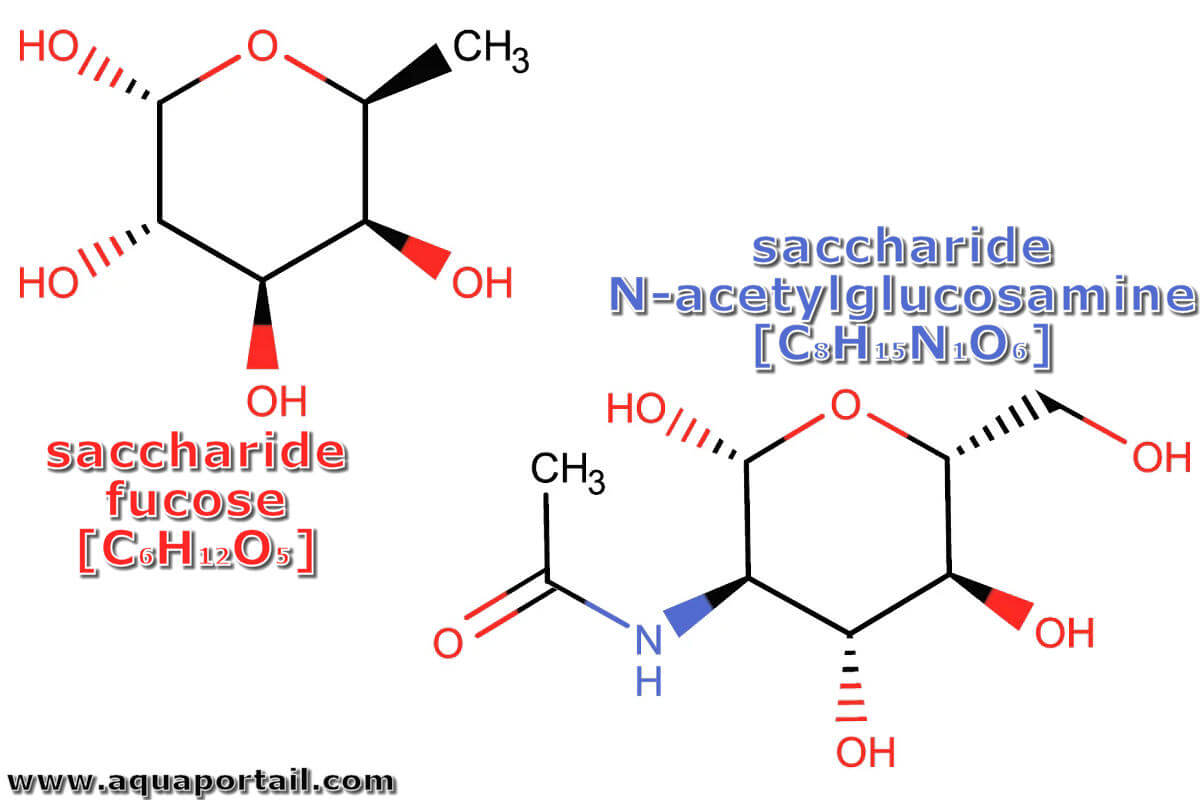
A saccharide is a carbohydrate, a biomolecule composed of carbon, hydrogen, and oxygen atoms, usually with a hydrogen-to-oxygen atomic ratio of 2 :1.
