Centriole
noun (n.)
Definition
A centriole is a paired barrel-shaped organelle of the centrosome with 9 microtubule triplets. Centrioles participate in cell duplication during interphase in the process of mitosis and/or meiosis. During prophase, each centrosome migrates toward one of the cell poles to form the achromatic spindle.
Two centrioles of a centrosome:
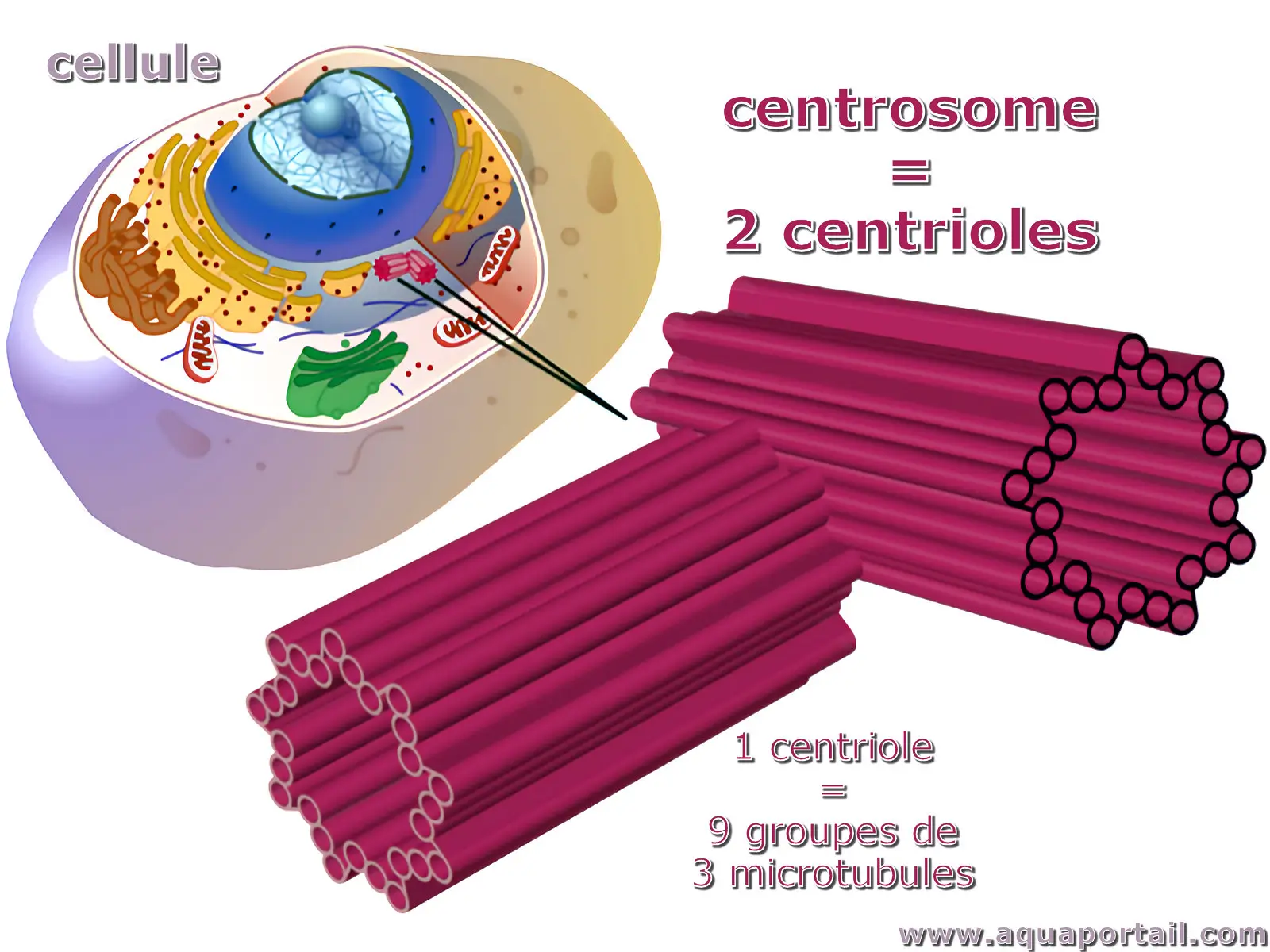
A centriole is a hollow cylindrical organelle made up of 9 microtubule triplets, about 0.5 µm long and 0.2 µm in diameter, composed of a protein called tubulin. The centrosome zone is located in the cytoplasm next to the nucleus. The twisted appearance of a centriole in longitudinal view makes the triplets appear arranged like turbine blades in cross-section.
Explanations
The centrioles of a cell are housed in the centrosome (centrosphere, cell center), which is essentially a mass of proteins where the centrioles are located, though it also plays its own role in cell division. All animal cells have two centrioles (a mother centriole and a daughter centriole) positioned at right angles to each other.
They are found in certain lower plants such as Chlamydomonas, although they are absent in many fungi, angiosperms, and conifers. They are generally present near the nucleus but are not visible when the cell is not dividing.
✅ Centrioles are involved in organizing microtubules in the cytoplasm. The position of the centriole is responsible for the position of the nucleus and the spatial arrangement of the cell. They are therefore essential for cell division.
Centrioles are paired barrel-shaped organelles located in the cytoplasm of animal cells near the nuclear envelope. The centrioles of centrosomes (grouped as a diplosome in animal eucytes) play a role in organizing microtubules that serve as the cell's skeletal system. They help determine the locations of the nucleus and other organelles within the cell. When a centriole forms part of a eukaryotic flagellum, it is called a basal body, basal corpuscle, or kinetosome. See also idiosome.
Anatomy of a centriole:
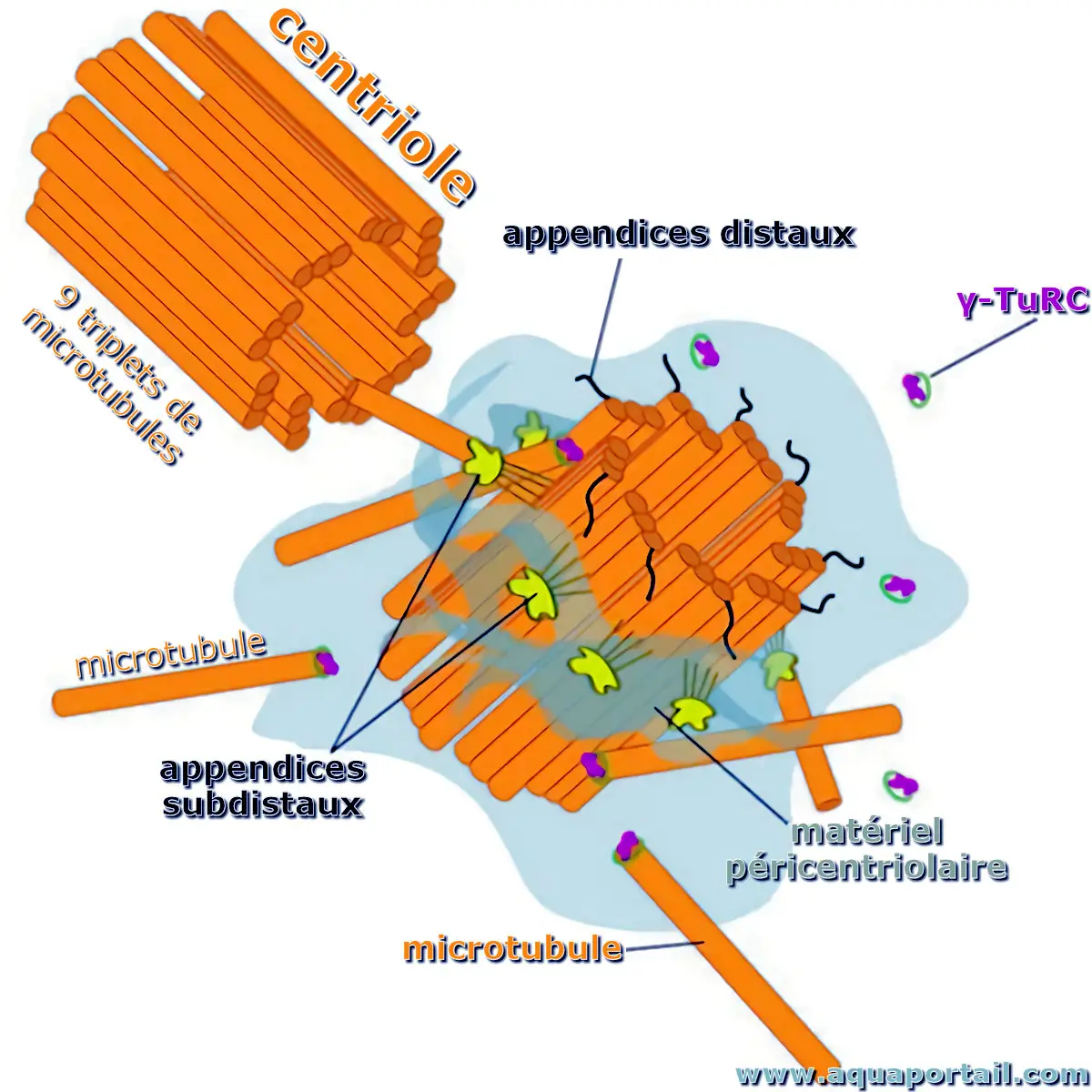
Each centriole is typically composed of nine microtubule triplets arranged in a circle. In addition to microtubules, centrioles contain accessory proteins and the pericentriolar material surrounding the centriole; it serves as a microtubule nucleation site and anchors the centriole in the cell.
✅ Centrioles structure the centrosome for cytoskeleton morphology. The centrosome and its centrioles regulate cell migration or chromosome segregation during cell division.
🚩 embryos of the fruit fly Drosophila melanogaster and the nematode Caenorhabditis elegans are exceptions to this organization. The former form 9 doublets instead of microtubule triplets, whereas early embryos and sperm cells of C. elegans have 9 singlet microtubules.
Duplication
In animal cells, the centrosphere distinguishes a zone of the centrosome (the cell center) surrounding the centrioles.
The word centriole generally refers to a cellular organelle, much like a lysosome or an endosome. Within this centrosome, there are two centrioles. Centrioles are physical structures composed of microtubules. These centrioles are very important for cell division. Thus, when the cell is about to divide, these centrioles move to opposite ends of the nucleus.
When chromosomes condense to undergo mitosis, centrioles form the regions from which the mitotic spindle organizes. These mitotic spindle fibers attach to each of the chromosomes and pull the chromosomes to opposite ends of the cell to allow cytokinesis to occur.
Centrioles are therefore essential for enabling mitotic spindle formation, which in turn is essential for cytokinesis. A centrosome is a region of the cell next to the nucleus where centrioles normally reside when the cell is not undergoing mitosis.
Protein composition
Centrioles are cylindrical structures generally composed of nine microtubule triplets, though some are simpler: doublet microtubules in flies and singlet microtubules in nematodes. The older mother centriole of each pair possesses appendages lacking on the newer daughter centriole.
Centriolar microtubules are more stable than most cytoplasmic microtubules, exchanging only about 10% of their tubulin per cell cycle. Like other stable microtubules, the α- and β-tubulins of centrioles are heavily modified by polyglutamylation. Microinjection of cells with antibodies directed against glutamylated tubulin disassembles both centrioles and pericentriolar material.
Synonyms, antonyms
Spanish translation: centríolo
4 synonyms (similar meaning) for "centriole":
- basal body
- basal corpuscle
- centrosphere
- kinetosome
0 antonyms (opposite meaning).
Related words and expressions to CENTRIOLE are directly connected by general or specific meaning.
The word CENTRIOLE is listed on page 1 of words starting with C in the dictionary glossary.
Related to "centriole"
centrosome
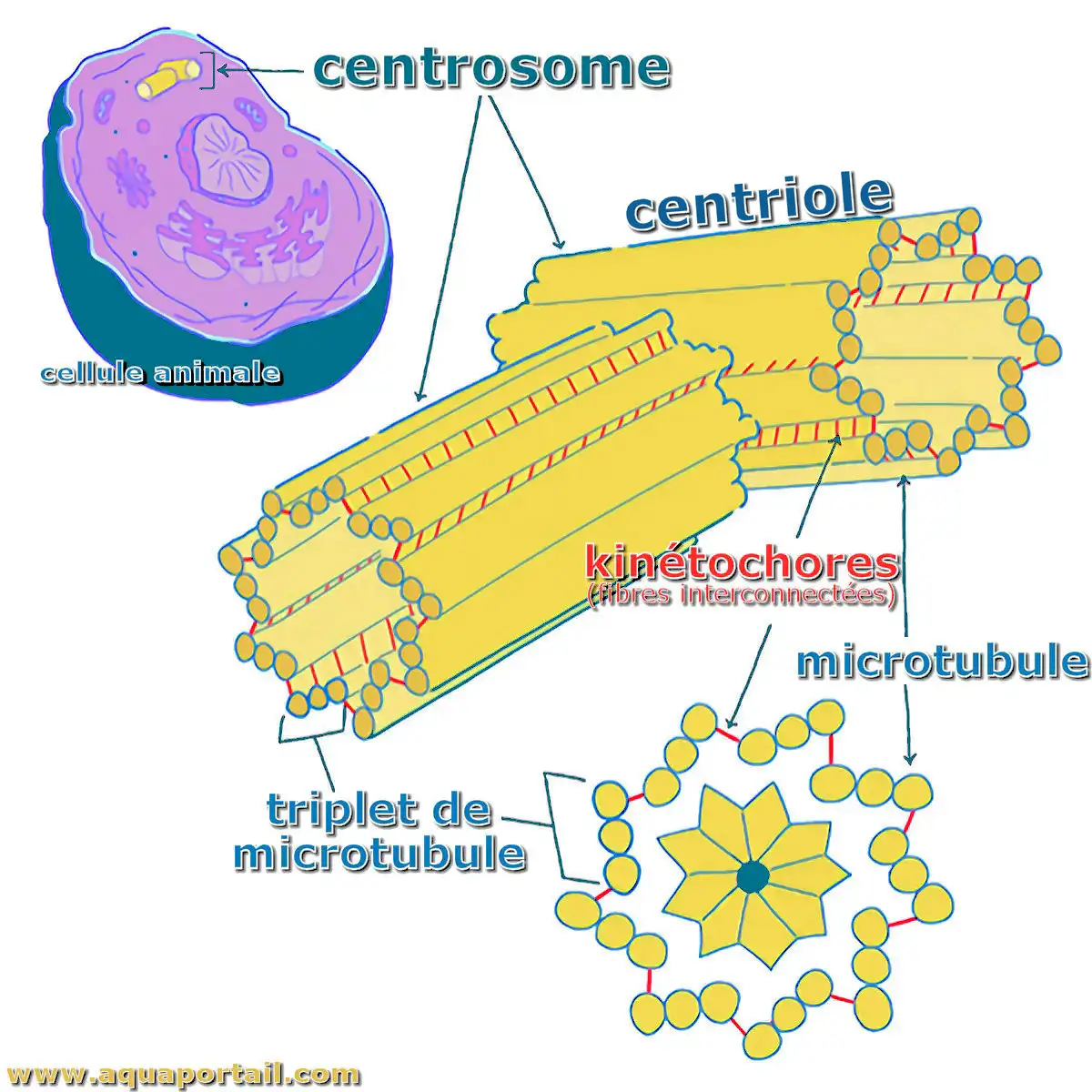
The centrosome is a cytoplasmic cellular organelle that acts as a microtubule-organizing center for nucleation in animal cells.
central nodule

A central nodule, or median nodule, is a thickening located at the center of the valve between the two branches of the raphe in diatoms.
cactus

A cactus is a thick, fleshy plant that grows in many hot, dry regions of the world. Cacti do not have leaves, and many are covered with spines.
caecilian

A caecilian (gymnophione) is a limbless, burrowing, worm-like amphibian whose legs are vestigial or absent.
