Interphase
noun (n.)
Definition
In cell biology, interphase or the resting stage is the first stage of the cell's life cycle and the time when the cell carries out its cellular maintenance functions according to instructions from its genes. It is the time period of the eukaryotic cell division cycle between one mitosis and the next.
Interphase in a cell's cycle:
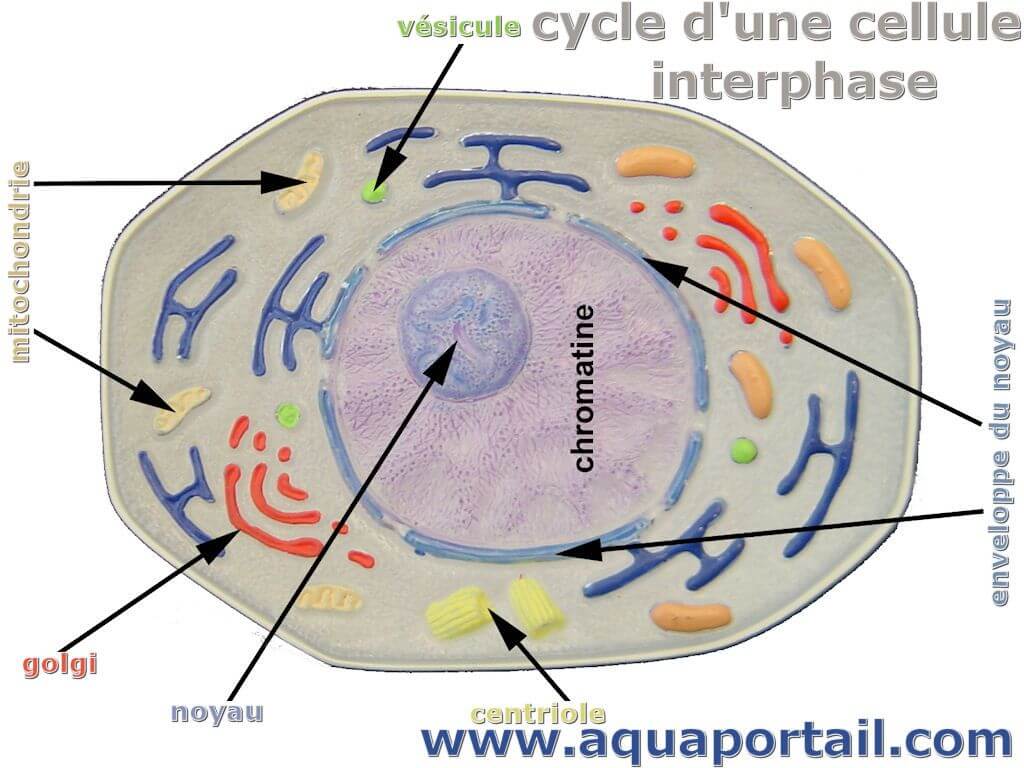
This interphase is thus the period of the cell cycle during which the nucleus is not undergoing division, typically occurring between mitotic or meiotic divisions.
Explanations
An interphase corresponds to a time interval, a set of 4 phases of variable duration, separating two successive mitoses, two cell divisions; during this period, the nucleus is called interphasic. It corresponds to the part of the cell cycle after the resting phase and before cell division. See also in detail the phases of a cell's cycle.
Put another way, interphases are stages in the development of a subsequent cell mitosis or meiosis, during which the nucleus is not dividing. In cells that will undergo further divisions, the DNA in the nucleus is duplicated in preparation for the next division.
Interphasic cycle
A cell's cycle breaks down into interphase, prophase, metaphase, anaphase, and telophase. ✅ In botany, an auxesis phenomenon with an increase in cell volume of a plant cell plays a similar role.
During this stage, inside the cellular structure (nucleus) lies the substance called chromatin, which is sometimes said to have a mass-like appearance and is formed by DNA and proteins and forms chromosomes. In this stage, protein synthesis is also carried out by the processes of transcription and translation, whereby DNA base sequences are translated into amino acids for their production. It is called the resting stage because it is at rest prior to its cell division stage: mitosis and meiosis. However, it is important to note that it is during interphase that duplication of the DNA structure takes place.
Chromosome duplication occurs by unwinding the double-stranded DNA helix">helix, thereby breaking the hydrogen bonds linking the nucleotide bases, and each freed strand duplicates and forms a complementary strand. This structure is held together by the centromere, resulting in double the chromosomal material, and therefore twice as much genetic material.
Interphasic phases
Interphase is divided into three to four phases which, depending on the organism and cell type, can be distinguished more or less easily. These stages are:
- G1 phase (Gap 1): in which the cell produces the organelles and proteins needed for cell growth and prepares the enzyme complexes required for the next stage. In multicellular organisms, specific activities are performed during this period, depending on the cell type. If the cell does not divide again, it will enter the G0 phase.
- S phase: in this phase, duplication of genetic material occurs. At the origins of replication, the two nucleotide strands making up DNA are separated by the action of a multiprotein complex called the Pre-Replication Complex. Subsequently, with the recruitment of replication-specific DNA polymerase, the actual replisome progression complex (RPC) is formed, responsible for synthesizing the two new strands using the existing DNA as a template.
- G2 phase (Gap 2): in which the cell continues to increase its mass and begins preparing for the upcoming mitosis by assembling other structures essential for division.
- In addition, certain cells that divide infrequently or never enter a phase called G0 (zero gap), which is a phase distinct from interphase or an extended G1.
Normally in mammals, the G1 phase lasts at least about 5 hours, the S phase 7 hours, and the G2 phase about 3 hours; in contrast, cell division lasts only 1 hour!
During interphase, within the nucleus, it is impossible to observe the chromosomes because they are in the form of chromatin that is not yet condensed; however, one or more nucleoli can be distinguished, regions containing the genes encoding ribosomal RNA, which are heavily transcribed during the G1 and G2 phases to enable ribosome production.
Synonyms, antonyms
Spanish translation: interfase
5 synonyms (similar meaning) for "interphase":
- auxesis
- cell division
- meiosis
- mitosis
- resting period
0 antonyms (opposite meaning).
Related words and expressions to INTERPHASE are directly connected by general or specific meaning.
The word INTERPHASE is listed on page 1 of words starting with I in the dictionary glossary.
Related to "interphase"
prometaphase
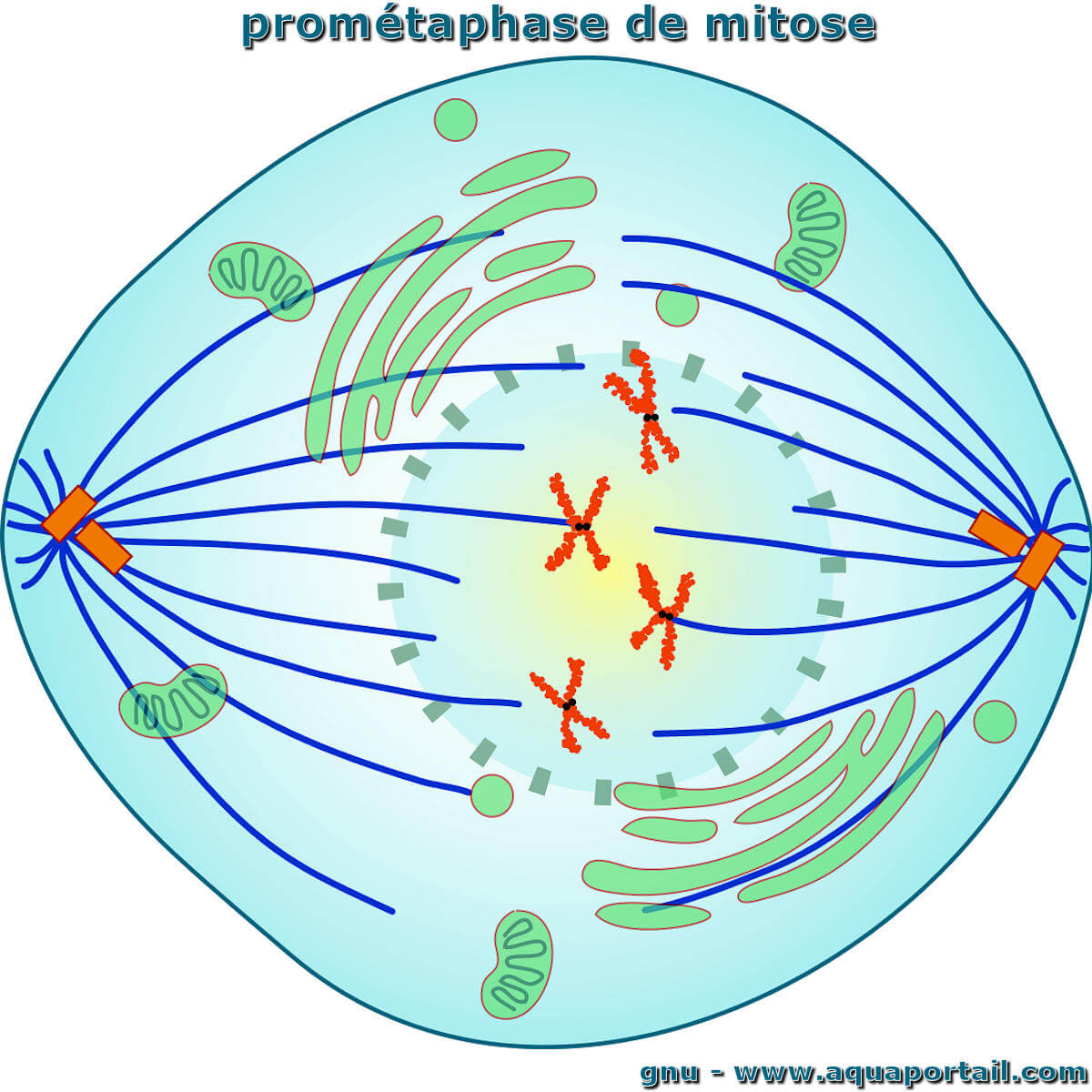
Prometaphase is the phase of mitosis following prophase and preceding metaphase during cell division in eukaryotes, involving an equational division.
apomeiosis

Apomeiosis (or ameiosis) corresponds to the absence of meiosis or an incomplete meiosis that does not result in a reduction in chromosome number.
internal clock

The internal clock is an endogenous periodic biological rhythm. It constitutes an internal regulatory system in the body that governs sleep timing, feeding...
internode
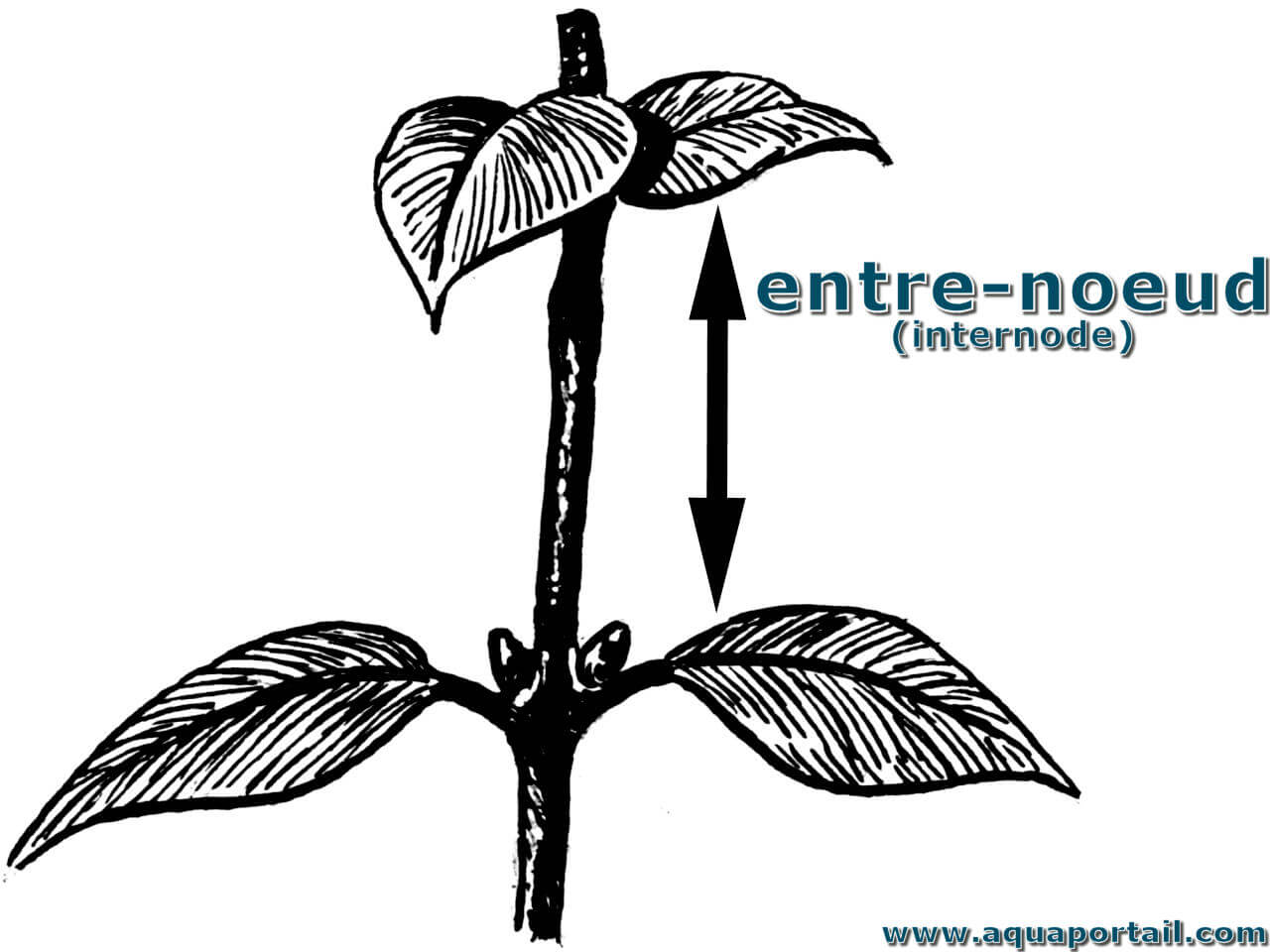
An internode is a space between two successive nodes along an axis. In botany, internodes refer to the leafless part (section) of a plant stem located between...
