RNA
abbreviation (abbr.)
Definition
RNA is ribonucleic acid, a nucleic acid formed by a single-stranded chain of ribonucleotides (nucleobases, nitrogenous bases). It is composed of ribose, phosphate, cytosine, guanine, adenine, and uracil. RNA is present in prokaryotic and eukaryotic cells, and it is the sole genetic material of certain viruses (RNA viruses). This nucleic acid results from DNA transcription.
RNA can be defined as the molecule formed by a single strand of ribonucleotides, each consisting of a phosphate group, a sugar (ribose), and one of the four nitrogenous bases (cytosine, guanine, adenine, and uracil).
The A-helix of ribonucleic acid (RNA):
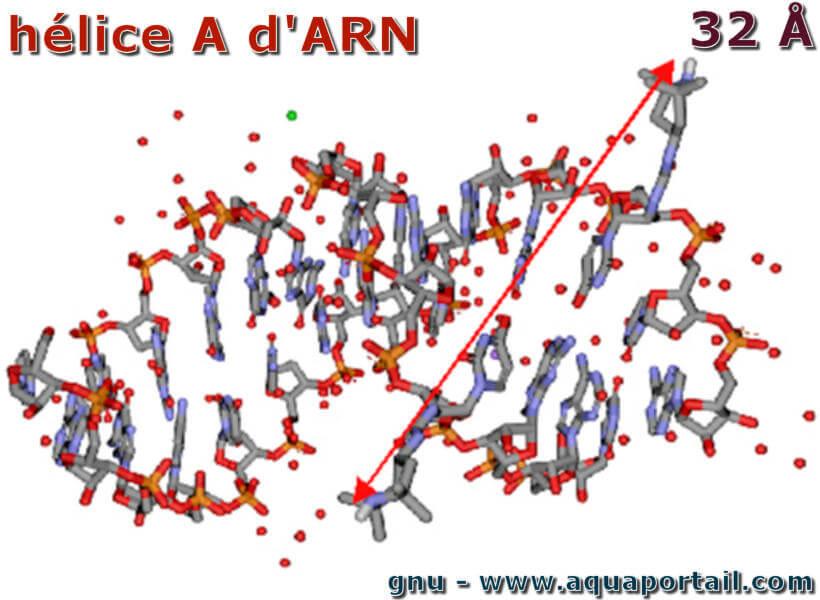
Like DNA, RNA consists of a chain of repeating monomers called nucleotides. Nucleotides are joined one after another by negatively charged phosphodiester bonds.
Explanations
Cellular RNA is linear and, unlike DNA, RNA molecules are generally single-stranded and do not form large double helices. However, in regions with paired bases, they form helices as a tertiary structural motif. An important structural feature of RNA distinguishing it from DNA is the presence of a hydroxyl group at the 2' position of the ribose (sugar), which causes RNA double helices to adopt an A-form conformation rather than the B-form conformation most common in DNA. This A-helix has a very deep, narrow major groove and a shallower, wider minor groove.
🚩 While RNA is generally single-stranded, in the genome of certain viruses it occurs as double-stranded RNA. Conversely, other viruses such as Microvirus and Levivirus possess single-stranded rather than double-stranded DNA. The single-stranded or double-stranded nature of RNA and DNA is therefore not entirely universal.
A second consequence of the presence of this hydroxyl group is that the phosphodiester bonds of RNA in regions where no double helix is formed are more susceptible to chemical hydrolysis than those of DNA; RNA phosphodiester bonds are rapidly hydrolyzed in alkaline solution, whereas DNA bonds are stable. The half-life of RNA molecules is much shorter than that of DNA, ranging from a few minutes in certain bacterial RNAs to a few days in human tRNAs.
In cellular organisms, RNA performs diverse functions. It is the molecule that directs the intermediate steps of protein synthesis: DNA cannot act alone, and uses RNA to transfer this vital information during protein synthesis (production of proteins needed by the cell for its activities and development). Several types of RNA regulate gene expression, while others possess catalytic activity. RNA is thus far more versatile than DNA.
The main difference in RNA processing between prokaryotes and eukaryotes lies in the processing of messenger RNAs.
Structure of RNA
Structurally, RNAs differ from DNA in several features:
- their pentose sugar is ribose
- uracil replaces thymine
- it is single-stranded (except in rare viruses).
Comparison of RNA and DNA, including nucleobases:
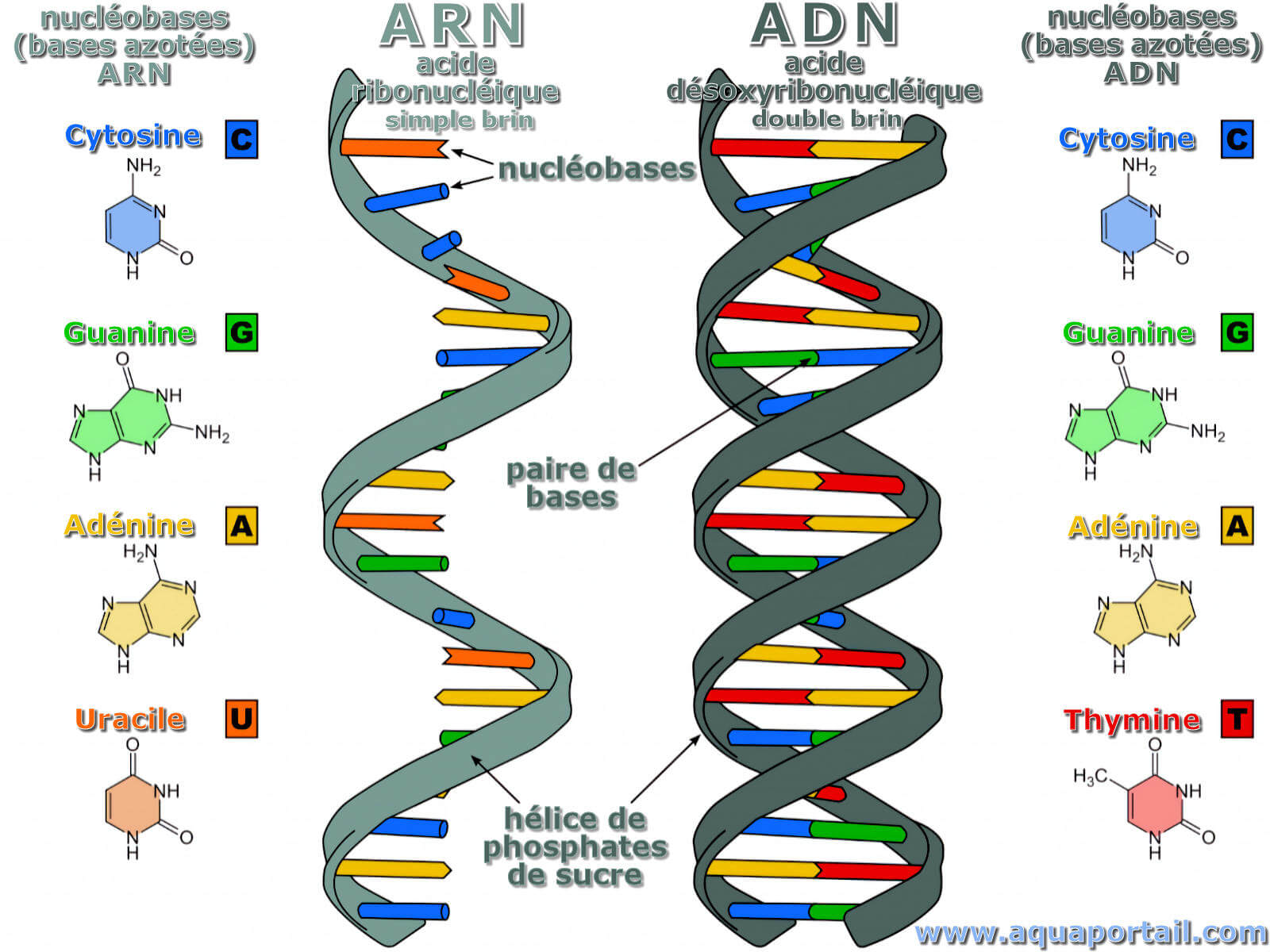
On the left, single-stranded RNA and its nucleobases; on the right, double-stranded helical DNA with its base pairs.
Functions of RNA
Their functions are numerous and carried out by different forms of RNA. Thus, we define:
- messenger RNAs (mRNAs): they are read or translated into proteins at the ribosomes. In eukaryotes, they consist solely of exons, the introns having previously been excised during splicing. mRNAs are monocistronic, meaning they originate from a single gene and encode only a single peptide chain. Polycistronic mRNAs, found in prokaryotes, arise from the transcription of multiple genes and encode multiple peptides
- transfer RNAs (tRNAs): they consist of approximately 70 to 90 nucleotides forming a cloverleaf structure. Each tRNA possesses an anticodon complementary to an mRNA codon to which it binds during translation. The 3' end of the tRNA carries a binding site for the amino acid corresponding to the anticodon
- ribosomal RNAs (rRNAs): associated with proteins, they make up ribosomes. Several rRNAs exist, distinguished by their sedimentation coefficients expressed in svedbergs (S): 5S RNA, of about 120 nucleotides, forming part of the large ribosomal subunit; the 45S precursor and its mature derivatives 28S, 18S, and 5.8S in eukaryotes
- extranuclear RNAs: derived from the transcription of mitochondrial and chloroplast DNA
- heterogeneous nuclear RNAs (hnRNAs): primary transcripts prior to processing. Only 5% of them will be utilized, the remainder being rapidly degraded.
RNA probes designate labeled RNA segments used to detect homologous RNA or DNA segments in tissue or culture samples.
RNA turnover
RNA turnover involves 3'→5' exonucleolytic degradation of eukaryotic mRNAs. A general mRNA degradation pathway involves 3'→5' exonucleolytic degradation of the transcript. This pathway has been best documented in yeast when the competing, faster 5'→3' degradation pathway is blocked in cis or in trans. The 3'→5' degradation pathway may play a more prominent role in systems other than yeast. For instance, decay intermediates consistent with 3'→5' exonucleolysis have been observed for oat phytochrome A mRNA degradation in vivo. Degradation of the transcript body by 3'→5' exonucleolysis likely occurs following deadenylation, although this has not yet been proven.
In yeast, the exonuclease(s) responsible for 3'→5' degradation appear to be the exosome complex. The exosome is a large, evolutionarily conserved complex of multiple 3'→5' exoribonucleases that carries out a variety of RNA processing and exonucleolytic degradation events, including mRNA decay and ribosomal RNA processing. In addition to the exosome complex, several accessory factors have been shown to play a role in 3'→5' mRNA degradation. These include the SKI2 protein, which shares homology with the DExH RNA helicase family and may function by delivering the mRNA substrate to the exosome, and the SKI3 and SKI8 proteins, whose function in 3'→5' mRNA degradation remains unknown.
See also RNA hydrolysis.
Synonyms, antonyms
Spanish translation: ARN
1 synonym (similar meaning) for "RNA":
0 antonyms (opposite meaning).
Related words and expressions to RNA are directly connected by general or specific meaning.
The word RNA is listed on page 1 of words starting with R in the dictionary glossary.
Related to "RNA"
acid

An acid is a substance that, when dissolved in water, produces an increased concentration of hydrogen ions.
acrylic acid

Acrylic acid is an unsaturated organic compound (sulfur-free), a precursor to acrylic polymers, possessing bacteriostatic activity.
alginic acid
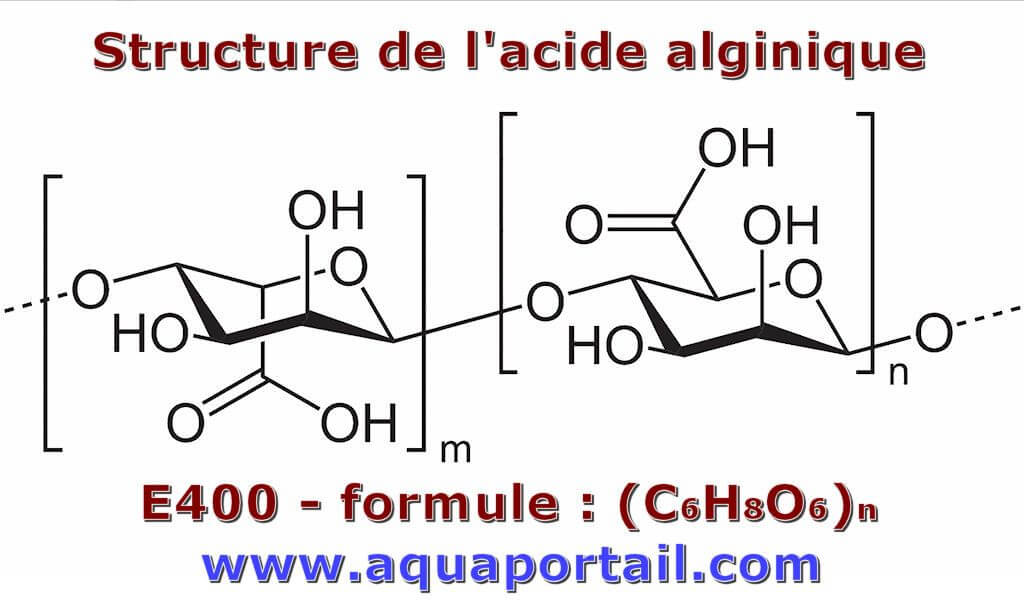
Alginic acid designates a linear polymer composed entirely of β-D-mannuronic acid and α-L-guluronic acid in variable proportions, extracted from brown algae...
beta-hydroxybutyric acid

Beta-hydroxybutyric acid (β-hydroxybutyrate, β-hydroxybutyric acid) is a ketone body, a chiral compound with two optical isomers.
