Messenger RNA
noun phrase (n. phr.)
Definition
A messenger RNA (mRNA) is the transcript of a gene after the excision of any non-coding regions (introns). Distinct from tRNA, mRNA is a single-stranded nucleic acid, unlike DNA.
mRNA is the ribonucleic acid responsible for transferring the genetic code. This RNA communicates genetic information from DNA in the cell nucleus to a ribosome in the cytoplasm. It determines the order in which the amino acids of a protein will be assembled and serves as a template or pattern for the synthesis of said protein.
Messenger RNA:

Messenger ribonucleic acid, or mRNA, plays a vital role in human biology, particularly in a process known as protein synthesis.
Explanations
mRNA is a single-stranded molecule that carries the genetic code from DNA in a cell's nucleus to ribosomes, the cell's protein-manufacturing machinery. See also antisense DNA.
Simply put, messenger RNA (mRNA) is a single-stranded RNA molecule complementary to one of the DNA strands of a gene. The discovery of mRNA dates to 1961, following the discovery of RNA in 1953.
mRNA is an RNA copy of the gene that leaves the cell nucleus and travels to the cytoplasm where proteins are manufactured. During protein synthesis, an organelle called a ribosome moves along the mRNA, reads its base sequence, and uses the genetic code to translate each three-base triplet (codon) into its corresponding amino acid.
Although most eukaryotic mRNAs are monocistronic, meaning they carry information for a single polypeptide chain, certain studies have shown that some eukaryotic genes organized in clusters are transcribed in polycistronic form as in prokaryotic organisms. Polycistronic mRNAs encode more than one protein.
The type of RNA dictates the function that this molecule will perform in the cell. Beyond the coding region of messenger RNA (mRNA) molecules that will be translated into proteins, other cellular RNA elements are involved in various processes, including transcriptional and post-transcriptional regulation of genetic material, temperature and ligand sensing, and control of RNA translation.
Since DNA cannot leave the nucleus, it is unable to generate a protein on its own. Generating proteins from their coding DNA sequence begins with a process called transcription. During transcription, several enzymes, notably helicase and topoisomerase, unwind DNA to grant access to another enzyme called RNA polymerase.
RNA polymerase travels along the unwound DNA strand to build the mRNA molecule until it is ready to leave the nucleus.
⭐ Messenger RNAs are one of the types of RNA found in the cell. Like most RNAs, it is produced in the nucleus and then exported to the cytoplasm where the translation machinery, the system that actually builds proteins, binds to these mRNA molecules and reads the code on the mRNA to manufacture a specific protein. Thus, in general, a gene, the DNA of a gene, can be transcribed into an mRNA molecule that will ultimately produce a specific protein.
Synonyms, antonyms
Spanish translation: ARN mensajero
1 synonym (similar meaning) for "messenger RNA":
- messenger ribonucleic acid
0 antonyms (opposite meaning).
Related words and expressions to MESSENGER RNA are directly connected by general or specific meaning.
The expression MESSENGER RNA is listed on page 1 of words starting with M in the dictionary glossary.
Related to "messenger RNA"
RNA
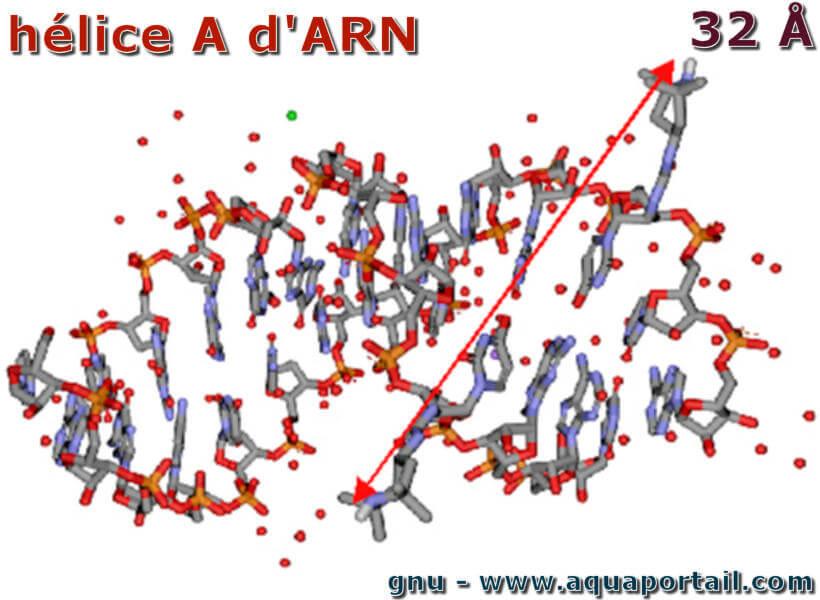
RNA is ribonucleic acid, a nucleic acid formed by a single-stranded chain of ribonucleotides (nucleobases, nitrogenous bases).
madrepore

A madrepore (Madrepora) is a marine animal of the group of scleractinian corals possessing an external skeleton, typically an acropora and encompassing...
mangrove

A mangrove is a coastal salt-marsh biotic zone comprising specific plants, mangrove trees, and plant associations that grow in the intertidal zone...
manure

Manure is a mixture of animal droppings and plant bedding used to fertilize land. Manuring consists of applying manure to cultivated soil by spreading.
