Methyl
noun (n.)
Definition
A methyl (or methyl group) is an alkyl functional group composed of one carbon atom and three hydrogen atoms (-CH3). Methyl groups are added to or removed from proteins or nucleic acids and can alter how these molecules act within the body.
Methyl cation, anion, and radical:
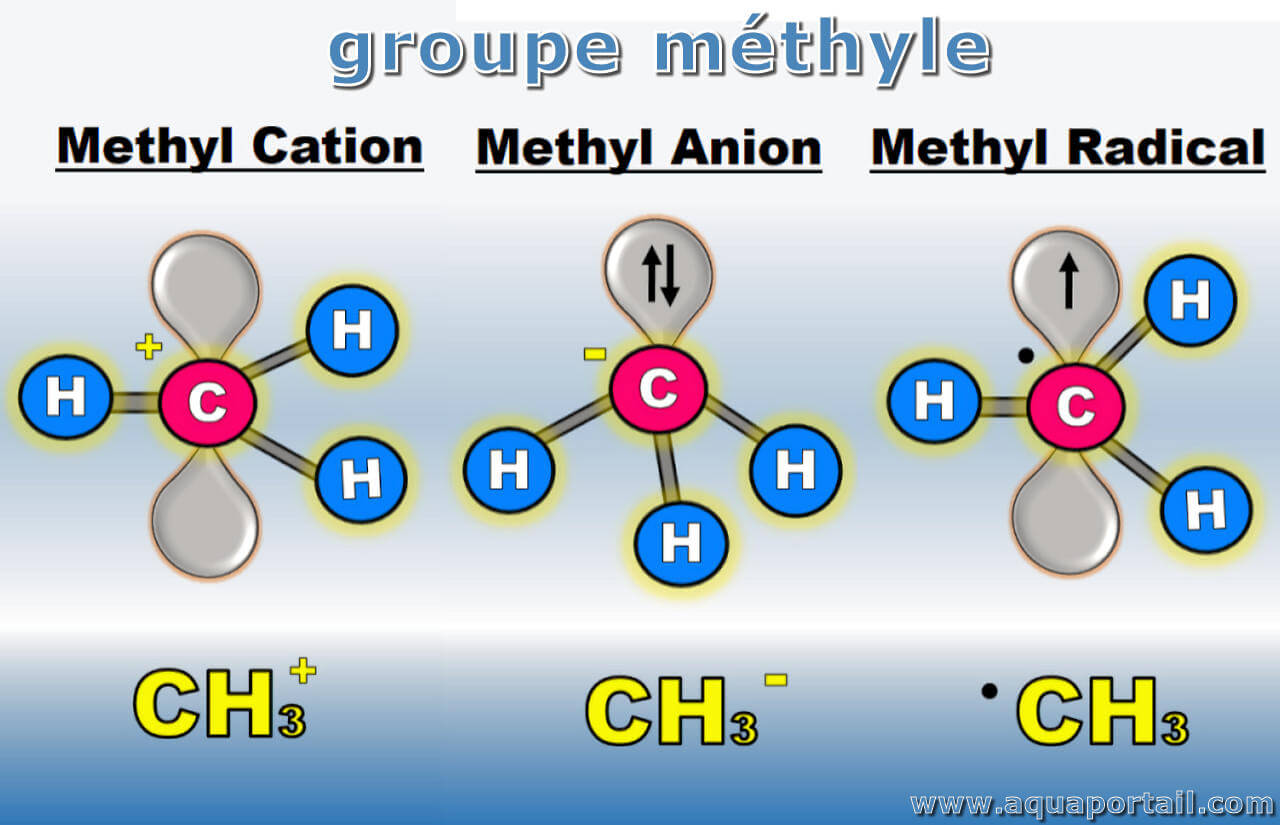
The methyl cation, methyl anion, and methyl radical are all reaction intermediates in organic chemistry.
Explanations
Methyl groups are very stable and consist of a central carbon atom bonded to three hydrogen atoms. The functional group itself is typically unreactive, even in the presence of very strong acids or bases. Despite this stable configuration, methyl groups can be involved in reactions transferring the entire functional group to another compound, in a process called methylation.
Methyl is found in many plastics such as acrylic and Plexiglas (polymethyl methacrylate). Combined with a carboxyl group (-COOH), methyl forms acetic acid (CH3COOH). In chloride form, it is called chloromethane.
Some examples:
- aminomethane: a methyl bonded to an amino group (-NH2)
- hydroxymethyl: a methyl bonded to a hydroxyl group (-OH)
- alkyl (alkyl group, alkyl radical): any of a series of univalent groups with general formula CnH2n+1 derived from aliphatic hydrocarbons.
Cleavages in methane
Following cleavage of the C-H bond of the methane molecule, the following chemical species are formed: methyl cation, methyl anion, methyl radical.
Methane is a stable molecule. Two types of bond cleavage (breaking) take place in the methane molecule:
- homolytic cleavage: covalent bond breaking in which shared electrons are distributed evenly between atoms
- heterolytic cleavage: covalent bond breaking in which shared electrons are retained by a more electronegative atom.
Following heterolytic cleavage, a methyl cation and a methyl anion are formed, while a methyl radical is formed following homolytic cleavage.
Methyl ion formations
Methyl is found in cation, anion, or radical form:
- formation of methyl cations: when the methyl group is attached to a more electronegative element, the more electronegative element pulls the electron pair, resulting in the formation of a methyl cation. The methyl cation is a carbocation and acts as a Lewis acid because it is an electron-deficient, electron-accepting species
- formation of methyl anions: when the methyl group is attached to a less electronegative element, the methyl carbon pulls the electron pair from the less electronegative element, resulting in the formation of a methyl anion. The methyl anion is a carbanion and acts as a Lewis base because it is an electron-rich, electron-pair-donating species
- formation of methyl radicals: due to homolytic cleavage of the methane molecule, the shared electron pair is evenly distributed between the carbon and hydrogen of methane, resulting in the formation of methyl free radicals and hydrogen free radicals.
In genetics
The importance of methyl groups is found in modulating the biological activity, selectivity, solubility, metabolism, and pharmacokinetic/pharmacodynamic properties of biologically active molecules. Methyl groups (functional single-carbon atoms) are involved in numerous biochemical reactions in the human body. They are essential for reading DNA and must be considered relevant to the activation of peritoneal and pelvic immune cells in endometriosis.
Methyl groups are added to DNA at various times during development, for example to regulate gene transcription on both autosomes and in X inactivation, to establish parental imprints, to methylate centromeric DNA and other constitutive heterochromatins, and to defend the host against foreign DNA.
Methyl groups are generally attached at the 5-carbon position (C5) of cytosine and protrude into the major groove of DNA, where they are accessible for recognition by methylation-sensitive transcription factors and methyl-binding proteins associated with gene silencing. Some methyl-binding proteins can even interact with multiple adjacent methylated cytosines. Furthermore, these DNA-bound, methylation-sensitive factors can recruit additional complexes (for example, histone deacetylases) to modulate chromatin state and transcriptional activity.
Effects on solubility
As a general rule, grafting one or more methyl groups onto an active molecule makes it more lipophilic and therefore less soluble in water. However, in certain special cases, grafting one or more methyl groups onto a molecule leads to an increase in water solubility through mechanisms such as increasing hydrophobic bonding opportunities or lowering crystal lattice energy.
Synonyms, antonyms
Spanish translation: metilo
2 synonyms (similar meaning) for "methyl":
- methyl group
- methyl radical
0 antonyms (opposite meaning).
Related words and expressions to METHYL are directly connected by general or specific meaning.
The word METHYL is listed on page 1 of words starting with M in the dictionary glossary.
Related to "methyl"
dimethyl sulfide
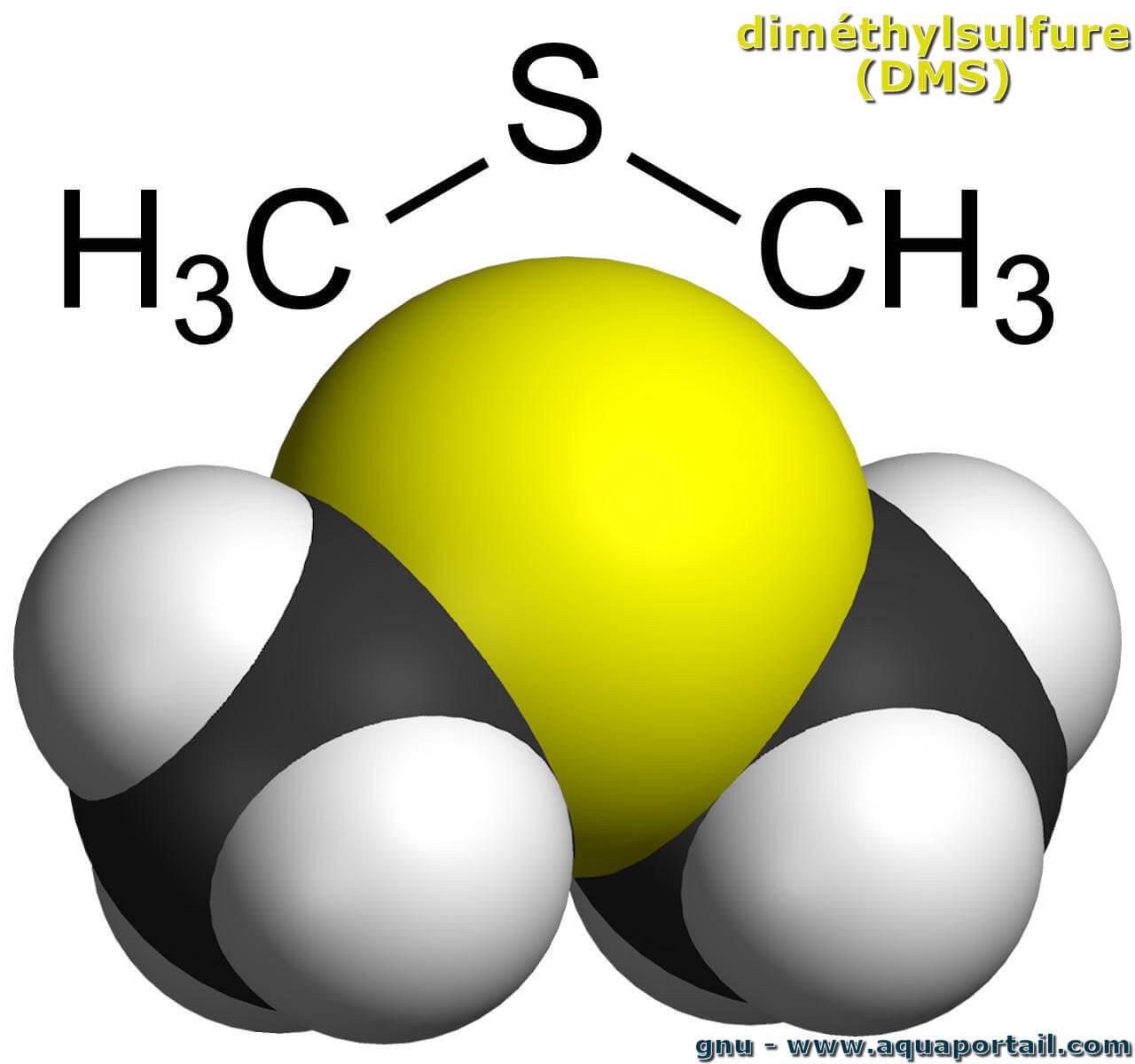
Dimethyl sulfide (DMS) is a volatile chemical compound, a thioether, with the molecular formula (CH₃)₂S.
dimethyl sulfoxide

Dimethyl sulfoxide (DMSO) is an oxidation product of dimethyl sulfide. DMSO is a colorless organic liquid with the chemical formula CH₃SOCH₃ containing...
madrepore

A madrepore (Madrepora) is a marine animal of the group of scleractinian corals possessing an external skeleton, typically an acropora and encompassing...
mangrove

A mangrove is a coastal salt-marsh biotic zone comprising specific plants, mangrove trees, and plant associations that grow in the intertidal zone...
