Electron
noun (n.)
Definition
The electron (e-) is a negatively charged elementary particle. Electrons bound to an atom or ion form its electron shells, and virtually all of chemistry rests upon the properties and interactions of these bound electrons.
The electrons of an atom:
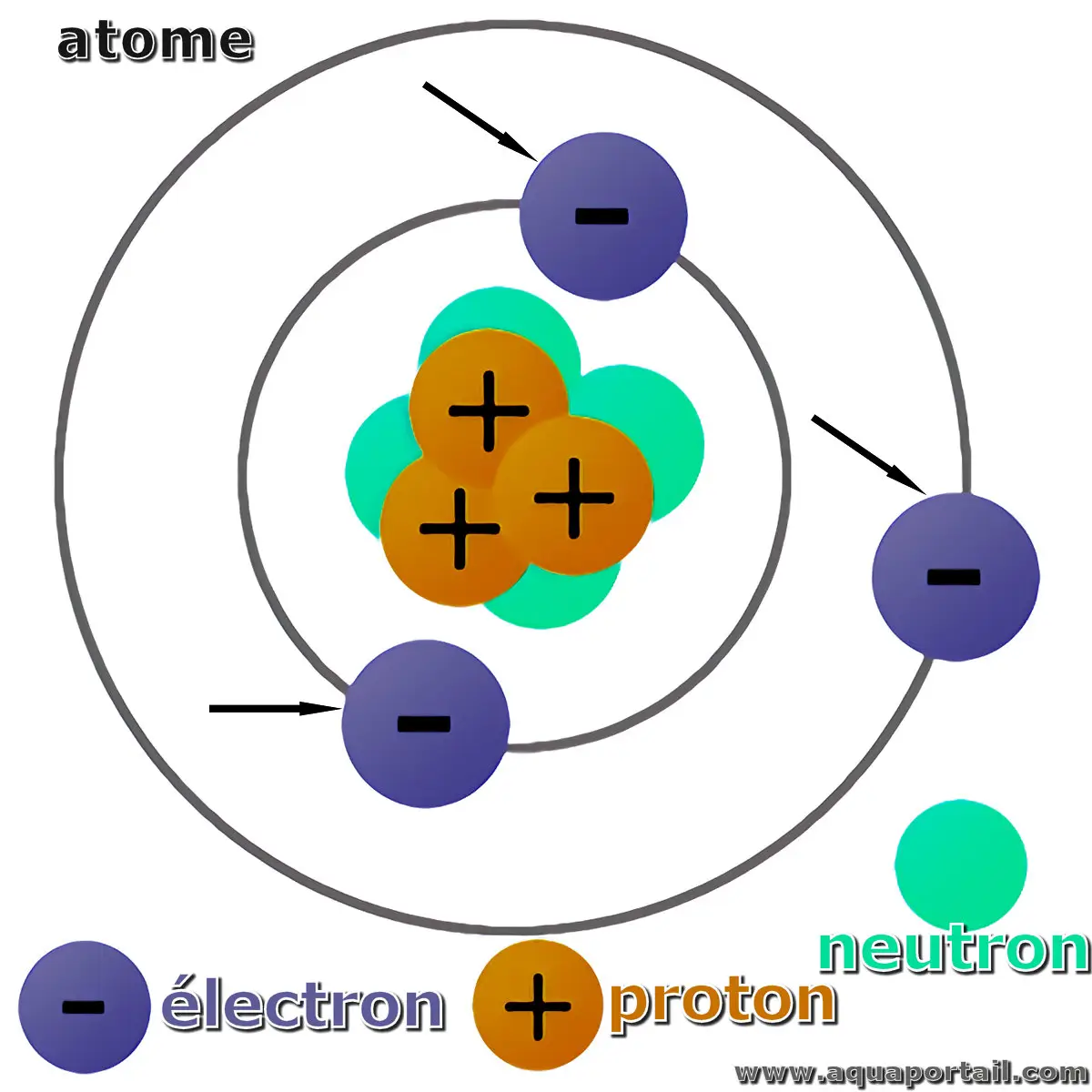
The electron is a subatomic particle present in every atom. Unlike protons, neutrons, or atomic nuclei, electrons are considered elementary particles, meaning they are not composed of smaller constituents. Moreover, compared with protons and neutrons, electrons have a nearly negligible mass, while the electric charge of electrons and protons is crucial because it generates electrostatic forces.
Explanations
✅ The alternative term negatron (derived from negative charge and electron) is rarely used today, appearing occasionally in beta spectroscopy. Its symbol is e-. Within an atom, its negative electric charge balances that of the positively charged proton, while its antiparticle is the positron.
⭐ For a donor, see electron donor; for an acceptor, see electron acceptor; for a carrier, see electron carrier. See also electrode, electrolysis, electronography...
In connection with the particulate nature of electricity, the fundamental unit of electric charge was theorized as early as 1874 by George Johnstone Stoney (who coined the term "electron" in 1891) and Hermann von Helmholtz.
In metals, a fraction of electrons are freely mobile (conduction electrons) and give rise to the high electrical conductivity of metallic conductors, forming the foundation of electrical engineering. In semiconductors, the number of mobile electrons—and hence electrical conductivity—can be readily controlled both during material synthesis (doping) and by external factors such as temperature, applied voltage, or incident light. From any conductive material, electrons can be emitted under intense heating or a strong electric field (thermionic emission, field emission). Once freed in a vacuum, they can be accelerated and focused into an electron beam, enabling the development of the oscilloscope, television, and cathode-ray computer monitor. Other applications of free electrons include X-ray tubes, electron microscopes, electron-beam welding, fundamental physics research using particle accelerators, and synchrotron radiation generation for scientific and industrial purposes.
During "beta-minus" (β-) radioactive decay of an atomic nucleus, an electron is created and emitted.
Experimental evidence of the electron was first achieved by Emil Wiechert in 1897 and shortly thereafter by Joseph John Thomson, while its elementary charge was measured in 1909 by Robert Millikan.
Properties
The electron is the lightest electrically charged elementary particle. Assuming the conservation laws of electric charge and energy hold—as borne out by all physical experiments—electrons must be completely stable; indeed, there is no experimental evidence of electron decay.
The electrons of hydrogen:

An electron occupies orbitals around an atomic nucleus. Hydrogen atomic orbitals at different energy levels show probability density clouds: the brightest regions indicate where an electron is most likely to be found at any given moment.
The electron belongs to the lepton family and, like all leptons, has a spin (specifically, spin quantum number) of 1/2. As a half-integer spin particle, it belongs to the class of fermions and is thus governed by the Pauli exclusion principle. Its antiparticle is the positron, symbol e+, with which it shares every physical property except the opposite sign of its electric charge. Quantum effects accounted for only by quantum electrodynamics (QED) produce a slight measurable deviation in its gyromagnetic ratio, known as the anomalous magnetic dipole moment of the electron.
See also excitons.
Interactions
Numerous physical phenomena such as electricity, magnetism, and electromagnetic radiation rest fundamentally on electron interactions. Electrons in an electrical conductor are displaced by a changing magnetic field, inducing an electric voltage; conversely, electrons flowing in a current-carrying conductor generate a magnetic field. An accelerated electron—including one following a curved path—emits photons known as Bremsstrahlung or braking radiation (Hertzian dipole, synchrotron radiation, free-electron laser).
Inside a crystalline solid, an electron interacts with the periodic crystal lattice, and its dynamics can be described using an effective mass rather than its free rest mass, which also depends on its direction of motion.
Electrons liberated from their parent atoms in polar solvents such as water or liquid ammonia are called solvated electrons; when alkali metals dissolve in liquid ammonia, solvated electrons impart a deep blue color to the solution.
An electron is a quantum object: the simultaneous uncertainty in position and momentum described by Heisenberg's uncertainty principle lies within a measurable regime, allowing both particle-like and wave-like behavior to be observed—a phenomenon known as wave-particle duality. Inside an atom, a bound electron can be treated as a standing matter wave (atomic orbital).
Experiments
The charge-to-mass ratio e/m of the electron can be determined in a classic laboratory demonstration using a fine-beam tube, while direct determination of the elementary charge was accomplished by Millikan's oil-drop experiment.
For electrons moving at speeds non-negligible compared with the speed of light, the relativistic relationship between energy and momentum must be taken into account. Because of their tiny mass, electrons can be accelerated relatively easily to relativistic speeds; even at a kinetic energy of 80 keV, an electron travels at roughly half the speed of light. Momentum can be measured via magnetic deflection, a departure from classical mechanics first demonstrated by Walter Kaufmann in 1901 and explained by special relativity.
Free electrons
In a cathode-ray tube (Braun tube), electrons emerge from a heated cathode and are accelerated under vacuum by an electric field toward the positive anode. Under magnetic fields, electrons are deflected perpendicular to both the magnetic field lines and their velocity vector (Lorentz force), properties that enabled the oscilloscope, television, and CRT monitor.
Other applications of free electrons include X-ray tubes, electron microscopes, electron-beam welding, basic physics research using particle accelerators, and synchrotron radiation generation for scientific and technical applications.
Synonyms, antonyms
Spanish translation: electrón
2 synonyms (similar meaning) for "electron":
2 antonyms (opposite meaning):
Related words and expressions to ELECTRON are directly connected by general or specific meaning.
The word ELECTRON is listed on page 1 of words starting with E in the dictionary glossary.
Related to "electron"
klepton
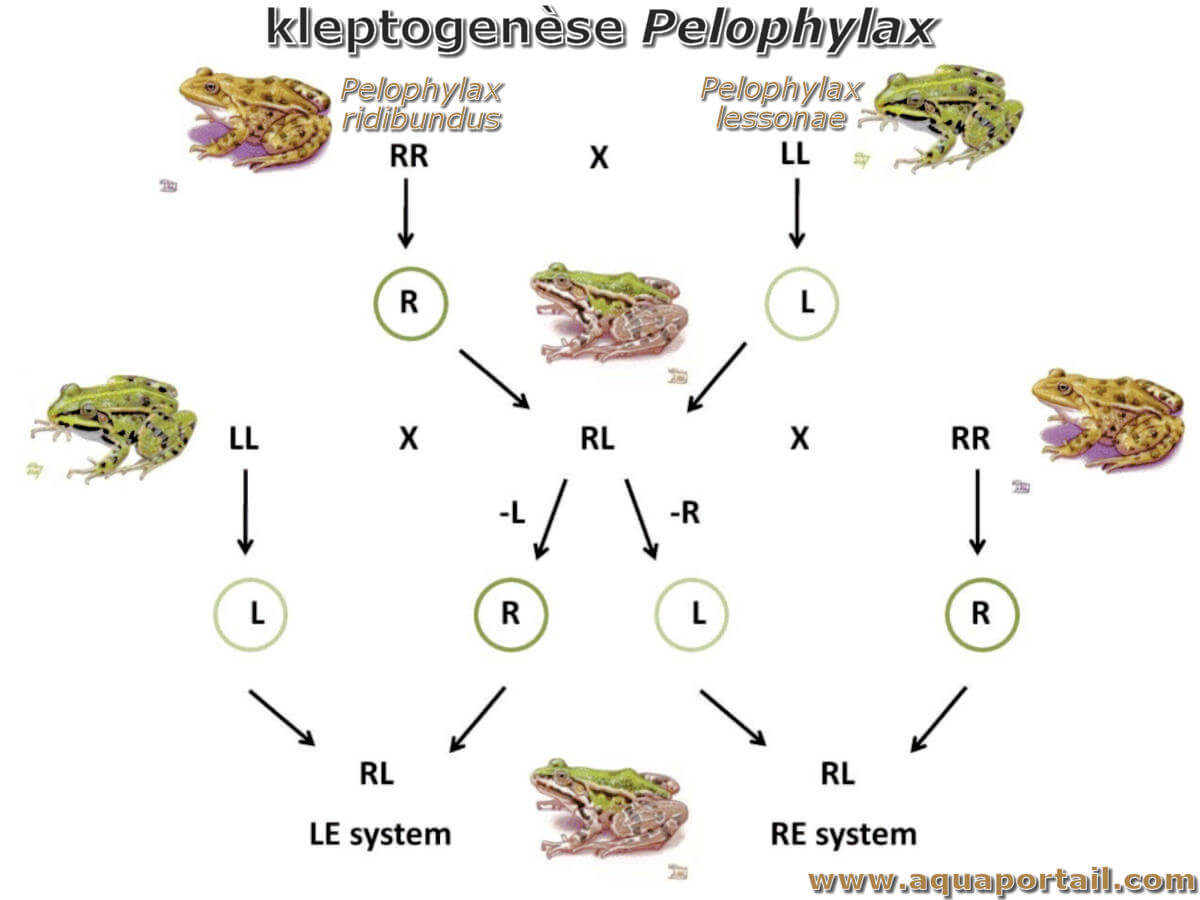
A klepton (kl.) is a unisexual hybrid taxon that requires gametes from another biological taxon to complete its reproductive cycle through hybridogenesis...
protonema
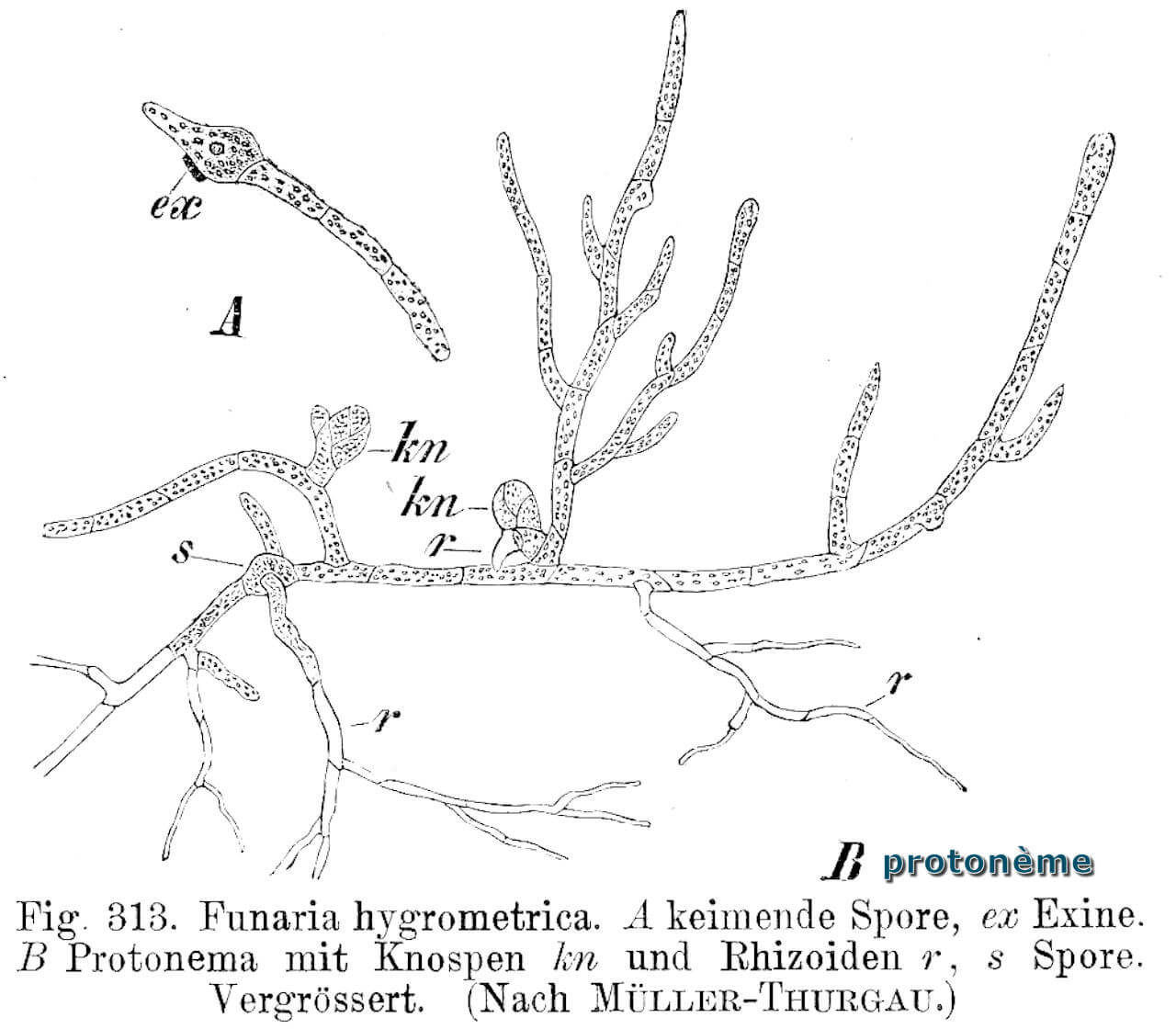
The protonema of a moss or liverwort is a thread-like chain of chlorophyllous cells constituting the initial haploid phase—the earliest developmental stage...
E=mc2
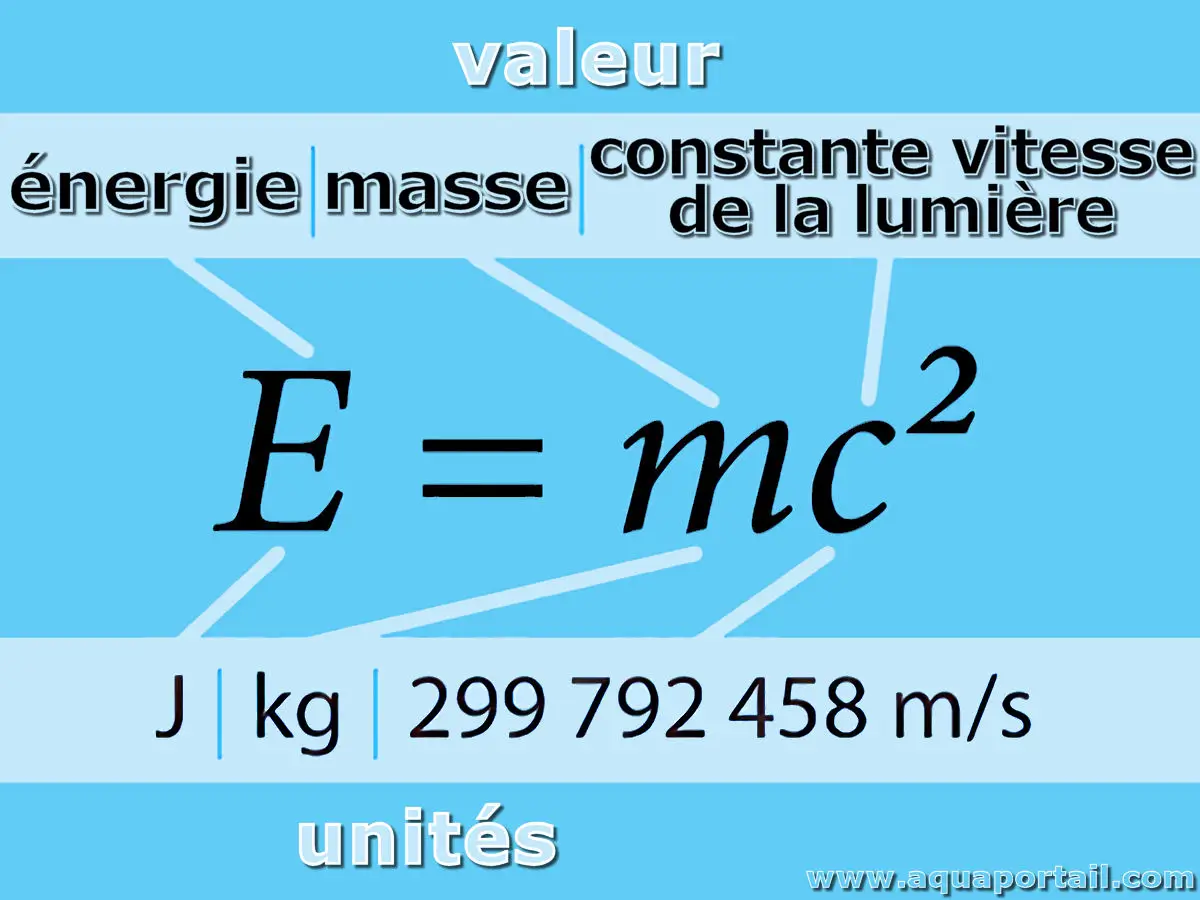
The formula E=mc2 (E = m. c²) is a mass-energy equivalence equation according to the theory of relativity developed by Albert Einstein. It expresses that...
Ecdysozoa

Ecdysozoans, of the superphylum Ecdysozoa, are protostomes undergoing ecdysis within Bilateria.
