E=mc2
phrase (phr.)
Definition
The formula E=mc2 (E = m.c2) is a mass-energy equivalence equation according to the theory of relativity developed by Albert Einstein. It expresses that energy is equal to mass multiplied by the speed of light squared.
E=mc2 is a physics formula known to everyone, described as "the most famous equation in the world."
The equation E=mc2:
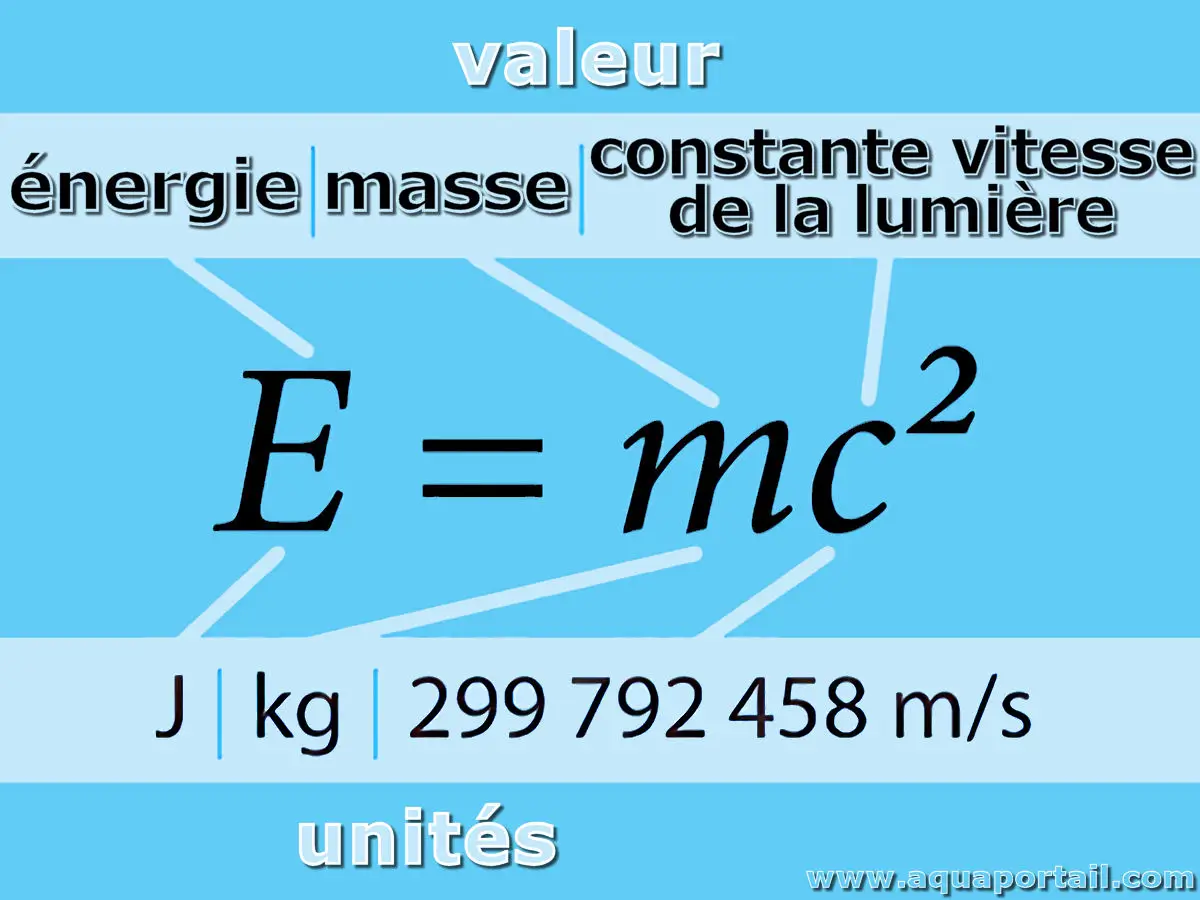
E=mc2, where E is energy, m is mass, and the constant for the speed of light in a vacuum is c = 2.99792458 × 10⁸ m/s (1.86282397 × 10⁵ mi/s) ≅ 3 × 10⁸ m/s = 3 × 10⁵ km/s (1.86 × 10⁵ mi/s)
Explanations
The equation E = m.c2 means that the total energy of a physical object (physical system, body) at rest is equal to its mass multiplied by the dimensional factor of the square of the speed of light in a vacuum. The constant c for the speed of light in a vacuum is equal to 299,792,458 m/s (186,282 mi/s).
In this formula, written by Albert Einstein (1879–1955), c, the value of the speed of light in a vacuum, converts kilograms into joules (since the quantities of mass and energy are distinct).
The equation E = m.c2 is a fundamental result of the concept of special relativity and is obtained in the physical derivation of relativity from the postulates of special relativity. A physical derivation is one in which you begin with basic axioms, but introduce additional ones as you proceed as seems reasonable through physical intuition (that is, an educated guess) or foresight (that is, believing you know where you need to arrive). The equation does not result from pure mathematics.
Depending on what is meant by the terms "mass" and "energy," this concept can be interpreted in two ways:
- on the one hand, the concept means that the mass of a body (invariant mass, also called rest mass) is equal (up to a constant factor c2) to the energy "it contains," that is, its energy measured or calculated in its accompanying reference frame (rest frame), known as rest energy, or broadly the internal energy of that body;
- on the other hand, it can be stated that any type of energy (not necessarily internal) of a physical object (not necessarily a body) corresponds to a certain mass; for example, for any moving object, the notion of relativistic mass was introduced, equal (up to a factor c2) to the total energy of that object (including kinetic energy).
The formula is attributed to Albert Einstein, who published it in 1905 in the paper titled "Ist die Trägheit eines Körpers von seinem Energieinhalt abhängig?" (Does the inertia of a body depend upon its energy-content?). Although Einstein was not the first to propose the relationship between mass and energy, and several similar formulas appeared before Einstein's theory, he was the first to propose that mass-energy equivalence is a general principle that is a consequence of the symmetries of space and time.
On November 20, 2008, an international team of physicists at the Center for Theoretical Physics in Marseille, using the "Blue Gene" supercomputer, confirmed in practice for the first time that the mass of the proton originates from the energy released by quarks and gluons, proving that mass comes from energy, as Einstein theorized more than a hundred years ago: E=mc2.
Synonyms, antonyms
French translation:
E=mc2Spanish translation: E=mc2
2 synonyms (similar meaning) for "e=mc2":
- mass-energy equivalence
- mass-energy relation
0 antonyms (opposite meaning).
Related words and expressions to E=MC2 are directly connected by general or specific meaning.
The expression E=MC2 is listed on page 1 of words starting with E in the dictionary glossary.
Related to "E=mc2"
Ecdysozoa

Ecdysozoans, of the superphylum Ecdysozoa, are protostomes undergoing ecdysis within Bilateria.
echinoderm
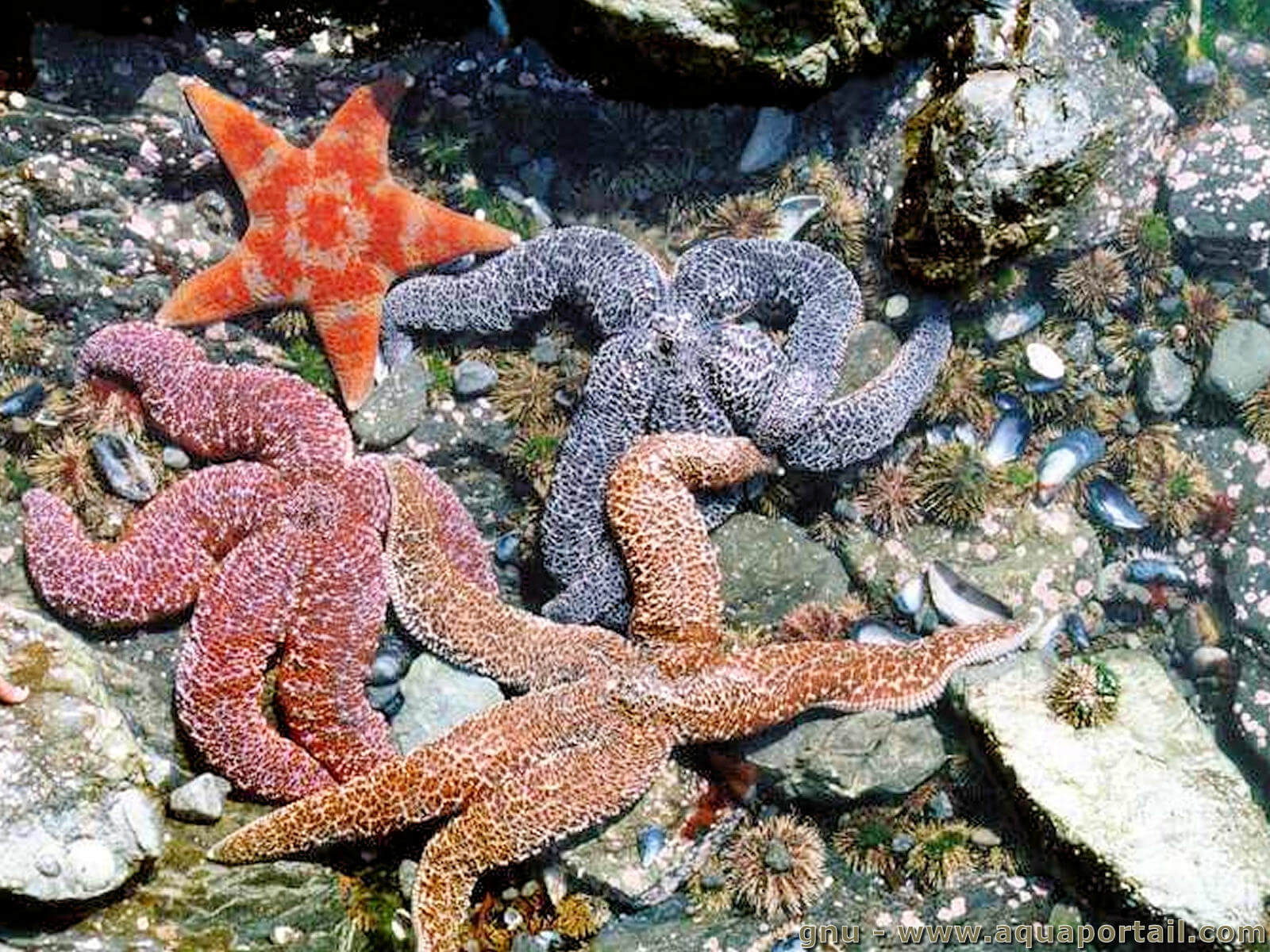
An echinoderm belongs to a lineage of invertebrates, the phylum Echinodermata, found exclusively in the world's oceans : starfish, brittle stars, sea urchins...
eco-grazing
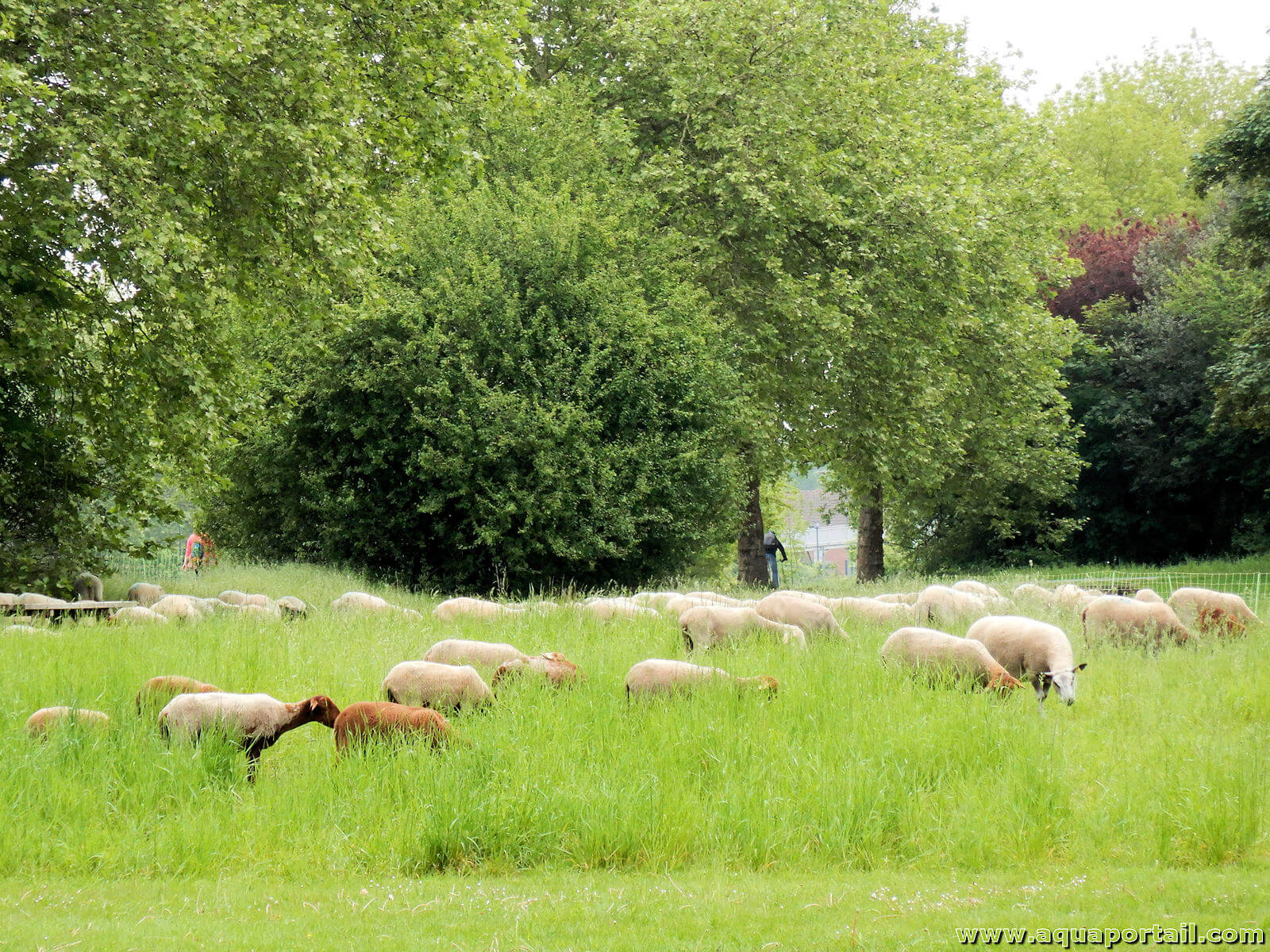
Eco-grazing is ecological grazing carried out with small ruminants on a meadow or green space in an urban environment.
ecophysiology
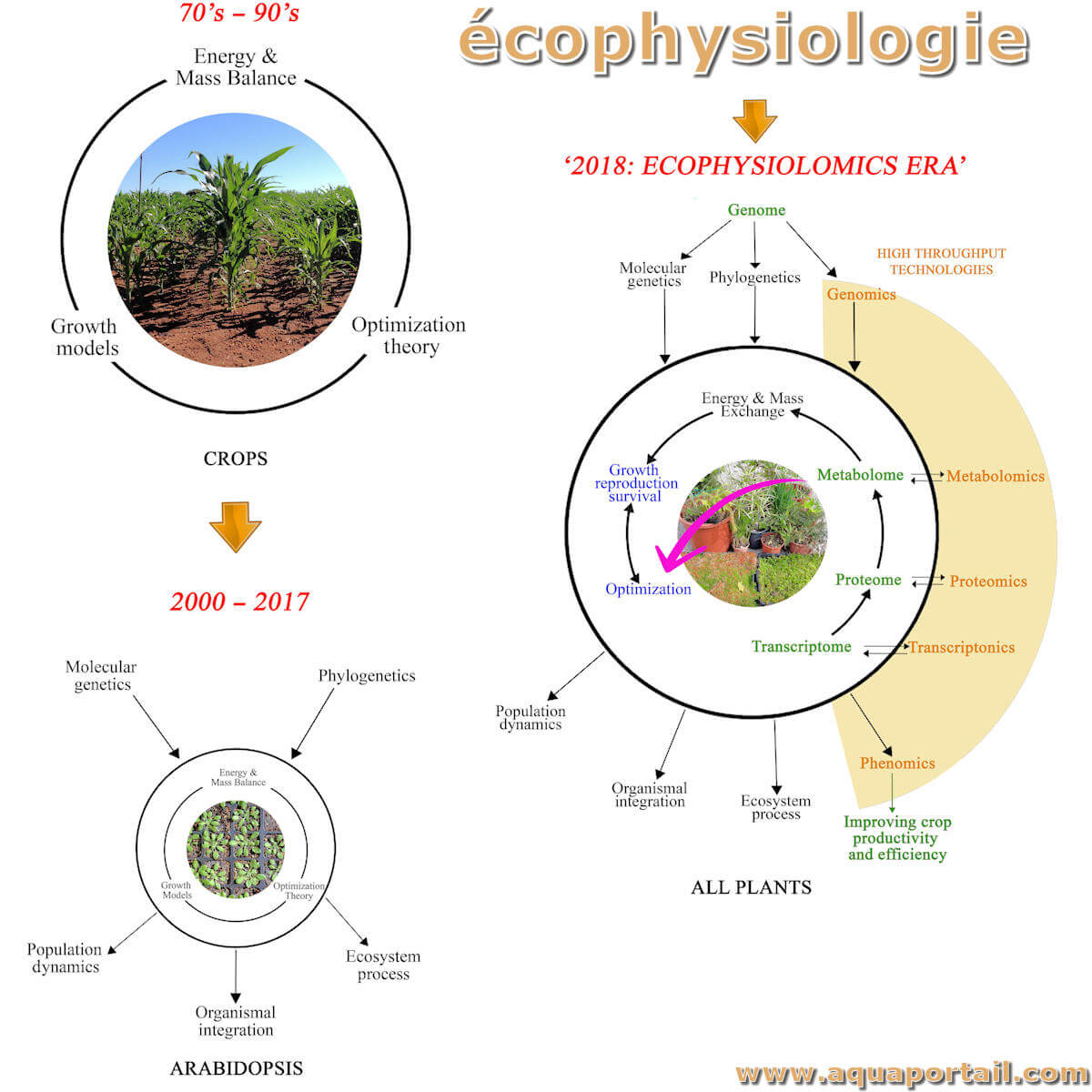
Ecophysiology is the study of the interrelationship between an organism's normal physical function and its environment.
