Ecotype
noun (n.)
Definition
An ecotype is a distinct variety of an animal, plant, or other organism that is closely linked to the ecological environment in which it lives. An ecotype is a genetically homogeneous population obtained through mass selection within a circumscribed territorial context (region, ecosystem).
Two ecotypes of the species Timema cristinae:

The species Timema cristinae has two distinct ecotypes (or varieties). One displays a distinct white stripe along its back and feeds on the narrow, needle-like leaves of a shrub called Adenostoma. The other phenotype lacks a stripe and feeds on Ceanothus.
Explanations
An ecotype, or a morph in the zoological sense, is an individual or population of individuals of a species whose specific morphology is determined by environmental conditions. The environment is then termed ecotypic, though in the view of some ecologists the term is somewhat ambiguous.
In biology, an ecotype is a genetically differentiated subpopulation restricted to a specific habitat, a particular environment, a defined ecosystem, or a different diet, with specific tolerance limits to environmental factors. The identity of ecotypes is thus tied to territory and is the expression of the interaction between a species' germplasm, the specific environmental conditions of a region, and human influence.
Within a given taxon, it qualifies a population whose genetic traits are adapted to environmental conditions. Ecotypes, adapted to particular edaphic or climatic conditions, are not, however, generally considered infraspecific taxa. They belong to the same species that, across different environments, exhibit different phenotypic expression due to gene-environment interaction.
An ecotype therefore designates a biological form of a species adapted to specific ecological factors (as opposed to an ecophene/accommodate). An ecotype often displays no distinctive external markings, the difference being purely physiological. Ecotypes can interbreed without loss of offspring fertility.
Ecotypism is a form of environmentally associated variation and does not necessarily imply the separation of populations into isolated geographic areas.
Although lacking a formal taxonomic identity, ecotypes often hold major agronomic and economic value because they are used both for germplasm conservation and the protection of genetic biodiversity, as well as for promoting typical regional products.
Note: this term bears no relation to nomenclatural types (such as a lectotype). The term ecotype was coined in 1922 by the Swedish botanist Göte Turesson.
In evolutionary ecology, an ecotype—sometimes called an ecospecies—describes a geographically and genetically distinct variety, population, or race within a species (or closely related varieties) adapted to environmental conditions specific to the local biotope. As a rule, ecotypes exhibit phenotypic differences (such as in morphology, physiology, or sometimes anatomy) stemming from environmental heterogeneity and are capable of interbreeding with other geographically adjacent ecotypes without loss of fertility or vigor.
In architecture, an ecotype is a building style adapted to the climate of its environment and constructed with local materials, characteristic of traditional vernacular architecture—and today, the outcome of applying sustainability criteria within a given environment.
In anthropology, an ecotype corresponds to the cultural landscape, the transformation of nature to better utilize resources.
Synonyms, antonyms
Spanish translation: ecotipo
2 synonyms (similar meaning) for "ecotype":
1 antonym (opposite meaning):
Related words and expressions to ECOTYPE are directly connected by general or specific meaning.
The word ECOTYPE is listed on page 1 of words starting with E in the dictionary glossary.
Related to "ecotype"
prototype

A prototype is an early, typical, or preliminary model of something—particularly a machine—from which other forms are developed or copied.
E=mc2

The formula E=mc2 (E = m. c²) is a mass-energy equivalence equation according to the theory of relativity developed by Albert Einstein. It expresses that...
Ecdysozoa

Ecdysozoans, of the superphylum Ecdysozoa, are protostomes undergoing ecdysis within Bilateria.
echinoderm
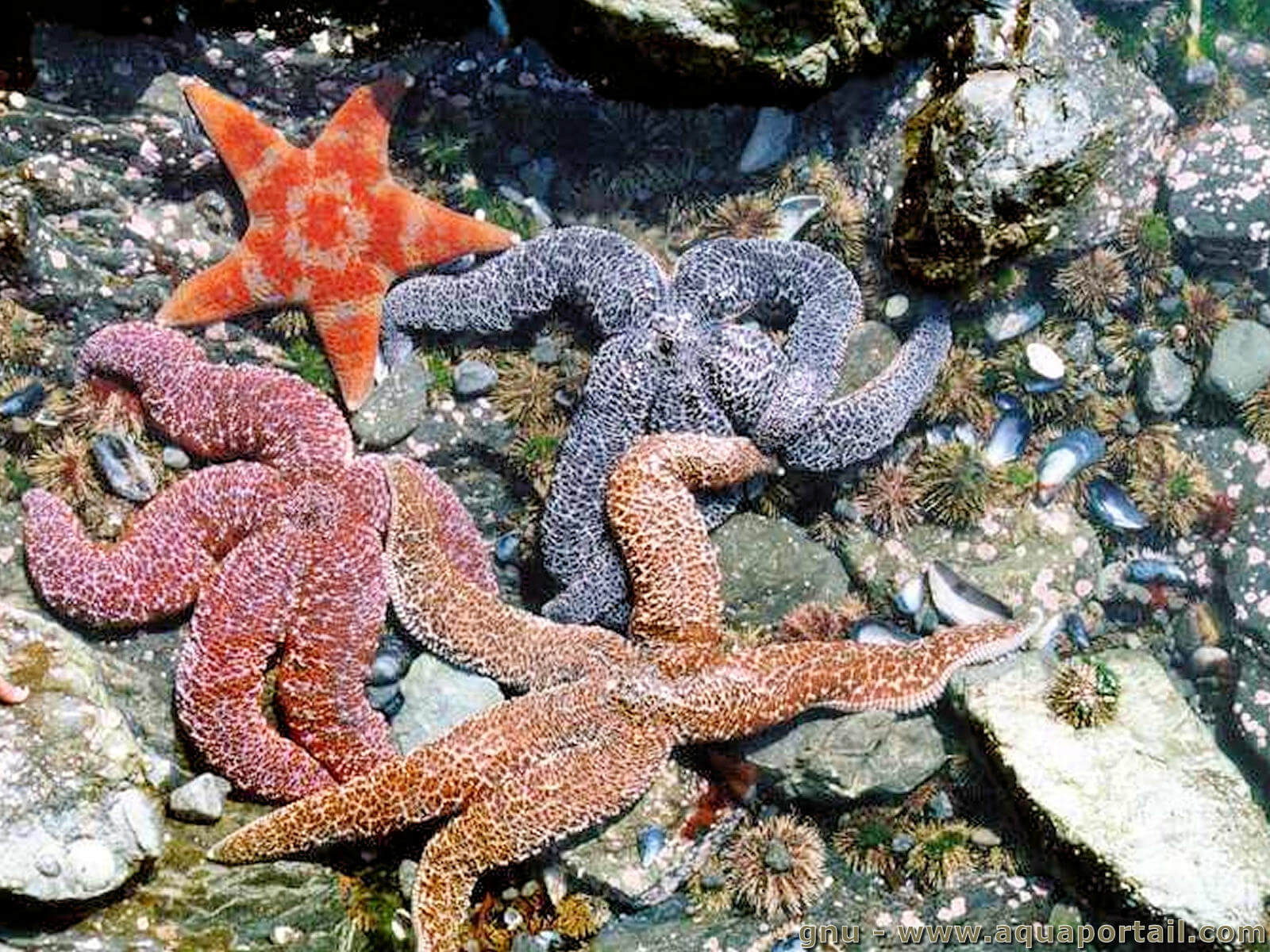
An echinoderm belongs to a lineage of invertebrates, the phylum Echinodermata, found exclusively in the world's oceans : starfish, brittle stars, sea urchins...
