Landscape
noun (n.)
Definition
A landscape is a visual depiction representing a view of an inland natural environment, a portion of territory visible at once from a single vantage point. A landscape is a balance between lines and paths, focal points, and transition zones.
A flowery landscape:

This landscape represents the landforms of a region as a whole at a specific moment. The scenic view shows flowers on a hillside, a lake with a dam below in front of mountains, and a red sky.
Explanations
Landscapes are shaped by geophysical landforms (valleys, hills, mountains), living elements (vegetation, animals), water features (bodies of water, watercourses), and human structures (buildings, bridges, etc.).
In a less terrestrial sense, a landscape refers to a particular field of activity, such as a political landscape. More generally, it is understood as a portion of the surface of the Earth (or of the Moon, Mars...) that can be viewed simultaneously from a single location. It comprises the geographic features that mark or characterize a specific area.
There are many different types of landscapes, notably:
- coastal landscapes;
- fluvial landscapes;
- desert landscapes;
- karst landscapes;
- mountain landscapes;
- aquatic landscapes (aquascapes).
See also pedolandscapes.
A mountain landscape:

The mountain landscape shows the rocky, snow-capped peaks of the summits, as well as the coniferous forest on the lower slopes.
Traditional concept
The concept of traditional landscapes was introduced in Flanders in 1985 and aimed to update the classical chorology of geographical regions. Traditional landscapes were defined as landscapes that evolved over centuries until the onset of rapid, large-scale modern changes in a "tabula rasa" style. These large-scale impacts became possible with the Industrial Revolution, when the necessary technological power became available.
Nevertheless, modern impacts became truly devastating after World War II, with the ensuing economic boom. These changes distort the traditional structures—and thus the functioning—of existing landscapes.
In some places, the traditional landscape has even been completely erased to create an entirely new landscape. Modern landscapes are characterized primarily by uniform, rationalized solutions and lack identity and personality. Remnants of traditional landscape structures still exist, but have become isolated patches within a large-scale uniform space and are increasingly difficult to recognize.
The notion of an ensemble and its use as an anchor proves to be a valuable approach for landscape management.
The first objective of mapping traditional landscapes was to reconstruct the pre-industrial spatial framework for the entire territory of the Flemish Region, based on natural regions and cultural and historical landscapes layered over the centuries.
This was achieved using a hierarchical land classification showing "familiarity" between smaller units to form larger regions. Second, for all units, the characteristics of their present and past status were described. This made it possible to formulate models or ideal descriptions for the various types of traditional landscapes. Since the detail and completeness of available information are not yet equally available across different regions, the method incorporated the ability to refine mapping and modeling in the future.
Phyto-geomorphic landscape classification
Subdividing the landscape into phyto-geomorphic units provides a useful basis for land resource surveys and offers a holistic approach to potential biological productivity.
The natural basis of the units justifies their hierarchical subdivision and provides definitive criteria for each categorical level. The main levels are land zone, land division, land province, land region, land system, land catena, and land facet, among which province, system, and facet are the most important. Most show some analogy with categories recognized in pedology and plant ecology.
The importance of vegetation varies according to landforms in defining land units, both at the regional and categorical levels, being greater in forested areas and for certain other land categories.
Sampling areas in the United Kingdom, Australia, and Jordan illustrate complete hierarchies of land units for different climatic zones. A straightforward procedure based on critical path analysis and using remote sensing imagery, maps, and other data can yield a landscape analysis suited to planning at various scales.
Synonyms, antonyms
Spanish translation: paisaje
5 synonyms (similar meaning) for "landscape":
- horizon
- panorama
- perspective
- point of view
- view
0 antonyms (opposite meaning).
Related words and expressions to LANDSCAPE are directly connected by general or specific meaning.
The word LANDSCAPE is listed on page 1 of words starting with L in the dictionary glossary.
Related to "landscape"
tundra

The tundra is a treeless plain in Arctic regions, featuring a permanently frozen layer beneath the soil surface and vegetation composed primarily of mosses...
valley

In geology, a valley is a depression, an elongated low-lying area between higher landforms such as hills or mountains, often with a river flowing through it.
L-form bacteria
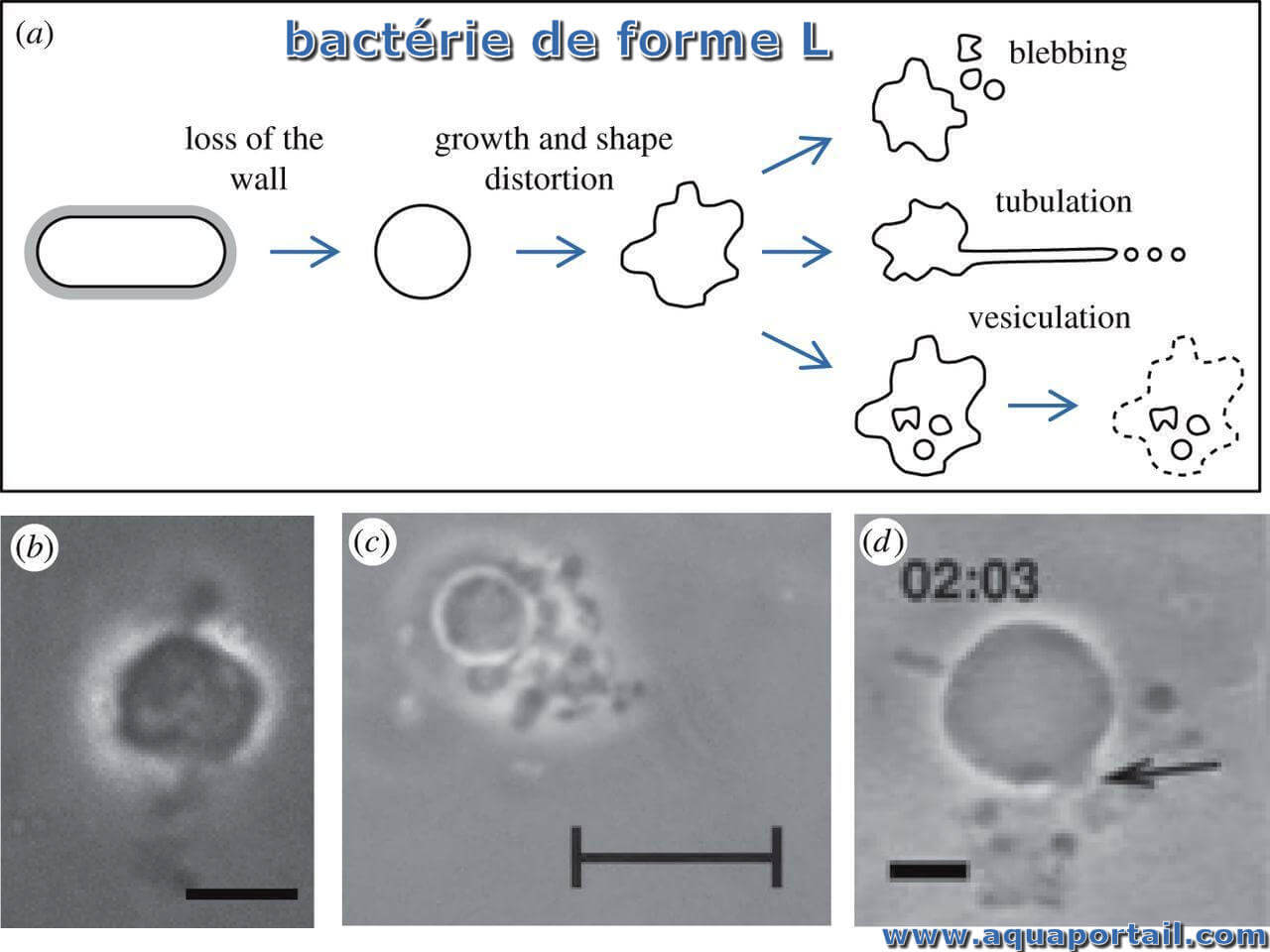
L-form bacteria originate from a strain of bacteria that lack cell walls while retaining the ability to grow.
lake

A lake is a large inland and continental body of freshwater, nearly stagnant or slow-moving.
Simple summary
A landscape refers to the visible features of an expanse of land, including both its physical elements, such as mountains, hills, bodies of water, and vegetation, and human-made structures like buildings or roads. It encompasses both natural environments and those shaped by humans, thereby determining how the place is perceived by observers. Landscapes often reflect geographical, cultural, and historical influences, giving a region a sense of place and its own identity.
