Lake
noun (n.)
Definition
A lake is a large inland and continental body of freshwater, nearly stagnant or slow-moving. Lakes are larger and above all deeper than ponds. They are fed or drained by rivers and other watercourses.
Fogo crater lake in the Azores:

Fogo Crater Lake is a body of water located on the island of São Miguel, in the archipelago and autonomous region of the Portuguese Azores, forming the visible part of the Agua de Pau volcano and impressive in its dimensions, as it covers an area of 1,360 hectares (3,360 acres) and reaches a depth of 30 meters (98 ft).
Explanations
Although by certain dimensions some saltwater lakes are considered inland seas, lakes are inland (continental waters) and are not part of the ocean: they are distinct from lagoons.
Freshwater body
Lakes can be differentiated from a river or stream by the movement and flow of water: whereas watercourses are lotic systems, a lake, just like a pond, is a lentic system.
A lake refers to a lentic freshwater body with a relatively long water residence time and an open-water zone free of emergent vegetation under typical hydrological and climatic conditions. However, most lakes are fed and drained by rivers and streams.
Natural lakes are generally located in mountainous areas, rift zones such as the African Great Lakes Victoria, Tanganyika, and Malawi, and glaciated regions. Other lakes are found in endorheic basins or along the courses of major rivers.
In some parts of the world, there are many lakes due to chaotic drainage patterns inherited from the last ice age.
In geology and limnology, all lakes are temporary bodies of water on the geological timescale, as they will slowly fill with sediment or drain out of the basin containing them.
A mountain lake:

A lake refers to a natural or artificial body of water with more than one hectare (2.47 acres) of water surface during high-water periods. Here, a mountain lake in the alpine zone that hosts numerous trout for fishing. The forest gradually gives way to open views of mountain peaks, snowfields, wildflowers, and streams.
Many lakes are artificial and are built for industrial or agricultural use, hydroelectric power generation, or domestic tap water supply, or for aesthetic or recreational purposes as leisure lakes.
Differences between a lake and a pond
Ponds and lakes are both inland bodies of freshwater that contain living creatures. Lakes are normally much deeper than ponds and have a larger surface area.
All the water in a pond lies within the photic zone. This implies that ponds are shallow enough to allow sunlight to reach the bottom.
Diagram of the differences between a lake (left) and a pond (right):

While a lake is deep enough that light does not reach the deep zone, which becomes aphotic, the opposite is true in a pond because light reaches the bottom due to its shallow water depth.
See the full article detailing what differences exist between lakes and ponds.
The lake: when and how?
What is a pond, what is a lake? The French expression "être dans le lac" (to be lost or in trouble) already hints at the vast expanse of a lake. A lake is characterized by significant depth and rather steep banks; it is a large body of water surrounded by land.
These two characteristics do not favor the establishment of aquatic and amphibious vegetation found in ponds (whose banks have a gentle slope and whose depth is limited). While their origins are diverse (glacial overdeepening basin, ancient crater, fault, etc.), their geological origin is also varied: tectonic, glacial, volcanic...
The evolutionary history of a lake is, without human intervention (many artificial lakes have been created; the largest in France is Lac du Der in the Haute-Marne department), fairly well established. It unfolds over millions of years, unlike that of a pond, and can schematically be said to comprise three stages.
Moreover, a lake, unlike shallow bodies of water, appears vertically very stratified.
Lake Assal in East Africa:

A lake can become very salty through the evaporation of seawater that became trapped during a past geological era. It becomes a hypersaline lake.
Trophic evolution of a lake
A lake generally exhibits three stages:
- Oligotrophic stage: this is the "young" stage of the lake. Its pure (low-mineral) and clear, nutrient-poor waters contain a small number of plant and animal species, primarily represented by plankton.
- Mesotrophic stage: over time (several centuries), lake waters receive inputs of organic and mineral matter. zooplankton and phytoplankton species develop and support larger organisms. Their remains accumulate on the bottom and, decomposed by bacteria, supply mineral matter which, recycled in the aquatic environment, helps enrich the water. This bacterial activity consumes oxygen and thus depletes the deep layers of the lake.
- Eutrophic stage: as organic matter enrichment continues, and due to the growing oxygen deficit, mineralization slows down: the lake gradually closes in. Its edges, if shallow, are invaded by vegetation, and after a more or less long period, it eventually fills in. This natural phenomenon, called eutrophication, is very often accelerated by artificial inputs of nitrates and phosphates that stimulate plant growth (for example, even if these excesses are diminishing: agricultural fertilizer runoff, industrial and urban wastewater discharges, etc.).
This evolutionary cycle also occurs in a pond: it is markedly accelerated (a few decades) compared to that of a lake. This three-stage cycle, involving nitrogen, phosphorus, carbon, and oxygen, is ultimately found in aquariums as well: the small volume makes the nitrogen cycle very rapid. See also allotrophic lake.
Thermal layers of lakes
In temperate climates, the water temperature of a deep lake (more than about 40 m or 131 ft) decreases rapidly with depth, reaching a constant value of 4 °C (39.2 °F), which corresponds to the maximum density of water.
Thermal stratification is established in the water column, where three zones are observed:
- epilimnion: upper zone with variable temperature, subject to the influence of atmospheric conditions
- metalimnion: intermediate zone, where temperature decreases rapidly with depth
- hypolimnion: deep zone with constant temperature
A homothermic lake in Europe:

A lake that undergoes vertical mixing of the water column with warm temperatures is polymictic.
In temperate climates, a lake generally undergoes two turnovers per year caused by the disappearance of thermal stratification, giving way to a homothermic water column. Under these new conditions, the water mass becomes very unstable and wind blowing across the lake surface triggers mixing of the entire water column.
A distinction is made between:
- an autumn turnover: surface waters cool and sink to the bottom when they reach a temperature of 4 °C (39.2 °F). Bottom waters rise to the surface.
- a spring turnover: through an inverse phenomenon, surface waters that had a temperature near 0 degrees Celsius (32 °F) warm up gradually and sink to the bottom of the lake when they reach 4 °C (39.2 °F).
This mixing brings back into play, in the sunlit zones where planktonic life develops, the mineral matter released at the bottom by bacterial activity. It therefore contributes to the maintenance and development of all forms of life occurring in this environment.
An interlake is a space or region located between two neighboring lakes.
Synonyms, antonyms
Spanish translation: lago
8 synonyms (similar meaning) for "lake":
- basin
- body of water
- lagoon
- loch
- pond
- pool
- reservoir
- water body
1 antonym (opposite meaning):
Related words and expressions to LAKE are directly connected by general or specific meaning.
The word LAKE is listed on page 1 of words starting with L in the dictionary glossary.
Related to "lake"
ocean basin

An ocean basin is a benthic environment taking the form of a depression in the ocean floor bounded by the lower part of the continental slope.
L-form bacteria
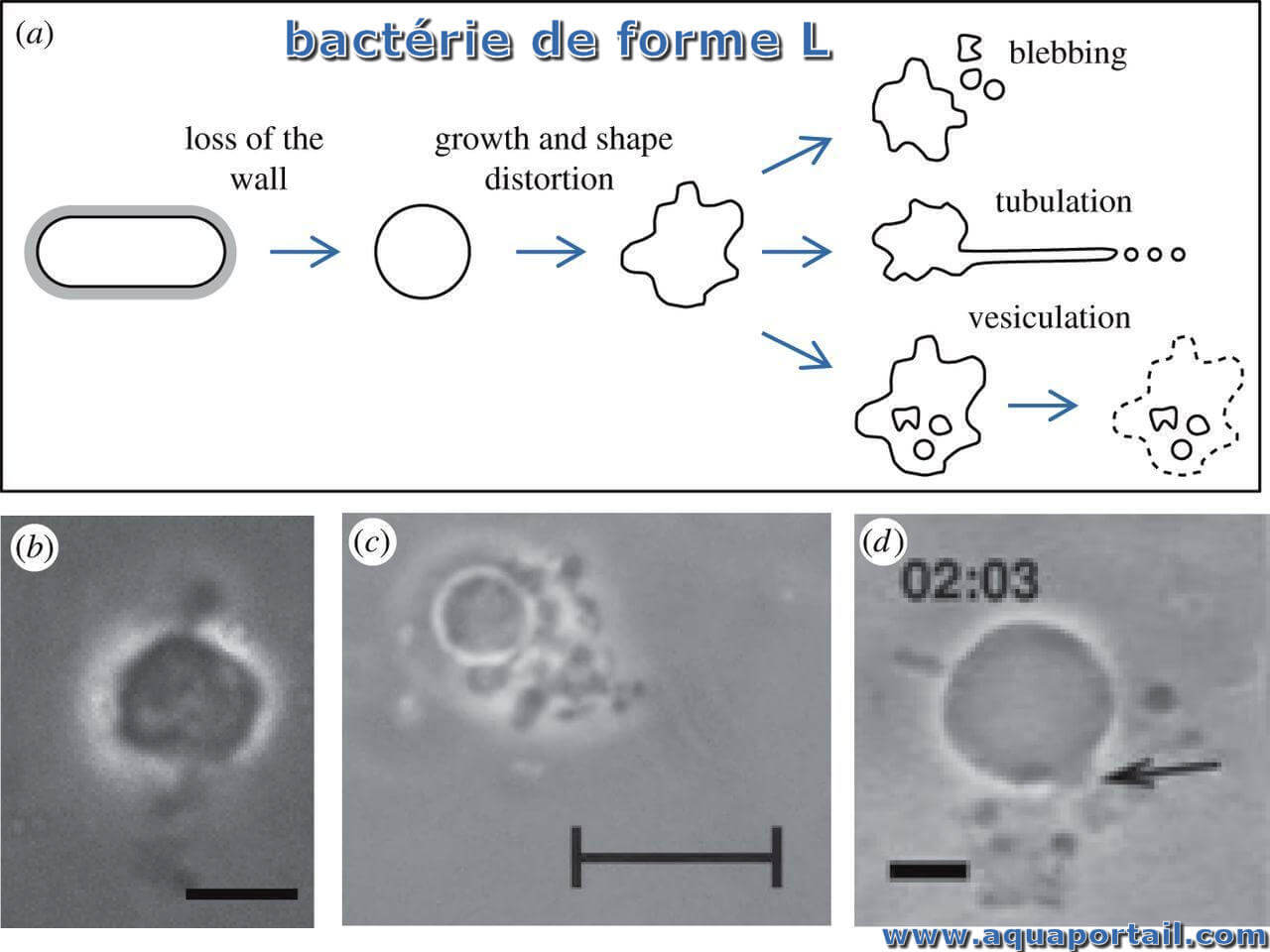
L-form bacteria originate from a strain of bacteria that lack cell walls while retaining the ability to grow.
lamprey

A lamprey is an aquatic vertebrate of the class Petromyzontida within the cyclostomes. Adult lampreys are characterized by a toothed, funnel-like sucking...
lanceolate

A leaf blade is said to be lanceolate when it has the appearance of a narrow lance. More generally, lanceolate indicates a lance-like or spearhead shape...
