Zooplankton
noun (n.)
Definition
Zooplankton is the non-photosynthetic fraction of plankton composed of animal organisms. These small animals live suspended in the water column, and many are larvae of larger animals. They feed primarily on phytoplankton.Atlantic krill is part of zooplankton:
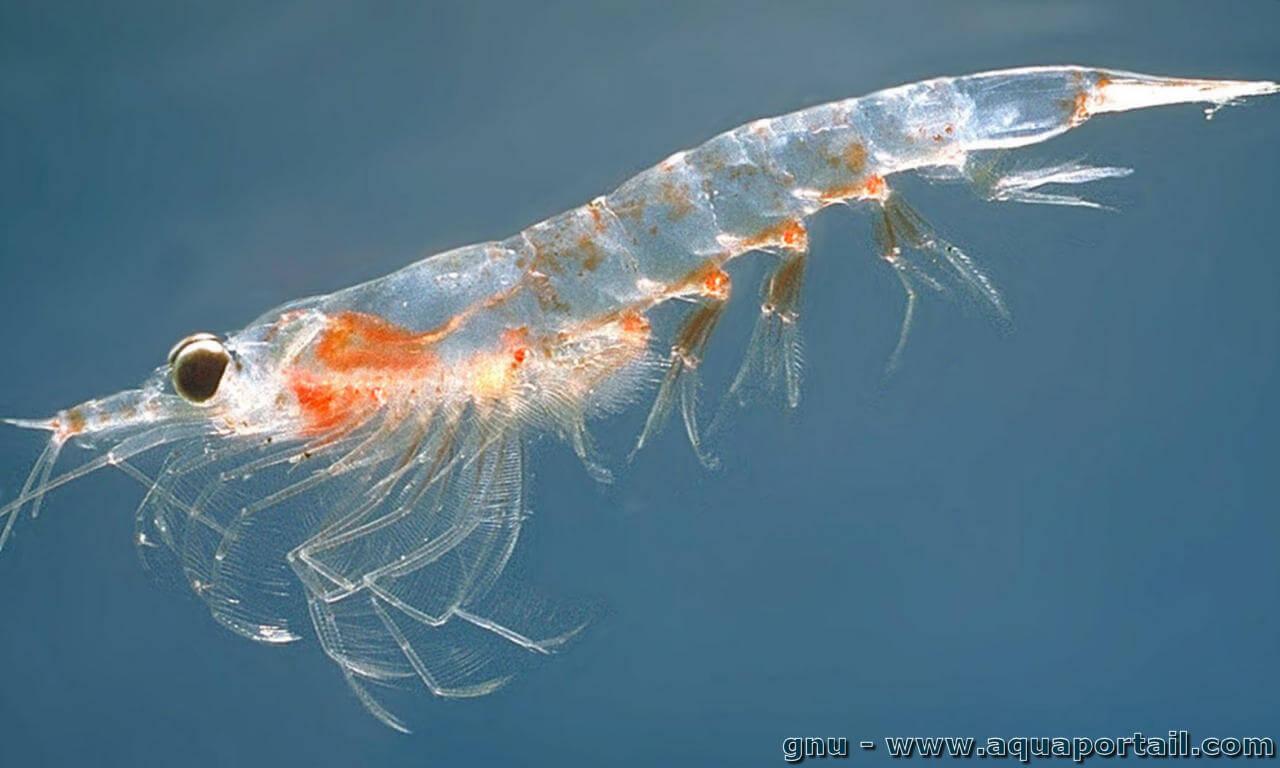
krill is a typical lucifugous zooplankton organism (here the species Meganyctiphanes norvegica, the northern krill) measuring just a few millimeters to centimeters.
Explanations
Zooplankton, or zoopelagos as opposed to zoobenthos, a component of holoplankton, consists of a vast number of animal species with great morphological diversity, ranging in size from a few hundredths of a millimeter to several centimeters and living in open water. These animals, whether larval or adult forms in suspension, are passively carried by the various currents moving through the water; indeed, aside from certain organisms reaching about a meter in length (colonies of salps and siphonophores), planktonic animals are small, ranging from micrometers to millimeters.
It complements phytoplankton to make up total plankton, itself supplemented by neuston; moreover, zooplankton feeds directly or indirectly on phytoplankton.
Traditionally, the planktonic community has been divided into phytoplankton (plant plankton) and zooplankton (animal plankton). Zooplankton is the portion of plankton made up of organisms nourished by ingesting pre-formed organic matter. It comprises protozoans—that is, various phagotrophic protists that engulf food via phagocytosis—as well as the larvae of larger animals such as sponges, worms, echinoderms, mollusks, crustaceans, and other aquatic arthropods, along with small adult crustaceans such as copepods and cladocerans, rotifers, and juvenile fish.
They are heterotrophs occupying the primary consumer levels in the food chain, feeding on primary producers (phytoplankton components), decomposers such as bacteria, or other zooplankton components. Some feed on particulate organic detritus.
In many cases, members of the zooplankton share close systematic affinities with members of the phytoplankton, sometimes even belonging to the same genus. Numerous flagellated unicellular algae mimic or alternate photosynthesis with the ingestion of organic food.
Within zooplankton, a wide diversity of organisms possess the ability to emit light to produce bioluminescence: radiolarians, cnidarians, ctenophores, mollusks, annelids, crustaceans, chaetognaths, echinoderms, and pelagic tunicates. Notably, most taxonomic phyla are represented.
Zooplanktivore
A zooplanktivorous animal is an aquatic organism that feeds primarily on zooplankton, mainly of animal origin though not excluding plant-like phytoplankton.
In an aquarium, this translates into a varied small-sized diet, easily provided by red daphnia, small brine shrimp (Artemia), cyclops, etc.
Possible relationship with climate
Zooplankton occupies a key position in complex food webs because it transfers organic matter produced by unicellular algae via photosynthesis to higher trophic levels. Studies on zooplankton are valuable because, by analyzing their species richness and overall composition, water bodies and aquatic systems can be characterized holistically rather than solely through physicochemical variables.
Despite the ecological importance of this group of organisms to a wide variety of commercially valuable marine species, knowledge of zooplankton remains limited compared to what is known about terrestrial plant and herbivore biodiversity. Its composition and distribution exhibit spatial and temporal variations driven, among other factors, by physical and chemical parameters—such as bottom topography, temperature, salinity, and dissolved oxygen—as well as biological factors such as food availability, reproductive capacity, and competitive exclusion. These variations are recognized as being more complex in coastal zones due to the synergistic ocean-continent influences occurring there.
Other factors whose prediction remains imprecise, such as El Niño or La Niña events, have an impact on zooplankton composition and distribution that is not yet fully established today. While certain taxa tend to decline, others become opportunists that increase in abundance during these events. For example, as a result of La Niña, zooplankton biomass, abundance, and composition are expected to increase relative to El Niño, before returning to levels comparable to years in which neither phenomenon occurs.
Synonyms, antonyms
Spanish translation: zooplancton
5 synonyms (similar meaning) for "zooplankton":
- animal plankton
- holoplankton
- microorganism
- plankton
- zoopelagos
2 antonyms (opposite meaning):
Related words and expressions to ZOOPLANKTON are directly connected by general or specific meaning.
The word ZOOPLANKTON is listed on page 1 of words starting with Z in the dictionary glossary.
Related to "zooplankton"
zeaxanthin
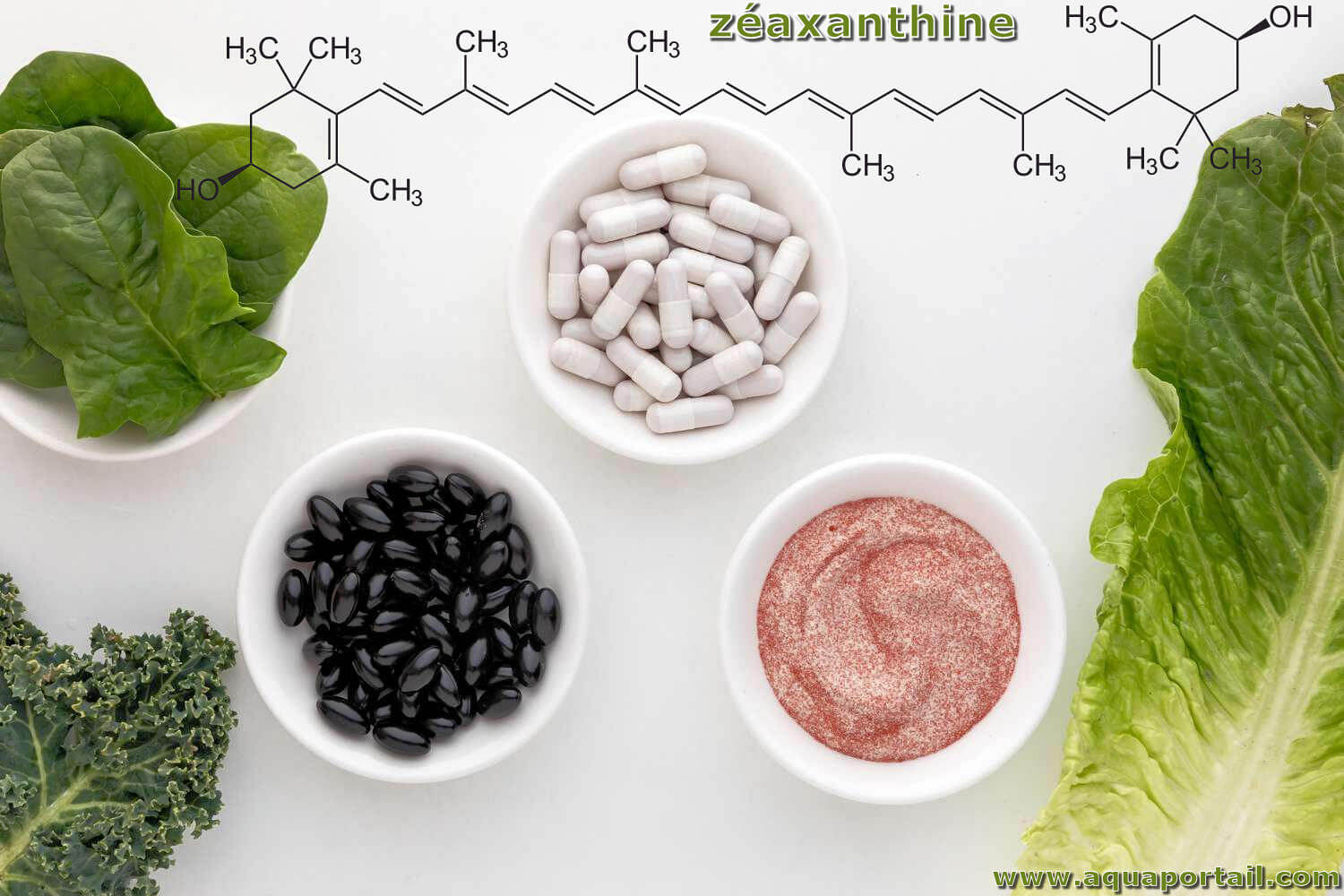
Zeaxanthin is a carotenoid pigment of certain algae such as red algae, cryptophytes, and others.
ZEOvit method
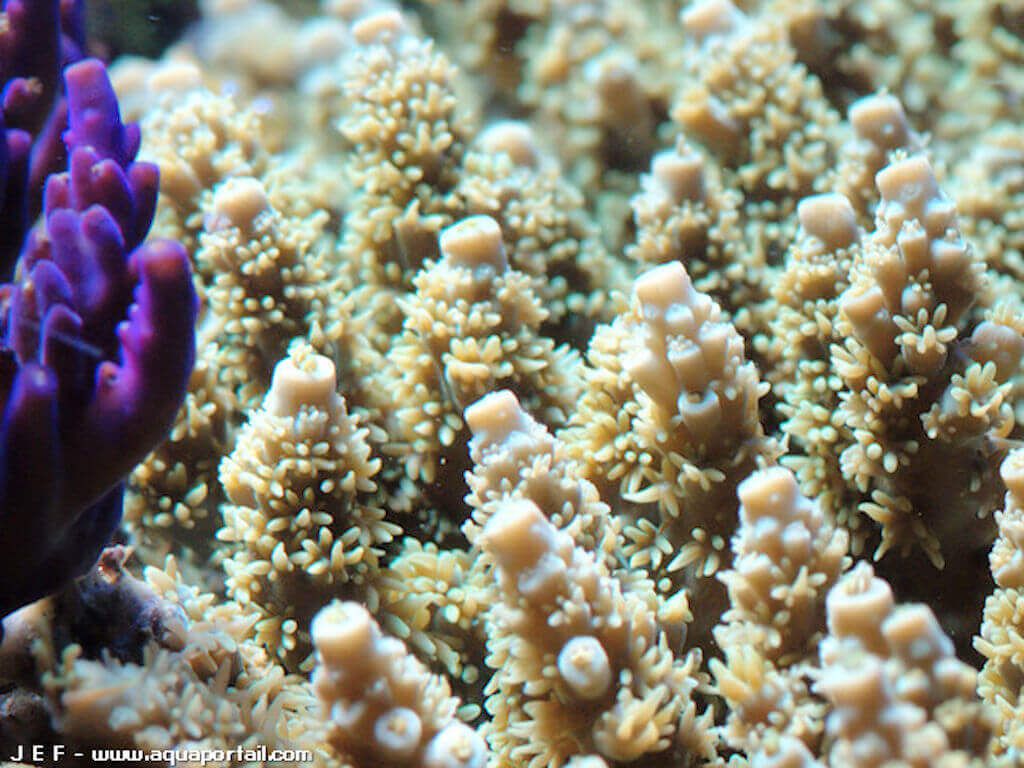
In marine aquariology, the ZEOvit method is a form of saltwater aquarium management aimed at enhancing the coloration of stony corals, though without using...
zoanthid

A zoanthid (or zoantharian) is a small, soft-bodied anthozoan lacking a calcareous skeleton, resembling a sea anemone, either solitary or colonial.
zoid

A zoid is a motile reproductive cell, whether a spore or a gamete, that moves by means of flagella or cilia.
