Krill
noun (n.)
Definition
Krill is the common name for planktivorous pelagic crustaceans of the order Euphausiacea, resembling small shrimp. Their length generally does not exceed 6 cm (2.4 in). Krill is a prime prey for whales, whose stomachs can hold up to 40 metric tons (44 short tons) of it.An Antarctic krill:
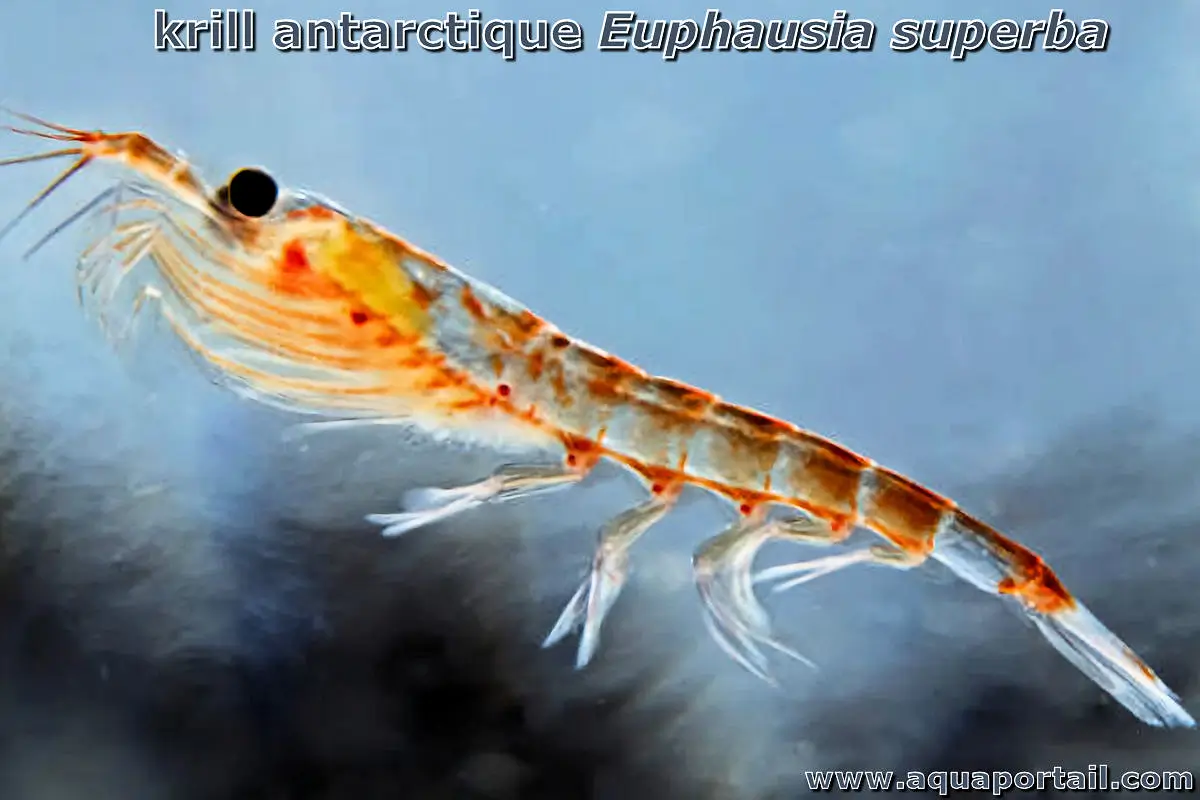
Euphausia superba is the krill of the Antarctic Ocean, the primary prey and food source for large whales. Mostly transparent, although its carapace exhibits a bright red hue due to small pigment spots. Its digestive system is generally visible and often green in color, a consequence of the microscopic plants it has ingested.
Explanations
Krill are distant cousins of crabs and lobsters, and these crustaceans measure only a few centimeters. Particularly abundant in the Southern Ocean, they belong to the zooplankton and holoplankton. They feed on phytoplankton. Krill is found in all the world's oceans and is considered an important trophic link, near the base of the food chain.
While Euphausia pacifica (belonging to the class Malacostraca) is found as feed, especially frozen feed, under the name "pacifica krill" (specimens are larger and bulkier), it is primarily Antarctic krill that is most commonly found as feed. This is the species Euphausia superba.
Most species of Euphausiacea make large daily vertical migrations, providing food to predators near the surface at night and in deeper waters during the day. Krill is generally photophobic.
Like crustaceans, krill has a chitinous exoskeleton composed of three tagmata: the cephalon (head), the pereon (fused to the cephalon to form a cephalothorax), and the pleon; this outer layer is transparent in most species. Species have their body divided into five cephalic segments, eight thoracic segments, and six abdominal segments. They have complex compound eyes.
The Atlantic krill Meganyctiphanes norvegica:
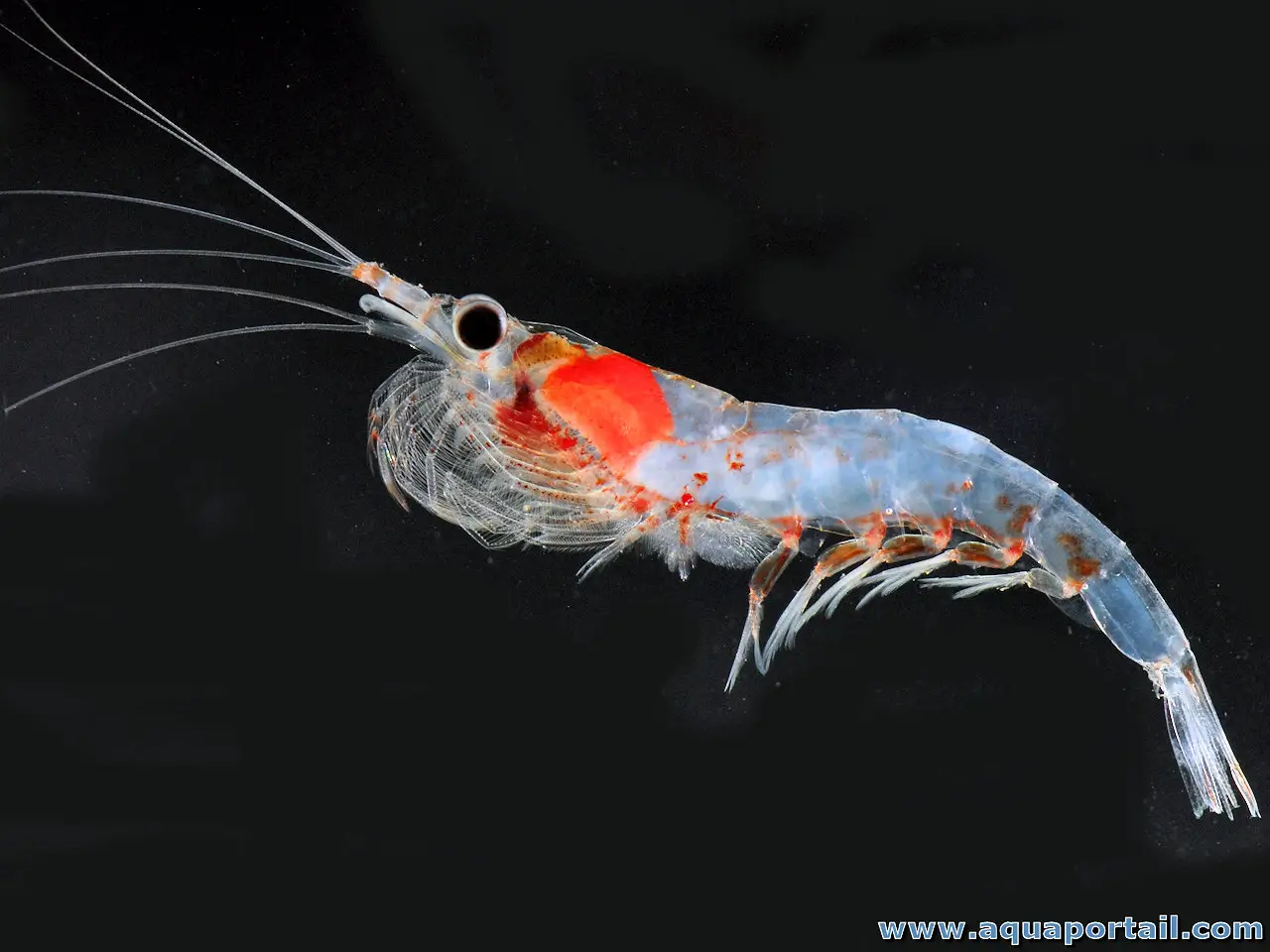
The Atlantic krill Meganyctiphanes norvegica (Euphausiidae) is a swimming organism of oceanic zooplankton, living in the Northeast Atlantic Ocean.
The shape and size of the eyes can be an important factor in defining a species. They have two pairs of antennae: the upper pair of antennae, the antennules, are formed by a three-segmented antennular peduncle and a pair of multi-segmented antennular flagella; the lower antennae consist of a basal segment with a scale and an antennal peduncle formed of two segments ending in a long flagellum. They have several pairs of thoracic legs in the ventral region called pereiopods or thoracopods, because they are attached to the thorax; their number varies among different genera and species. These thoracic legs include feeding legs and grooming legs.
All species have six articulated abdominal segments: a telson with uropods at the rear end and five pairs of ventral swimming legs called pleopods, very similar to those of a lobster or crayfish. Most species have an approximate length of 1–2 cm (0.4–0.8 in) at the adult stage, although some reach sizes of 6–15 cm (2.4–5.9 in). The largest species is the bathypelagic Thysanopoda spinicauda. Krill can be easily distinguished from other similar crustaceans, such as shrimp and other decapods, by their visible external gills on the outer margin of the coxa.
The Antarctic krill Euphausia superba:
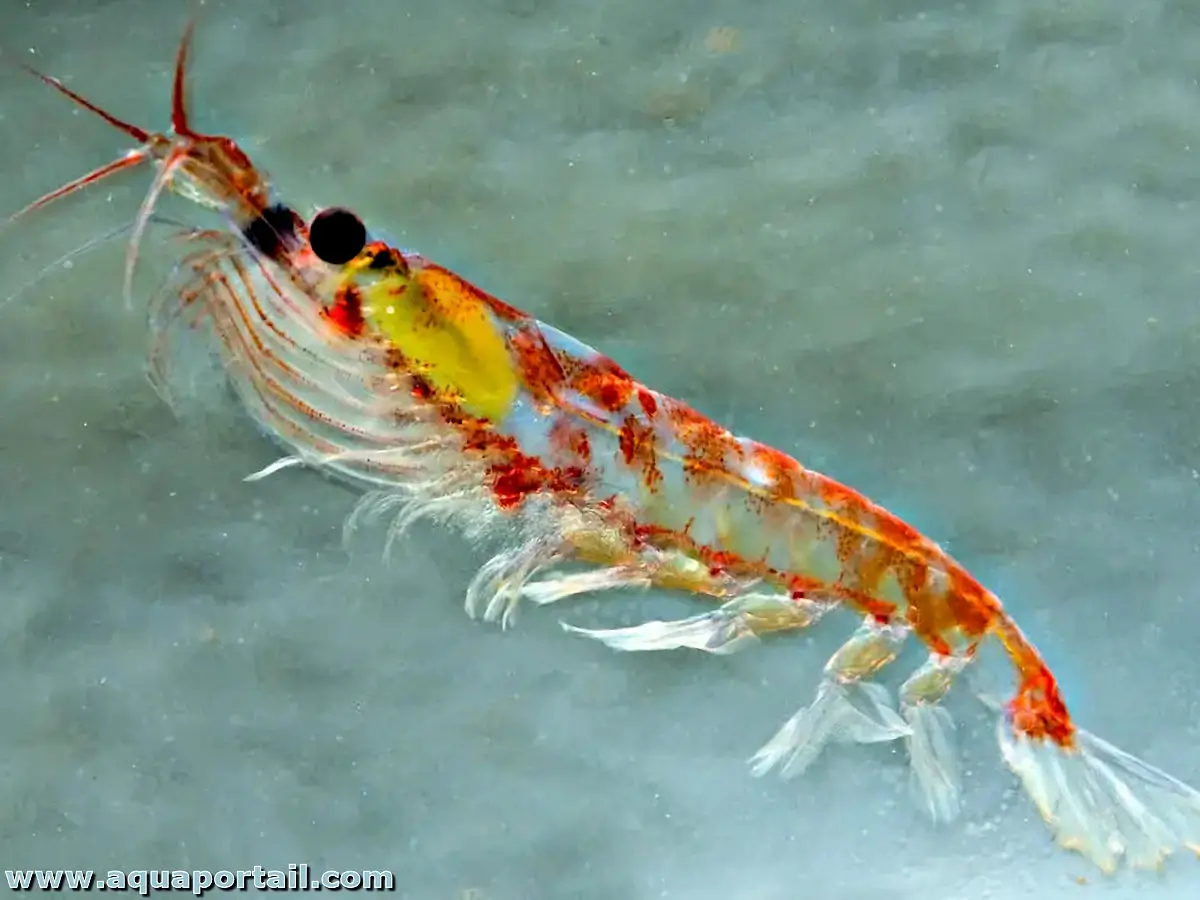
The Antarctic krill Euphausia superba is the primary species among the 5 most commonly seen in Antarctica. Adult Antarctic krill measure about 6 cm (2.4 in) long and weigh over one gram (0.035 oz).
Put simply, krill (Norwegian etymology meaning "small whale fry") is plankton composed of small crustaceans serving as food for baleen whales (mysticetes). Pyrosomes are a seasonal alternative to krill in temperate seas.
gregarious in behavior, krill gather in enormous swarms stretching for kilometers with tens of thousands of individuals concentrated in a single cubic meter of water, making it a suitable species for commercial exploitation. It is fished commercially in the Southern Ocean and in waters around Japan. The total catch is between 150,000 and 200,000 metric tons per year, most of which comes from the Scotia sea.
Most of the krill caught is used in aquaculture, to manufacture aquarium feeds, as bait in sport fishing, or in the pharmaceutical industry to produce krill oil. In Japan, the Philippines, and Russia, it is also used for human consumption.
Synonyms, antonyms
French translation:
krillSpanish translation: kril
3 synonyms (similar meaning) for "krill":
0 antonyms (opposite meaning).
Related words and expressions to KRILL are directly connected by general or specific meaning.
The word KRILL is listed on page 1 of words starting with K in the dictionary glossary.
Related to "krill"
zooplankton
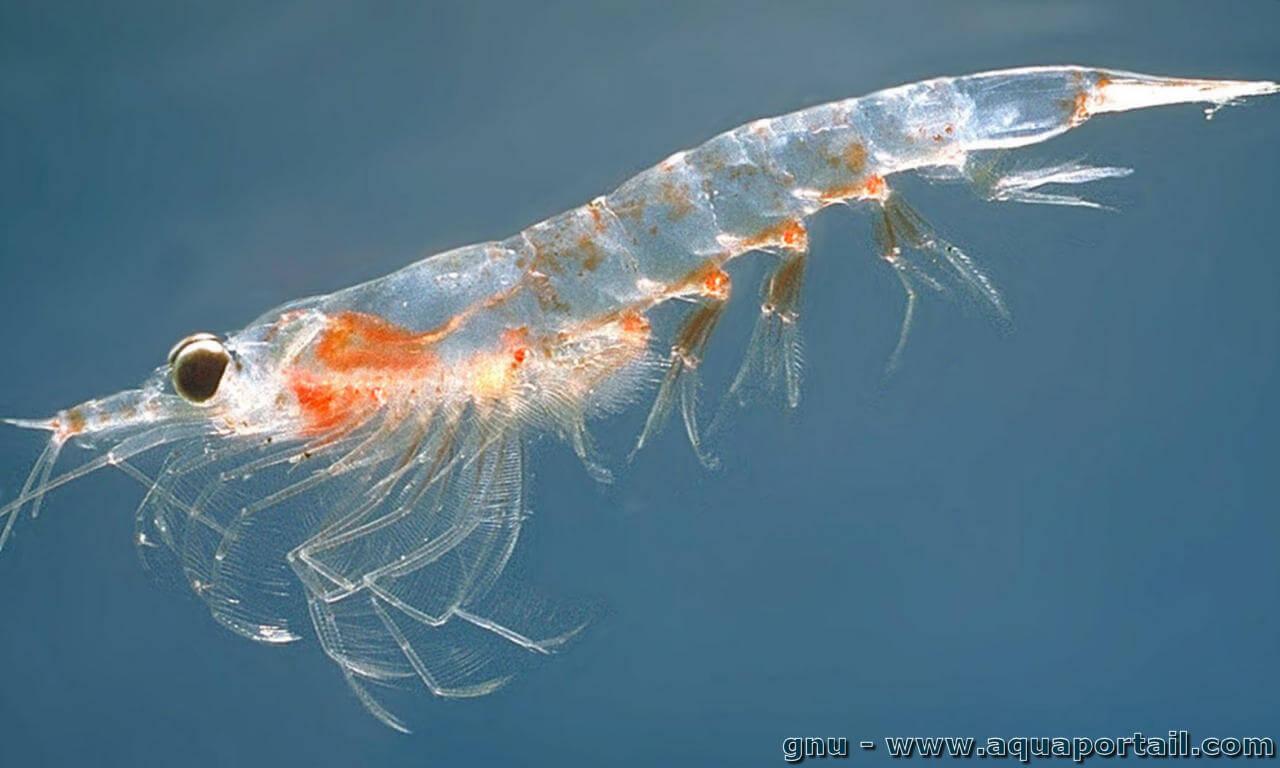
Zooplankton is the non-photosynthetic fraction of plankton composed of animal organisms. These small animals live suspended in the water column, and many...
kidney

A kidney is one of two bean-shaped, fist-sized organs in the abdomen. A kidney is responsible for removing waste products and excess water from the blood...
killifish

A killifish is an oviparous fish of the family Cyprinodontidae (and Rivulidae). Under this common name, killifish encompass more than 800 species of fish...
klepton
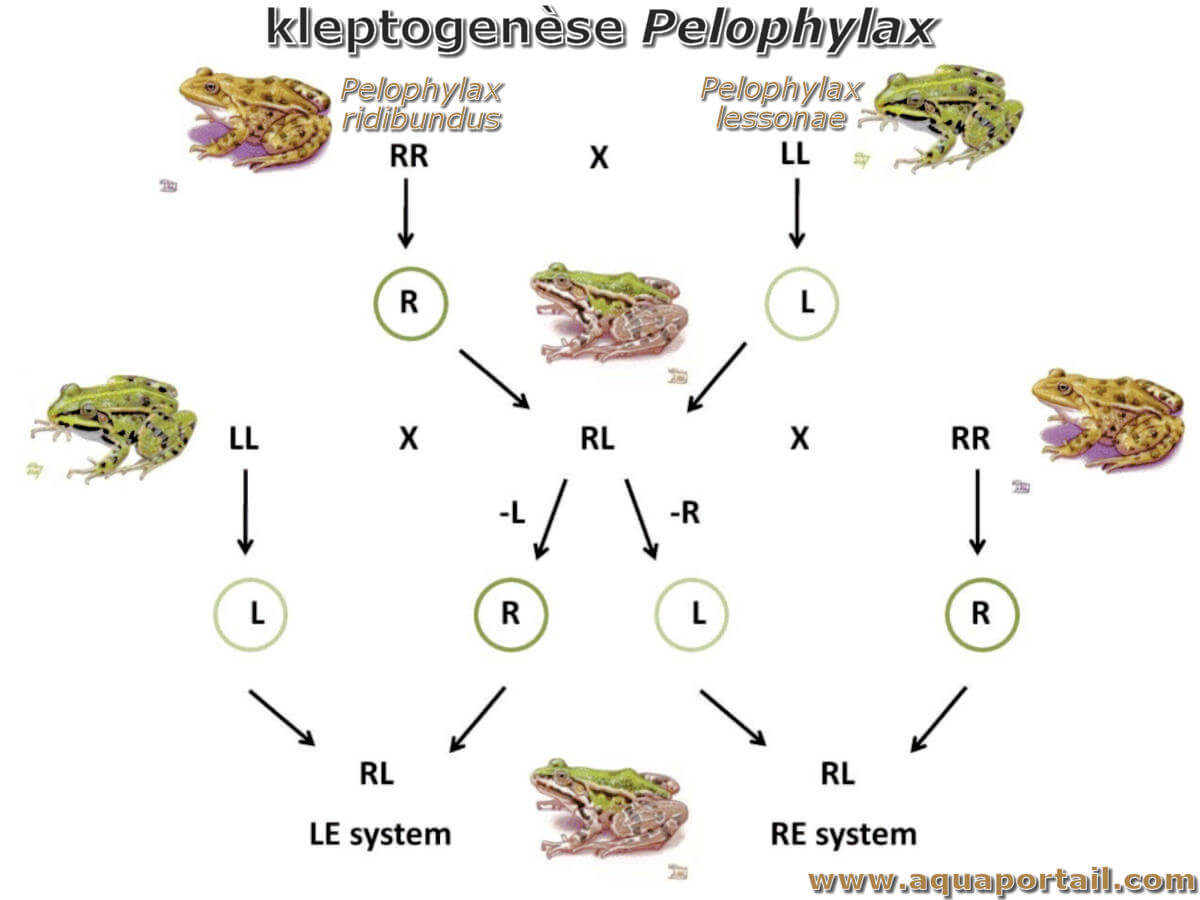
A klepton (kl.) is a unisexual hybrid taxon that requires gametes from another biological taxon to complete its reproductive cycle through hybridogenesis...
Simple summary
Krill consists of small, shrimp-like crustaceans found in oceans worldwide. It is vital to the marine ecosystem by serving as a food source for various larger animals such as whales, seals, fishes, and seabirds. Krill feeds on phytoplankton and holds a major place in the oceanic food chain. It can form immense swarms, sometimes visible from the surface due to their exceptional density.
