Kidney
noun (n.)
Definition
A kidney is one of two bean-shaped, fist-sized organs in the abdomen. A kidney is responsible for removing waste products and excess water from the blood in the form of urine. Healthy kidneys filter about half a cup of blood every minute.
Kidneys help maintain the balance of chemicals (e.g., sodium, calcium, etc.) in the body. Kidneys also produce hormones that help control blood pressure and stimulate the bone marrow to produce red blood cells.
The male urinary system with the kidneys:
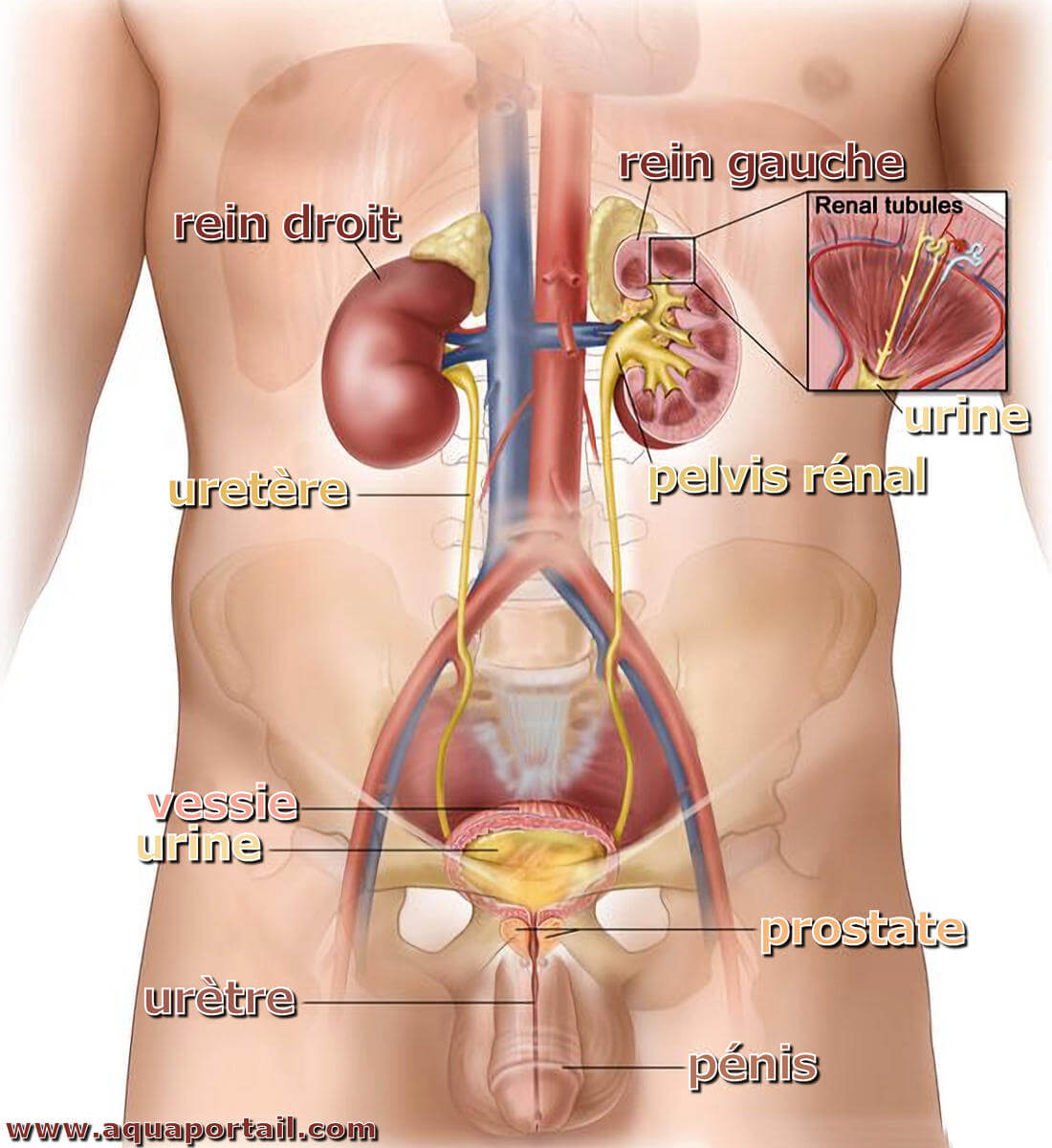
The two kidneys are situated just beneath the rib cage, one on each side of the spine. Urine is produced in the renal tubules and collects in the renal pelvis of each kidney. Urine drains from the kidneys through the ureters to the bladder, where it is stored until exiting the body via the urethra.
Explanations
In humans, a kidney is composed of roughly one million nephrons (a number that varies depending on the animal). Nephrons initially filter the blood through glomeruli. The filtered fluid is returned to the bloodstream with the necessary substances, but cleansed because the tubule eliminates waste.
✅ In vertebrates other than mammals, kidneys are referred to as nephroi (or nephros).
Kidney disease means that the kidneys are damaged and cannot filter blood as they should. Kidney disease is more likely to occur in the presence of diabetes or high blood pressure. Treatments for kidney failure include kidney transplantation or dialysis. Other kidney disorders include acute kidney injury, kidney cysts, kidney stones, kidney infections, and kidney cancers.
The kidney is recognized as one of the most common target organs for drug toxicity and environmental chemicals. It is particularly vulnerable due to its high blood flow relative to its mass and the unique ability of the renal tubular epithelium to concentrate urine and its constituents, including drugs and chemicals.
Role and functions
The kidney plays a key role in the body by functioning as an integrative and regulatory organ that maintains extracellular fluid homeostasis and blood pH within the normal physiological range.
The kidneys remove waste and excess fluid from the body. The kidneys also remove acid produced by body cells and maintain a healthy balance (homeostasis) of water, salts, and minerals—such as sodium, calcium, phosphorus, and potassium—in the blood. Without this balance, nerves, muscles, and other tissues in the body may not function normally.
The kidneys also produce hormones that help:
- control blood pressure
- produce red blood cells
- keep bones strong and healthy
The high excretory capacity of the kidney requires substantial blood flow. A total of 20 to 25% of cardiac output passes through the kidneys, 90% of which flows through the renal cortex. The kidneys continuously excrete substances such as creatinine, urea, and absorbed xenobiotics (drugs and chemicals) and their metabolites into the urine. At the same time, normal renal function is crucial for conserving valuable blood components, such as glucose and amino acids. As an endocrine organ, the kidney is the site of synthesis of mediating factors such as renin, erythropoietin, prostaglandins, cytokines, and kinins.
Anatomy
The kidneys have two independently organized and layered functional zones: the renal parenchyma and the renal pelvis. The ureters are the tubes that carry urine from the renal pelvis of each kidney to the bladder.
Complete anatomy of the kidney:

The anatomy of the male urinary system shows the kidneys, ureters, bladder, and urethra, as well as other details such as the fibrous capsule of the kidney.
The kidneys lie retroperitoneally (behind the peritoneum) in the abdomen, on either side of the vertebral column. They typically extend from T12 to L3, although the right kidney is often positioned slightly lower due to the presence of the liver. Each kidney is roughly three vertebrae in length.
The adrenal glands sit immediately atop the kidneys within a separate compartment of the renal fascia.
Metabolic waste products and excess electrolytes are excreted by the kidneys to form urine. Urine is transported from the kidneys to the bladder via the ureters. It leaves the body through the urethra, which opens into the perineum in females and passes through the penis in males.
Kidney cancer
Kidney cancer can develop in both adults and children. The main types of kidney cancer are renal cell carcinoma, transitional cell carcinoma, and Wilms tumor. Certain hereditary conditions increase the risk of kidney cancer.
Each kidney or ureter is considered a separate primary site unless bilateral involvement is documented as metastatic from one side to the other.
Synonyms, antonyms
Spanish translation: riñón
2 synonyms (similar meaning) for "kidney":
0 antonyms (opposite meaning).
Related words and expressions to KIDNEY are directly connected by general or specific meaning.
The word KIDNEY is listed on page 1 of words starting with K in the dictionary glossary.
Related to "kidney"
killifish

A killifish is an oviparous fish of the family Cyprinodontidae (and Rivulidae). Under this common name, killifish encompass more than 800 species of fish...
klepton

A klepton (kl.) is a unisexual hybrid taxon that requires gametes from another biological taxon to complete its reproductive cycle through hybridogenesis...
knee

The knee is a joint located in the middle of the human leg that forms the articulation between the femur, tibia, and patella.
krill

Krill is the common name for planktivorous pelagic crustaceans of the order Euphausiacea, resembling small shrimp.
Simple summary
The kidney is a vital organ of the mammalian body and a component of the urinary system, responsible for filtering blood, eliminating waste and excess substances, and regulating fluid balance. Each kidney has a bean-like shape and sits on either side of the spine just beneath the rib cage. The kidneys also maintain electrolyte balance, regulate blood pressure via the renin-angiotensin system, and produce hormones such as erythropoietin, which stimulates red blood cell formation.
