Extracellular
adjective (adj.)
Definition
In cell biology, extracellular indicates the exterior, or outside, of a cell's plasma membrane. The extracellular environment is what surrounds the outside of the cell, including the cell wall (primary or secondary).
Components of an extracellular matrix:

The animal extracellular matrix comprises the interstitial matrix and the basement membrane. It consists notably of collagen, elastin, fibronectin, laminins, and proteoglycans, linked to cells via integrins.
Explanations
When referring to a matrix, it is called the extracellular matrix, because it lies outside the intracellular environment.
In cell biology, molecular biology, and related fields, the word extracellular means space outside the cell. This space is generally considered to be outside a plasma membrane and occupied by a fluid, as with the extracellular matrix. The term is used in contrast to intracellular, which designates the interior of the cell.
The composition of the extracellular compartment (composition of the extracellular environment) includes metabolites, ions, various proteins, and non-protein substances (e.g., DNA, RNA, lipids, microbial products, etc.) that could affect cell function. For example, hormones, growth factors, cytokines, and chemokines act by moving through the extracellular space to biochemical receptors on cells. Other proteins active outside the cell include various enzymes, including digestive enzymes (trypsin, pepsin), extracellular proteinases (matrix metalloproteinases, cathepsins), and antioxidant enzymes.
Very often, proteins present in the extracellular space are stored outside cells by binding to various components of the extracellular matrix (collagens, proteoglycans, etc.). Furthermore, extracellular matrix produced from proteolysis is also present in the extracellular space, particularly in tissues undergoing remodeling.
⭐ The ultrastructural morphology of the extracellular matrix is introduced and the molecular structure of each of the major protein families that together constitute the extracellular matrix is reviewed, including collagens, laminins, tenascins, and proteoglycans. An important shared feature is the domain structure of these generally very large proteins. Several families share domains in common, promoting extensive interactions.
Integrins play an important role in these interactions as well as in communication between cells and the matrix. The extracellular matrix appears to be a highly dynamic structure playing a major role in normal development as well as in a variety of disease processes. Matrix metalloproteinases are key players in this complex interaction between cells and the extracellular matrix.
See also: intracellular, endocellular, unicellular, pericellular, multicellular, and intercellular.
Synonyms, antonyms
Spanish translation: extracelular
4 synonyms (similar meaning) for "extracellular":
- extracellular environment
- extracellular space
- intercellular
- pericellular
2 antonyms (opposite meaning):
Related words and expressions to EXTRACELLULAR are directly connected by general or specific meaning.
The word EXTRACELLULAR is listed on page 1 of words starting with E in the dictionary glossary.
Related to "extracellular"
intracellular
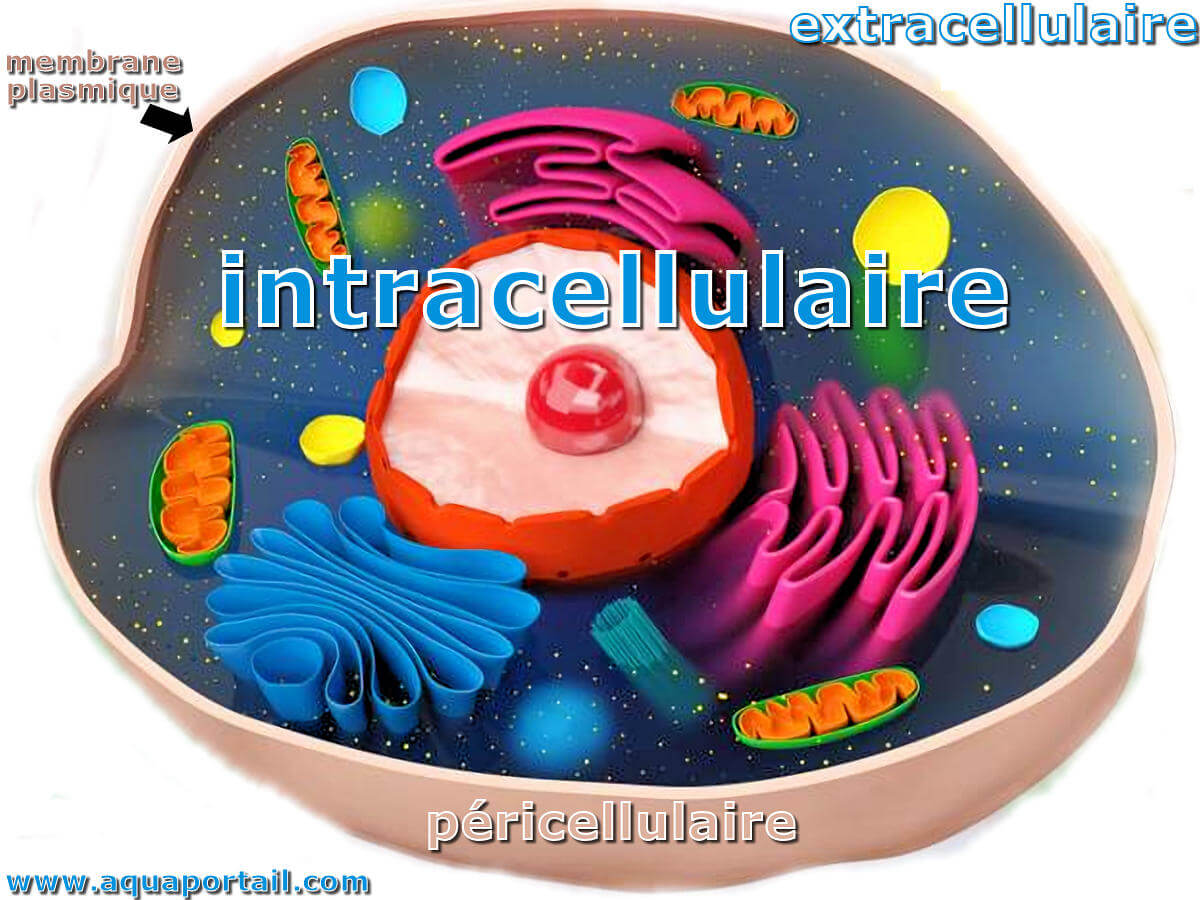
Intracellular describes anything located or occurring inside a cell, as opposed to extracellular (outside).
endocellular
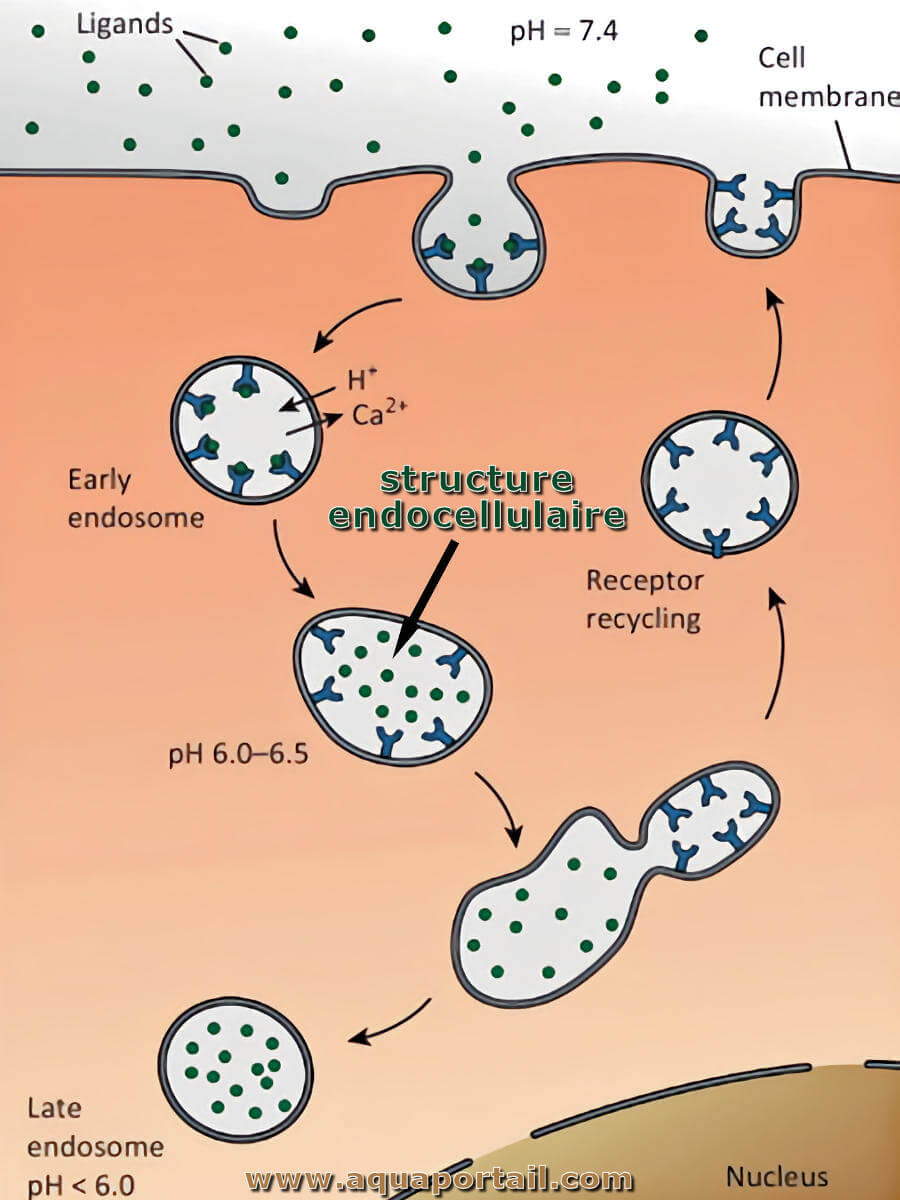
Any structure enclosed within an intracellular membrane system inside a cell is termed endocellular.
extrafloral nectary

An extrafloral nectary (or pseudonectary) is a nectar-secreting plant gland that develops outside flowers and is not directly involved in pollination.
E=mc2
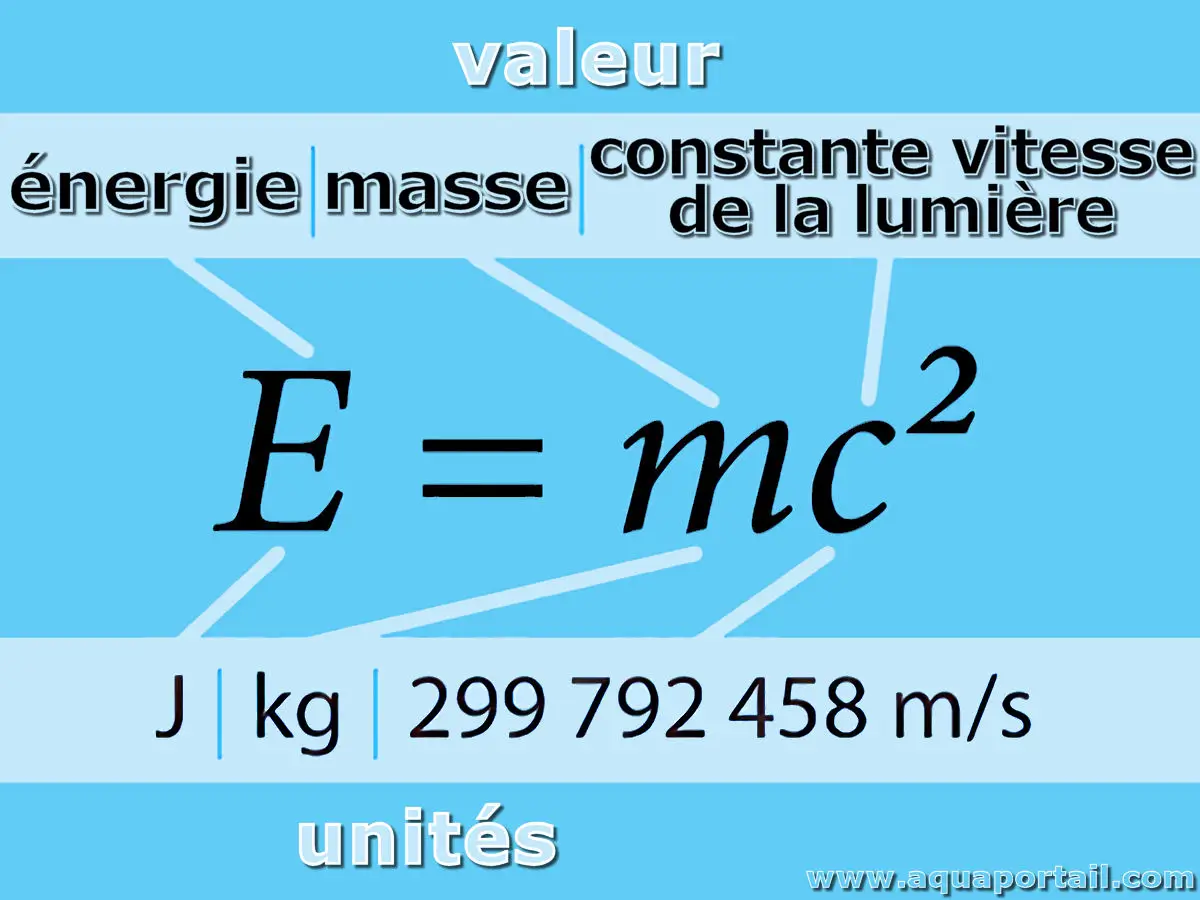
The formula E=mc2 (E = m. c²) is a mass-energy equivalence equation according to the theory of relativity developed by Albert Einstein. It expresses that...
Simple summary
Extracellular designates everything located or occurring outside the cells of an organism. It is commonly used to describe substances, structures, or processes taking place in intercellular spaces, known as the extracellular space.
