Scale
noun (n.)
Definition
A scale is a small, thin, horny or bony plate protecting the skin of fish and reptiles. Sets of scales generally overlap, partially covering one another, layered and imbricated like roof tiles. These small rigid plates growing out of an animal's skin provide protection.
The complete shapes of scales :

Different types of fish scales: 1, 2, cycloid scales; 3, 4, 5, 6, ctenoid scales; 7, ganoid scales; 8, 9, dermal papillae (of Monacanthus); 10, 11, cycloid scales of the lateral line. The chart shows 11 examples of fish scales.
Explanations
In bony fish, the four main types of scales are: ctenoid, cycloid, ganoid, and placoid. In cartilaginous fish, scales are dermal, placoid denticle-like structures.
✅ A scale is each of the small plates arranged on the surface of an organism, a cell, or a cellular organelle. These scales may be organic, mineral, calcified, or siliceous.
Scales, in fish, amphibians, reptiles, and plants, are an exoskeletal formation of dermal origin, and more specifically:
- In Chondrichthyans, they are continuously renewed and contain no bony tissue;
- In Osteichthyans, they are permanent and composed of dentin, enamel, and bone;
- In Amphibians, they exist only in a few caecilians (Apoda) and are bony;
- In "Reptiles", bony scales fuse into gastralia in Rhynchocephalians and Crocodilians and form osteoderms in most others (except Ophidians and Chelonians);
- In Chelonians, a horny formation of epidermal origin covering the bony plates of the carapace.
- In "Reptiles", each of the small differentiated horny thickenings across the entire integument;
- In Lepidopterans, a microscopic platelet covering the wings resulting from the transformation of macrotrichia. They contain colored pigments and urates;
- Each of the modified leaves of a scaly bulb (they do not completely surround it);
- In certain Conifers, notably Cupressaceae, a small rigid leaf appressed against the twig;
- In certain angiosperms, an atrophied leaf. For example, a broomrape;
- In higher Fungi, superficial ornamentation of the sporophore.
See also punctiform and coccolith.
Specific characteristics
Scales adjacent to the lateral line, unlike remote scales, are distinguished by an abverse margin and an adverse margin. The abverse margin, in ichthyology, corresponds to the edge farthest from the tubed scale for a scale adjacent to the lateral line. The adverse margin defines the edge closest to the tubed scale for a scale adjacent to the lateral line.
Remote scales define fish scales distributed across the body surface without touching one another. Such scales are found in eels, wolffish, etc.
The process of removing scales is called "scaling". Shucking (or scaling) is an action consisting of removing a shell, whether of an oyster, clam, or any other shellfish, prior to sale or consumption, and of course, scaling describes the operation of removing a fish's scales.
Scalation refers to the entire arrangement of scales on a fish or reptile.
See also scaleless fish. Some animals have a lepidophagous diet consisting of eating fish scales.
Reptile scales
Reptiles have dry, scaly skin. Their scales protect them from daily wear and injury. Reptile scales are often brightly colored and vary in shape and size across their body. These scales are primarily made of a tough substance called keratin. It is very durable and waterproof, preventing the reptile from drying out. Keratin is also found in hair, nails, and feathers.
The green scales of a crocodile:

Crocodiles are reptiles with scales, which are very strong and protect their skin.
A reptile's coloration is generally due to pigmentation in the deeper layers of its skin. The scales are transparent, allowing the color to show through.
Most snakes and lizards have overlapping scales arranged in rows. This overlapping arrangement provides protection and allows flexibility of movement.
The belly scales of a snake form a series of broad overlapping plates. These help the snake grip the ground or a branch and move forward.
Development
Scale development (formation) occurs in fish during late development, which, in the specific case of zebrafish, takes place 30 days after fertilization, as this is when the differentiation and organization of the various layers that form the scales occur.
To achieve this, mesenchymal condensation must first take place, followed by the induction of morphogenesis, and subsequently the process of differentiation or late metamorphosis.
Lepidotaxy
In ichthyology, lepidotaxy is the scientific study of scales. Lepidotaxy determines the arrangement and pattern of fish scales in anatomy and morphology. It helps distinguish and classify species, or more frequently subspecies and varieties of a species, by examining the scales in a fish's anatomy.
Synonyms, antonyms
Spanish translation: escama
5 synonyms (similar meaning) for "scale":
- denticle
- lamella
- plate
- scute
- squama
0 antonyms (opposite meaning).
Related words and expressions to SCALE are directly connected by general or specific meaning.
The word SCALE is listed on page 1 of words starting with S in the dictionary glossary.
Related to "scale"
plate tectonics
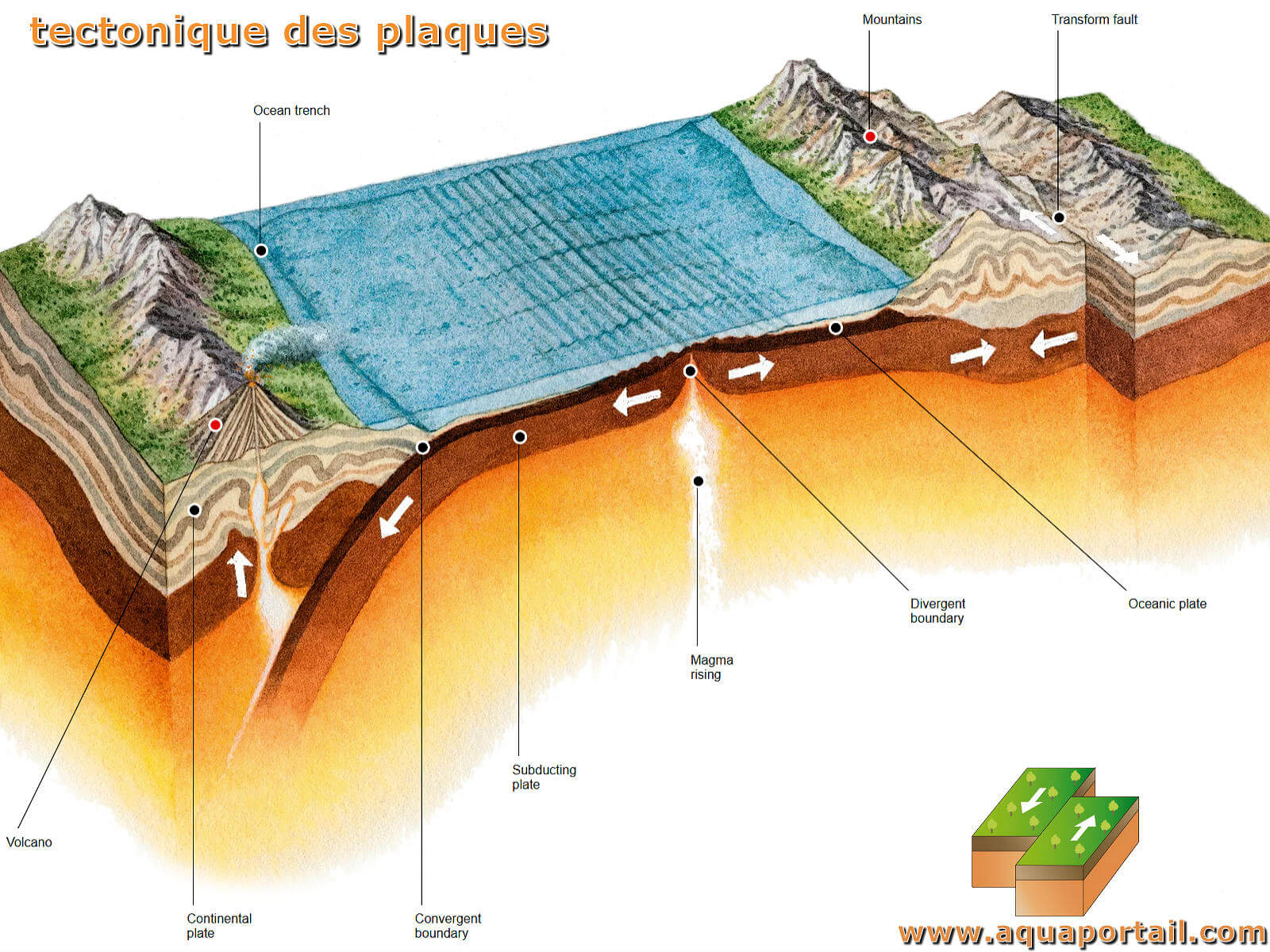
Plate tectonics is a theory that explains continental drift, earthquakes, deep ocean trenches, and other phenomena through the movement of the vast rigid...
saccharide

A saccharide is a carbohydrate, a biomolecule composed of carbon, hydrogen, and oxygen atoms, usually with a hydrogen-to-oxygen atomic ratio of 2 :1.
sagittocyst

A sagittocyst is a capsule containing a spindle-shaped needle produced by epidermal cells of certain flatworms (acoels).
saltwater treatment
The saltwater bath method, or aquarium salt treatment, helps halt potential external infections via osmotic shock.
