Angiosperm
noun (n.)
Definition
An angiosperm is a flowering plant in the subdivision of phanerogam spermatophytes whose seeds are enclosed within a fruit. Compared to angiosperms, gymnosperms have naked seeds. More than 80% of extant angiosperm orders appeared during the first wave of diversification.
The presence of flowers is characteristic of an angiosperm:

Angiosperms, such as this yellow-flowered cinquefoil, obligatorily produce flowers that serve as their reproductive organ. These flowering plants are seed plants whose flowers bear whorls or spirals with sepals, petals, stamens, and carpels, the carpels enclosing the ovules to receive pollen on their stigmatic surface (stigmas) rather than receiving pollen directly into the ovule as in gymnosperms.
Explanations
Angiosperms are the cornerstone of most terrestrial ecosystems and human livelihoods. A thorough understanding of angiosperm evolution is needed to explain their rise to ecological dominance.
⭐ A spermatophyte is a seed-bearing plant characterized, among other things, by the presence of flowers, carpels, and double fertilization.
Until now, the angiosperm tree of life has been determined mainly through plastid genome analyses. Numerous studies have built upon this foundational work, including classification and early insights into angiosperm diversification since their Mesozoic origins.
Flowering plants (angiosperms) account for roughly 90% of all terrestrial plant species, yet despite their remarkable diversity and ecological importance at the base of almost every major terrestrial ecosystem, their evolutionary history remains incompletely known. Since their Mesozoic origins, angiosperms have exerted a pervasive influence on Earth's biosphere, shaping global and local climate change, supporting biome structure and assembly, and influencing the diversification of other organisms such as insects, fungi, and birds. The evolution of terrestrial biodiversity is thus inextricably linked to the macroevolution of angiosperms, which can only be demonstrated using a robust and comprehensive tree of life. Reconstructing such a tree is challenging, however, due to the vast diversity of angiosperms and the complex phylogenetic signal in their genomes.
Characteristics
Flowering plants known as angiosperms Magnoliophyta (magnoliophytes), or Angiospermae, form the most diverse group of land plants.
Angiosperms are seed-producing plants (like gymnosperms) and can be distinguished from gymnosperms by a suite of characteristic synapomorphies. These features include flowers, endosperm within the seeds, and the production of fruits that contain the seeds.
Etymologically, an angiosperm is a plant that produces seeds inside an enclosure or sheath, and it is a fruit-bearing plant, although more commonly called a flowering plant.
Angiosperms are often equipped with floral or foliar organs producing nectar to attract pollinators. These glandular organs are called nectaries in flowers and extrafloral nectaries (pseudonectaries) on leaves. An angiospermous seed pertains to angiosperms, featuring the outer covering.
Members of the angiosperm group are the source of most food consumed by humans, as well as numerous raw materials and natural products, including medicinal plants. The bulk of the world's food comes from fifteen angiosperm species.
The distinctive structure of their flowers and the emergence of the fruit as a new organ are not the only differences they have from the rest of the spermatophytes; other distinctive morphological characters include: reduction of the female gametophyte to just a few cells, double fertilization, formation of a characteristic triploid nutritive tissue called endosperm during ovule fertilization, and distinctive xylem and phloem that are more recent than in the rest of the tracheophytes and more efficient in many respects (although xylem appears to have already evolved within the clade, with the most primitive angiosperms resembling gymnosperms in their xylem vessels).
Magnoliophyta
Magnoliophyta is the division (phylum) of flowering plants, commonly called angiosperms or magnoliophytes. This group is the most diverse, ecologically dominant, and economically important of all living plant phyla. Although woody forms (trees and shrubs) are common in this group, herbaceous members are ubiquitous.
Life cycle
The life cycle of an angiosperm is complex, comprising several stages (sporophyte, microgametophyte, megagametophyte).
The life cycle of an angiosperm:

In the life cycle of an angiosperm, there is a megagametophyte and a microgametophyte stage, in addition to a sporophyte.
Floral group
Angiosperms are a group of spermatophytes long recognized as monophyletic due to their distinctive morphological characters, and whose monophyly has subsequently been supported by molecular DNA analyses.
Because it contains so many species, this group is characterized by enormous diversity and has occupied virtually every possible ecological niche (see ecological niche). There are shrubs and herbaceous plants, terrestrial and aquatic plants, found in deserts and marshes, at sea level and on mountain peaks. Its species diversity is much higher in tropical and humid zones (about 60% of species are tropical and 75% have optimal growth in tropical climates), where they completely dominate the landscape, while reaching an impoverished representation at high latitudes in the coldest floras such as the tundra (which remains dominated by conifers).
See also the question fruit or vegetable.
Difference between angiosperm and gymnosperm
Angiosperms (the term is normally used in the feminine plural in French) contrast, in a sense, with gymnosperms. Gymnosperms have simpler reproductive structures than angiosperms.
Differences between gymnosperm and angiosperm ovules:

The ovules of angiosperms are more complex and more complete than those of gymnosperms.
Angiospory
Angiospory is the specific character of spermatophytes and prespermatophytes in which the megaspores, and hence the female gametophytes, remain enclosed within the megasporangium (nucellus).
Synonyms, antonyms
Spanish translation: angiosperma
4 synonyms (similar meaning) for "angiosperm":
- flowering plants
- magnoliophyte
- phanerogam
- spermatophyte
1 antonym (opposite meaning):
Related words and expressions to ANGIOSPERM are directly connected by general or specific meaning.
The word ANGIOSPERM is listed on page 1 of words starting with A in the dictionary glossary.
Related to "angiosperm"
sporangiospore
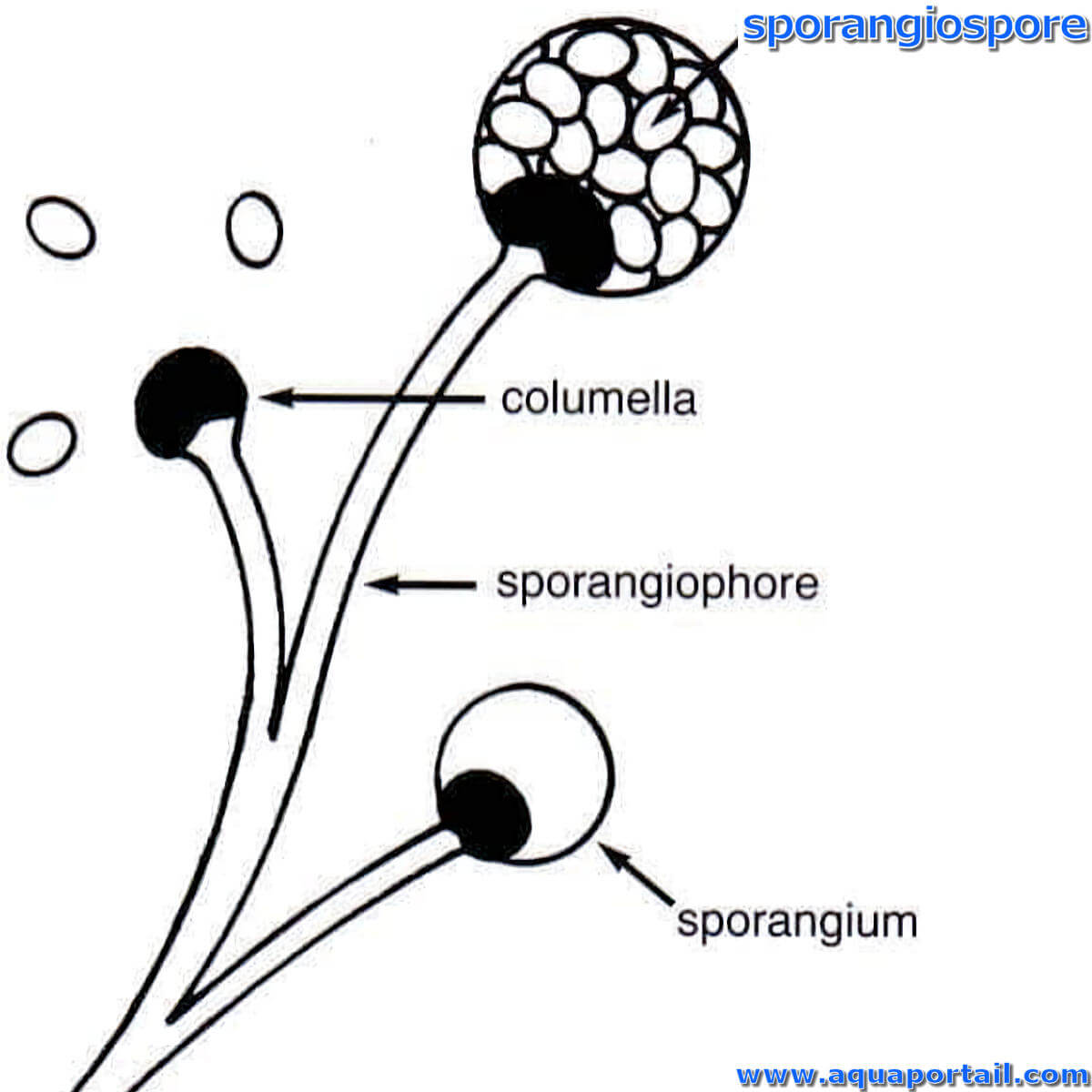
A sporangiospore is a spore produced inside a sporangium by many fungi, particularly zygomycetes and chytridiomycetes.
abiotic

In biology and ecology, abiotic refers to what is not biotic, that is, not part of living beings.
aboral

Aboral refers to what is situated away from or opposite the mouth in zoology, and especially in marine biology.
absence

Absence refers to non-presence at an expected location, or the complete non-existence of something.
