Annelid
noun (n.)
Definition
An annelid belongs to a lineage of metamerically segmented invertebrates alongside earthworms, ragworms (nereids), tubeworms, and leeches. A ringed worm has a metameric body (divided into segments). These animals are primarily aquatic (marine or freshwater), though some are terrestrial, burrowing or tubicolous, sedentary or free-living, commensal, and parasitic.
Some annelids:

An annelid is a member of the phylum Annelida, which groups together segmented worms. Annelids are defined as triploblastic, bilaterally symmetrical, metamerically segmented vermiform animals, coelomate worms with a thin flexible cuticle around the body.
Explanations
Annelids form a vast group of worms (phylum Annelida), the majority of which are marine worms, though a notable proportion are terrestrial or freshwater; a few rare species are parasitic. Earthworms and leeches are well known and belong to this phylum whose members range from a few millimeters to over a meter (3.3 ft) in length!
Annelids are identifiable externally by transverse grooves and internally by septa into a number of divisions. Each division is called a segment, metamere, or somite.
The epidermis consists of a single layer of columnar epithelial cells covered by a thin cuticle not made of chitin. The body wall is contractile or dermomuscular, composed of outer circular and inner longitudinal muscle fibers. Appendages are jointed when present.
Locomotory organs are chitinous bristles repeated per segment called setae or chaetae, embedded in the skin. The body may bear lateral fleshy appendages or parapodia.
A true coelom (schizocoelom) is generally divided into compartments by transverse partitions. It is especially well developed in leeches. Coelomic fluid contains cells or corpuscles. The digestive tract is a straight, complete tube extending from mouth to anus. Digestion is entirely extracellular. Excretion occurs through metamerically arranged coiled tubes: nephridia that connect the coelom to the exterior.
Respiration takes place through the moist skin or the gills of the parapodia and head.
The blood vascular system is of the closed type. The blood is red due to the presence of hemoglobin or erythrocruorin dissolved in the plasma. The nervous system consists of a pair of cerebral ganglia (brain) and a double ventral nerve cord with segmental ganglia and lateral nerves in each segment.
Receptor organs include tactile organs, taste buds, statocysts, photoreceptor cells, and sometimes eyes with lenses in certain species.
They are hermaphroditic monoecious or separate-sexed, with spiral and determinate cleavage. dioecious or unisexual forms exist. Their development is direct in monoecious forms but indirect in dioecious forms. asexual reproduction occurs in some.
The larva, when present, is a trochophore. It is characteristic in indirect development, whereas in others this stage is bypassed during development.
Regeneration is common. See a keelworm or Ficopomatus.
Classification of Annelida
Annelids are a ubiquitous, common, and diverse group of organisms found in terrestrial, freshwater, and marine environments. Despite considerable efforts to resolve the evolutionary relationships of these Lophotrochozoa and others, and the delimitation of basal nodes within the group, these questions remain debated.
Annelida holds an enormous diversity of forms and biological strategies alongside a large number of species, ranking after arthropods, mollusks, vertebrates, and perhaps Platyhelminthes among the most species-rich phyla within Metazoa.
The number of currently accepted annelid species changes rapidly as taxonomic groups are revised due to synonymies and descriptions of new species.
The group is also experiencing a recent increase in species numbers due to the use of molecular taxonomy methods, which allow the delimitation of entities within species complexes. Annelids comprise over 23,000 described species.
Since 1866, annelids (excluding clitellates) were divided into two groups: Annelidae erraticae and Annelidae sedentariae. The terms Errantia and Sedentaria were subsequently widely used to designate more mobile or vagile forms and tubicolous or sedentary forms, respectively.
This division was originally made according to segmentation type: polychaetes with homonomous segmentation (with all segments similar) were placed in Errantia, and those with heteronomous segmentation (segments grouped into distinct morphological series each with a different function) in Sedentaria. This was not strictly followed later, and certain annelid families were moved between these two groups.
Since the 1960s, a different classification system, in which families were grouped into orders, began to be widely used. Some of these "orders" proved to be natural clusters when cladistic analyses began to be implemented on annelids.
However, some early phylogenetic hypotheses for Annelida were contradictory, particularly when interpreting basal relationships. While some classifications based on morphological data analyses divided Annelida into Clitellata and Polychaeta, and the latter into Scolecida (parapodia with similar rami and possession of two or more pairs of pygidial cirri) and Palpata (with palps and peristomium restricted to the lips), other studies contradicted this view due to methodological discrepancies.
Subsequent molecular phylogenies corroborated that clitellates, echiurids, myzostomids, and sipunculids nested within polychaetes and recovered some taxa previously considered within Palpata (i.e., Canalipalpata) as closely related to Scolecida, returning to the earlier concept of Errantia and Sedentaria (including Clitellata). However, there is a series of heterogeneous, basally branching annelids previously considered among sedentary or errant forms: Palaeoannelida, Chaetopteridae, Amphinomida, and Sipuncula.
Importance
We entered the 21st century with a view of Annelida very different from what we have today, just twenty years later. At that time, the group's classification was thought to be undergoing a revolution as early molecular analyses placed clitellates within polychaetes.
Although there were also indications that several phyla then considered separate, such as Sipuncula, Myzostomida, Vestimentifera, Pogonophora, and Echiura, had affinities with annelids, it was not until the advent of phylogenomic methods that we received sufficiently strong evidence to consider these taxa within Annelida.
This expansion of the Annelida concept considerably increased diversity within the group, including aspects such as body plan, anatomy, reproductive biology, life history, feeding strategies, and species richness.
The fossil record has shown that the earliest annelids, equipped with cephalic appendages, biramous parapodia, and simple chaetae, were already present in the early Cambrian (although molecular clocks date the origin of annelids even earlier). These taxa appear closely related to extant annelid groups, which in most cases diversified rapidly during the late Cambrian-Ordovician.
Deep relationships in the annelid radiation remain poorly resolved, partly due to short basal branches resulting from this rapid diversification, and partly due to analytical artifacts such as long-branch attraction in certain groups. Sister-group relationships of Annelida remain debated, but its placement within Lophotrochozoa and its monophyly are now widely accepted.
Annelids are of crucial importance in most marine ecosystems due to their diversity and abundance, particularly in soft sediments from the intertidal zone to the deep sea, as well as in encrustations or attached to hard substrates. They exhibit a variety of feeding strategies ranging from deposit feeders to filter feeders, carnivores, herbivores, and parasites, thus occupying all levels of the food chain.
Certain groups of annelids, notably earthworms (oligochaetes) and many polychaetes, are important bioturbators, turning over sediments and decomposing organic matter. These mud-swallowing feeders can also accumulate heavy metals and other contaminants in their bodies and transfer them to other members of food webs.
Annelids are a major component of marine benthos and the terrestrial realm, and include species with varying stress tolerances. Consequently, they have been considered good bioindicators in environmental monitoring and surrogates for marine biodiversity biomarkers.
Annelids also exhibit a vast array of reproductive strategies ranging from broadcast spawning, brooding, and laying egg capsules to asexual reproduction. Lifespans vary from a few weeks to several years, with some species spawning annually while others reproduce only once and then die.
Thus, while polychaete biomass may not be high, in benthic communities they generally have high productivity readily available to a wide range of organisms. Some annelid species are widely collected as bait for recreational fishing, and some are used as feed in aquaculture practices, or collected during annual mass spawning associated with lunar phases for human consumption.
Bioactive compounds from annelids are utilized after showing properties compatible with anesthetics, fluorescent probes, and even antibiotics and pesticides. Negative ecological and economic impacts have also been reported due to annelids.
For example, an invasive species can cause problems such as blocking intake pipes to power plants, impacting the commercial value of mollusks by boring into shells, or altering benthic habitats.
Annelid worms
Annelid worms are segmented aquatic invertebrate organisms with a worm-like appearance. Fossils of these very ancient species are found as early as the Precambrian. Certain lithophagous varieties (boring into stone) have also left traces of their passage in sedimentary rocks.
In the sea, ragworms (nereids) are easily identifiable representatives.
In saltwater aquariums, these annelid worms are often known as bristleworms or fireworms because the bristles they bear are stinging. Thus, the bearded fireworm Hermodice carunculata is dangerous!
Refer to general information on worms in aquariums.
Fan worm (Myxicola)
Myxicola is a synonym for the species Myxicola infundibulum, a sedentary polychaete annelid worm living in a tube buried in the sediment, from 0 to 5 m (0 to 16.4 ft) deep. Its branchial crown is translucent brown, brownish-purple at the center. The myxicola organism depends on the sediment.
The fan worm Myxicola infundibulum:

This photo shows the marine species Myxicola infundibulum, an annelid species of the family Sabellidae.
The body of the myxicola worm consists of a head, a cylindrical segmented body, and a tail piece. The head consists of a prostomium (part for the mouth opening) and a peristomium (part around the mouth) and bears paired appendages (palps, antennae, and cirri).
Synonyms, antonyms
Spanish translation: anélido
4 synonyms (similar meaning) for "annelid":
- annelid worm
- metameric worm
- ringed worm
- segmented worm
0 antonyms (opposite meaning).
Related words and expressions to ANNELID are directly connected by general or specific meaning.
The word ANNELID is listed on page 1 of words starting with A in the dictionary glossary.
Related to "annelid"
abiotic

In biology and ecology, abiotic refers to what is not biotic, that is, not part of living beings.
aboral

Aboral refers to what is situated away from or opposite the mouth in zoology, and especially in marine biology.
absence

Absence refers to non-presence at an expected location, or the complete non-existence of something.
acetyltransferase
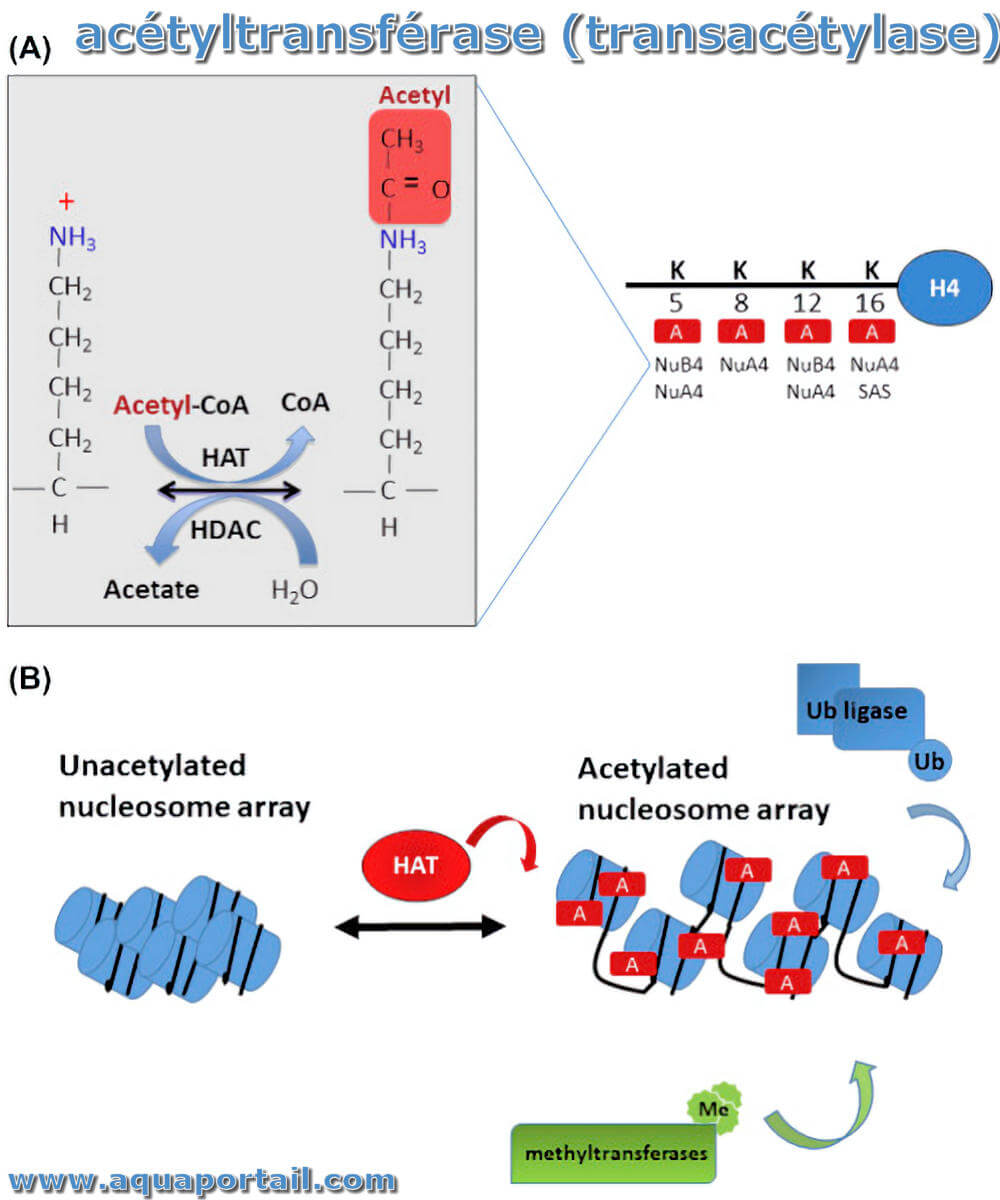
An acetyltransferase is an enzyme that transfers an acetyl group from acetyl-CoA to lysine amino acids.
Simple summary
Annelids are characterized by an elongated, cylindrical body divided into ring-like segments. Their structure relies on a hydrostatic skeleton, and they possess a true coelom that aids locomotion as well as organ function. This group encompasses a wide diversity of organisms, such as earthworms, leeches, and marine polychaetes.
