Benthic
adjective (adj.)
Definition
What is benthic relates to the benthos, derives from the sea floor, that is to say living in a fixed, sessile, or vagile manner directly on the substrate, or mobile living beings, free-swimming, inhabiting the immediate vicinity of the substrate in aquatic environments.
The benthic part of waters:
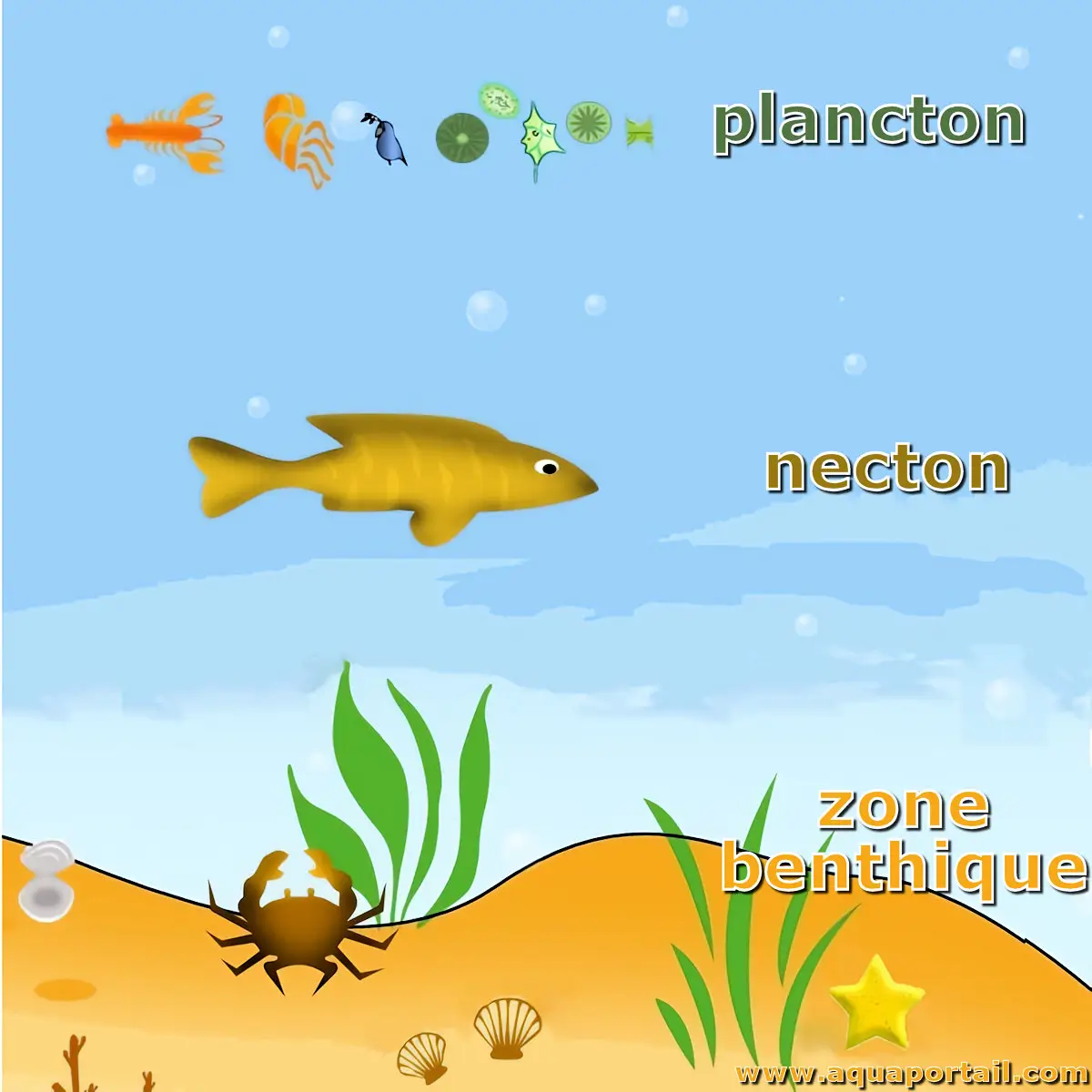
Benthic refers to everything located at the bottom of a body of water, such as an ocean, sea, lake, or river. It relates more specifically to the flora, fauna, and organisms that inhabit the sedimentary environments and ecosystems located on or near the substrate of these aquatic systems.
Explanations
The adjective benthic also describes the organisms that live there (hard corals, tunicates...) and an organism living attached to the substrate yet mobile is said to be epibenthic (soft corals in the sea, sea anemone).
Organisms living directly within the substratum are said to be endobenthic (burrowing organism) and those living just above the substrate are hyperbenthic. Many aquatic invertebrates, excluding nekton, are benthic. Bathybenthic (as opposed to the bathypelagic domain) describes benthic organisms of deep waters, beyond about 600 meters (1,969 ft), that is, in the bathyal zone.
The beadlet anemone is a benthic invertebrate:

In the sea, all actiniarians are benthic organisms, and a sea anemone, such as the beadlet anemone, is more specifically epibenthic.
Depending on the size of the organisms, several terms scientifically express the maximum size considered: macrobenthic for organisms longer than 1 mm (0.04 in), meiobenthic for organisms between 1 mm and 63 µm (0.063 mm), and finally microbenthic for a size smaller than 63 µm.
✅ By definition, benthic is directly opposed to pelagic. The word also gave the suffix for organisms living at great ocean depth on the substrate: the bathybenthic zone. Organisms living in an abyssal environment and near the substrate are described as abyssobenthic.
Distribution of species in the water column:

Benthic species live just below the demersal zone. In the marine environment, this includes fish species such as: ray, turbot, sole; and invertebrates such as: spider crab, crab, shrimp, lobster, spiny lobster, mussel, oyster, scallop, and various shellfish.
Be careful, however: this qualifier benthic is not usually attributed to organisms living in the immediate vicinity of the seabed in the littoral zone. For the latter, as for freshwater organisms, the term demersal is used! See also benthopelagic. An ascidian, a form of tunicate, is benthopelagic because one life phase is pelagic and then benthic.
✅ A benthonic organism is a benthic organism (the two terms are synonymous); it lives closest to the benthos. See also benthology.
Synonyms, antonyms
Spanish translation: bentónico
6 synonyms (similar meaning) for "benthic":
- abyssobenthic
- bathybenthic
- benthic
- demersal
- endobenthic
- hyperbenthic
2 antonyms (opposite meaning):
Related words and expressions to BENTHIC are directly connected by general or specific meaning.
The word BENTHIC is listed on page 1 of words starting with B in the dictionary glossary.
Related to "benthic"
benthos

Benthos is the assemblage of aquatic organisms living in close relationship (directly on or in the immediate vicinity of) the aquatic bottom.
bacterial artificial chromosome

A bacterial artificial chromosome (BAC) is a DNA construct, based on a functional fertility plasmid or F-factor, used for transformation and bacterial cloning...
bacteriochlorophyll

A bacteriochlorophyll (BChl) is a pigment of photosynthetic eubacteria other than cyanobacteria, yet containing chlorophyll and able to carry...
bacteriorhodopsin
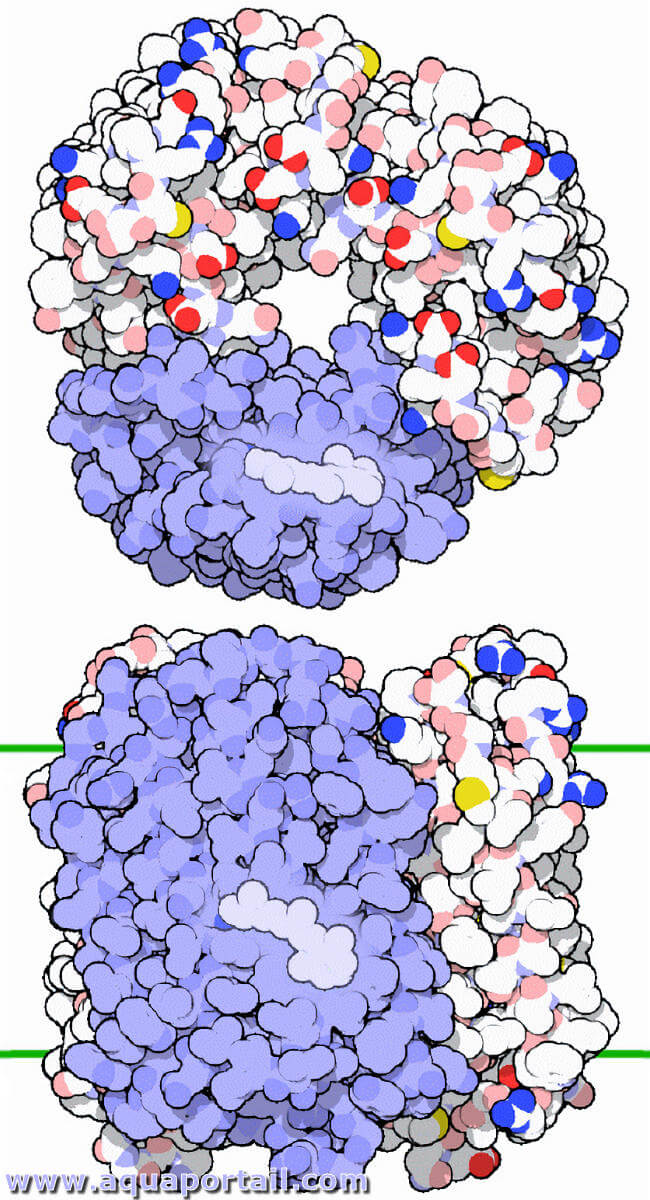
Bacteriorhodopsin (or proteorhodopsin) is a pigment of extreme halophilic photosynthetic archaebacteria.
