Oyster
noun (n.)
Definition
An oyster is a bivalve mollusk of the family Ostreidae, represented by numerous genera worldwide. Along French coastlines, the primary aquaculture species is Magallana gigas, the Pacific cupped oyster, alongside intertidal species of Crassostrea or Ostrea. However, the genus Pycnodonta comprises deep-sea oysters living in permanently submerged waters (down to 2,000 m / 6,560 ft), featuring a very rounded, vesicular shell.
Photo of the record giant Crassostrea gigas oyster from Denmark measuring 35.5 cm (14 in) long:

On February 19, 2014, a size record was registered in Denmark for a giant oyster measuring 35.5 cm (14 in) long, 10.7 cm (4.2 in) wide, and weighing 1.62 kg (3.57 lb)—the largest oyster on record worldwide! The record for Crassostrea (Magallana) gigas is listed in the Guinness Book of Records. The giant oyster was caught on December 18, 2013, in the North Atlantic off the coast of Jutland, Denmark; it is a Pacific oyster species introduced to Europe for aquaculture. The age of this unique specimen likely exceeds 15 to 20 years.
Explanations
The exact age of a specimen can be determined once the bivalve has died by counting the growth rings inside the shell. The maximum lifespan of an oyster is estimated at 30 years.
In cupped oysters, reproduction occurs outside the shell through random encounters between eggs and sperm in the water column. By contrast, the genus Ostrea—including the European flat oyster Ostrea edulis, which inhabits permanently submerged or only occasionally exposed zones—has a different reproductive mode: fertilization occurs inside the shell cavity, and larvae are later released into the surrounding water.
Photo of an oyster with a closed shell:

Oysters are bivalves capable of tightly sealing their shells by pulling their two valves together with a powerful adductor muscle.
Several species have given rise to extensive aquaculture. Broadly speaking, oyster consumption is virtually universal given their worldwide distribution. Oysters farmed in France include cupped oysters (whose lower valve is markedly more concave than the upper one) of the genera Crassostrea and Magallana. Cupped oyster farming began in France in 1867.
Portuguese oysters, Crassostrea angulata, were originally imported for consumption. Following an incident, a ship named the Morlaisien had to jettison its cargo of oysters in the Gironde estuary; the species became naturalized and spread northward to Vendée.
In the 1920s, it replaced the European flat oyster, which had been decimated by an epizootic disease. Initially banned north of the Vilaine River, it was authorized along the entire French coast starting in 1960. Struck by another epizootic in the 1970s, Portuguese oyster production declined sharply, and the introduction of the Pacific cupped oyster Crassostrea gigas (now Magallana gigas) enabled cupped oyster farming to rebound.
Farming techniques vary depending on tidal conditions: directly on the seabed (mudflats), in mesh bags on trestles, or cemented onto ropes. Spat collection takes place mainly in Arcachon Bay and the Marennes-Oléron basin. Young oysters are grown out in basins from Lower Normandy to the Mediterranean. After 3 years, finishing (affinage) may be performed in shallow clay ponds ("claires"), a specialty of Marennes-Oléron.
Flat oysters belong to the genus Ostrea. The European flat oyster, Ostrea edulis, is native to France. Bed cultivation, practiced by the Romans, was introduced to France during the Roman conquests; small oysters were harvested and stocked in beds. By the mid-19th century, spat collection techniques had been refined.
However, overexploitation of natural beds LED to the disappearance of flat oysters south of the Vilaine River, and successive epizootics (1920, 1970, 1980) caused production to plummet. A recovery program combining zootechnical and genetic research enabled a modest rebound, with roughly 2,000 metric tons produced annually; spat collection occurs in Brittany, in Quiberon Bay.
Pearls
Oysters are seeded in deep water and reach commercial size after two to three years of grow-out. Cultivation of the black-lip pearl oyster Pinctada margaritifera expanded rapidly in French Polynesia starting in the 1960s, to the point that black pearl production now represents the territory's top export resource by value (far ahead of copra).
Among other species farmed worldwide are C. virginica (eastern oyster), cultivated in the USA and Canada; C. margaritacea (Cape rock oyster), a warm-water species common in South Africa and Madagascar (Toliara); C. rhizophorae (mangrove oyster, attached to mangrove roots); and O. sinuata or O. lutaria (New Zealand dredge oyster).
An oyster with its pearl:

This pearl oyster, shown with its nacreous pearl, belongs to the species Pinctada fucata.
See also oyster plant.
Seasonal oysters
Seasonal oysters, as opposed to milky oysters, are claire-finished oysters that are not spawning ("milky"). The advantages of a seasonal oyster include superior shelf life when derived from triploid stock, as well as winter quality when diploid oysters are not producing milt/spawn for reproduction.
Triploid oysters, notably Crassostrea gigas, are sterile and therefore produce no spawn: they are sold and eaten year-round and are also called four-season oysters. "Fine de claire" or "spéciale de claire" oysters frequently possess this quality.
4 seasonal spéciale de claire oysters:

A seasonal oyster is an autumn, winter, and early spring oyster harvested during months containing the letter "R": January, February, March, April, September, October, November, and December. Months without an "R" (June, July, August) correspond to the spawning season, yielding milky oysters. While milky oysters have some fans, they also have many detractors; triploid oysters avoid this reproductive phase, making them true four-season oysters.
Organoleptically, milky oysters—besides having a very short shelf life because the spawn spoils quickly—are considered inferior in flavor and texture to seasonal or non-milky oysters. Nutritionally as well, seasonal oysters are richer in energy reserves stored as glycogen, whereas milky oysters are laden with gametes and lipids.
Moreover, a triploid seasonal oyster reaches market size in 3 years instead of 4, reducing production costs and consequently the final retail price, as energy otherwise spent on reproduction fuels faster somatic growth.
Seed oysters (parcage oysters) are young oysters, generally under 50 mm (2 in) long, ready to be grown out in beds until maturity.
Oyster plant
The oyster plant (or sea bluebells) refers to the coastal plant Mertensia maritima, also known as "oysterleaf," whose fleshy leaves possess a pronounced oyster flavor.
An oyster plant leaf:

The oyster plant leaf, shaped like a water droplet, even resembles a pearl.
The plant owes its nickname not so much to its shape as to its remarkably strong oyster taste, leading to its culinary use alongside fish dishes. It can be eaten raw, cooked, or pickled in vinegar like glasswort (samphire).
In France, oysterleaf is known primarily from Arcachon Bay, especially since its near-disappearance from the Normandy coast.
Zigzag oyster
A zigzag oyster is the vernacular name for large oysters of the family Ostreidae, named for the distinctive zigzag margin of their shell opening. Several oysters of the genus Dendostrea and the genus Lopha are called zigzag oysters, such as Lopha cristagalli (cockscomb oyster) and Dendostrea (Lopha) folium.
The bivalve mollusk Dendostrea folium in the open ocean:

Dendostrea species have thick, heavily ribbed shells with two unequal valves whose margins form a characteristic zigzag pattern. The lower valve bears finger-like projections by which the mollusks attach to the substrate. These mollusks are stationary, epifaunal suspension feeders, filtering seawater to extract nutrients.
The genera Dendostrea and Lopha have been present in the oceans since the Triassic period.
Taxonomic note: most species formerly placed in the genus Lopha were transferred to Dendostrea in 2015.
Synonyms, antonyms
Spanish translation: ostra
3 synonyms (similar meaning) for "oyster":
- cupped oyster
- flat oyster
- native oyster
0 antonyms (opposite meaning).
Related words and expressions to OYSTER are directly connected by general or specific meaning.
The word OYSTER is listed on page 1 of words starting with O in the dictionary glossary.
Related to "oyster"
ocean basin

An ocean basin is a benthic environment taking the form of a depression in the ocean floor bounded by the lower part of the continental slope.
ocean floor

The ocean floor (seafloor) is the region of the deep seabed where the topography flattens out, typically just beyond the continental rise at the level...
oceanic

What is oceanic relates to the ocean and designates the marine zone, or ecological province, located far from the coast, beyond the continental shelf.
ocellus
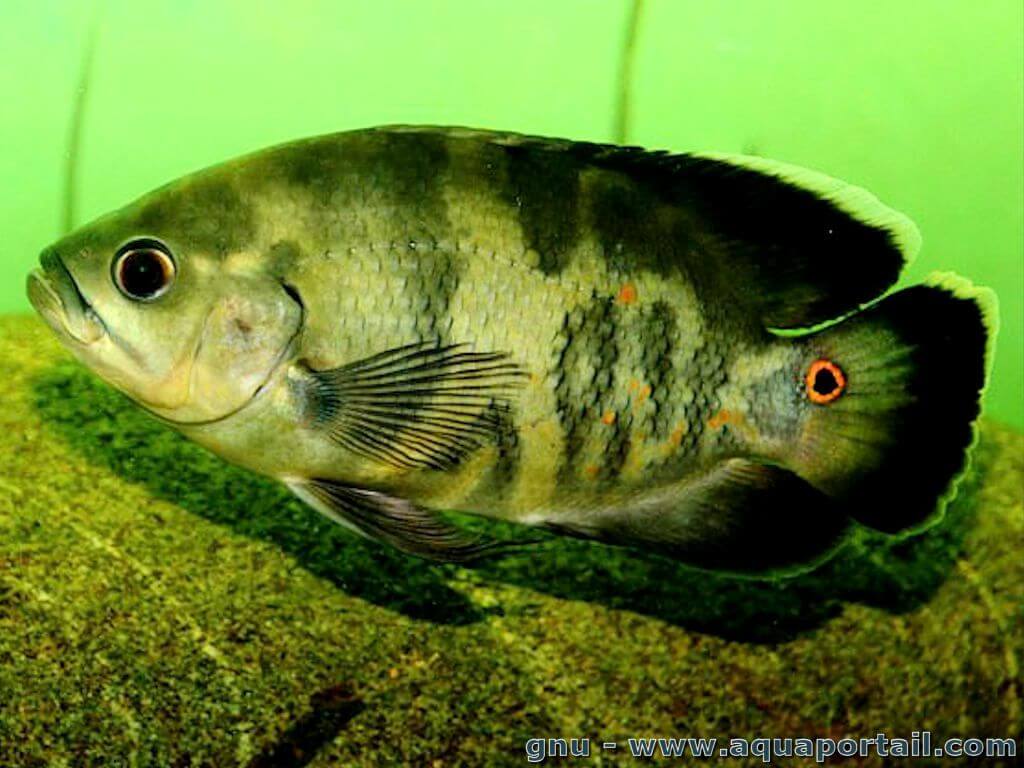
An ocellus (eyespot) is a ringed colored spot encircled by a zone of a different, usually sharply contrasting color, making it resemble an eye.
