Ozonolysis
noun (n.)
Definition
Ozonolysis is an organic reaction in which the unsaturated bonds of alkenes, alkynes, or azo compounds are cleaved with ozone. Thus, the process performs an oxidative cleavage (lysis) of multiple bonds. It is a type of cycloaddition that breaks chemical bonds.Ozonolysis is a method for the oxidative cleavage of alkenes or alkynes using ozone (O3), a reactive allotrope of oxygen. The process replaces carbon-carbon double or triple bonds with double bonds to oxygen.
An ozonolysis process with an alkene:

Ozonolysis is an organic reaction in which the pi bonds of unsaturated olefins such as alkenes and alkynes are cleaved with ozone (O3). Ozone is a highly reactive allotrope of oxygen and reacts readily with alkenes. Alkenes form organic compounds in which a carbonyl group replaces the multiple carbon-carbon bonds. The outcome of the reaction depends on the type of multiple bonds oxidized and the workup conditions.
Explanations
Alkenes and alkynes form organic compounds in which the multiple carbon-carbon bonds have been replaced by a carbonyl group, whereas azo compounds form nitrosamines. The outcome of the reaction depends on the type of multiple bond oxidized and the operating conditions used for the process.
✅ Ozonolysis is used to determine the position of the double bond in alkenes and triple bonds in alkynes. It has been widely employed to elucidate the structure of natural products, particularly terpenes, and to synthesize rare aldehydes and ketones.
During ozonolysis, ozone cleaves the C=C bond of alkenes and forms an intermediate compound called an ozonide. The ozonide is decomposed into carbonyl compounds by a reducing agent such as zinc (Zn) or dimethyl sulfide ((CH3)2S). At the same time, the reducing agent is oxidized to zinc oxide (ZnO) or dimethyl sulfoxide (DMSO). This process is known as reductive workup and yields aldehydes and ketones. On the other hand, if hydrogen peroxide is used instead of Zn or (CH3)2S, any aldehyde formed is oxidized to a carboxylic acid. This process is known as oxidative workup.
Ozonolysis can be carried out on alkenes such as ethene, butene, and pentene and cyclic compounds such as cyclopentene and cyclohexene, which are then converted into their corresponding carbonyl compounds. Ozonolysis of benzene yields glyoxal via the formation of benzene triozonide as an intermediate. The mechanism proceeds via an oxidative cleavage reaction with ozone through a three-step process. Ozone reacts with an alkene via a cycloaddition reaction to form an unstable 5-membered ring called a molozonide. It begins with a 1,3-dipolar cycloaddition but ultimately cleaves the pi bonds oxidatively, yielding two carbonyl groups.
Ozonolysis of alkynes produces an acid anhydride or a diketone. Fragmentation is incomplete in this reaction. A reducing agent is unnecessary because a simple aqueous workup yields a mixture of carboxylic acids.
⭐ The history of ozonolysis dates back to 1840 when the German-Swiss chemist Christian Friedrich Schönbein first discovered it.
Synonyms, antonyms
Spanish translation: ozonólisis
0 synonyms (similar meaning) for "ozonolysis".
0 antonyms (opposite meaning).
Related words and expressions to OZONOLYSIS are directly connected by general or specific meaning.
The word OZONOLYSIS is listed on page 1 of words starting with O in the dictionary glossary.
Related to "ozonolysis"
ocean basin

An ocean basin is a benthic environment taking the form of a depression in the ocean floor bounded by the lower part of the continental slope.
ocean floor

The ocean floor (seafloor) is the region of the deep seabed where the topography flattens out, typically just beyond the continental rise at the level...
oceanic

What is oceanic relates to the ocean and designates the marine zone, or ecological province, located far from the coast, beyond the continental shelf.
ocellus
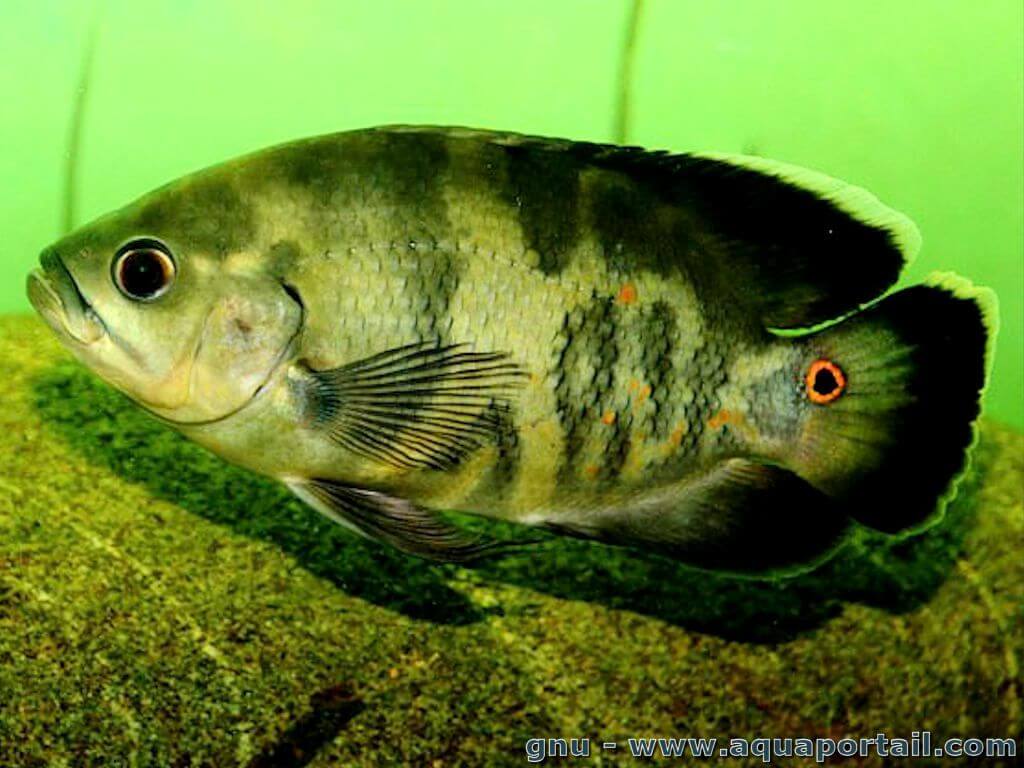
An ocellus (eyespot) is a ringed colored spot encircled by a zone of a different, usually sharply contrasting color, making it resemble an eye.
