LED
abbreviation (abbr.)
Definition
An LED is a light-emitting diode, an optoelectronic semiconductor that emits light when an electric current is applied. LEDs provide highly economical lighting by consuming less electrical current compared to other light sources.
Diagram of an LED:
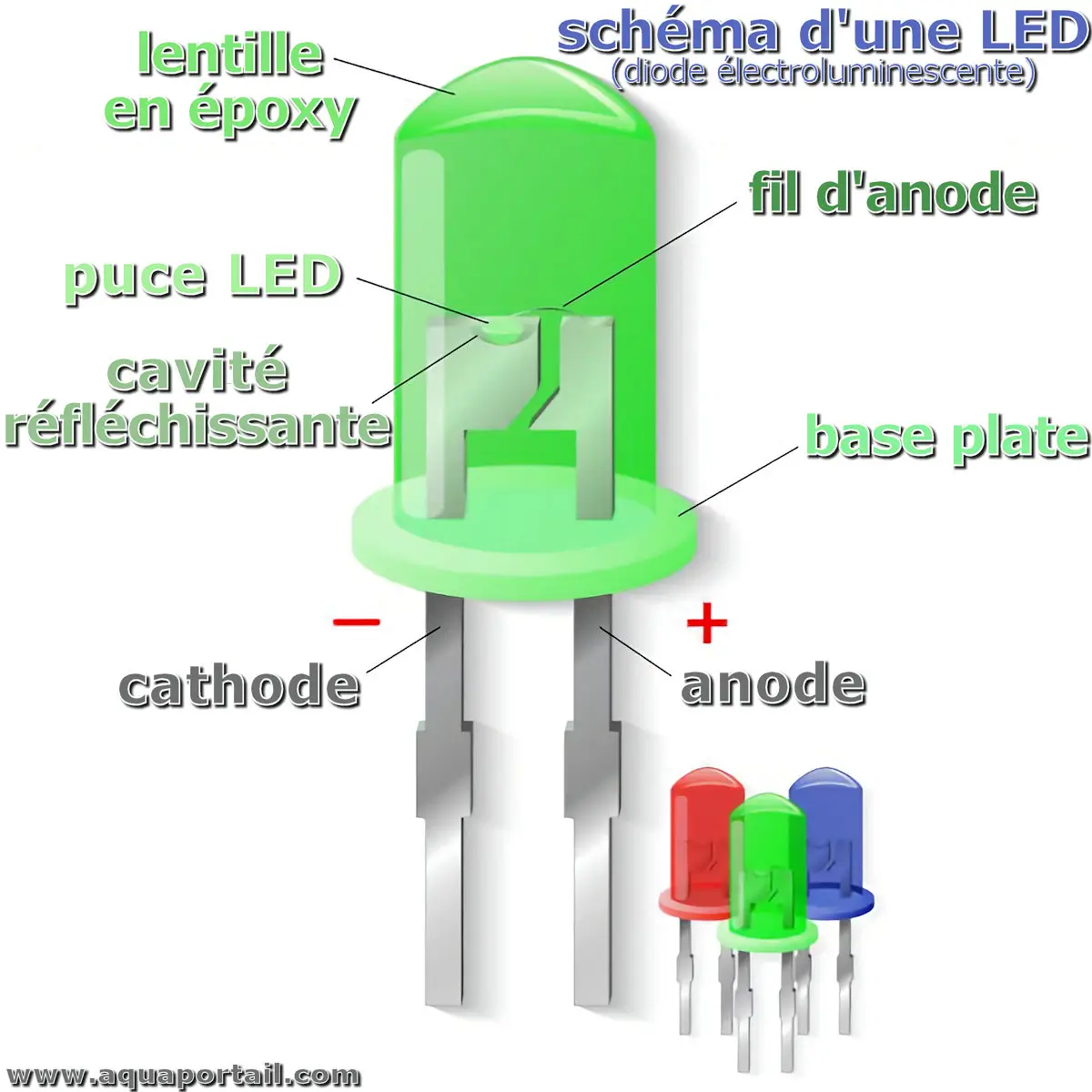
An LED powered by an electric current lights up through the movement of electrons in a semiconductor. A voltage crosses two electrodes (anode and cathode) to reach the LED chip, and energy is then released in the form of photons, producing electroluminescence.
Explanations
The abbreviation LED comes from the English "Light-Emitting Diode," which translates to "Diode ÉlectroLuminescente" (DEL) in French.
The lifespan of LEDs can reach decades, though accompanied by lumen depreciation and reduced luminous intensity over the years. Their small size allows integration into numerous systems, particularly where other light sources could not have been fitted due to their bulk.
They are 80 to 90% more efficient (luminous flux emitted, expressed in lumens, relative to electrical power consumption) than incandescent bulbs. LEDs produce little heat, which is an advantage over most other light-producing sources (incandescent bulbs, fluorescent tubes, etc.).
When a voltage is applied to an LED, electrons recombine with electron holes, releasing energy in the form of photons that produce the emitted light.
The color of an LED is determined by the wavelength and the semiconductor material used. For example, red is produced at a wavelength between 620 and 645 nm (2.44 × 10⁻⁵ and 2.54 × 10⁻⁵ in) using a semiconductor material such as gallium arsenide phosphide (GaAsP).
Synonyms, antonyms
Spanish translation: led
1 synonym (similar meaning) for "LED":
0 antonyms (opposite meaning).
Related words and expressions to LED are directly connected by general or specific meaning.
The word LED is listed on page 1 of words starting with L in the dictionary glossary.
Related to "LED"
aquarium lighting

Lighting an aquarium is essential for replicating the natural biotope of aquatic environments.
light-harvesting complex

A light-harvesting complex (antenna complex) consists of photosynthetic pigments capable of intercepting photons of various wavelengths, and therefore various...
L-form bacteria
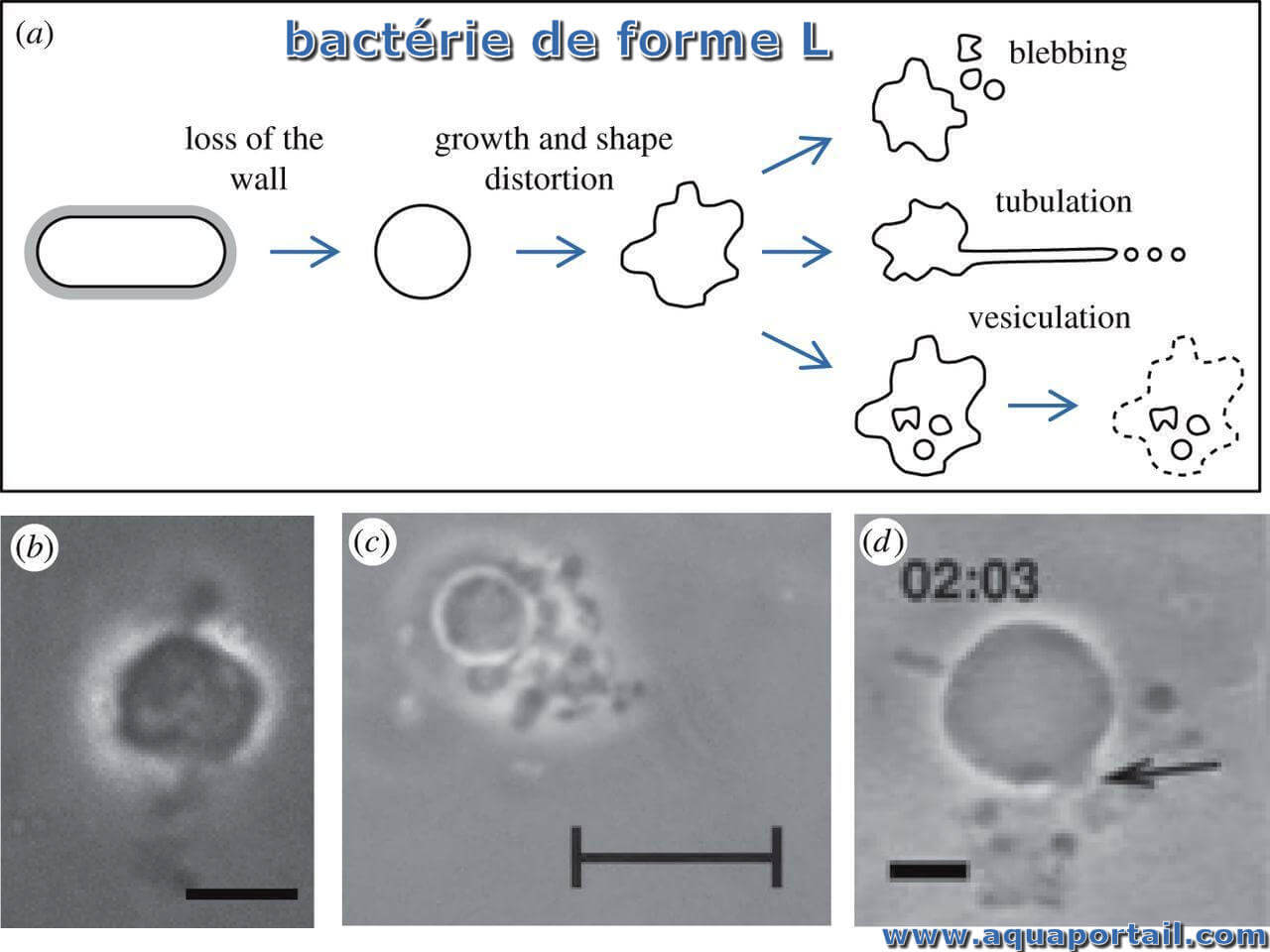
L-form bacteria originate from a strain of bacteria that lack cell walls while retaining the ability to grow.
lake

A lake is a large inland and continental body of freshwater, nearly stagnant or slow-moving.
