Bulb
noun (n.)
Definition
Bulbs are underground nutrient-storage organs, like rhizomes, corms, and tubers. A bulb consists of a cluster of thickened, fleshy leaves packed with food reserves and tightly compressed against one another.
Onion, shallot, garlic, many leeks, fennel (and other umbellifers) are edible bulbous plants, often referred to as bulb vegetables. Tulip, hyacinth, narcissus, grape hyacinth, lily, etc., are ornamental bulbous plants.
Tulip bulbs :

Tulip bulbs, some partially sliced open to show the compressed layers of shoots with thickened lower leaves.
Botanical explanations
A bulb is a bulbous organ, most often underground, serving to store nutrient reserves, particularly in flowering geophytes. Plants possessing this type of structure are collectively called bulbous plants, such as onions, garlic, and tulips. Small bulbs are called bulbils, while daughter bulbs are called offsets.
Thus, a bulb is a globose underground storage organ found in certain Monocotyledons and rare Dicotyledons. It consists of a short stem or basal plate surrounded by numerous leaves: these are called scales if they are not wide enough to wrap completely around, and tunics if they are cylindrical and wide enough to enclose the entire bulb.
In solid or cauline bulbs, only the stem stores reserves. In scaly or foliar bulbs, both the stem and leaves are succulent. In tunicate bulbs or onions, the leaves are large and thickened by the reserves they contain.
This organ enables the plant to regenerate its vegetative apparatus after acting as a survival structure during unfavorable seasons. The bulb complements other underground or aerial storage organs of green plants such as rhizomes, corms, tubers, pseudobulbs, and caudices.
Types (classification)
Bulbs are classified into two types:
- Tunicate: in which their bases are enclosed by overlapping concentric layers. Tunicate bulbs include tulips (Tulipa), daffodils (Narcissus), hyacinths (Hyacinthus), grape hyacinths (Muscari), onions (Allium cepa), and ornamental garlics (certain species of Allium).
- Scaly (imbricate): in which these bases overlap (like roof tiles) and are fleshier. The lily (Lilium) is an example of an imbricate (scaly) bulb.
Both classes produce offsets that serve to propagate the plants once they reach sufficient size. See also bulbiform.
Certain epiphytic orchids form bulb-like, above-ground organs called pseudobulbs.
✅ In some cases, bulbs or bulbils also form in leaf axils or within the inflorescence, for example in water lilies or at the base of onions. These bulbs are likewise organs of agamic propagation.
Bulbiform refers to anything bulb-shaped or resembling a bulb, sometimes described as pear-shaped or ampulla-shaped.
Tentacular bulb
A tentacular bulb, in medusoid hydrozoans, designates a bud-like swelling or outgrowth located along the margin of the umbrella opening. The bulb may or may not give rise to a marginal tentacle and may bear photosensitive organs called ocelli.
In anatomy
Outside botany, particularly in anatomy, a bulb denotes a bulb-like swelling of an organ, such as the bulb of the urethra.
Synonyms, antonyms
French translation:
bulbeSpanish translation: bulbo
4 synonyms (similar meaning) for "bulb":
- bulbil
- caudex
- propagule
- pseudobulb
0 antonyms (opposite meaning).
Related words and expressions to BULB are directly connected by general or specific meaning.
The word BULB is listed on page 1 of words starting with B in the dictionary glossary.
Related to "bulb"
rhizome
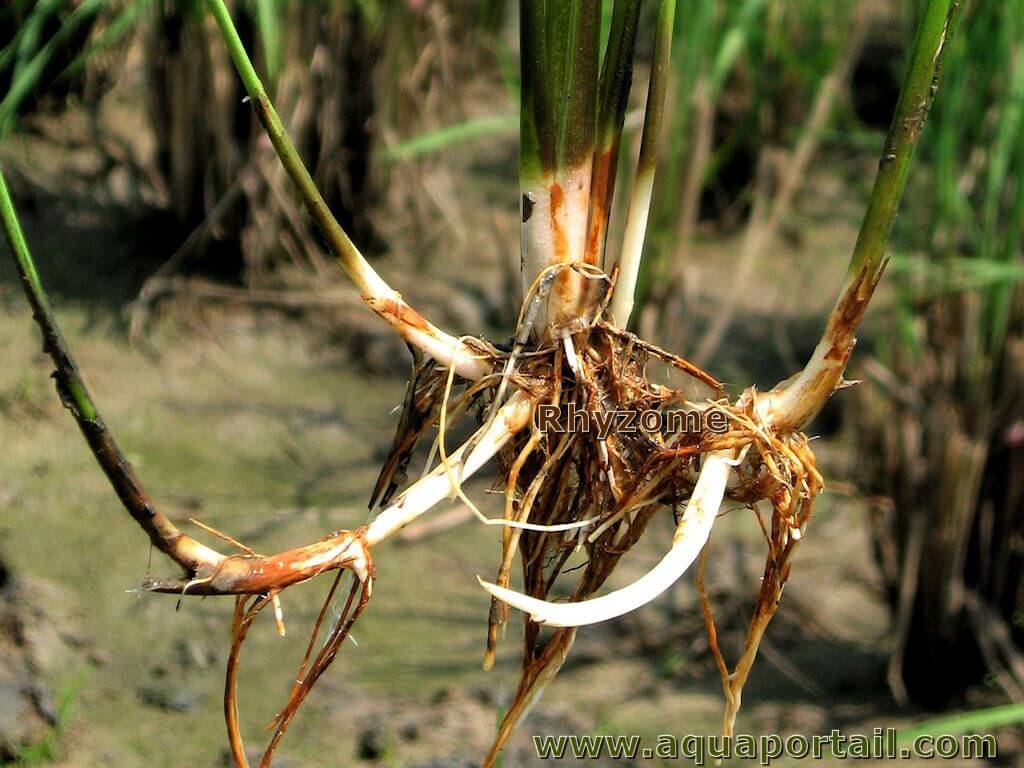
A rhizome is a perennial, subterranean or subaquatic, elongated horizontal or oblique plant stem typically extending along or beneath the soil surface.
bulbil

In bulbous plants, the bulbil is a small bulb (or corm) acting as a propagation organ that will produce a new plant a year or two later.
bacterial artificial chromosome

A bacterial artificial chromosome (BAC) is a DNA construct, based on a functional fertility plasmid or F-factor, used for transformation and bacterial cloning...
bacteriochlorophyll

A bacteriochlorophyll (BChl) is a pigment of photosynthetic eubacteria other than cyanobacteria, yet containing chlorophyll and able to carry...
