Green plants
noun phrase (n. phr.)
Definition
Green plants (subkingdom Viridiplantae) encompass land plants, aquatic vascular plants, and green algae, accounting for roughly one-sixth of all described species on Earth. A plant (kingdom Plantae) is defined as a multicellular eukaryotic organism possessing a cell wall and photosynthetic tissues.Green plants synthesize chlorophyll :
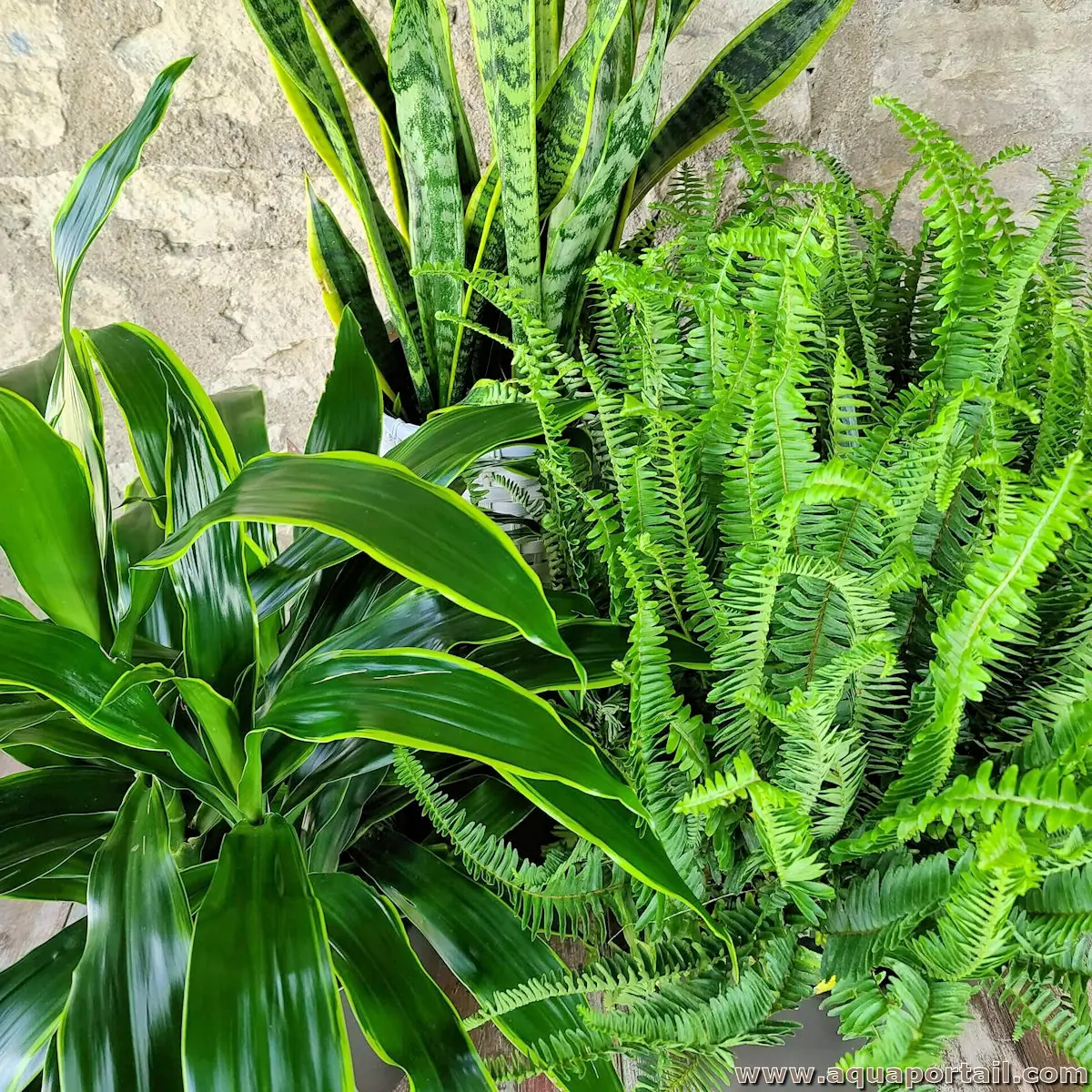
Green plants encompass all organisms recognized as green algae and land plants, including mosses, ferns, and seed-bearing plants. They are primary producers capable of synthesizing their own organic food in sunlight through photosynthesis.
Explanations
Strictly botanically, green plants comprise chlorophytes and streptophytes, a clade uniting green algae and virtually all terrestrial and aquatic plants within the subkingdom Viridiplantae. In everyday usage, a green plant is a green-leaved plant deriving its energy primarily from chlorophyllous photosynthesis, with chlorophyll imparting its green coloration.
All green plants are chlorobionts whose cells contain cellulose-rich walls, and whose primary chloroplasts originated from an ancient endosymbiosis with cyanobacteria, containing chlorophylls a and b while lacking phycobilins.
A fruit tree is a green plant:

The tree Citrus japonica is a green plant producing kumquat fruits.
More than 350,000 species of green plants exist! Their life cycles may be brief in annuals, biennial, or long-lived in perennials (especially woody species such as trees) whereas herbaceous perennials and algae have softer tissues. Terrestrial green plants (along with aquatic vascular plants) largely produce flowers and fruits for reproduction; all flowering plants (angiosperms) belong to the green plants.
Common comfrey is a flowering medicinal green plant:

Photosynthetic medicinal herbs are all green plants, regardless of which plant organ is harvested in herbal medicine—shown here is common comfrey.
The common ancestor of green algae and all land plants (also allied to red algae and glaucophytes) acquired its first chloroplast through a single primary endosymbiotic event with a cyanobacterium. Consequently, Archaeplastida (of which Viridiplantae forms the largest clade) are characterized by primary two-membrane plastids, whereas other algal lineages acquired plastids secondarily from red or green algae. chlorobiont chloroplasts exhibit ultrastructural and pigment traits that readily distinguish them from red algae and glaucophytes.
Molecular data strongly support the monophyly of this clade across nuclear and organellar DNA sequences, ultrastructural traits, and chloroplast-to-nucleus gene transfers. Biochemical and morphological synapomorphies include the loss of phycobilins (present in cyanobacteria, red algae, and glaucophytes) and the evolution of chlorophyll b alongside chlorophyll a. Green plants store carbohydrates as starch granules directly inside plastids, and their motile flagellated cells (sperm in non-angiosperm lineages) bear a distinctive stellate structure at the flagellar transition zone. Pyrenoids are commonly present in the plastids of green algae and hornworts, and cell walls are rich in cellulose.
Several lineages of unicellular organisms bearing distinct organic scales, known as prasinophytes (or micromonads), diverge near the base of the viridophyte phylogenetic tree, while overall phylogeny divides into two major clades: Chlorophyta and Streptophyta.
Synonyms, antonyms
Spanish translation: plantas verdes, Viridiplantae
2 synonyms (similar meaning) for "green plants":
0 antonyms (opposite meaning).
Related words and expressions to GREEN PLANTS are directly connected by general or specific meaning.
The expression GREEN PLANTS is listed on page 1 of words starting with G in the dictionary glossary.
Related to "green plants"
chlorobiont

A chlorobiont (Chlorobionta) is a green photosynthetic plant organism. The chlorobionts as a whole encompass terrestrial green plants (Embryophyta) as well...
beginner aquarium plant

A beginner aquarium plant is an easy-to-grow aquatic plant species with good growth regardless of planting conditions.
live plants

Live plants are natural plants, generally implied to be herbaceous species, whereas fake plants are artificial.
live plants with goldfish

Is it possible to keep live aquatic plants with goldfish in an aquarium ? Will they eat everything ? Which living, non-artificial plants are suitable...
