Tentacle
noun (n.)
Definition
In biology, a tentacle is an unsegmented, generally flexible appendage of an animal's body, used as a tactile organ, for locomotion, or for feeding. In animals such as the octopus, tentacles (arms) are used for locomotion, defense, and capturing prey for food.
The red tentacles of the beadlet anemone:

In cnidarians, tentacles form a crown of organs around the digestive opening whose primary function, through the discharge of the nematocysts they contain, is to paralyze prey and draw it to the mouth.
Explanations
In zoology, a tentacle is a flexible, mobile, elongated organ present in certain animal species, primarily invertebrates. In animal anatomy, tentacles usually occur in even numbers. Anatomically, animal tentacles function mainly as muscular hydrostats.
Functions
Most forms of tentacles are used for prey capture and feeding. Many are sensory organs, variously receptive to touch, vision, or the smell or taste of certain foods or threats. Examples of such tentacles include the "eyestalks" of various types of snails. Some types of tentacles serve dual functions: sensory and manipulative.
A small tentacle adjacent to a large tentacle is called a tentillum. A tentacle may be retractable or non-retractable.
Tentacles are also found on the leaves of certain carnivorous plants (such as sundews). In general, they are used for capturing food, acting as a sensory organ or simply grasping prey.
In corals, including sea anemones
In cnidarians, a tentacle is an elongated appendage such as in a coral or sea anemone. pinnate or feathery in soft corals, yet smooth in hard corals, tentacles surround the mouths of polyps and are used in corals for prey capture, defense, gas exchange, locomotion, light capture, and reproduction. A tentacle may also have a sensory function. In cnidarians, the tentacle bears cnidocysts (or rather cnidoblasts).
In hydromedusae, sea anemones, and many cnidarians, there are marginal tentacles around the rim of the bell and oral tentacles surrounding the mouth. Depending on the species, they form a ring around the polyp's mouth or are distributed along the entire length of the column.
See also sweeper tentacle.
An acrosphere is the swollen tip of a tentacle packed with cnidoblasts.
In cephalopods
In general, in cephalopods, a tentacle designates an elongated appendage typically serving a tactile role (thigmotaxis) or prehension. This is the case in cephalopods, both octopods like the octopus and decapods like the squid, where the appendages attach to the head. This body extension plays a tactile, palpating, grasping, and sometimes locomotor role. Tentacles must not be confused with arms: for example, a cuttlefish has 2 tentacles (very long) and 8 arms (shorter). In cephalopods, tentacles bear suckers.
Among mollusks, many species possess muscular hydrostats in the form of tentacles and arms. Tentacles are longer than arms and generally have suckers at their tips. Squids and cuttlefish have eight arms like octopuses, plus two tentacles, which is a reliable way to distinguish squids from octopuses.
Sweeper tentacles
A sweeper tentacle is an elongated polyp tentacle equipped with a high density of cnidoblasts, used by corals in aggressive interactions with neighboring invertebrates. Sweeper tentacles serve not only for defense, but also to attack a neighbor. These systems can be tentacular.
In invertebrates other than corals, such as octopuses, the skin of the arms secretes a chemical compound that prevents their suckers from sticking to one another.
Tentacles in algae? Yes!
In algae, such tentacular appendages occur in certain Chlorarachniophyceae, certain dinoflagellates, or members of the family Pedinellophyceae.
Bryozoans (moss animals) are tiny colonial creatures with tentacles around their mouths (lophophore). The tentacles are nearly cylindrical and bear bands of cilia that generate a water current toward the mouth, from which the animal extracts edible particles.
Tentillum
A tentillum is literally a little tentacle, taking the form of a branch of a tentacle. In particular, a tentillum is one of the contractile branches rich in nematocysts found on the tentacles of various siphonophores.
However, regardless of size, tentilla (plural of tentillum) generally refer to a lateral branch of a larger tentacle. In certain cases, these tentilla are specialized for specific functions.
For example, in cnidarians, tentilla generally bear cnidocysts, whereas in ctenophores they typically bear colloblasts.
Synonyms, antonyms
Spanish translation: tentáculo
3 synonyms (similar meaning) for "tentacle":
0 antonyms (opposite meaning).
Related words and expressions to TENTACLE are directly connected by general or specific meaning.
The word TENTACLE is listed on page 1 of words starting with T in the dictionary glossary.
Related to "tentacle"
jellyfish

A jellyfish is a gelatinous marine invertebrate of the phylum Cnidaria. These creatures are distinguished by their bell- or umbrella-shaped body, composed...
tagma

A tagma is a group of fused segments formed by series of metameres differentiated from the rest of an arthropod's body.
tapeworm
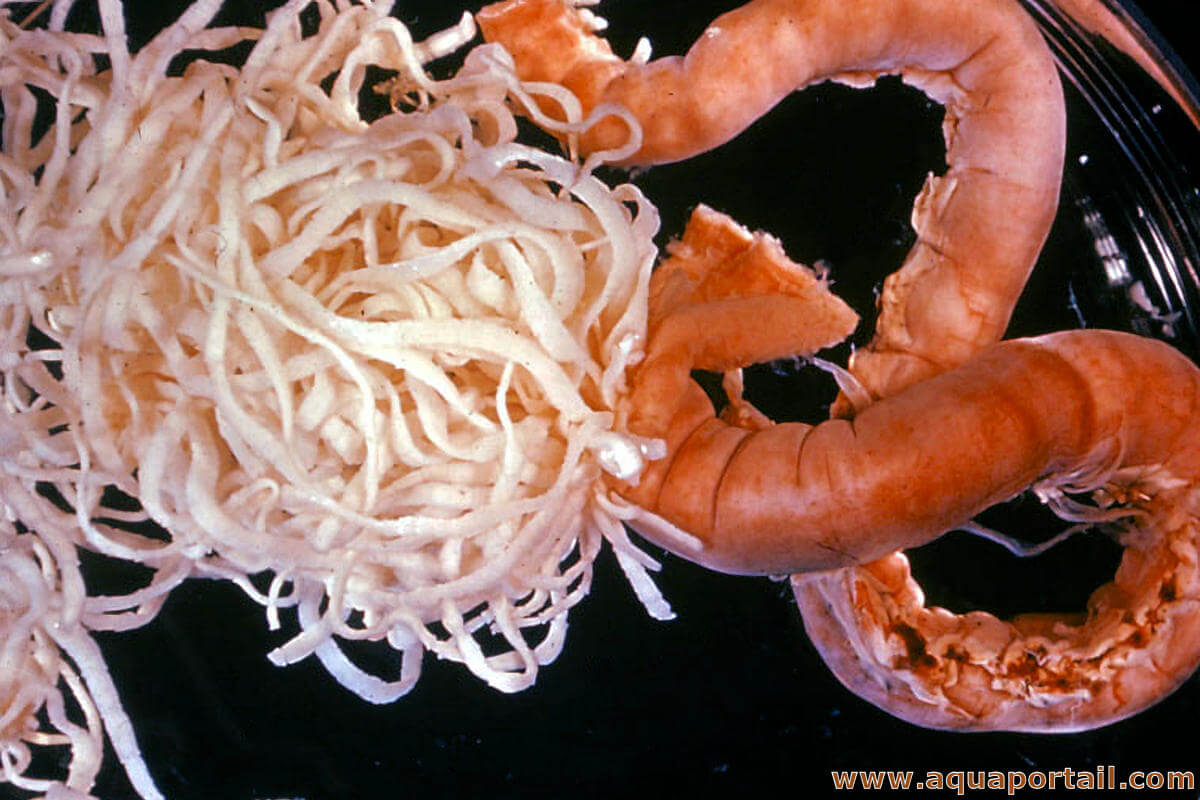
The tapeworm, or solitary worm, is a long, ribbon-like, segmented flatworm, a parasitic cestode of the genus Taenia.
tectonics

Tectonics is a branch of geology that studies the structure of the crust of a planetary body, such as Earth or the Moon, particularly the formation of folds...
