Siphonophore
noun (n.)
Definition
A siphonophore is a marine cnidarian of the order Siphonophorae formed of colonies of hundreds to thousands of polyps. The polymorphism of these animals is spectacular. By-the-wind sailors and Portuguese man o' war are well-known siphonophores.
Siphonophores:
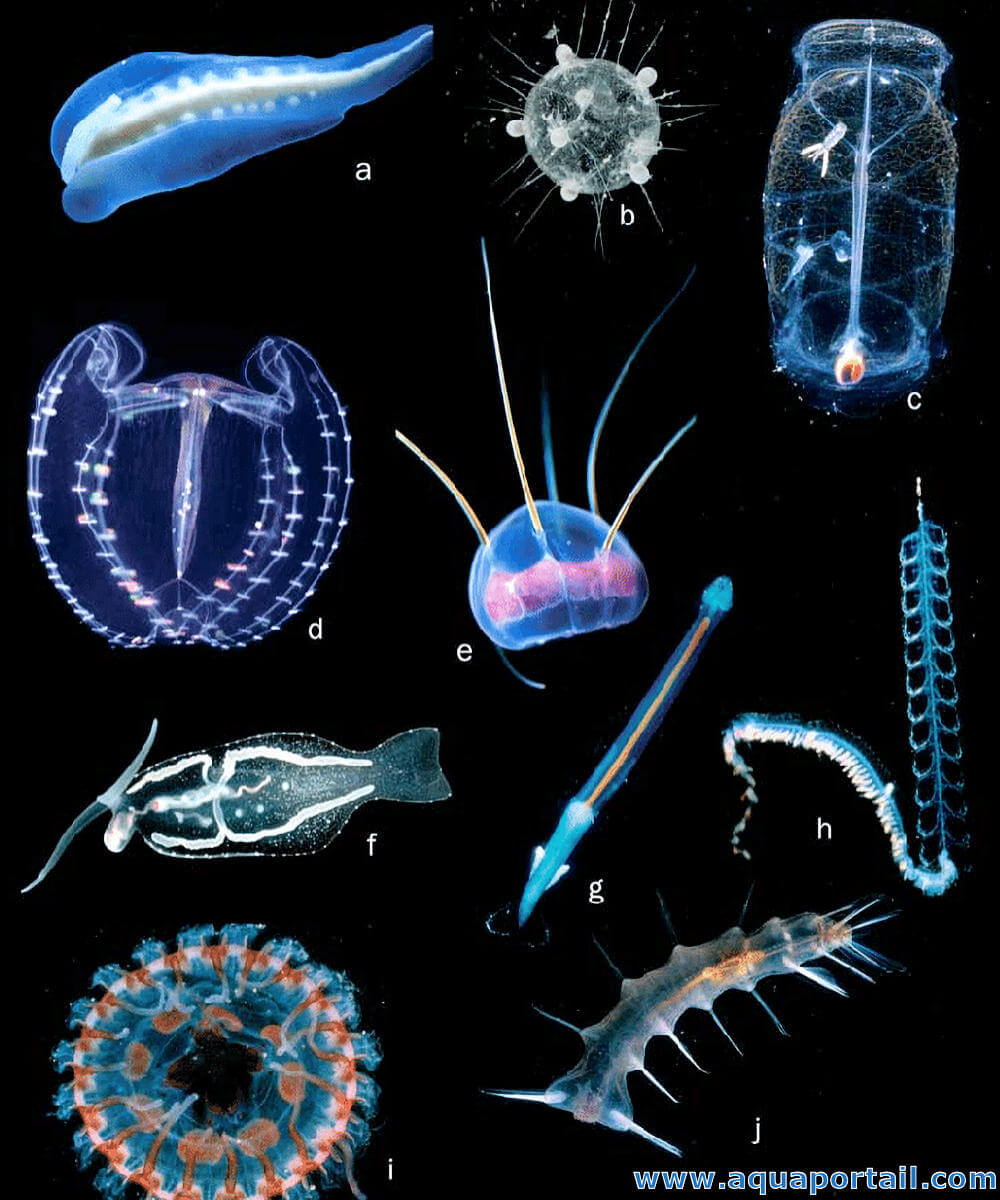
Siphonophores live from the ocean surface down to great bathyal depths (bathyplankton).
Explanations
Siphonophores maintain buoyancy and move through the water column via two types of structures: pneumatophores, which are gas-filled floats, and nectophores, which are muscular swimming bells. Some 175 species of siphonophores have been described, and certain specimens can reach a length of 40 meters (131 ft). Some acquire kleptocnids (or stinging nematocysts) that make them dangerous (such as Portuguese man o' war).
⭐ The siphonula larva refers to a larva of hydrozoan siphonophore cnidarians bearing a pneumatophore at the anterior pole and a gastrozooid at the posterior pole.
The Portuguese man o' war is a siphonophore:

Among the best-known siphonophores, the genus Physalia, with the Portuguese man o' war (shown here), comprises marine animals whose tentacle contact produces severe irritation. They are equipped with long stinging tentacles.
The upper portion of a siphonophore is usually highly modified and gas-filled (pneumatophore or float), and from there it extends vertically into a siphosome. Indeed, they are composed of multiple individuals, or zooids, which have different shapes and structures depending on the function they perform: some are responsible for capturing prey (gastrozooids), others for defense (dactylozooids), and others for reproduction (gonozooids). Collectively, the individuals have a gelatinous appearance.
A siphonophore, the by-the-wind sailor:
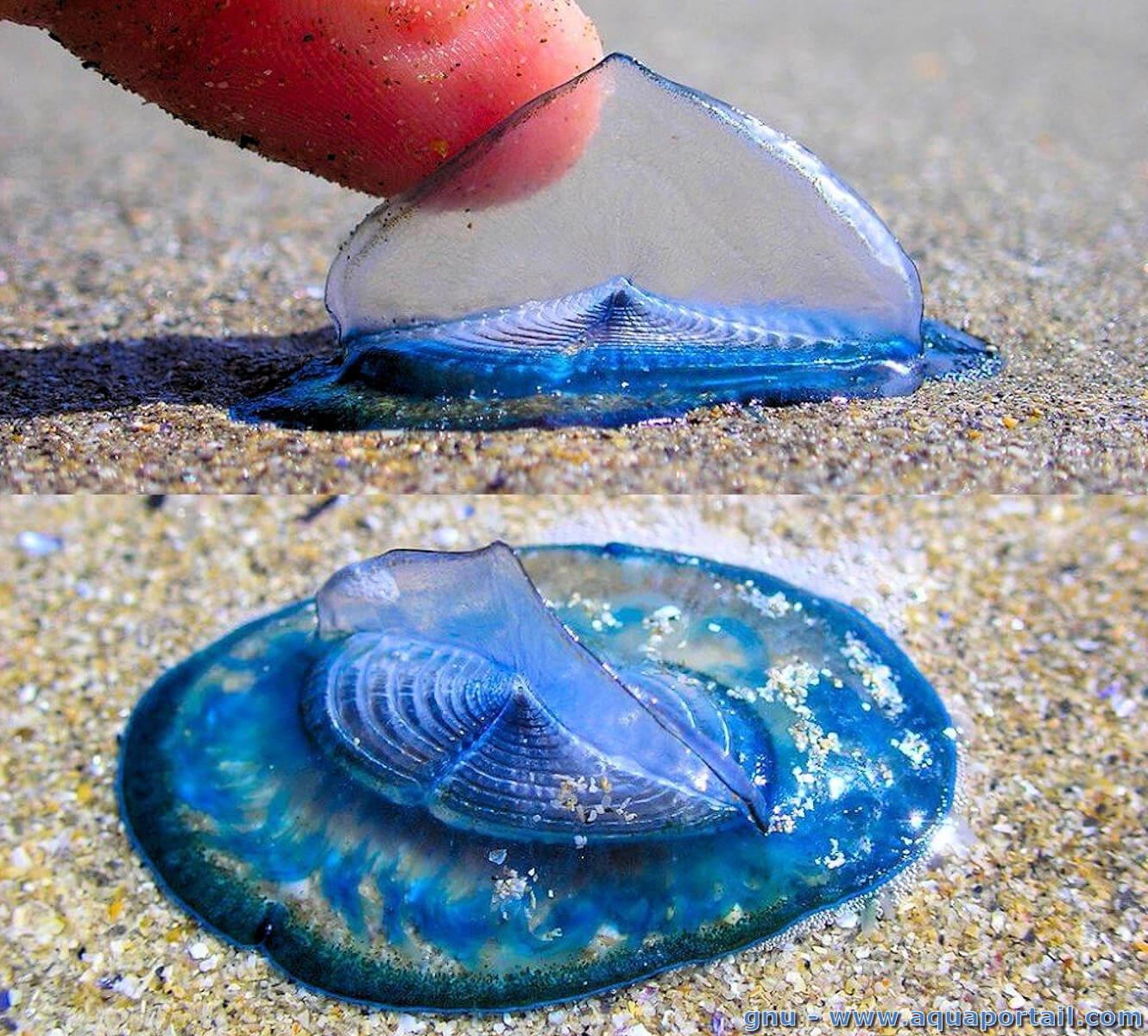
The by-the-wind sailor is a marine siphonophore, the species Velella velella, which drifts at the surface of seas and oceans using its "sail". By-the-wind sailors are relatively harmless to the touch, except for the eyes! Each individual houses an entire colony of polyps. On top of the body, a gas-filled triangular sail enables wind-driven movement. After storms, entire ribbons of these animals are often seen washed up on tropical beaches.
Siphonophores are predators; they possess potent stinging cells, or cnidocytes, specialized cells equipped with venom released upon contact. The toxins they discharge make them very dangerous, even when washed ashore out of the water.
Siphonophores are one of the most common groups of marine holoplankton (due to their inability to swim actively against strong currents), primarily in warm and temperate seas. They form part of the pleuston.
An eudoxid, in hydrozoan siphonophore cnidarians, is an older cormidium detached from a colony, enabling it to disperse its embryos.
Synonyms, antonyms
Spanish translation: sifonóforo
2 synonyms (similar meaning) for "siphonophore":
0 antonyms (opposite meaning).
Related words and expressions to SIPHONOPHORE are directly connected by general or specific meaning.
The word SIPHONOPHORE is listed on page 1 of words starting with S in the dictionary glossary.
Related to "siphonophore"
saccharide
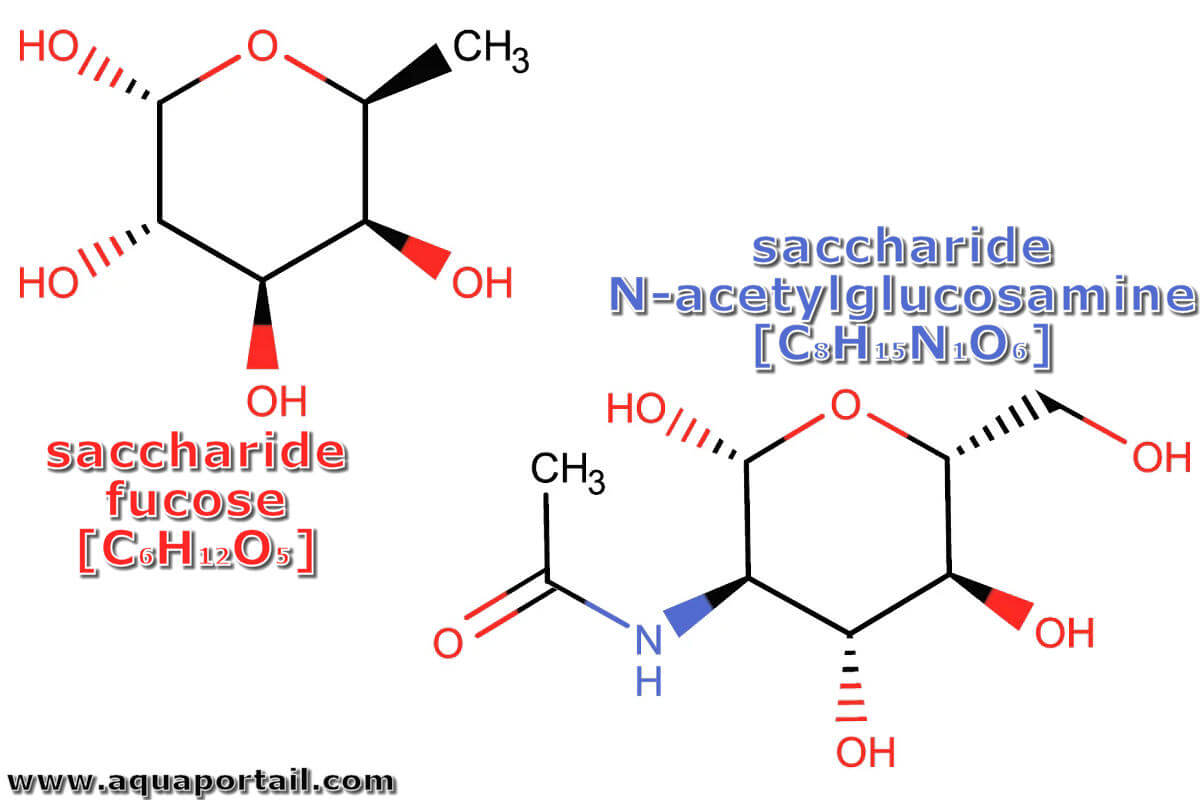
A saccharide is a carbohydrate, a biomolecule composed of carbon, hydrogen, and oxygen atoms, usually with a hydrogen-to-oxygen atomic ratio of 2 :1.
sagittocyst

A sagittocyst is a capsule containing a spindle-shaped needle produced by epidermal cells of certain flatworms (acoels).
saltwater treatment
The saltwater bath method, or aquarium salt treatment, helps halt potential external infections via osmotic shock.
scale

A scale is a small, thin, horny or bony plate protecting the skin of fish and reptiles. Sets of scales generally overlap, partially covering one another...
Simple summary
A siphonophore is a colonial marine organism belonging to the order Siphonophorae, within the class Hydrozoa. These invertebrates consist of specialized zooids, animal individuals functioning together as a single coherent entity. Each zooid performs a specific function, such as locomotion, feeding, or reproduction. Related to jellyfish and corals, siphonophores generally inhabit open-ocean environments. Certain species, such as the famous Portuguese man o' war, can reach an imposing size and exhibit bioluminescence.
