Soil amendment
noun phrase (n. phr.)
Definition
A soil amendment is a product, fertilizer, or organic or inorganic material intended to improve soil quality in terms of structure and composition, adjustment of nutrient levels available to crops, and pH for acidity or basicity.
In cultivation, an amendment is any product added to a soil to improve its physical or chemical properties, typically via compost. An agricultural organic amendment refers to any substance incorporated into cultivated soil, such as lime or an organic fertilizer like manure.
A soil amendment:

Most soil amendments are added to improve soil structure and increase organic matter content so that the soil is better able to retain nutrients and moisture.
Explanations
⭐ Organic amendments include sphagnum peat, wood chips, grass clippings, straw, compost, manure, biosolids, sawdust, and wood ash.
⭐ Inorganic amendments include vermiculite, perlite, tire shreds, gravel, and sand (marine amendments).
Modifications through amendments usually involve:
- biological products that help form humus, exerting a positive influence on the soil by promoting water retention, improved structure, buffering capacity, cation exchange capacity (CEC), chelating capacity, and increased nutrient availability
- limestone, dolomitic limestone, or sulfur, to modify acidity or alkalinity by altering soil reaction; to raise pH, calcium and magnesium carbonates are commonly used on acidic peat soils
- application of gypsum to reduce sodium (Na) in sodic soils
- in addition, modifications may be considered through contributions via non-biological commercial products that facilitate soil translocation (making CEC more efficient)
The product used is called an amendment (or soil conditioner). It generally promotes the fertilization of cultivated plants.
Marling, liming, and topdressing are amendment techniques. See also marine amendment for a more specialized and complete definition in the field of aquaculture.
Organic amendments are those made from organic materials, such as mulch, chestnut leaf mold, manure, etc. They are generally used to improve the physical characteristics of the soil by supplying organic matter. They reduce soil compaction and also provide nutrients.
pH amendments may be basic amendments, which affect the physical and chemical properties of the soil (for example, pH) by establishing an environment more conducive to crop growth, or organic amendments, which also act on soil microbial life. Amendments also often contain significant amounts of nutrients and are sometimes synonymous with fertilizers.
Acidic soils are neutralized by alkaline treatments. Several products can be used, with lime being one of the most effective materials.
In alkaline soils, acidifying fertilizers such as ammonium sulfate, monoammonium phosphate, or diammonium phosphate may be used. Among these amendments, ammonium sulfate is useful for saline and sodic soils and can also supply sulfur.
These elements can act as fertilizers, although that is not the primary purpose of their use.
Hortic
A soil, substrate, or horizon resulting from intensive, long-standing fertilization (ornamental gardens, market gardening, horticulture, floriculture, etc.) is termed hortic.
A hortic substrate has received intensive, long-term organic and mineral amendments in market and kitchen gardens for vegetable crops. It is a horticultural substrate.
The horticultural substrate is the living medium for plant roots, isolated from bedrock. Its structure is a form of spatial arrangement of the solid phase. The structural elements of the horticultural substrate are the primary particles of the solid phase, their complexes or aggregates, and the pores, or spaces between solid-phase particles and aggregates.
A physical property is an attribute of a substance that can be observed and measured without changing one substance into another. The main physical parameters characterizing the physical state of the horticultural substrate are bulk density, total porosity, container water capacity, available water retention, air capacity, and permeability to water and air.
In the second half of the 20th century, hortic (horticultural) substrates consisting mainly of white peat were the most widely used. Today, the range of applied materials has expanded considerably.
Amend
In French, amender can mean imposing a fine, but in the scientific field it refers to soil amendment, that is, an operation aimed at improving the physical properties of a soil (such as the texture or structure of a pond bottom), for example through liming, organic fertilization, or mechanical loosening.
✅ In the case of textual correction for improving a text, an amendment (in the margin) is called an emendation.
Emendation
An emendation is a revision or correction whose corresponding action is to emend in order to remove errors, or in textual criticism to deliberately rewrite a text. It leads to amendments. The correction of errors in texts by an editor is called an improvement modification, that is, an emendation.
In zoology, the International Code of Zoological Nomenclature (ICZN) has established very precise rules authorizing the emendation of scientific names spelled erroneously by the taxon's describer.
When editing older manuscripts, the problem often arises that characters, words, or entire sentences have become illegible due to mold stains, ink blots, or the action of insects or worms. Simple spelling mistakes may also occur. If a text to be edited has survived only in copy form, transcription errors may also be assumed.
These points can be emended (corrected) in the edition, provided the original text is meaningfully accessible. In the best case, several copies of a text exist that can be compared. Based on errors in transcriptions, their chronology can often also be determined. If a passage of text cannot be reconstructed, it is marked in the printed text (these premises minimize potential interference with the author's text).
When printed texts are published in a new philologically edited edition, for example, obvious typographical errors are corrected. If several early printed versions of a text exist (such as Shakespeare's works), they are compared. The editor must then decide on a case-by-case basis (word for word, letter for letter if necessary) which version to adopt.
A critical edition of texts records modifications in the critical apparatus, that is, in a special appendix or at the bottom of the page.
The substantive and stylistic correction of a text is called conjecture.
Synonyms, antonyms
Spanish translation: enmienda del suelo
3 synonyms (similar meaning) for "soil amendment":
0 antonyms (opposite meaning).
Related words and expressions to SOIL AMENDMENT are directly connected by general or specific meaning.
The expression SOIL AMENDMENT is listed on page 1 of words starting with S in the dictionary glossary.
Related to "soil amendment"
manure
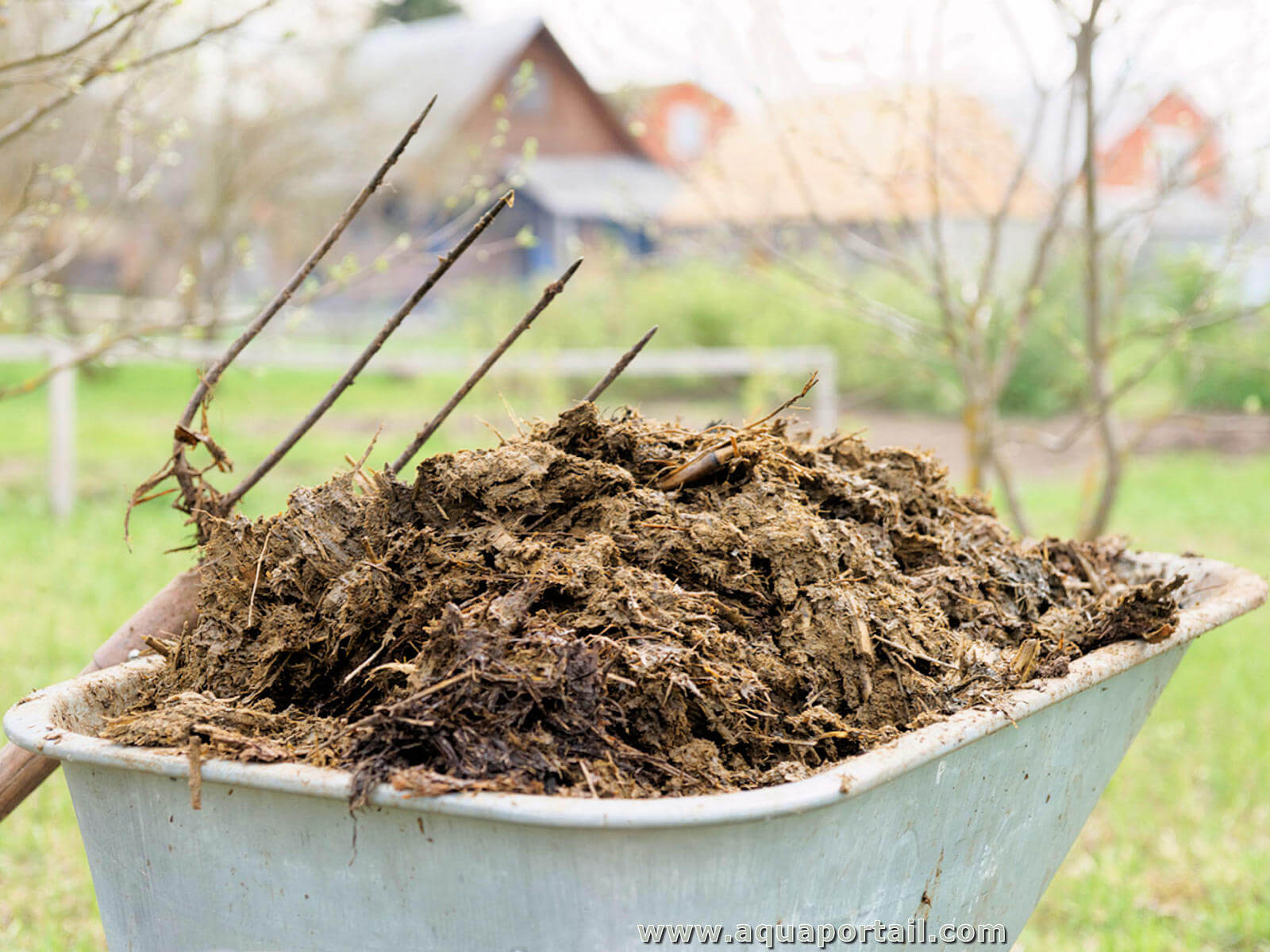
Manure is a mixture of animal droppings and plant bedding used to fertilize land. Manuring consists of applying manure to cultivated soil by spreading.
well-drained soil

Well-drained soil defines a substrate characteristic that promotes water runoff and percolation to prevent waterlogging around plant roots.
saccharide

A saccharide is a carbohydrate, a biomolecule composed of carbon, hydrogen, and oxygen atoms, usually with a hydrogen-to-oxygen atomic ratio of 2 :1.
sagittocyst

A sagittocyst is a capsule containing a spindle-shaped needle produced by epidermal cells of certain flatworms (acoels).
