Skull
noun (n.)
Definition
The skull is the complex assembly of various bony structures forming the head of a vertebrate animal's skeleton. The skull is composed of two parts: the neurocranium and the splanchnocranium. The neurocranium encloses the brain, and the splanchnocranium surrounds the mouth and pharynx.
Together with the vertebral column and ribs, the skull forms the axial skeleton, as distinct from the appendicular skeleton (limb bones, pectoral girdle, and pelvic girdle).
The human skull with its bones:

The human skull consists of several bony regions. It is composed of numerous bones, most of which are fused into a main part—the neurocranium (cranium, braincase)—and a "secondary" part: the splanchnocranium (viscerocranium, facial skeleton). The only bony parts of the skull not fused to the cranium are the mandible, the auditory ossicles, and the teeth.
Explanations
The skull is an enclosure of more or less rigid tissues housing the brain, organs of smell, vision, and the inner ear. It supports certain internal organs of the respiratory and digestive systems.
The skull performs numerous functions, including protecting the brain, shaping the face, and providing space for several senses, the nose, and the mouth. In some animals, the skull also bears protuberances with specialized functions, such as horns and antlers.
The braincase consists of a base (occipital, temporal, sphenoid, ethmoid, and frontal bones) and, during early development, the frontal portion of the occiput. The bones forming the braincase and facial skeleton are joined by synarthroses, almost always via dentate, squamous, plane (harmonic), or schindylesis sutures.
Unlike most bones of the body, which form through endochondral ossification of cartilage, most flat cranial bones, the lower jaw, and the clavicles form through intramembranous ossification of connective tissue joined by sutures (sutural bones).
Skull measurements are studied in craniology (craniometry and cranioscopy).
Anatomy
The skull is undoubtedly the most complex bony structure in the human body, formed of 22 paired and unpaired bones, often highly irregular in shape and joined together with some variability. Most of these bones are flat, composed of three layers—a thicker outer table, a thinner inner table, and a low-density spongy central layer called the cranial diploë (cancellous bone sandwiched between the two compact bone plates of a flat bone) in the cranial vault.
Bone thickness generally varies according to muscular coverage, so parts of the skull covered by more muscles or greater muscle mass than relatively exposed areas are thinner (and potentially more prone to fracture). An example of the former is the temporal bone; of the latter, the occipital bone.
The bones of the skull are joined by fibrous joints called sutures, which tend to fuse with aging, each within a more or less defined timeframe, though exceptions exist. They are fundamental because they allow the cranial bones to grow during development, growth that proceeds from the inside outward.
Cranial sutures become increasingly complex from the inside outward. Three types can be distinguished based on the forces acting upon them.
The first type consists of adjacent bones with smooth margins, the second of beveled bones overlapping one another, and the third of complex sutures formed by interdigitated bones. It is no coincidence that the first type predominates in the inner parts of the skull while interdigitated sutures are very common on its outer surface.
Ossification of cranial bones is often intramembranous; even in adulthood, they continue to house hematopoiesis (though playing a minor role compared to the bone marrow of other bones). The bones of the skull base form via endochondral ossification and their joints are synchondroses, though there are also two synovial joints: the temporomandibular and atlanto-occipital joints.
Newborn skull
In newborns, the cranium is not yet fully formed. The unfused spots are the anterior one at the top of the forehead, and the smaller posterior one (under an inch), which closes within a few weeks of birth.
The newborn skull is incompletely fused for two reasons:
- to allow the infant's head during childbirth to pass smoothly through the mother's pelvic bones without major difficulty;
- to allow the cranial bones to expand as rapidly as the brain grows.
Indeed, the anterior fontanelle at the crown of the head begins closing after 6 months of life and finishes around 18 months of age.
Non-mammalian skull
The skull of non-mammals connects to the vertebral column in several ways:
- In fish, it is immovably connected to the vertebral column. In cartilaginous fish, the skull (chondrocranium) is made not of bony tissue but of cartilage.
- In amphibians, the skull is connected to the vertebral column to a limited degree. There are no true cervical vertebrae, though the first vertebra is modified to allow slight head movement.
- In reptiles, birds, and mammals, the skull (osteocranium) articulates with specially shaped cervical vertebrae, giving the head relatively broad freedom of movement relative to the trunk.
Skull of a fish:
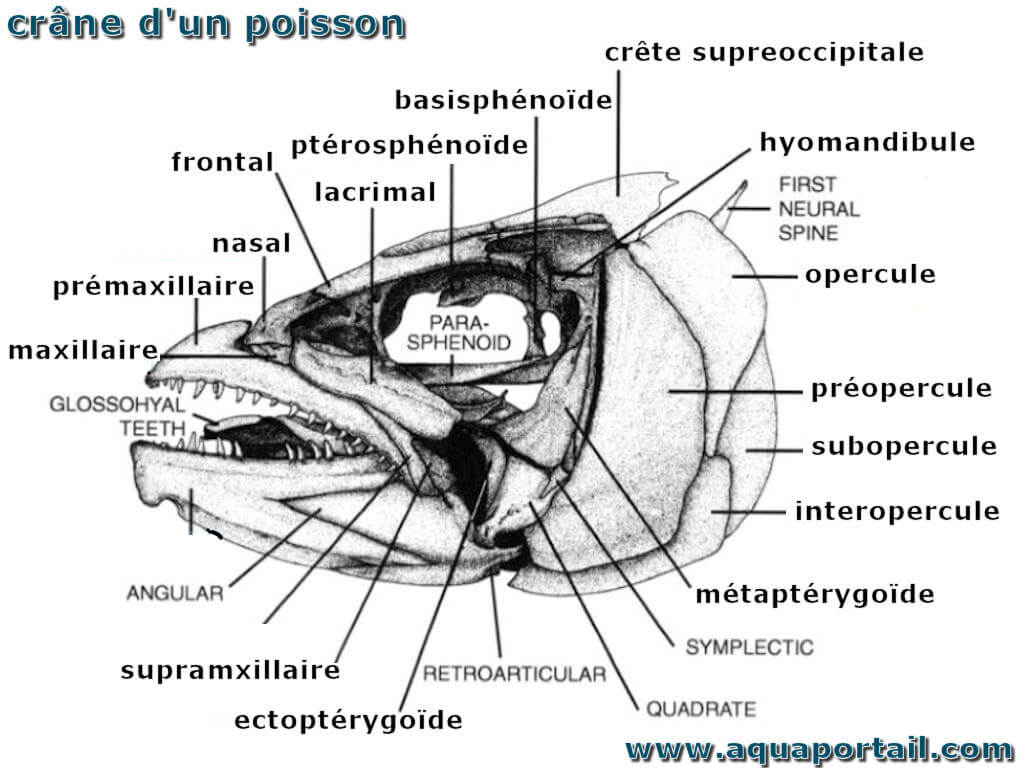
A fish skull differs from a mammalian skull in several bones.
In certain fish, amphibians, reptiles, and birds, the upper jaw can move independently of the braincase, a feature called a kinetic skull. This enables snakes to swallow prey larger than themselves.
Prootic region
The prootic region lies in front of the ear of the auditory apparatus. The prootic is an endochondral bone of the braincase, generally forming the anterior and dorsal surface of the otic capsule. In addition to the otic region of the brain itself, the otic capsule houses the labyrinth and inner ear.
The prootic bone is a bone or ossification center at the front of the periotic capsule closely associated with the anterior semicircular canal. During acute decompression sickness, fractures of the petrous (periotic) bones of the middle ear may occur. The dorsal periotic sinus is represented by a smooth-surfaced concavity hollowed into the lateral surface of the prootic.
See also pterotic.
Synonyms, antonyms
French translation:
crâneSpanish translation: cráneo
2 synonyms (similar meaning) for "skull":
0 antonyms (opposite meaning).
Related words and expressions to SKULL are directly connected by general or specific meaning.
The word SKULL is listed on page 1 of words starting with S in the dictionary glossary.
Related to "skull"
saccharide
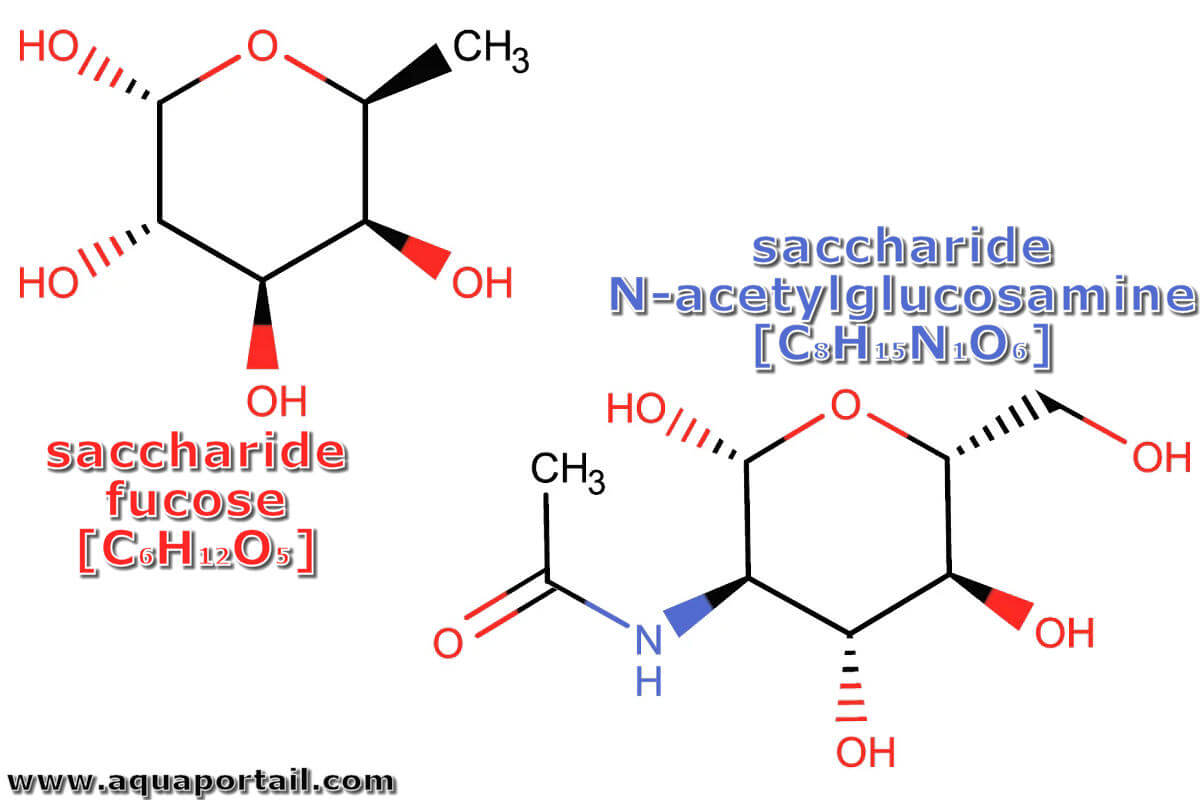
A saccharide is a carbohydrate, a biomolecule composed of carbon, hydrogen, and oxygen atoms, usually with a hydrogen-to-oxygen atomic ratio of 2 :1.
sagittocyst

A sagittocyst is a capsule containing a spindle-shaped needle produced by epidermal cells of certain flatworms (acoels).
saltwater treatment
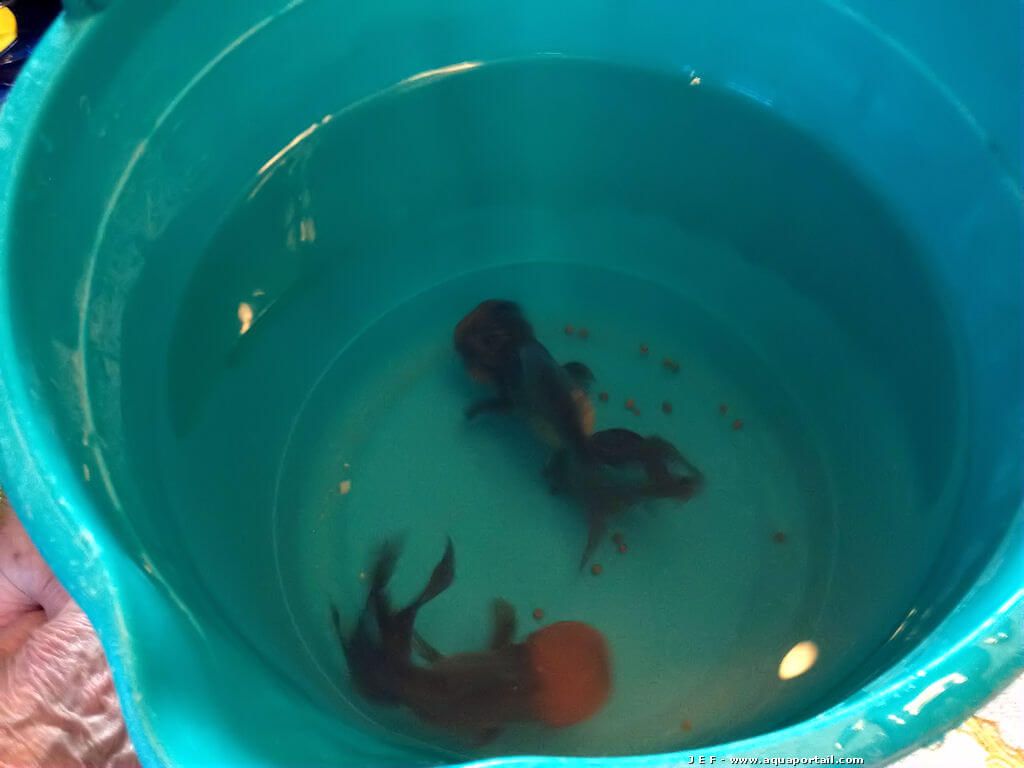
The saltwater bath method, or aquarium salt treatment, helps halt potential external infections via osmotic shock.
scale

A scale is a small, thin, horny or bony plate protecting the skin of fish and reptiles. Sets of scales generally overlap, partially covering one another...
Simple summary
The skull is the bony structure forming the head in vertebrates, providing protection and support for the brain and sensory organs. It consists of two main parts: the cranium (braincase), which houses the brain, and the facial bones, which shape the face, hold the teeth, and support sensory structures such as the eyes, nose, and mouth.
