Tooth
adjective (adj.)
Definition
In biology, a tooth is a whitish calcified anatomical structure in the jaw of many vertebrates, used to break down, tear, and chew food. Its primary function is mastication, though in carnivores teeth are also employed for hunting or defensive purposes.
The formidable teeth of the tigerfish:

The tigerfish has a formidable jaw lined with impressive teeth that enable it to tear flesh from its prey. Teeth are a vertebrate feature; in cartilaginous fishes, teeth are the only fossilized parts recovered because cartilage does not fossilize.
Explanations
In anatomy, a tooth is a hard, mineralized organ implanted in the oral—or rarely pharyngeal—mucosa by rooting. The visible portion of the tooth is the crown, and the junction between root and crown is called the neck (cervix). The main constituent of teeth is dentin or ivory, a material found across all taxonomic groups, which may be covered by enamel, cementum, and enameloid.
The collective set of teeth is termed dentition.
Structure
Teeth are composed of several tissues of varying densities and hardness. The cellular tissues that ultimately become teeth originate from the embryonic germ layer known as the ectoderm (along with neural crest mesenchyme). The general structure is similar across species, although wide variation exists in shape and position; in mammals, this diversity is defined by dentition and the dental formula.
A tooth showing enamel, dentin, and dental pulp:

Inside a tooth, the dental pulp lies beneath the dentin and enamel.
Mammalian teeth have deep roots, which are also found in certain fishes and crocodilians. However, in most teleost fishes, teeth are attached to the outer surface of the bone, whereas in lizards they attach to the inner surface of the jaw. In cartilaginous fishes, teeth are embedded in fibrous connective tissue covering the jaw cartilages. Modern amphibians generally have small teeth—or none at all—as they feed on soft prey. In reptiles, teeth are typically simple and conical in shape, though variation occurs among species; in snakes, specialized fangs operate like hypodermic needles, as their primary function is venom injection.
Growth
Tooth growth may be limited in time in the case of brachydont teeth, or continuous in hypsodont teeth, as seen in certain rodents such as guinea pigs and in lagomorphs, whose molars and incisors grow continuously.
Teeth may be very numerous, yet an evolutionary trend toward reduction or complete loss occurs in chelonians (turtles) and birds. The number and arrangement of a dentition are specified by the dental formula. Depending on the number of cusps, a tooth is described as unicuspid (1), bicuspid (2), etc.
Main types
Incisors are flattened anterior teeth with a cutting edge. Lemurs possess procumbent (comb-like) incisors unsuited for slicing flesh.
A canine is a pointed labial tooth situated between the incisors and premolars. In carnivores, canines are highly developed into fangs (as in dogs, for example); in wild boars and elephants, modified teeth form tusks.
The carnassial, or carnassial tooth, designates the shearing cheek tooth of carnivorans, specifically the upper 4th premolar and lower 1st molar.
A molariform tooth, generally located on pharyngeal jaws, has the shape of a molar without being a true molar; nonetheless, it serves to crush food. A molariform fungus is one whose surface bears tooth-like projections resembling molars with tubercles.
Two teeth of large sharks, including the famous megalodon:

Glossopetrae ("tongue stones") are fossilized teeth of certain fishes, notably shark teeth such as those of megalodon.
What is dental pertains to teeth. For example, a dentary bone, in gnathostomes other than chondrichthyans, is a dermal bone of the lower jaw bearing teeth. See also dental pulp.
See septal tooth, pharyngeal tooth, palatine tooth.
In botany
In botany, when leaves exhibit margins (edges) resembling teeth, they are termed dentate, runcinate, pinnatifid, etc.
Synonyms, antonyms
Spanish translation: diente
4 synonyms (similar meaning) for "tooth":
- dental formula
- dentition
- denture
- glossopetra
0 antonyms (opposite meaning).
Related words and expressions to TOOTH are directly connected by general or specific meaning.
The word TOOTH is listed on page 1 of words starting with T in the dictionary glossary.
Related to "tooth"
tagma

A tagma is a group of fused segments formed by series of metameres differentiated from the rest of an arthropod's body.
tapeworm
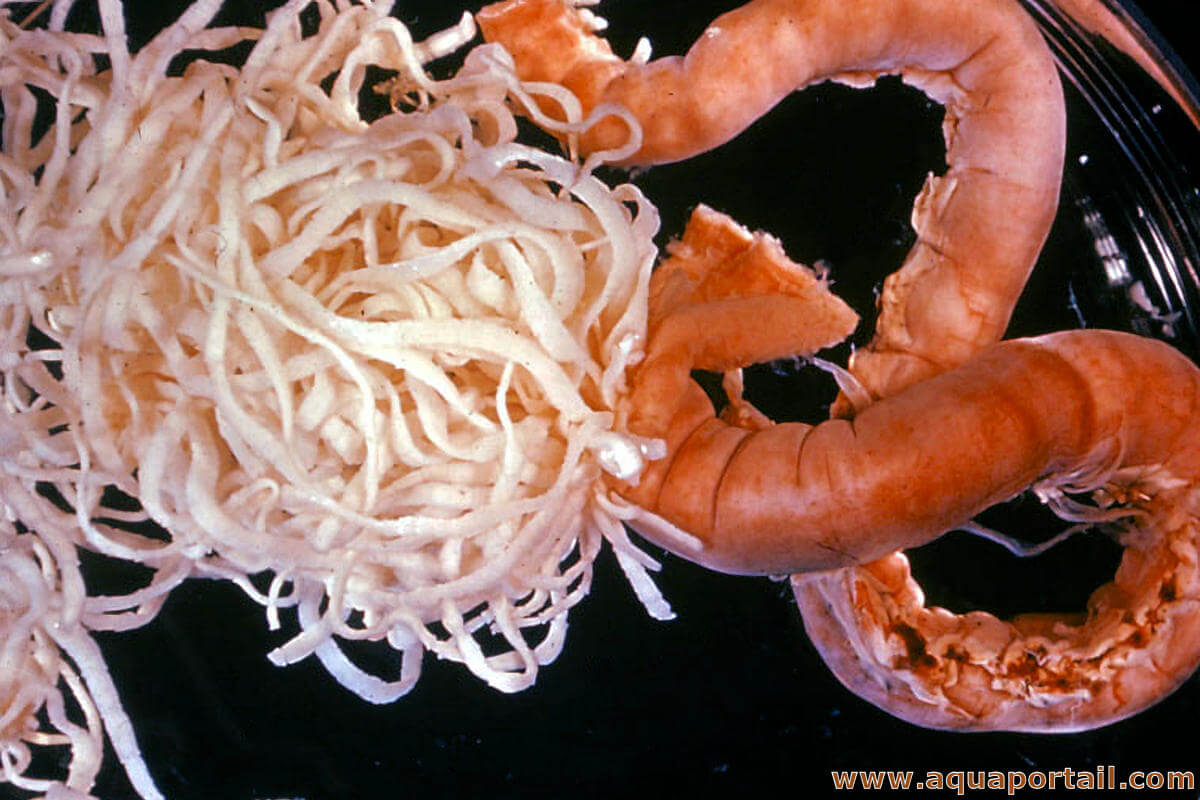
The tapeworm, or solitary worm, is a long, ribbon-like, segmented flatworm, a parasitic cestode of the genus Taenia.
tectonics

Tectonics is a branch of geology that studies the structure of the crust of a planetary body, such as Earth or the Moon, particularly the formation of folds...
teliospore

A teliospore (teleutospore) is a thick-walled, multicellular fungal spore from which the basidium develops.
Simple summary
A tooth is a hard, calcified structure located in the mouth, composed of enamel, dentin, pulp, and cementum. The set of teeth (dentition) participates in chewing and breaking down food into smaller, more digestible pieces.
