Cartilage
noun (n.)
Definition
Cartilage is a connective skeletal tissue—a smooth, elastic connective tissue whose cells, enclosed within lacunae, are separated from one another by a ground substance impregnated with a mucoprotein, chondrin, which can undergo calcification.Forming a resilient, rubbery cushion that covers and protects the ends of long bones at joints, it is a structural component of the rib cage, ear, nose, bronchi, intervertebral discs, and numerous other structures of the body.
Cartilage:
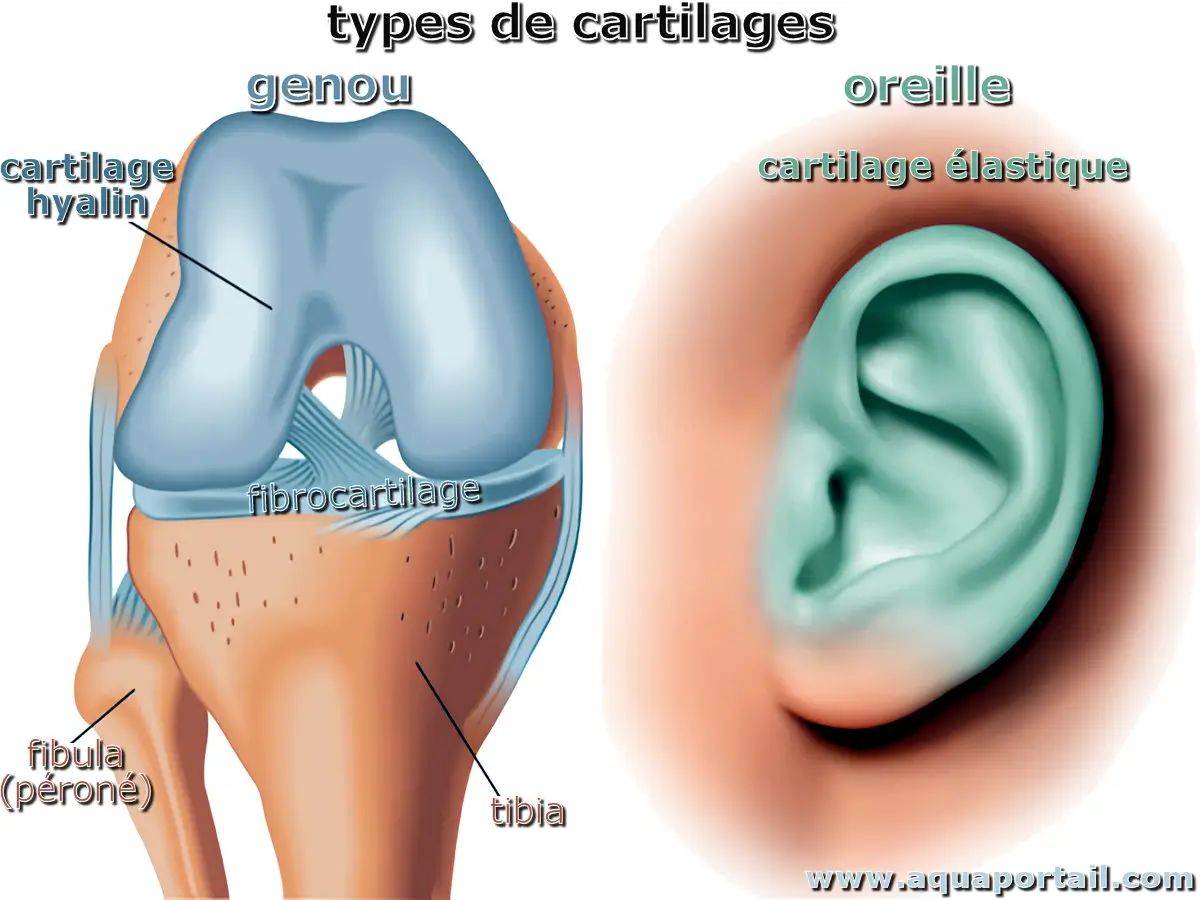
Cartilage is a flexible connective tissue found in various parts of the body, notably the joints, ears, nose, and rib cage. Unlike bone, its resilient gel-like matrix enables it to absorb shock and provide structural support, cushioning the skeletal system and facilitating smooth movement between bones.
Explanations
⭐ Cartilage is not as hard and rigid as bone, yet it is far stiffer and much less flexible than muscle. Because of its firmness, cartilage often serves to hold passageways open in the body. Examples include the rings of the trachea, such as the cricoid cartilage and the tracheal carina.
See also cranial cartilages such as Meckel's cartilage and the palatoquadrate cartilage.
✅ Cartilaginous tissue is a firm supporting tissue, both elastic and flexible, resistant to compression, which during embryonic development also precedes the bony skeleton. It can be sliced with a blade and, like other connective and supporting tissues, consists of cells and surrounding intercellular substance composed of fibrous and amorphous components.
⭐ The primary role of cartilage is to provide both structural support and flexibility. It acts as a protective layer, minimizing friction between bones during movement, particularly at joints such as the knees, hips, and shoulders.
Cartilage lacks blood vessels in adults. Its growth occurs either by apposition from its connective sheath or by division of cartilage cells (interstitial growth). Cartilage is found in vertebrates as well as in cephalopod mollusks.
In species with a bony skeleton, adult skeletal elements arise either from embryonic cartilaginous templates (deep skeleton via endochondral ossification) or from connective tissue condensations (superficial skeleton via intramembranous/dermal ossification).
Composition
Cartilage is composed of specialized cells called chondrocytes that produce a large amount of collagenous extracellular matrix, an abundant ground substance rich in proteoglycans and elastin fibers. Cartilage is classified into three types—elastic cartilage, hyaline cartilage, and fibrocartilage—which differ in their relative proportions of collagen, elastin, and proteoglycans.
Cartilage contains neither blood vessels (it is avascular) nor nerves (it is aneural). Nutrition is supplied to chondrocytes by diffusion. Compression of articular cartilage or flexion of elastic cartilage generates fluid flow, which promotes nutrient diffusion to the chondrocytes. Compared with other connective tissues, cartilage exhibits very slow turnover of its extracellular matrix and heals poorly.
The three types of cartilage:

There are three distinct types of cartilage: elastic (A), hyaline (B), and fibrous (C). In elastic cartilage, cells are more closely packed, leaving less intercellular space; elastic cartilage is found in the auricles of the outer ears and parts of the larynx. Hyaline cartilage has fewer cells than elastic cartilage, with more intercellular matrix; hyaline cartilage is found in the nose, trachea, parts of the larynx, and bronchi. Fibrous cartilage (fibrocartilage) has the fewest cells and therefore the greatest amount of intercellular matrix; fibrocartilage is found in the vertebral column (intervertebral discs) and menisci.
⭐ In healthy joints, the ends of bones are covered by a layer of articular cartilage. When in good condition, this cartilage is smooth, firm, and resilient; its primary function is to absorb shock and reduce friction during movement. The joint structure is supported by tendons, ligaments, and the joint capsule, which maintain cohesion and facilitate motion. Tendons connect muscles to bones, whereas ligaments connect bones to one another, contributing to joint stability.
In detail
Cartilage cells comprise chondroblasts, chondrocytes, and chondroclasts.
Chondroblasts ("cartilage-forming cells") are the precursors of chondrocytes. They derive from mesenchymal stem cells and represent the metabolically active form of cartilage cells capable of synthesizing all components of the cartilaginous matrix. Once chondroblasts complete this active synthetic phase, they differentiate into mature chondrocytes.
Chondrocytes are smaller than chondroblasts, spherical or ovoid in shape, have a rounded nucleus, and contain water, lipids, and glycogen. Their number, arrangement, and density are specific to each type of cartilage.
Chondrocytes can still divide while immature, giving rise to characteristic "isogenous groups." These arise when dividing cells are already surrounded by cartilaginous matrix and can no longer migrate apart. Isogenous groups are clusters of chondrocytes in which each cluster originates from a single parent chondrocyte.
Individual chondrocyte clusters are surrounded by a pericellular capsule and housed within a cartilaginous cavity (lacuna), reflecting the space occupied by the chondrocytes. This unit is surrounded by a territorial matrix, distinctly stainable due to its strong basophilia.
Isogenous groups are often arranged in columns (axial isogenous groups) or clusters. The isogenous group together with its territorial matrix forms a "chondron" (chondrium). Once fully differentiated, chondrocytes lose their capacity to divide.
Chondroclasts are resorptive cells specialized in breaking down cartilage. They are much larger, formed by the fusion of multiple monocytic precursors, and therefore appear as multinucleated giant cells. They play a major role in resorbing the cartilaginous template during endochondral ossification into definitive bone, as well as in remodeling during bone fracture healing.
The intercellular substance consists of fibrous and amorphous components. The fibrous components consist of collagen or elastic fibers, whose content varies across the three types of cartilage. The primary constituents of the amorphous intercellular ground substance are water (about 70%), proteoglycans (chiefly aggrecan), and hyaluronic acid. Proteoglycans are polyanionic and thus attract sodium cations, which in turn draw water into the matrix.
Cartilaginous tissue is free of blood vessels and nerves in adults, so cell nutrition must occur by diffusion. This takes place either via a protective vascularized connective tissue sheath (perichondrium) covering the cartilage (with the exception of articular cartilage and fibrocartilage) or, in the case of articular cartilage, via synovial fluid in the joint cavity. However, surgical techniques such as microfracture can stimulate the formation of fibrocartilaginous repair tissue.
Synonyms, antonyms
Spanish translation: cartílago
0 synonyms (similar meaning) for "cartilage".
0 antonyms (opposite meaning).
Related words and expressions to CARTILAGE are directly connected by general or specific meaning.
The word CARTILAGE is listed on page 1 of words starting with C in the dictionary glossary.
Related to "cartilage"
cactus

A cactus is a thick, fleshy plant that grows in many hot, dry regions of the world. Cacti do not have leaves, and many are covered with spines.
caecilian

A caecilian (gymnophione) is a limbless, burrowing, worm-like amphibian whose legs are vestigial or absent.
cancer
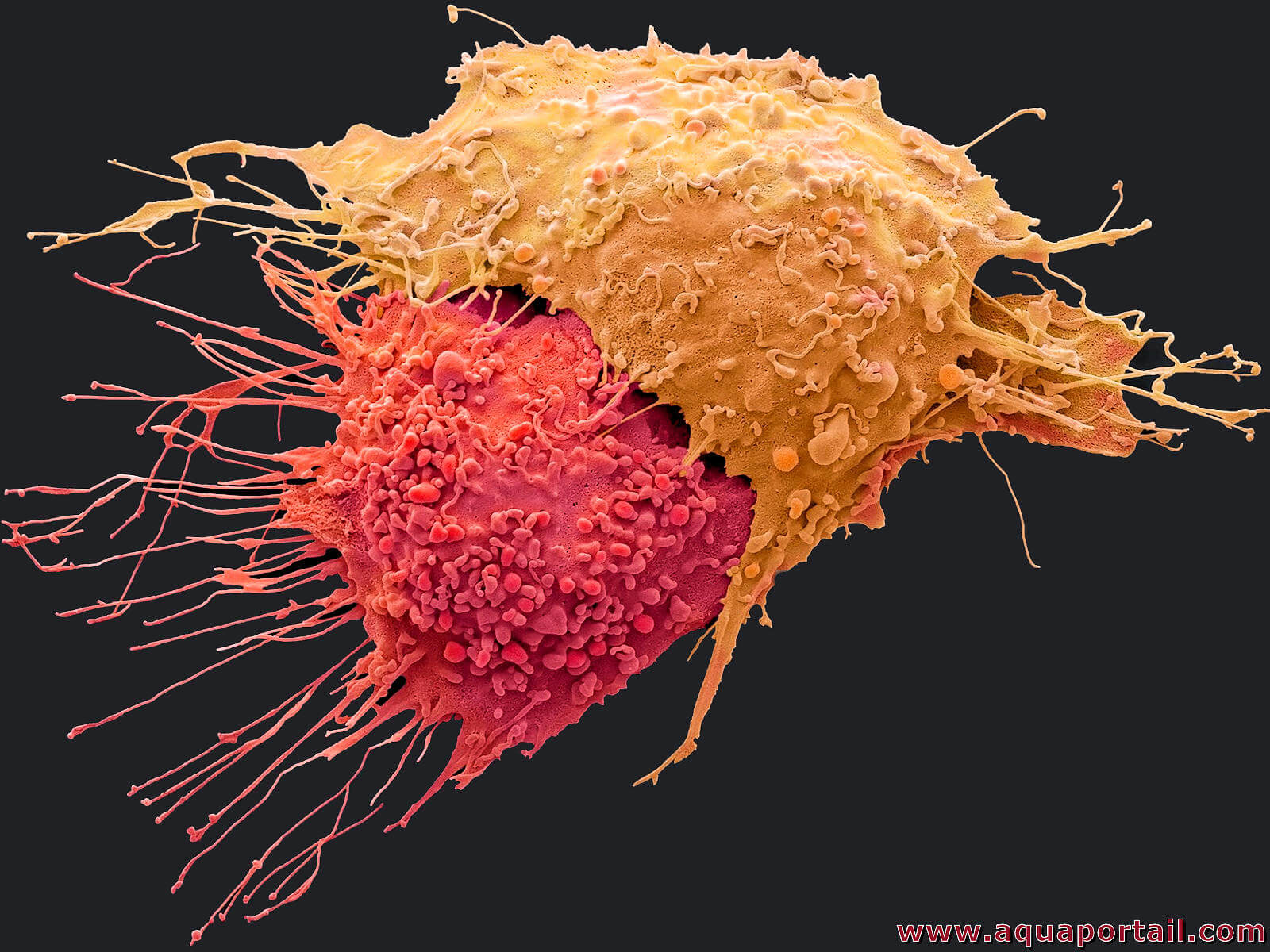
Cancer is a disease in which certain cells of the body grow uncontrollably and spread to other parts of the body.
capsule

A hard capsule (gelcap) is a small, hollow, hard-shelled capsule made of two interlocking halves containing a medication, nutraceutical, or dietary...
