Mollusk
noun (n.)
Definition
A mollusk is a soft-bodied terrestrial or aquatic invertebrate animal belonging to the phylum Mollusca. These lophotrochozoans are bilaterally symmetrical, unsegmented, and many possess a calcareous shell. The soft body consists of a cephalic region, a visceral mass, and a muscular foot.
Mollusks include:
- gastropods (snails, slugs, nudibranchs)
- bivalves (cockles, clams, mussels, oysters, giant clams)
- cephalopods (squids, octopuses)
- chitons (polyplacophorans).
Burgundy snails are terrestrial mollusks :

A mollusk is a soft-bodied invertebrate generally characterized by a muscular foot, a visceral mass containing its internal organs, and, in many cases, a protective calcium carbonate shell. Burgundy snails are mollusks.
Explanations
The study of mollusks is called malacology. In the past, they were called malacozoans, whereas today they are classified among the lophotrochozoans within the protostomes. Mollusk farming (shellfish farming) is the cultivation of mollusks. A diet based on mollusks is called molluscivorous (or malacophagous).
Description
Although the body shape of each mollusk varies widely across the seven classes forming the group, certain features are shared by almost all mollusks. The shell may take the form of a vestige or an exoskeleton.
In biology, a mollusk is a soft-bodied animal whose dorsal portion containing the visceral mass is enveloped in a fold called the mantle, and a calcareous shell (or equivalent). The mantle fold defines the pallial cavity (mantle cavity), which houses the gills, reproductive organs, and digestive organs. The "head," reduced in bivalve shellfish, bears the sensory organs. Locomotion is provided by a muscular foot. Reproduction is sexual, though many species possess a dual reproductive system, as in hermaphroditic mollusks.
Many aquatic mollusks are found in the sea, though they have also colonized Earth's freshwaters. While most mollusks are fairly drab in coloration to blend in and avoid predators, some are conversely resplendent with vibrant colors.
Giant clams are marine bivalve mollusks:
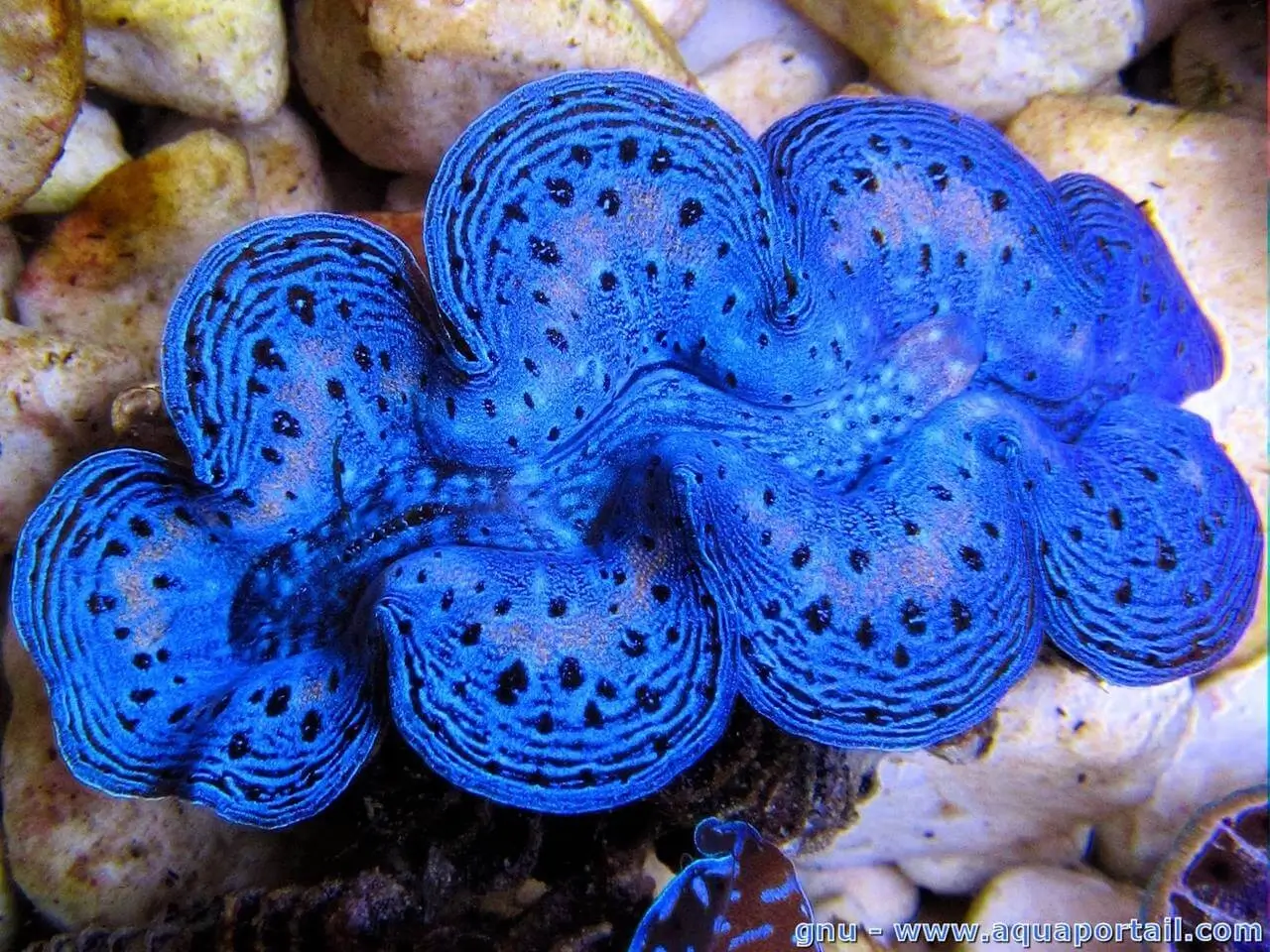
A bivalve mollusk such as the giant clam Tridacna maxima displays a very showy mantle with its ctenidia to take advantage of its association with algae (zooxanthellae) and harvest energy produced by photosynthesis.
The diet of mollusks is highly varied, with some even being carnivorous, including those with a molluscivorous diet.
Most mollusks have blue blood because their respiratory pigment is hemocyanin, a type-3 copper-binding protein that turns blue upon binding oxygen. Molluscan hemocyanins are enormous cylindrical polymeric glycoproteins dissolved freely in the hemolymph.
See also mollusk attachment.
Phylum Mollusca
The phylum Mollusca comprises over 85,000 living species, and new species are discovered or described very frequently. This phylum is one of the largest and most successful among invertebrate groups. Numerous fossils (whose species count is estimated between 60,000 and 100,000) are mollusks (ammonites, fossil nautiloids, belemnites...), and mollusks rank among the oldest animals on Earth.
Many mollusks are encountered in the sea, though they have also colonized Earth's freshwaters. Although body form varies widely across the seven classes forming the group, certain characteristics are common to nearly all mollusks. With the exception of Neopilina, a primitive deep-sea form, mollusks show virtually no trace of segmentation. Their fundamentally bilaterally symmetrical body generally comprises a head, a muscular foot, and a hump-shaped visceral mass housing the digestive tract and other organs, such as respiratory organs.
A skin covering called the mantle extends from the dorsal margin of the body to cover it wholly or partially. Between the mantle and the visceral mass lies the pallial cavity, where the gills are located when present, as well as the anus and the openings of the excretory and reproductive organs.
In most mollusks, the mantle secretes a protective calcareous shell into which the body can retract; in others, the shell may be internal or even absent.
Sexes may be separate, though hermaphroditic forms are not uncommon! Sometimes eggs and sperm are released into the water where fertilization then takes place, and sometimes individuals reproduce through copulation. Planktonic larvae often feature in the developmental cycle.
Adult aquatic mollusks are often benthic, though some forms are planktonic or active swimmers. They are particularly abundant on tidal flats uncovered slightly by tides, and especially in the intertidal zone and shallow waters, where many feed on films of bacteria, fungi, or algae that they scrape from the substrate using their radula, a structure unique to their phylum, a tongue-like organ equipped with teeth... Carnivorous forms use the radula to attack their prey (cone snails, for example).
Conversely, many species lack a radula and feed by filtration, trapping nutrient particles found in the water or on the surface of the sediments in which they live.
Bioluminescent mollusks
There are planktonic mollusks that generate bioluminescence. These are gastropods from 4 orders: heteropods, thecosome pteropods, gymnosome pteropods, and nudibranchs. To date, bioluminescence has been observed in only 2 genera of nudibranchs: Phylliroe and Tethys.
In food
Mollusks constitute an important food source for fishes, waterbirds, mammals (mainly marine), and humans. Snails, oysters, mussels, and scallops are farmed in several countries around the world. Shellfish harvesting is practiced on a large scale by both amateurs and professionals; certain shells are used to make jewelry and buttons.
The Burgundy snail is a mollusk consumed in France:

Mollusks are eaten in many regions of the world: their flesh has little flavor of its own, so culinary preparations pair them with a fragrant sauce to enhance their organoleptic qualities.
Many mollusks are edible, such as most snails. In Asia and Africa, giant African land snails such as Achatina fulica are highly prized as a source of animal protein.
A cooked dish of wedge clams, bivalve mollusks:

Shellfish, such as these Donax trunculus, large wedge clams, are mollusks simply prepared with garlic butter for human consumption.
Seafood largely comprises mollusks such as periwinkles, mussels, and oysters (especially the Pacific cupped oyster), though it also includes crustaceans.
In the aquarium
Modern aquariums house mollusks. While in freshwater it is primarily aquatic snails such as bladder snails, pond snails, and ramshorn snails that occupy the bottom, there are also a few bivalves such as Asian clams (Corbicula) and freshwater mussels. Aquatic snails are usually very prolific, reproducing rapidly, and sometimes become pests in freshwater aquariums.
The ramshorn snail is a freshwater mollusk:

Aquatic mollusks such as Planorbarius corneus are kept and bred in freshwater aquariums for their detritivorous qualities.
In marine aquariums, the selection among mollusks is very broad, though giant clams are among the most beautiful and colorful.
Synonyms, antonyms
Spanish translation: molusco
5 synonyms (similar meaning) for "mollusk":
0 antonyms (opposite meaning).
Related words and expressions to MOLLUSK are directly connected by general or specific meaning.
The word MOLLUSK is listed on page 1 of words starting with M in the dictionary glossary.
Related to "mollusk"
bivalve

A bivalve is a type of shellfish among pelecypod (lamellibranch) mollusks and brachiopods, whose shell is formed of two valves connected by a hinge...
chiton
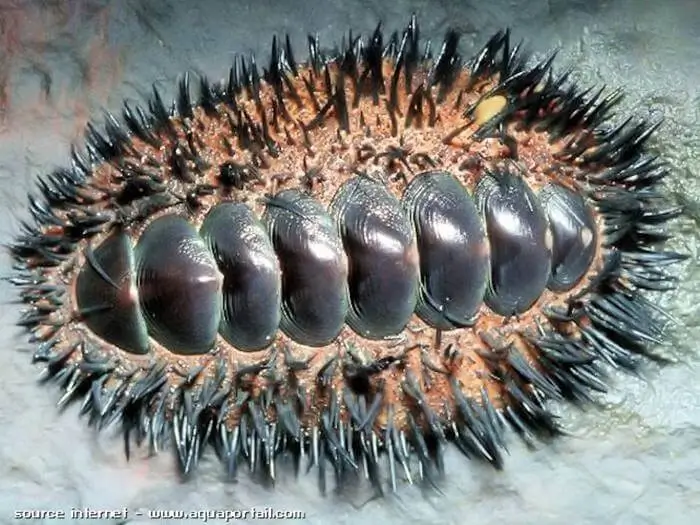
From the class Polyplacophora, a chiton, or sea cradle, is a marine mollusk belonging to an ancient group whose shell is formed of several segmented...
mesogastropod
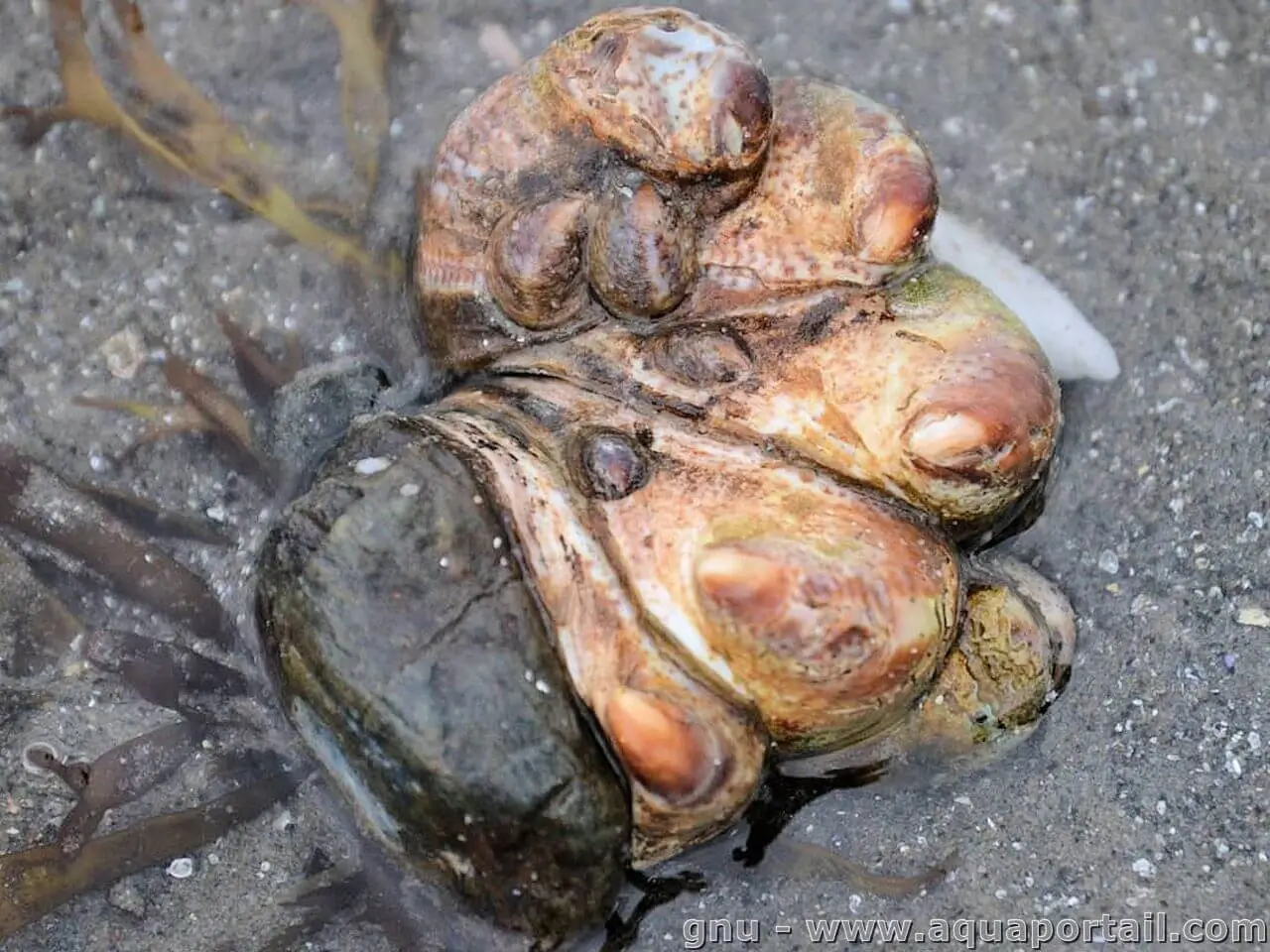
A mesogastropod is a marine mollusk, such as the slipper limpet, belonging to the former taxonomic order Mesogastropoda.
madrepore

A madrepore (Madrepora) is a marine animal of the group of scleractinian corals possessing an external skeleton, typically an acropora and encompassing...
