Foot
noun (n.)
Definition
A foot is the terminal structure of a hindlimb (leg, paw) just as the hand is for a forelimb. The foot is essential for human locomotion, bipedalism, and postural stability.
This lower extremity of the leg below the ankle enables a person to stand upright and walk, with the muscles associated with the foot primarily involved in these functions.
A foot with its main bones:

The foot and ankle form a complex joint assembly involved in movement and providing stability and balance for the body. The foot and ankle consist of 26 bones, 33 joints, and numerous muscles, tendons, and ligaments.
Explanations
evolution has refined human feet for bipedal walking. Consequently, the anatomy of the foot broadly parallels that of the hand, yet differs sufficiently to perform distinct mechanical functions.
The foot can be divided into three regions: the hindfoot, the midfoot, and the forefoot.
Bones of the foot
There are 26 bones in the foot, divided into three groups: seven tarsal bones, five metatarsal bones, and fourteen phalanges (toe bones). The tarsals form a sturdy weight-bearing platform; they are homologous to the carpal bones of the wrist and are grouped into proximal, intermediate, and distal rows.
The proximal tarsal bones are the talus and the calcaneus.
The intermediate tarsal bone is the navicular.
The distal tarsal bones are the cuboid and three cuneiform bones (lateral, intermediate, and medial).
X-ray of the bones of the foot:

Detail of all the bones of the foot viewed via X-ray (radiograph).
The metatarsals are homologous to the metacarpals of the hand and assist in supporting body weight. On the plantar surface of the head of the 1st metatarsal lie two prominent sesamoid bones (one medial and one lateral).
The phalanges likewise parallel those of the hand: the four lateral toes consist of three phalanges (proximal, middle, and distal), whereas the big toe (hallux) is composed of only two phalanges (proximal and distal).
The tarsals are a group of 7 irregular bones forming the hindfoot and midfoot. Arranged in proximal and distal rows, the proximal tarsals form the hindfoot, while the distal tarsals form the midfoot.
For the hindfoot: talus (astragalus) and calcaneus (heel bone). The talus connects the foot to the rest of the leg and body via articulations with the tibia and fibula, the two long bones of the lower leg.
For the midfoot: navicular, cuboid, medial cuneiform, intermediate cuneiform, and lateral cuneiform. Some individuals are born with an extra navicular bone (accessory navicular) on the medial side of the normal navicular bone, a normal anatomical variant observed in roughly 2.5% of the population.
The metatarsal bones form a group of 5 long bones located toward the front of the foot, behind the toes. Together with the phalanges (toe bones), they form the forefoot. They decrease in length from the big toe (hallux) toward the little toe and are numbered accordingly (I to V).
Each metatarsal has a head, a shaft (body), and a base. The proximal base articulates with the tarsal bones, while the distal head articulates with the proximal phalanges.
The phalanges are the 14 long bones of the toes in each foot, forming the forefoot together with the metatarsals. The second through fifth toes each have 3 phalanges, whereas the big toe has only 2.
These bones are named proximal (closest to the ankle), middle, and distal (farthest from the ankle) phalanges according to their position in the toes; the big toe has only proximal and distal phalanges.
Two small, rounded sesamoid bones lie beneath the base of the big toe near the joint between the 1st metatarsal and the proximal phalanx of the hallux, serving as attachment sites for tendons and aiding movement of the big toe.
Joints
In addition to the ankle joint (talocrural joint) connecting the foot to the leg, the bones of the foot articulate with one another via numerous synovial joints grouped into four sets: intertarsal, tarsometatarsal, metatarsophalangeal, and interphalangeal.
The four groups are:
- Intertarsal joints lie between the tarsal bones, comprising the subtalar (talocalcaneal), talocalcaneonavicular, calcaneocuboid, cuneonavicular, cuboideonavicular, and intercuneiform joints.
- Tarsometatarsal joints connect the tarsal bones with the metatarsals.
- Metatarsophalangeal (MTP) joints connect the heads of the metatarsals with the corresponding bases of the proximal phalanges.
- Interphalangeal joints lie between the phalanges of the toes. The big toe has a single interphalangeal joint, whereas the four lateral toes each have a proximal (PIP) and a distal (DIP) interphalangeal joint.
Muscles
Numerous muscles, ligaments, and tendons attach to the foot, enabling both fine and powerful movements. There are 29 muscles associated with the human foot: 10 originate in the lower leg and cross the ankle joint to act on the foot (extrinsic muscles), and 19 are intrinsic muscles located entirely within the foot.
These muscles are assisted by the plantar fascia, shaping the posture, arch, and strength of the foot while transmitting muscular tension not only to the ground but throughout the locomotor system.
Foot muscles contribute to eversion and inversion of the foot, toe movements, plantar flexion, and dorsiflexion. Intrinsic foot muscles are divided into dorsal and plantar groups: there are only two muscles in the dorsal group, whereas the plantar muscles are subdivided into three groups—lateral, central, and medial.
Synonyms, antonyms
Spanish translation: pie
2 synonyms (similar meaning) for "foot":
1 antonym (opposite meaning):
Related words and expressions to FOOT are directly connected by general or specific meaning.
The word FOOT is listed on page 1 of words starting with F in the dictionary glossary.
Related to "foot"
hallux

The hallux is the big toe (great toe) of a foot, homologous to the thumb of a hand. It is located on the medial (inner) side of the foot, whereas the little...
toe

A toe is one of the digits at the end of a foot (human, quadruped, or bird). The human foot has five toes, the largest of which is called...
buttercup

A buttercup is a member of the Ranunculaceae family, often a terrestrial or aquatic plant of the genus Ranunculus whose petals are very glossy, especially...
maxilliped
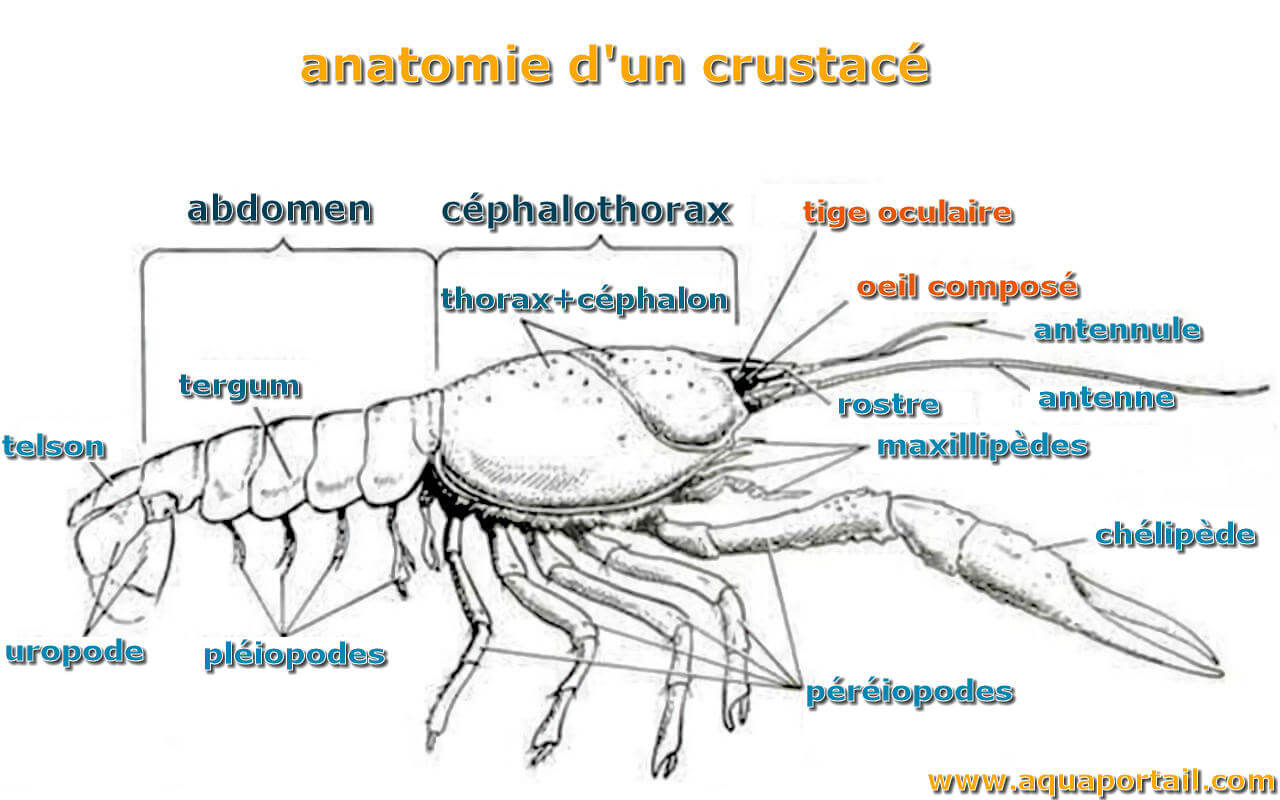
A maxilliped (or jaw-foot) is one of the thoracic feeding appendages of certain crustaceans located behind the maxillae, used in feeding.
Simple summary
The foot is an anatomical structure located at the lower extremity of the leg or limb. The human foot consists of three main sections: the forefoot, comprising the toes and metatarsals; the midfoot, which includes the plantar arch; and the hindfoot, formed by the heel and ankle.
