Flame
noun (n.)
Definition
A flame is the hot, visible part of a fire resulting from the rapid combustion of glowing gas. A substance that vaporizes during combustion produces flames. It is caused by a highly exothermic reaction occurring within a thin zone. A body of hot, incandescent gas generating fire is called a flame.
A flame is a stream of hot, burning gas rising from something on fire. Fire is the state of combustion that produces flames emitting heat and light, and may produce smoke. While "fire" refers to a state, "flame" refers to the visible result of that state.
A flame:
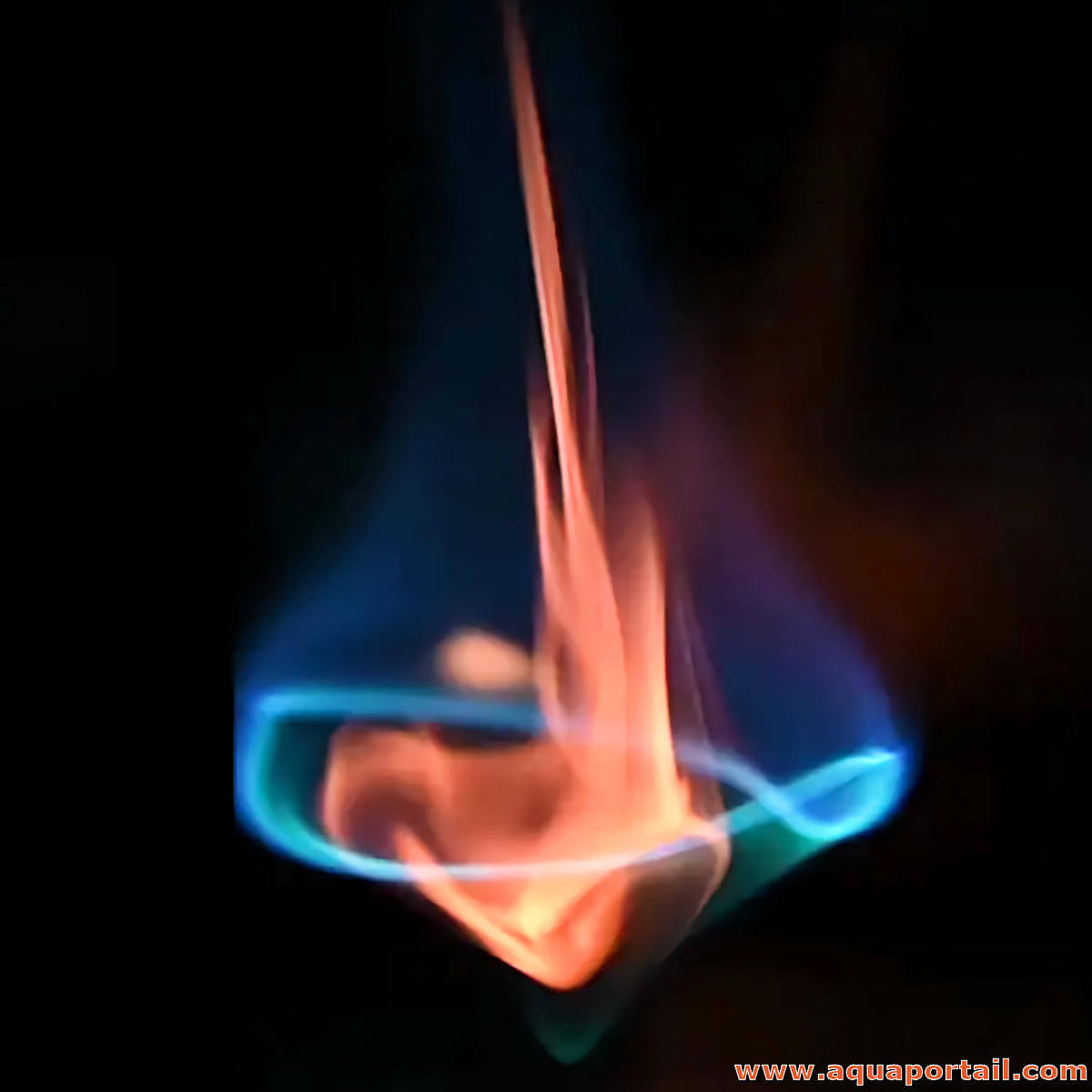
A flame emits heat as well as red and blue light. The colors depend on the fuel being burned. Blue flames are the hottest, followed by white flames (faintly visible); below that, yellow, orange, and red are the common visible colors. A non-luminous flame is hotter because it releases more energy.
Explanations
Flames occur when two gases react, producing both heat and light. When different gases react, they release different amounts of energy, causing some flames to burn at higher temperatures than others. A body of hot, incandescent gas generating fire is called a flame.
Flame propagation is explained by two theories: thermal conduction and diffusion. A flame often contains tiny incandescent particles, typically emanating from flickering streams of burning material or produced by a jet of ignited gas.
The flame of a household candle, for example, reaches between 800 °C and 1,000 °C (1,472 °F and 1,832 °F). A flame can burn at a higher temperature by adjusting the reaction, such as using pure oxygen instead of air. Burning a mixture of oxygen and acetylene, or oxyacetylene, produces a flame burning at over 3,000 °C (5,432 °F) and can be used to cut, melt, and weld metals.
Diagram showing details of a flame:
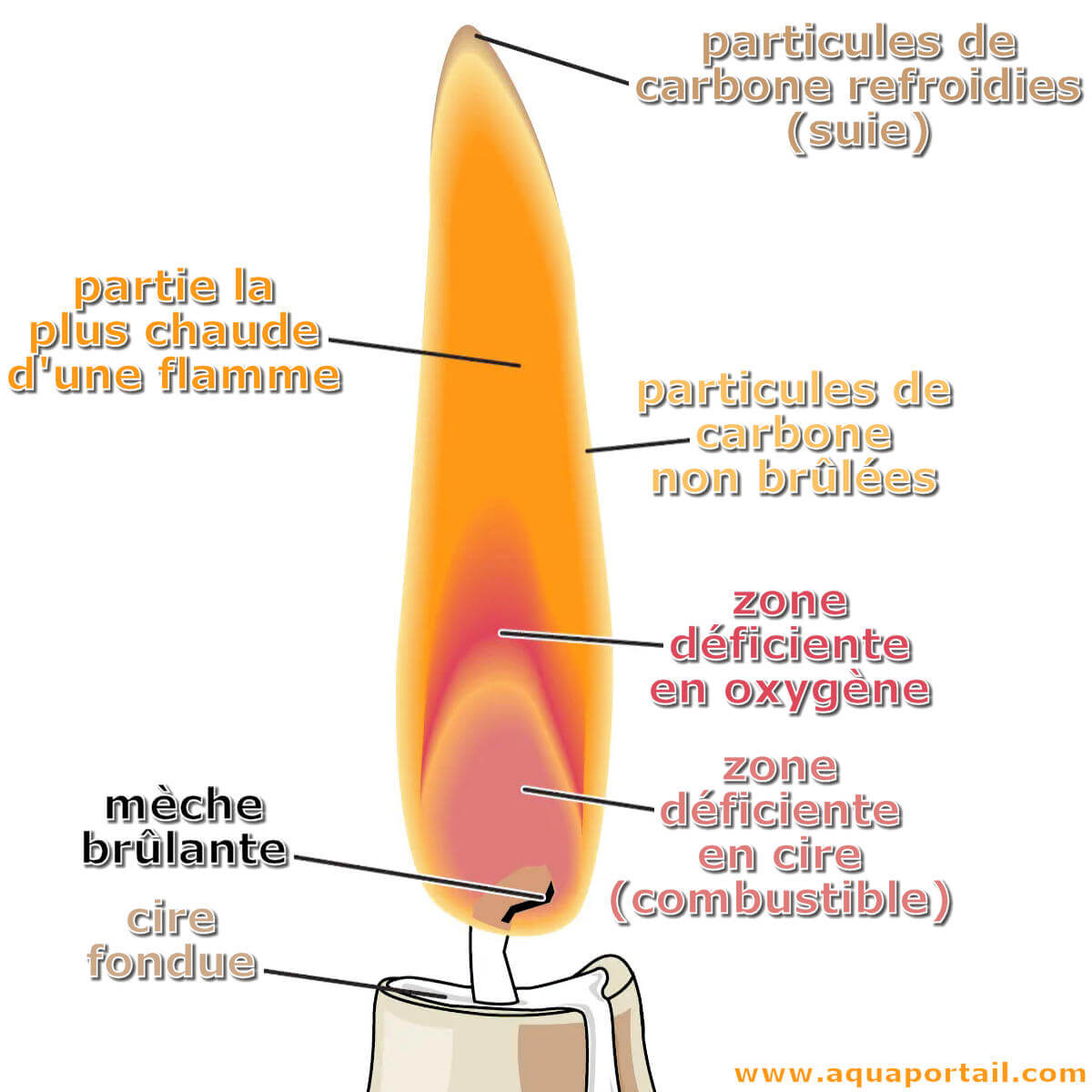
A wax candle burns with a flame (whereas charcoal burns without a flame). There are 3 flame zones: the outermost zone (blue, oxidizing, and very hot), the middle zone (bright yellow, rich in glowing soot particles), and the innermost zone (dark, containing unburned vaporized gases and poor in oxygen).
✅ A healthy, clean-burning flame on gas appliances should be blue, sometimes with a tiny yellow tip, featuring a small light-blue inner cone at the center. By contrast, flames in an uncontrolled fire are deeply orange, verging on blazing red.
⭐ As a reminder, fire, or rapid combustion, is a chemical reaction that transforms a fuel and oxygen into carbon dioxide and water. It is an exothermic reaction, meaning it releases heat. This occurs because the chemical bonds in the oxygen molecule are relatively weak while the newly formed bonds are more stable, resulting in a net release of energy.
Synonyms, antonyms
Spanish translation: llama
0 synonyms (similar meaning) for "flame".
0 antonyms (opposite meaning).
Related words and expressions to FLAME are directly connected by general or specific meaning.
The word FLAME is listed on page 1 of words starting with F in the dictionary glossary.
Related to "flame"
fabrication

Fabrication is the act or process of making, constructing, or inventing something. The manufacturing or fabrication process, whether artisanal or industrial...
fang
A fang is a long, pointed, and curved tooth. All animals equipped with fangs use them to bite. Whereas in mammals the upper-jaw fangs (called canines)...
fatty acids

Fatty acids are molecules possessing a long hydrophobic hydrocarbon chain and a highly hydrophilic carboxyl group at one of its ends.
feeding

Feeding is the ingestion of food aimed at meeting the nutritional or medicinal needs of all organisms for their vital functions, notably growth, movement...
