Forearm
noun (n.)
Definition
The forearm is the distal region of the human upper limb extending from the elbow to the wrist, composed of two long bones: the radius and the ulna. It complements the upper arm, which is the proximal segment connected to the shoulder.
Anatomy of the forearm:
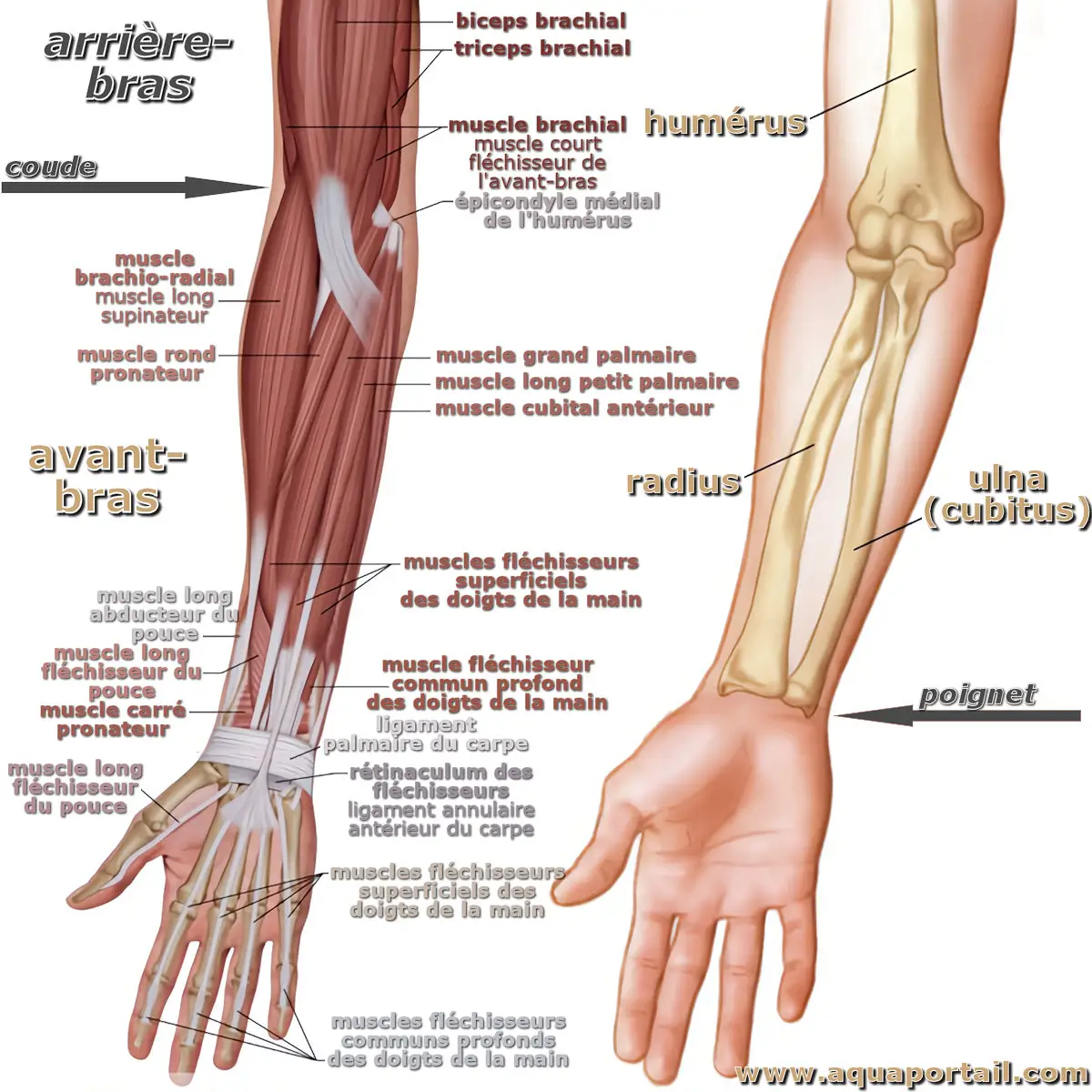
The forearm is the segment of the upper limb extending from the elbow to the wrist. Its skeleton consists of two bones: the radius laterally and the ulna medially, housing two primary muscle compartments—anterior (flexors) and posterior (extensors)—comprising twenty muscles.
Explanations
The muscles of the forearm are organized into two main compartments: an anterior compartment housing the flexors and pronators, and a posterior compartment housing the extensors and supinators. These compartments are separated by deep fasciae investing the muscles around the radius and ulna, with the interosseous membrane spanning between the radius and ulna alongside intermuscular septa.
Forearm (antebrachial) muscles act together to move the elbow, forearm, wrist, and digits. Specific muscles drive pronation and supination by rotating the radius around the ulna, whereas extrinsic hand muscles control flexion and extension of the wrist and fingers. The brachioradialis crosses the elbow joint from the humerus to the distal radius near the wrist and assists in elbow flexion.
The proximal process of the ulna forms the prominent bony point at the back of the elbow, known as the olecranon.
⭐ The term "forearm" applies to all primates, not only humans; in other tetrapods, the homologous limb segment is the zeugopod.
Muscles
The 20 muscles of the forearm coordinate movements across the elbow, radioulnar, and wrist joints, as well as the carpometacarpal, metacarpophalangeal, and interphalangeal joints of the hand, enabling precise upper-limb and fine finger dexterity.
Key anterior (and lateral) forearm muscles include:
- brachioradialis muscle;
- pronator teres muscle;
- flexor carpi radialis, palmaris longus, and flexor carpi ulnaris muscles;
- abductor pollicis longus muscle (deep posterior compartment);
- flexor pollicis longus muscle;
- flexor digitorum superficialis muscle;
- flexor digitorum profundus muscle;
- pronator quadratus muscle.
Most anterior antebrachial flexors originate from the medial epicondyle of the humerus, known as the common flexor origin. Pronator teres inserts onto the mid-lateral shaft of the radius, forming the medial border of the cubital fossa. Flexor carpi radialis and flexor carpi ulnaris insert onto the bases of the second (and third) and fifth metacarpals, respectively, with flexor carpi ulnaris anchoring via the pisiform bone and adjacent pisohamate and pisometacarpal ligaments. Flexor digitorum superficialis passes through the carpal tunnel at the wrist and inserts onto the bases of the middle phalanges of the four medial digits (index through little fingers); just before insertion, each tendon splits into two slips to allow the flexor digitorum profundus tendon to pass through to the distal phalanx.
The brachialis muscle is a primary elbow flexor situated in the distal upper arm and inserting on the ulna, while the biceps brachii and triceps brachii belong to the upper arm.
Brachioradialis, pronator teres, flexor carpi radialis, palmaris longus, and flexor carpi ulnaris all cross the elbow joint.
Flexor carpi radialis, palmaris longus, and flexor carpi ulnaris belong to the wrist flexor group and cross the radiocarpal joint.
Pronator teres, flexor carpi radialis, palmaris longus, and flexor carpi ulnaris (along with the humeroulnar head of flexor digitorum superficialis) attach proximally to the common flexor tendon at the medial epicondyle.
Pronator teres, pronator quadratus, and supinator act directly across the proximal and distal radioulnar joints.
Synonyms, antonyms
2 synonyms (similar meaning) for "forearm":
1 antonym (opposite meaning):
Related words and expressions to FOREARM are directly connected by general or specific meaning.
The word FOREARM is listed on page 1 of words starting with F in the dictionary glossary.
Related to "forearm"
arm
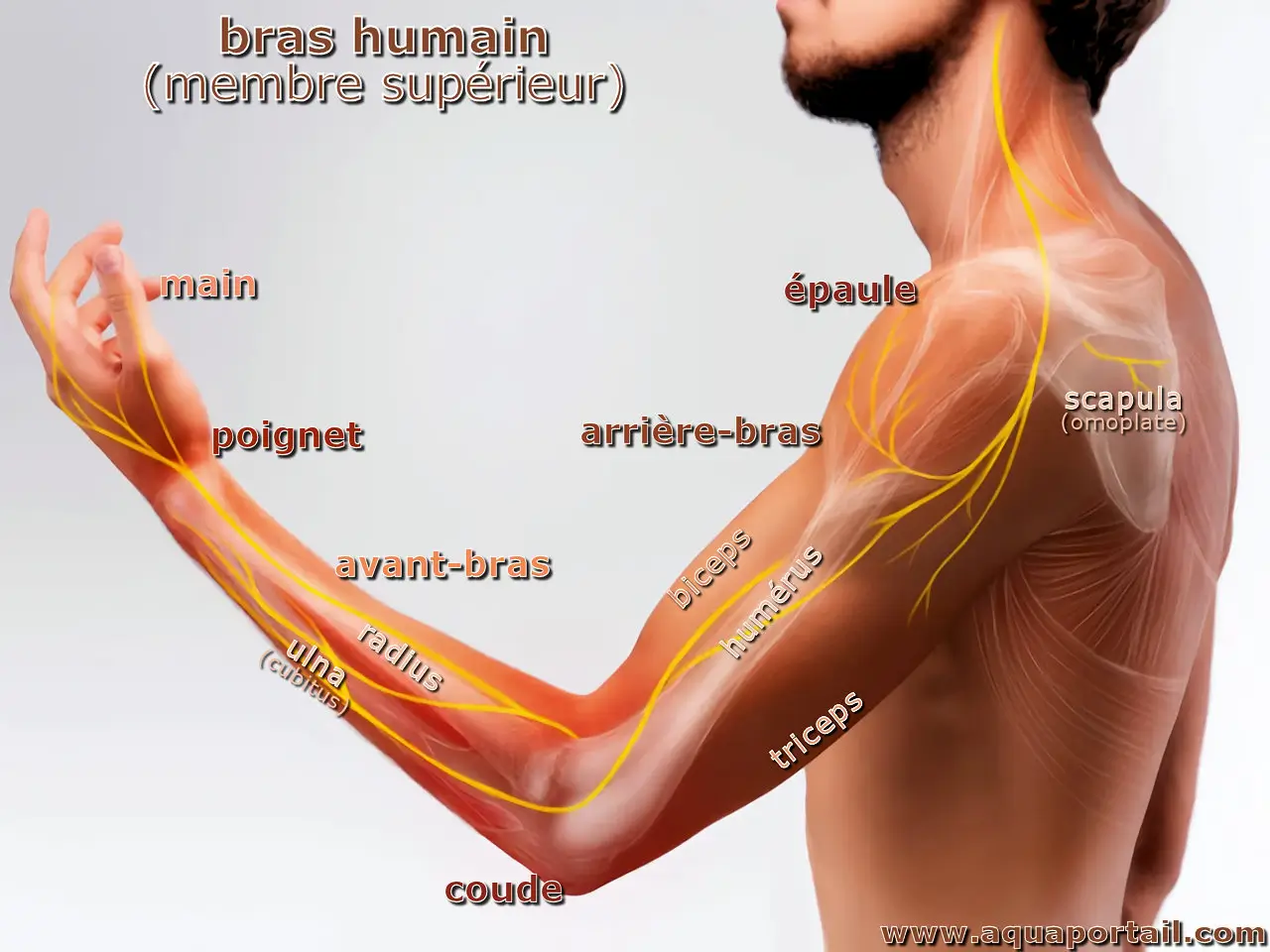
The arm is the upper limb of the upper body of primates, consisting of 3 joints (shoulder, elbow, wrist) and 3 parts (upper arm, forearm, hand).
wrist
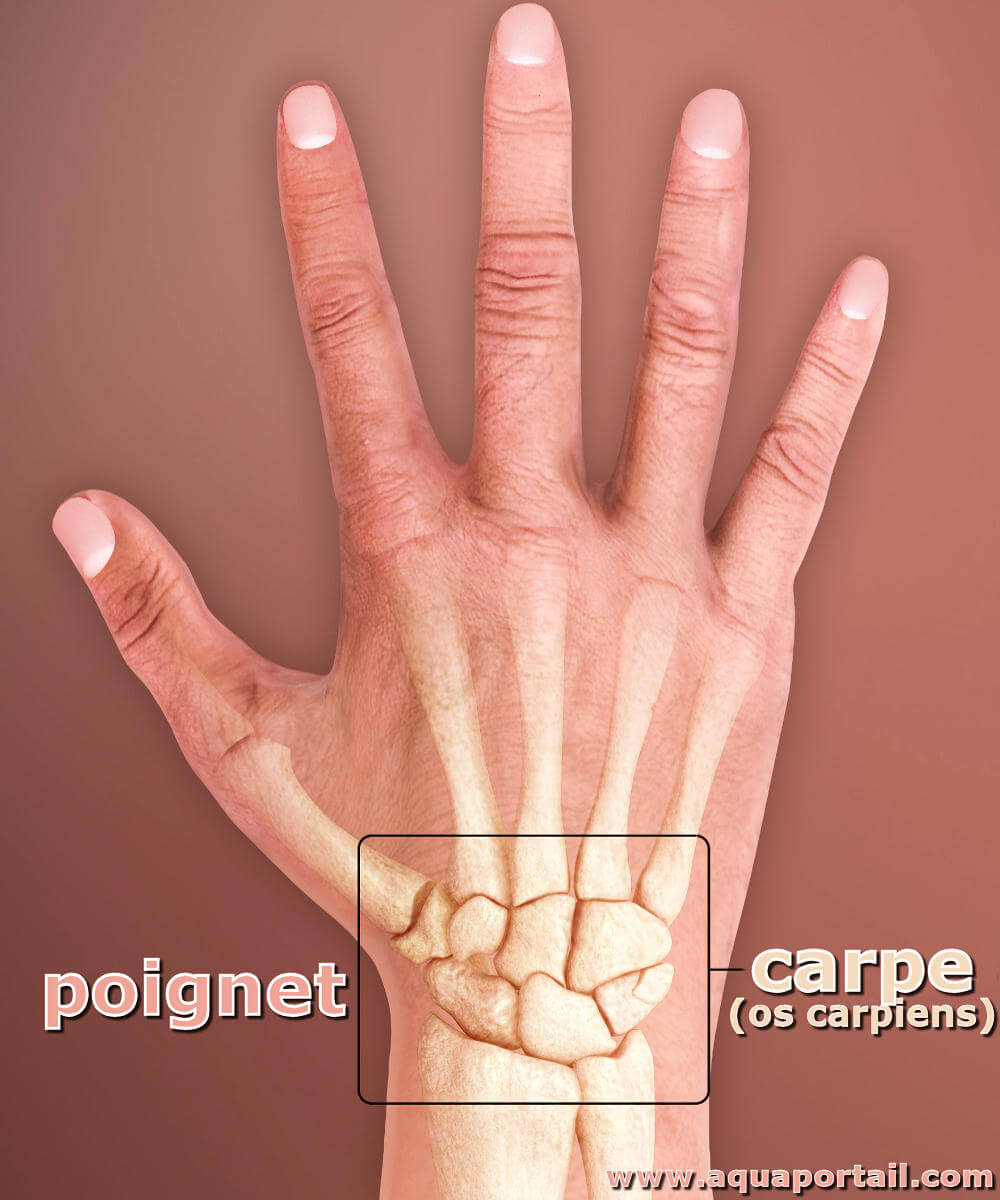
The wrist is the complex joint connecting a hand to the forearm. It consists of the distal ends of the radius and ulna bones, eight carpal bones...
fabrication
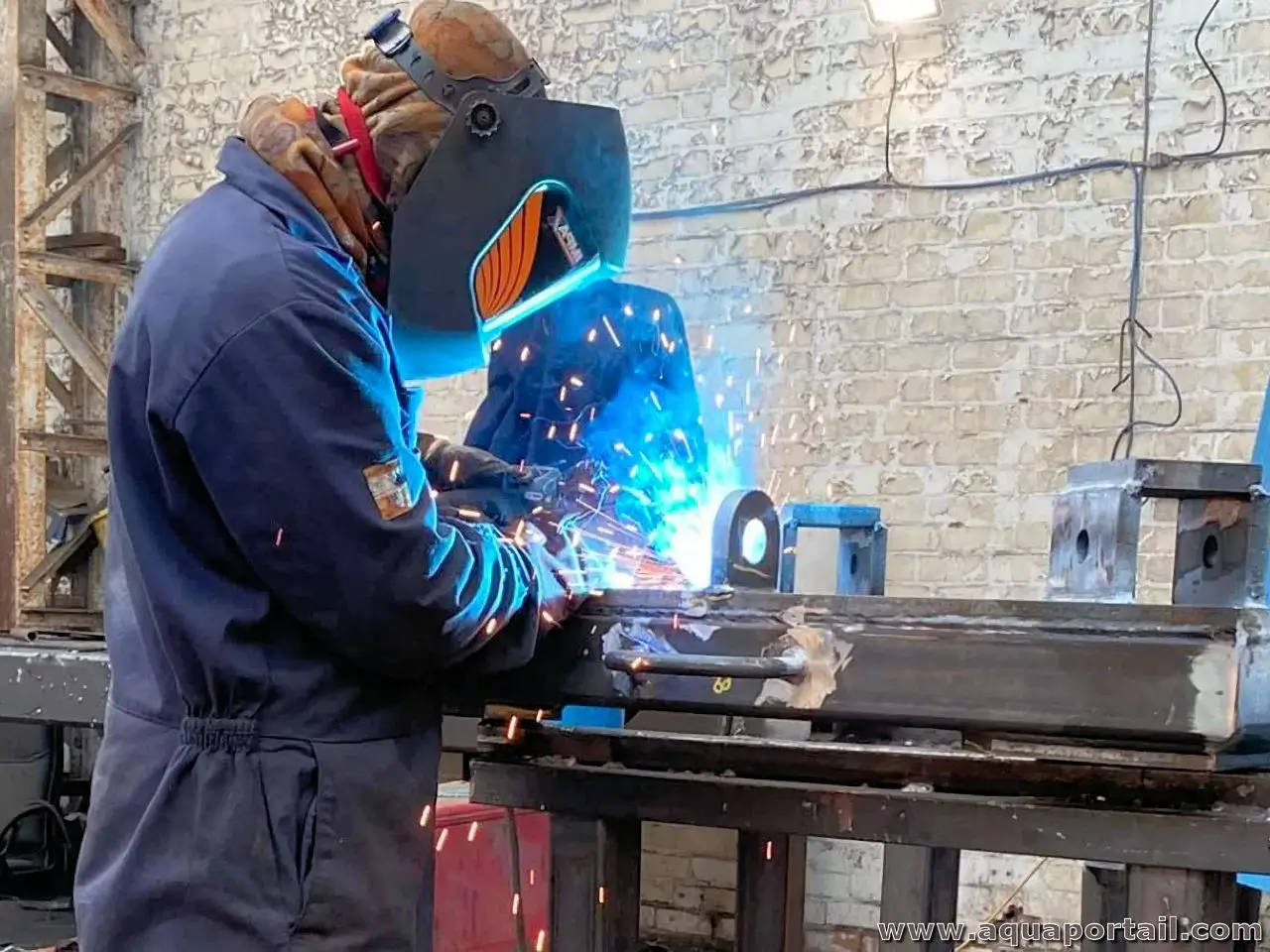
Fabrication is the act or process of making, constructing, or inventing something. The manufacturing or fabrication process, whether artisanal or industrial...
fang

A fang is a long, pointed, and curved tooth. All animals equipped with fangs use them to bite. Whereas in mammals the upper-jaw fangs (called canines)...
Simple summary
The forearm is the part of the human upper limb located between the elbow and the wrist, composed of two long bones called the radius and the ulna. These bones work together to enable movements such as rotation (pronation/supination) and flexion, while housing muscles, tendons, nerves, and blood vessels essential for hand and wrist function.
