Tide
noun (n.)
Definition
The tide corresponds to the periodic change in water level in large bodies of water (sea, ocean, lake) occurring on Earth as a result of the gravity of the Moon and, to a lesser extent, the Sun. The explanation of the phenomenon was first given in 1687 by Newton's laws.
A tide with a lowering of the water level:

Low tide follows high tide: moored boats sit grounded after the ebb tide, resting on the exposed substrate out of the water.
Explanations
A tide, in bathymetry, is a periodic variation in sea level that uncovers a coastal area known as the intertidal zone. The tide of seas and oceans, as well as certain Great Lakes, consists of a rise in water level (high tide) and a fall in water level (low tide) caused primarily by the Moon's gravity and other factors.
⭐ See also green tides and red tides, perigean and/or solstitial tide, astronomical tide, and chart datum with nautical chart zero for measuring sea levels with a tide gauge.
Some principles and terms regarding tides
Tides are the rise and fall of sea levels caused by the combined effects of gravitational forces exerted by the Moon and the Sun, together with the rotation of the Earth inducing tidal currents. The tide is often diurnal or semi-diurnal.
Some shorelines experience two nearly equal high tides (at spring tide) and low tides (at neap tide) each day, called semi-diurnal tides. Some locations experience only one high tide and one low tide each day, called a diurnal tide. Some locations experience two unequal tides per day, or sometimes one high and one low per day; this is called a mixed tide.
The timing and amplitude of tides at a given location are influenced by the alignment of the Sun and Moon, by the tidal pattern in the deep ocean (and world ocean), by oceanic amphidromic systems, and by the shape of the coastline and nearshore bathymetry (which explains certain coastal floodings during extreme high tides).
Tides vary over timescales ranging from a few hours to years due to numerous influences. To keep accurate records, tide gauges at fixed stations measure water level over time. The gauges filter out variations caused by waves with periods shorter than one minute. These data are compared against a reference level generally called mean sea level.
Although tides are generally the primary source of short-term sea-level fluctuations, sea level is also subject to forces such as winds and barometric pressure changes, resulting in storm surges, especially in shallow seas and near coasts.
Low tide makes it possible to practice certain activities prohibited at high tide:

Shorelines uncovered at low tide allow certain human activities such as shore foraging: the exposed or nearly exposed sand permits collecting invertebrates by hand.
✅ Tidal phenomena are not limited to oceans, but can occur in other systems whenever a gravitational field varying in time and space is present. For example, the solid part of the Earth is affected by tides, even though this is not as easy to observe as the water-mass movements of marine tides.
⭐ The period of rising water is called the rising tide (flood tide), culminating at high tide (maximum level), while the ebb or falling tide ends at low tide (minimum level).
When the tidal forces of the Sun and Moon act in the same direction and reinforce each other, the tidal range is greatest; this is called a spring tide.
When these tidal forces are in opposition and weaken each other, the difference between high and low water is smallest, which is called a neap tide.
✅ In a synodic month of 29 days, 12 hours, and 44 minutes, the Sun, Earth, and Moon align twice—at the new moon and the full moon. The tidal forces of the Moon and Sun reinforce one another, resulting in higher high waters and lower low waters. This is the spring tide.
During the first and last quarters, tidal forces weaken and there are smaller high and low water levels: this is the neap tide.
The tidal day defines the period between two consecutive high tides at a given location, averaging 24 h 51 min (24.84 h).
An oceanic phenomenon
Simple observation of sea-level variations in the intertidal zone along a quay or seawall immediately reveals its cyclical nature and, over the longer term, makes it possible to appreciate modulations in its rhythm. Indeed, the tide integrates three sets of variations.
The first, called "regular semi-diurnal," accounts for the phenomenon observed daily. Twice a day, the sea rises to meet the shore, stabilizes at a given level (slack high water), and then begins to ebb.
Initially slow, the movement gradually accelerates, becomes particularly dramatic 3–4 hours after high water, and then slows down as the sea reaches its lowest level. The receding water generates more or less strong currents along the shore (ebb currents) that subside as slack low water approaches.
The "reversal" of coastal currents signals a new rise in water occurring under conditions very similar to its retreat. "Flood" currents once again fill channels, gulfs, and rias until the sea has regained its initial level.
Slightly more than half a day (about 12 h 20 min) separates two slack high waters. Thus, from day to day, the timing of tides shifts, thereby governing all coastal activities.
The duration of the two cycles (24 h 45 min) is that of the "lunar day," meaning the time required for the Moon to return to an identical position in the sky as the previous day. The Ancients had noticed this coincidence and already attributed a decisive role in the phenomenon of tides to the Moon.
It is indeed the Moon that exerts an attraction on ocean masses, giving rise to what oceanographers call the "tide-generating force" and imparting to the oceans the rhythm of their daily pulsations.
The second component of the tidal rhythm is barely noticeable from one day to the next. Careful observation reveals, however, that the level reached by two consecutive tides is not exactly the same, with the discrepancy reaching its maximum after about a week.
Tides known as "spring tides," during which the amplitude of each oscillation is particularly large, thus alternate from week to week with "neap tides," characterized by small oscillations in sea level.
Here again, the coincidence between the phenomenon and the phases of the Moon had not escaped the Ancients: spring tides occur at the full moon and new moon, while neap tides fall during the first and last quarters of the lunar cycle.
The cosmic explanation is simple: the Sun also exerts an influence on tides, though it is more modest than the lunar influence.
Depending on the respective positions of the two celestial bodies relative to the Earth, their actions counteract each other and the tidal phenomenon is then attenuated. This is precisely what happens during the first or last quarter of the Moon.
⭐ Spring tides display exceptional amplitude at the equinoxes, showing noticeable nuances from one season to another. These variations are also the result of favorable cosmic alignments linked, in particular, to the Earth's temporary proximity to the Sun at the equinoxes.
Types of tide
The most important components of tidal forces are the one-cycle-per-day and two-cycles-per-day components. What produces the strongest water movement in a sea depends on the strength of these components and the resonant frequencies of that sea.
The strength of the components is determined by geographical latitude. The resonant frequencies of the sea are determined by the shape of that sea.
A distinction is made between three types:
- Semi-diurnal tide: when the tide is double (semi-diurnal), there are two high waters per day and two low waters per day, where the two high-water levels are more or less equal, and the two low-water levels are roughly equal. Spring tide occurs at intervals of 14 3/4 days, roughly two days after the full or new moon. High and low tide times fall about one hour later each day than the previous day. Once the tide has passed through half a lunar cycle, high and low waters recur at roughly the same time as at the end of the previous half-cycle. High-water levels on spring tide days therefore always fall around fixed times for that location. Neap tide occurs 7 days after spring tide. Semi-diurnal tides occur in the Indian Ocean, the Atlantic Ocean (except the gulf of Mexico), New Zealand, the east coast of Australia, large parts of the west coast of Central and South America, and a few other scattered regions.
- Diurnal tide: in a single (diurnal) tide, there is one high water once a day and one low water once a day. Diurnal tides occur in the Gulf of Mexico, the Sea of Okhotsk, the South China Sea, the northwestern part of the Gulf of Thailand, and the Java Sea.
- Mixed tide: with mixed tides, there is a large difference between the heights of the two high tides and those of the two low tides almost every day. On some days, the tide has the character of a diurnal tide, but in general there are two high waters per day. This type of tide occurs primarily in the Pacific Ocean.
The tidal cycle calculates the duration of a given tidal sequence, such as a lunar month or a tidal day. See lunar tide.
Shallow-water tide
A shallow-water tide refers to the generation of a tide in shallow water modified by hydrodynamic phenomena.
Global differences
Since the tide at a given location is determined by numerous factors—notably the distance between that location and the equator, water depth, and the presence and shape of continental landmasses—there are major differences from place to place.
Tidal forms are broadly subdivided into semi-diurnal tides, diurnal tides, and mixed tides. The actual water level reached is also determined not only by the tide, but also by meteorological conditions such as atmospheric pressure and wind.
Yet the interplay of cosmic forces is not the sole factor involved; otherwise, it would produce nearly identical tides across the entire planet.
However, it is a common observation that tides in the Gironde estuary are not comparable to those in the English Channel or the Bay of the Seine. During average spring tides, for example, the tidal range at Concarneau barely exceeds 4.40 m (14.4 ft); it reaches nearly 8 m (26 ft) at Roscoff, and that of Mont-Saint-Michel Bay is famous for records with few equivalents worldwide (the largest known tides have been recorded in the Bay of Fundy in Canada—17 m (56 ft)—and at Mont-Saint-Michel—15.50 m (50.9 ft)).
The tidal wave, arriving from the Atlantic, approaches the French coastline almost simultaneously between the southern coast of Brittany and the Basque Country, where it propagates slowly and fairly uniformly.
As it enters the English Channel, it is disrupted by the progressive narrowing of the Cornish and Breton shorelines, collides with the rugged seabed of the Armorican basement, and finally comes up against the Cotentin peninsula barrier, which it has some difficulty rounding.
These various obstacles to the progression of the tide in the English Channel lead to a number of local anomalies and, notably, a very marked increase in tidal range along the northern coasts of Brittany as it travels eastward: 6 m (20 ft) at Ushant during an average spring tide, 7.80 m (25.6 ft) at Roscoff, 8.60 m (28.2 ft) at Bréhat, 10.70 m (35.1 ft) at Saint-Malo... and more than 12 meters (39 ft) at Mont-Saint-Michel.
Synonyms, antonyms
French translation:
maréeSpanish translation: marea
3 synonyms (similar meaning) for "tide":
- ebb tide
- flood tide
- tidal bore
0 antonyms (opposite meaning).
Related words and expressions to TIDE are directly connected by general or specific meaning.
The word TIDE is listed on page 1 of words starting with T in the dictionary glossary.
Related to "tide"
peptide

A peptide is a molecule comprising at least two amino acid residues linked by a CO-NH peptide bond, formed by dehydration condensation between the NH₂ group...
tide table

A tide table (or tide almanac) is an annually published compilation containing predictions of tide heights relative to the chart datum of the reference port...
tagma

A tagma is a group of fused segments formed by series of metameres differentiated from the rest of an arthropod's body.
tapeworm
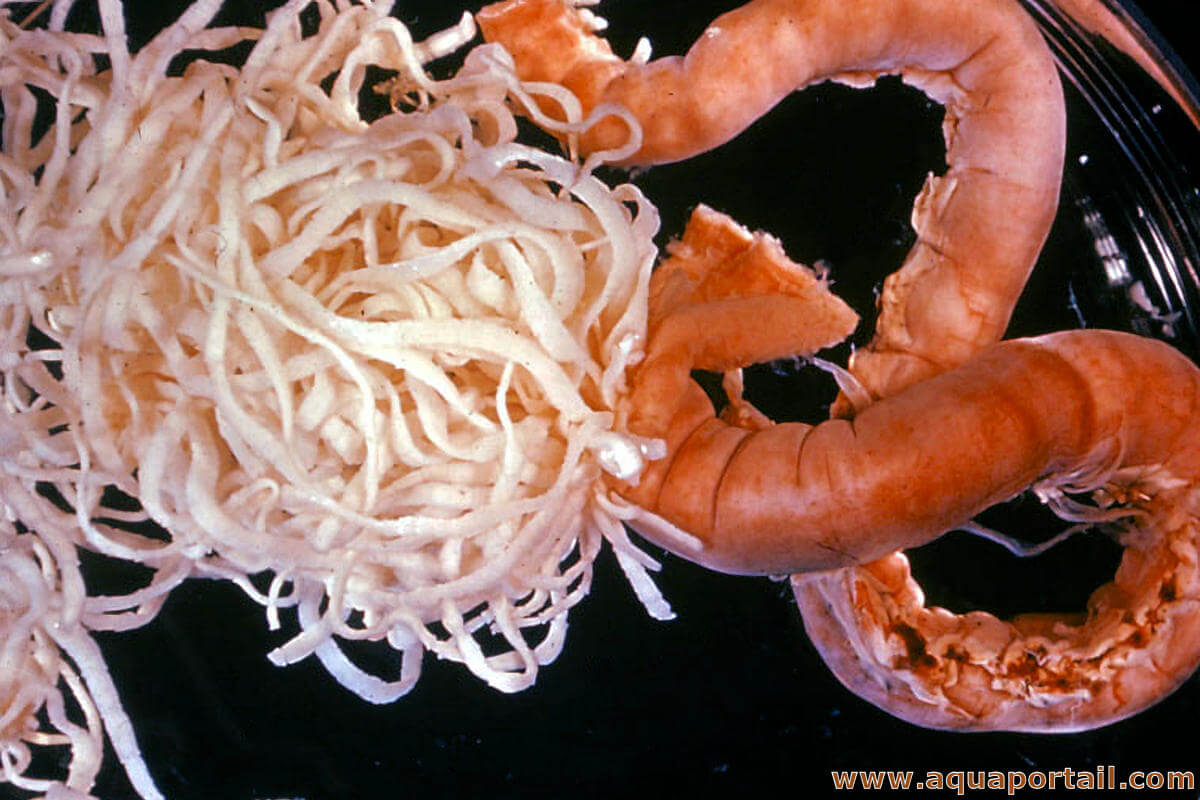
The tapeworm, or solitary worm, is a long, ribbon-like, segmented flatworm, a parasitic cestode of the genus Taenia.
