Thiol
noun (n.)
Definition
A thiol is an organic chemical compound similar to an alcohol and a phenol (organooxygen compounds), except that a sulfur atom (organosulfur, R–SH) replaces the oxygen atom of alcohols (R–OH). Thiols have a strong foul odor, allowing olfactory detection.
A thiol is an organic compound derived from an alcohol in which the oxygen atom of the alcohol group has been replaced by a sulfur atom. The functional group itself is also called thiol or sulfhydryl.
Structures of thiols:
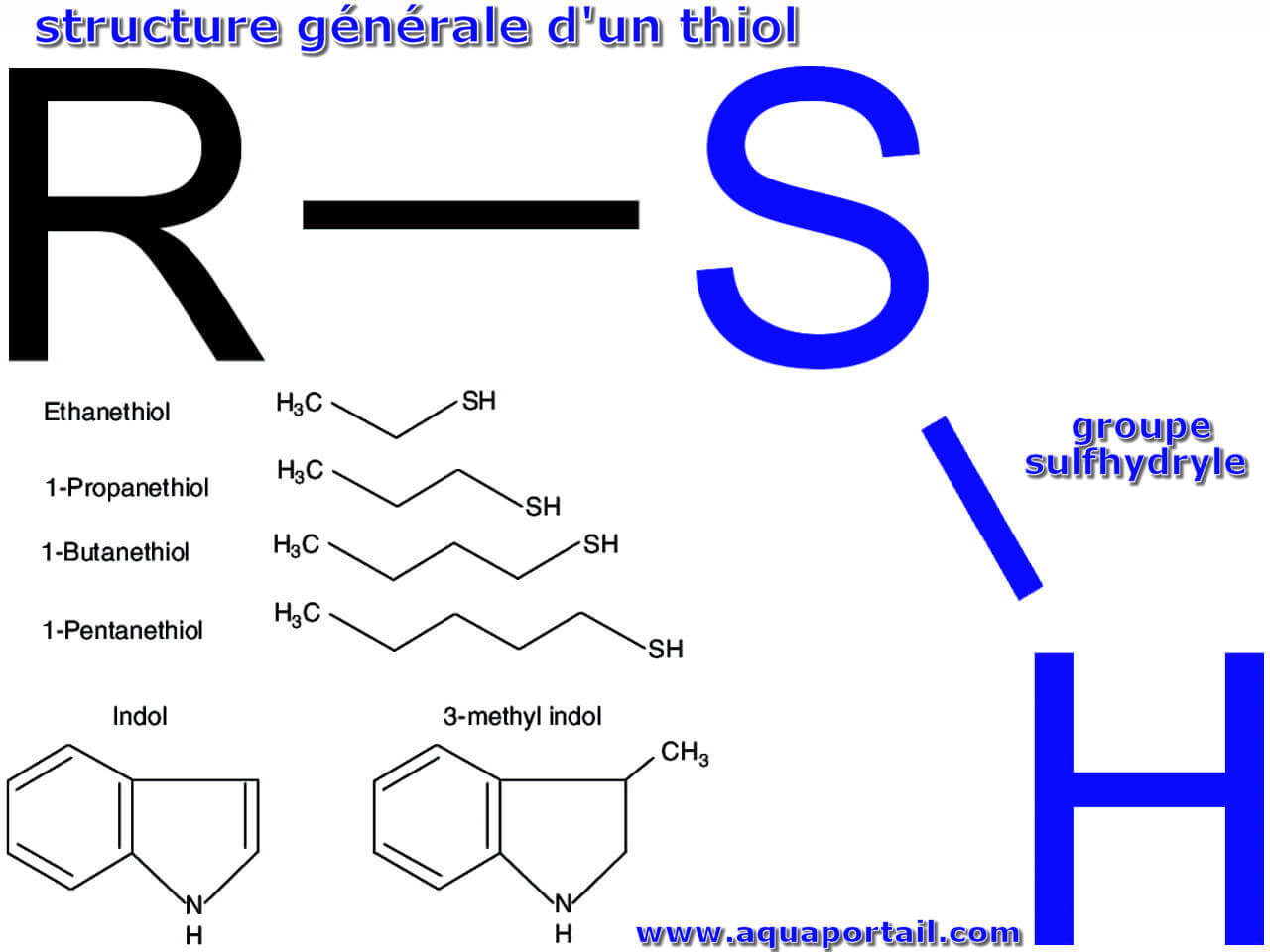
A thiol is a compound with the general formula R–SH, where R is an organic radical (alkyl or aryl) and –SH is the sulfhydryl group (shown in blue). In addition, the diagram includes the chemical structure of thiols (ethanethiol, butanethiol, etc.) and indoles used as olfactory stimuli.
Explanations
Thiols contain a sulfur group that gives them a foul stench. Hydrogen sulfide (H2S) is responsible for the smell of rotten eggs and bad breath, among other unpleasant odors. Thiols contribute to the odor of skunks and certain beers. ✅ The sulfur chemist's best friend is bleach, which oxidizes smelly thiols into relatively odorless sulfoxides.
Thiols are more nucleophilic than alcohols, and thiolates are more nucleophilic than alkoxides. Since nucleophilicity is measured by reaction rate, this means these sulfur nucleophiles tend to react faster with typical electrophiles (such as alkyl halides) than their oxygen-based cousins.
Characteristics
Alcohols are relatively acidic (pKa of around 16–17). Thiols are more acidic than alcohols by an average of about 5 pKa units (pKa of about 11 for a thiol). Remember that pKa is logarithmic, meaning they are roughly 105 times more acidic.
When understanding acidity trends, it is very helpful to consider the stability of the conjugate base. Recall that acidity is increased by any factor that stabilizes the conjugate base. Since acid-base reactions are equilibria, stabilizing the product (conjugate base) makes the equilibrium in which the starting material (acid) loses a proton more favorable, increasing Ka—in other words, increasing acidity. In the case of sulfur, the negative charge is carried on a larger atom (sulfur vs. oxygen) and is dispersed over a larger volume. More volume = more diffuse charge = greater stability.
A corollary of the conjugate base being more stable is that thiolates (the conjugate bases of thiols) are weaker bases than alkoxides. The stronger the acid, the weaker its conjugate base.
If you can get past their foul odors, thiols share many characteristics with alcohols:
- like alcohols, they can be deprotonated with a base and undergo SN2 reactions with alkyl halides to yield thioethers (sulfides)
- thiols tend to be considerably more acidic than alcohols because the sulfur atom is more polarizable
- their conjugate bases, thiolates, are excellent nucleophiles
- thiols can undergo oxidation to give disulfides
Mercaptan
Mercaptan is an obsolete synonym for thiol, discovered by the Danish organic chemist William Christopher Zeise (1789–1847), though it is still occasionally used. This older name for thiols stems from the fact that these compounds have a strong affinity for binding mercury, owing to the soft nature of sulfur and mercury. The term mercaptan derives from the Latin mercurium captans (mercury-capturing).
Synonyms, antonyms
French translation:
thiolSpanish translation: tiol
2 synonyms (similar meaning) for "thiol":
0 antonyms (opposite meaning).
Related words and expressions to THIOL are directly connected by general or specific meaning.
The word THIOL is listed on page 1 of words starting with T in the dictionary glossary.
Related to "thiol"
dimethyl sulfide
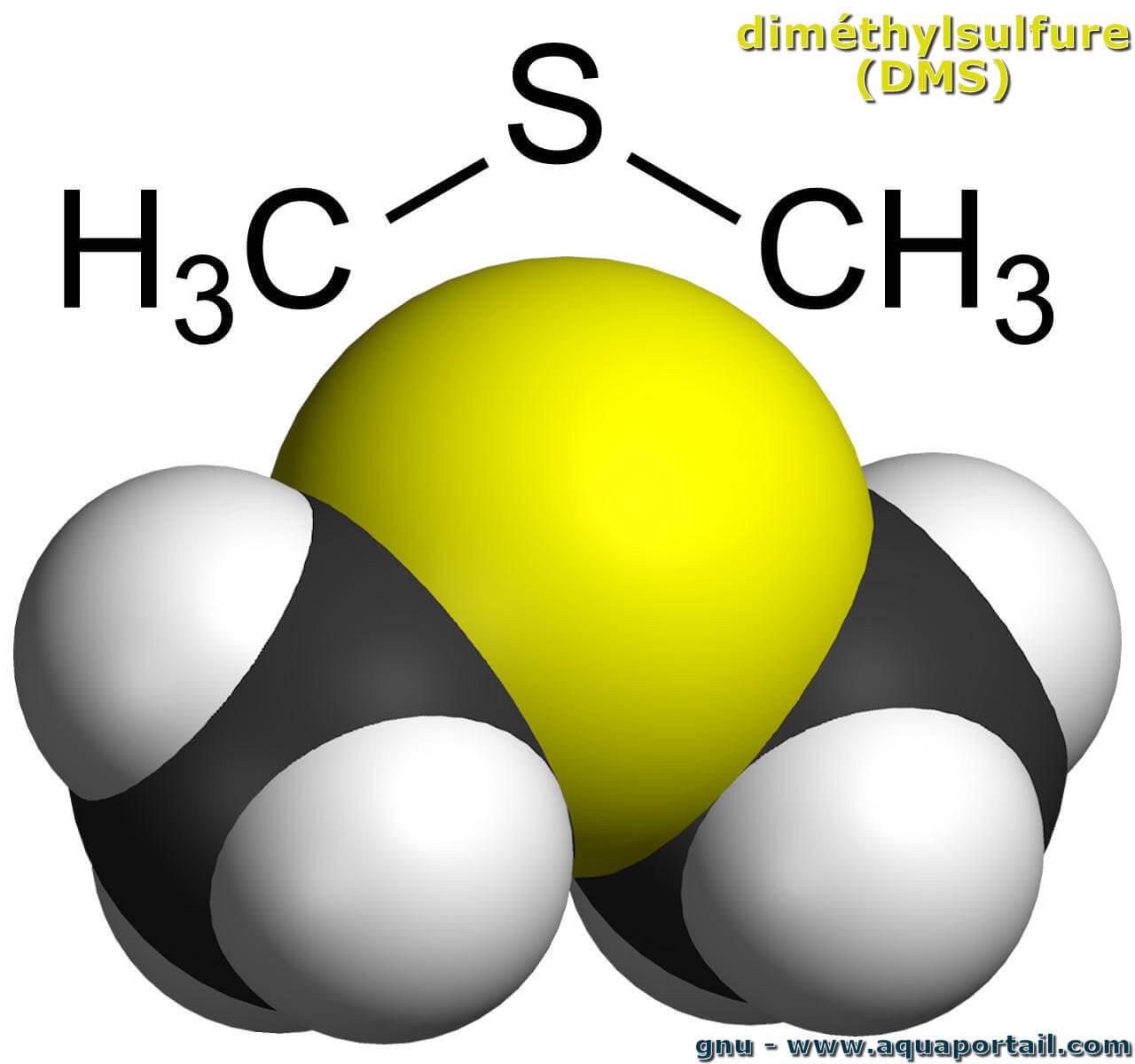
Dimethyl sulfide (DMS) is a volatile chemical compound, a thioether, with the molecular formula (CH₃)₂S.
tagma

A tagma is a group of fused segments formed by series of metameres differentiated from the rest of an arthropod's body.
tapeworm

The tapeworm, or solitary worm, is a long, ribbon-like, segmented flatworm, a parasitic cestode of the genus Taenia.
tectonics

Tectonics is a branch of geology that studies the structure of the crust of a planetary body, such as Earth or the Moon, particularly the formation of folds...
