Bioluminescence
noun (n.)
Definition
Bioluminescence consists of the production of visible light by chemiluminescence in certain living organisms. According to the leading theories on bioluminescence, its functions are: camouflage, attraction for capture or reproduction, repulsion, and communication.Bioluminescence and marine convection phenomena are linked:
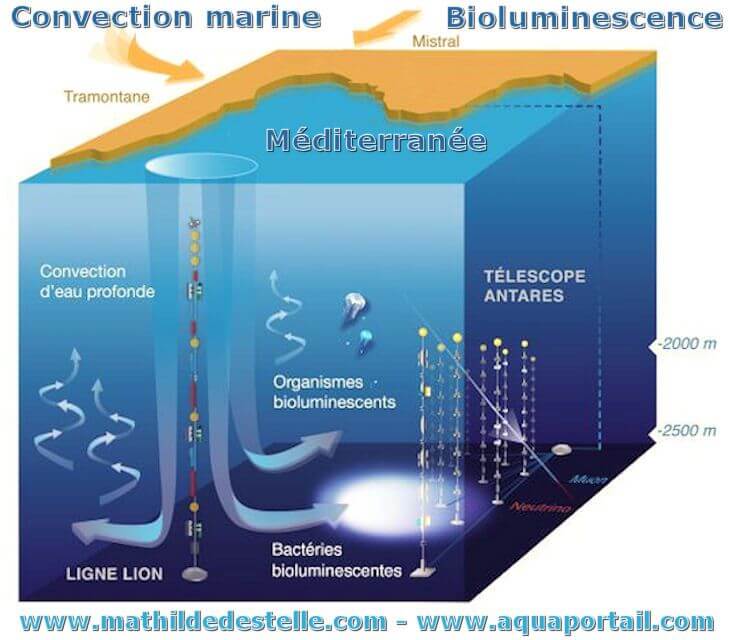
This schematic representation of bioluminescence is coupled with marine convection in the Mediterranean sea observed in deep waters.
Explanations
Bioluminescence is the production of light by a biota, a living being. It is a special case of luminescence including phosphorescence and fluorescence. In the case of phosphorescence and fluorescence, photons are absorbed and then re-emitted at a longer wavelength.
In the case of bioluminescence, a form of chemiluminescence, light is produced by an organism independently of ambient light at the time of production. This chemical reaction involves a substrate and an enzyme, respectively luciferin and luciferase. The oxidation of luciferin in the presence of luciferase produces a photon as well as an inactive molecule: oxyluciferin. Returning the substrate to the ground state requires energy, such as ATP.
Bioluminescence occurs in certain bacteria, but is also widespread among deep-sea inhabitants such as fishes and especially invertebrates such as squids and other cephalopods, jellyfish, corals, sponges, and plankton. Various fungi and insects can light up on land. A well-known example of a bioluminescent organism is the firefly.
There are bioluminescent bacteria belonging to the genera Photobacterium and Vibrio. They are free-living or symbiotic. The light emitted by these bacteria is continuous and occurs without external stimulation.
Jellyfish bioluminescence:
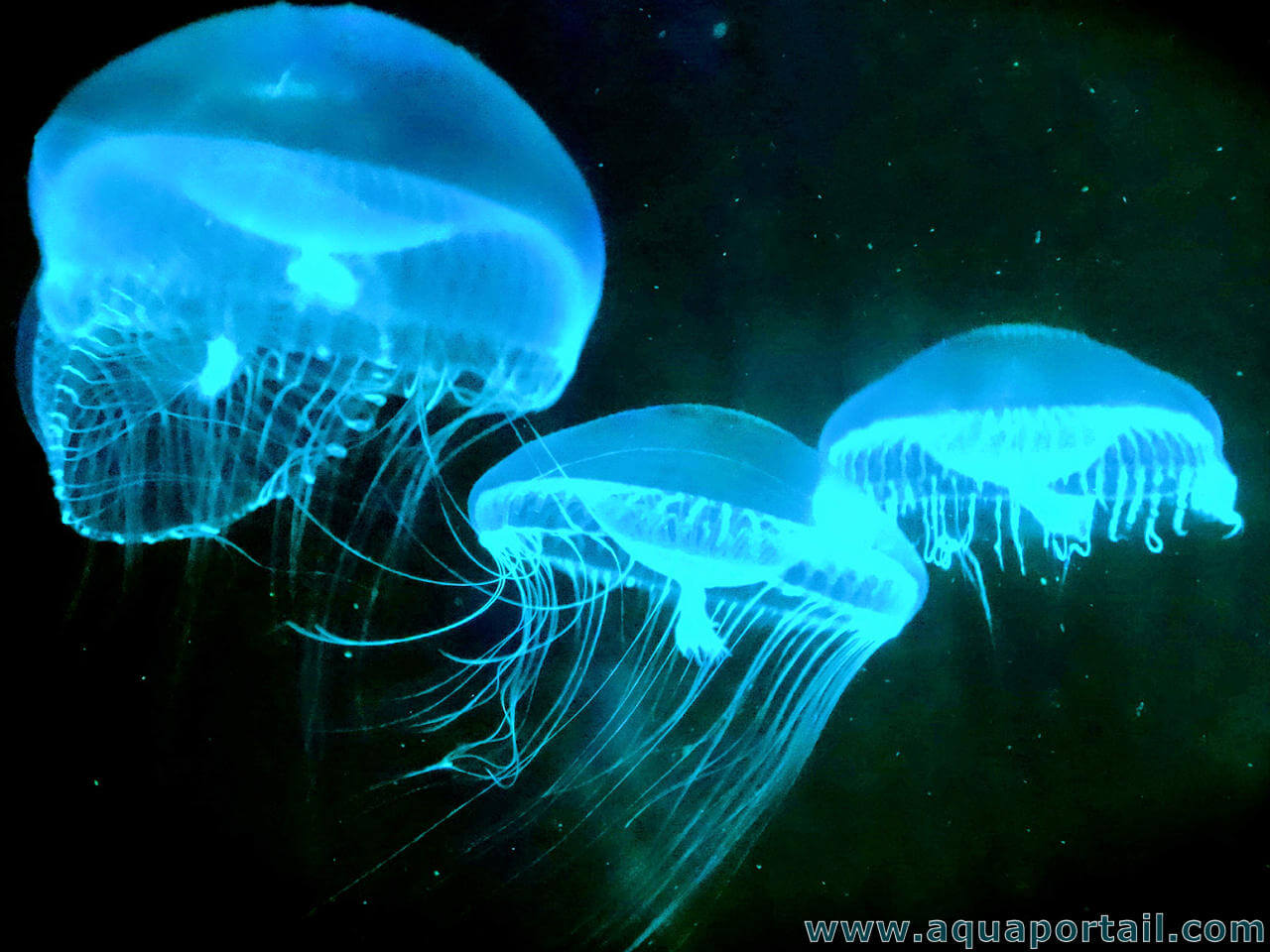
A multitude of marine organisms are bioluminescent, capable of generating living light, bioluminescence, through chemical reactions.
As an anecdote, planktonic bioluminescence measurements were carried out in the Almeria-Oran front zone in December 1997 and January 1998. Vertical profiles of bioluminescence, chlorophyll fluorescence, temperature, and salinity were obtained with a bathyphotometer coupled to a CTD probe (conductivity temperature depth) and a fluorometer (spectrofluorometer). The first part of the mission consisted of regular sampling along a transect across the front. During the second part, repetitive sampling of twelve stations at eight sites corresponding to different water masses characteristic of the frontal zone was performed. Hydrological data distinguish three marine areas from north to south: "Mediterranean," frontal, and "Atlantic." Continuous sampling indicates an increase in marine bioluminescence in the frontal zone, with high surface values and numerous light emissions down to 200 m (656 ft) deep. Mediterranean waters are characterized by a stratification of bioluminescence showing intense values in the top 50 meters (164 ft) and peak values just above the thermocline, whereas bioluminescence in Atlantic waters is evenly distributed in the mixed layer, between the surface and 130 m (427 ft) depth. Bioluminescence profiles indicate greater inter-site variability than intra-site variability and reflect differences in hydrological structures between sites. Bioluminescence and fluorescence correlate at three of the eight sites, suggesting a relative importance of bioluminescent chlorophyll-bearing organisms. No direct correlation between bioluminescence and temperature or salinity was found, but the thermocline is, in many cases, accompanied by an increase in luminous activity.
Bioluminescence is equated with light production by certain living beings belonging to all kingdoms, particularly the firefly. The light comes from a biochemical reaction between a long-chain aldehyde substrate (luciferin) and an FMN-containing enzyme (luciferase). The substrate is oxidized (oxyluciferin) with the formation of water and light. This light contains only radiation ranging from blue to yellow.
Measuring bioluminescence with a bathyphotometer
A bathyphotometer is a device for measuring bioluminescence in oceanic environments. Studying marine bioluminescence is complicated and requires specific equipment for deep environments (2,000 m / 6,562 ft).
Solar light intensity influences the occurrence of bioluminescence through convection, and with marine convection, the existence of a circadian rhythm in certain species is proven. The appearance of bioluminescence is closely linked to the light and carbon cycles, and therefore depends on nutrition and favorable physical conditions for plankton development.
Bioluminescence measurements are performed using bathyphotometers, though combining a bathyphotometer with a CTD profiler and a fluorometer forms an autonomous instrument usable aboard any research vessel equipped with a simple hydrographic winch.
Synonyms, antonyms
Spanish translation: bioluminiscencia
5 synonyms (similar meaning) for "bioluminescence":
- brightness
- chemiluminescence
- fluorescence
- luminescence
- phosphorescence
0 antonyms (opposite meaning).
Related words and expressions to BIOLUMINESCENCE are directly connected by general or specific meaning.
The word BIOLUMINESCENCE is listed on page 1 of words starting with B in the dictionary glossary.
Related to "bioluminescence"
efflorescence

In botany, efflorescence is a term often applied to terrestrial plants for flowering or to aquatic algae and phanerogams that may bloom simultaneously...
bacterial artificial chromosome

A bacterial artificial chromosome (BAC) is a DNA construct, based on a functional fertility plasmid or F-factor, used for transformation and bacterial cloning...
bacteriochlorophyll

A bacteriochlorophyll (BChl) is a pigment of photosynthetic eubacteria other than cyanobacteria, yet containing chlorophyll and able to carry...
bacteriorhodopsin
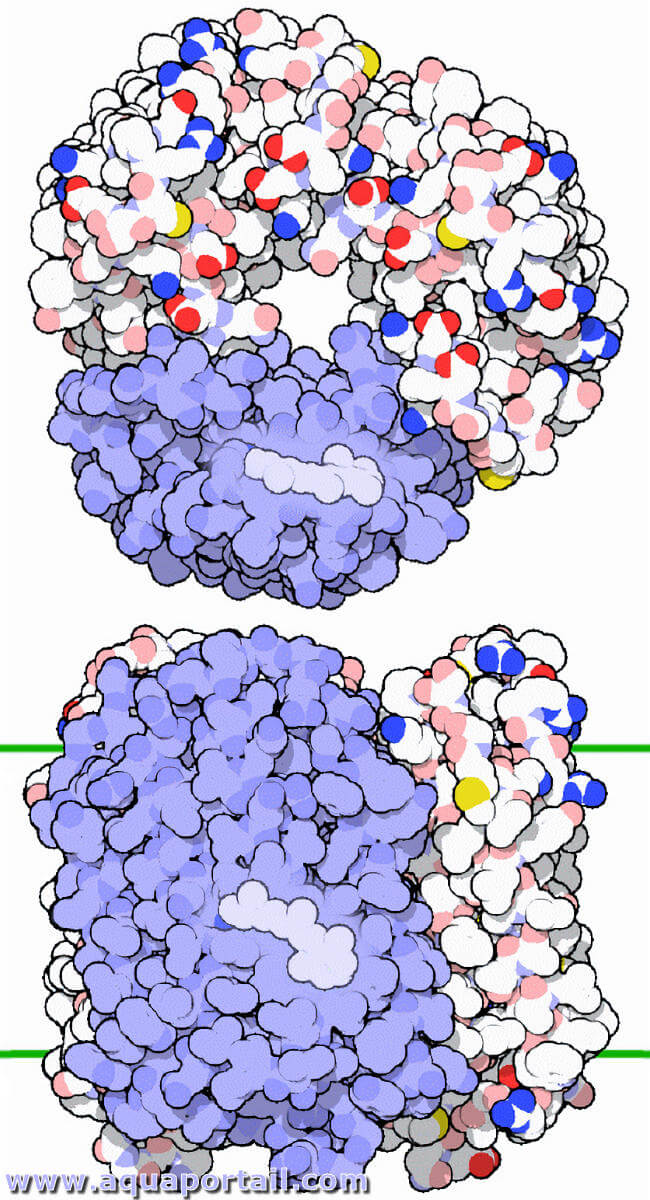
Bacteriorhodopsin (or proteorhodopsin) is a pigment of extreme halophilic photosynthetic archaebacteria.
