Bacterium
noun (n.)
Definition
A bacterium is a unicellular prokaryotic microorganism, primarily round, spiral, or rod-shaped, that generally lives in soil, water, organic matter, or the bodies of organisms (animals and plants).
Diagram of a bacterium:

Diagram of an elongated Pseudomonas bacterium.
Explanations
Bacteria (Bacteria) manufacture their own food, particularly from sunlight, or are saprophytic or parasitic, are often motile by means of flagella, reproduce notably by binary fission, and include many important pathogens.
Bacteria are the most abundant organisms on our planet by number. They live in all known types of habitats. Their quantity in a person's gut is greater than the total number of cells in the human body.
Group of bacteria:

Bacteria contribute to processes such as nutrient cycling, decomposition of organic matter, and even symbiotic relationships within living organisms. For example, certain bacteria aid in digestion or produce essential nutrients such as vitamin K in humans. Despite their simple cellular structure lacking a nucleus, bacteria exhibit remarkable biochemical versatility.
Bacteria (bacterial organisms) are indispensable to life on Earth. They number in the billions across all ecosystems of every biome. The size of a bacterium, microscopic, is a few micrometers in diameter. Bacteriology studies bacteria, including in tap water to verify its potability.
Bacteria differ from protists (eukaryotes) by a number of essential cytophysiological characteristics: absence of intracytoplasmic mitochondria, a nuclear apparatus different in structure, lacking a nuclear membrane, and in physiology, lacking mitosis.
The bacterium, a bacterial cell of the kingdom Bacteria, designates unicellular microbes of elongated (bacilli) or spherical (cocci, coccus) shape.
Pseudomonas bacteria:

Pseudomonas bacteria are essential in aquariums for breaking down nitrates, nitrogen residues at the end of the nitrogen cycle. Pseudomonas complete the "work" performed by nitrobacteriaceae.
An assemblage of Bacteria and viruses mixed together:

In this close-up of an assemblage of bacteria and viruses, the Bacteria microorganisms are rod-shaped.
E. coli bacteria can be deadly:

Certain pathogenic strains of Escherichia coli bacteria are dangerous and can lead to the death of the infected individual.
Synonyms, antonyms
Spanish translation: bacteria
8 synonyms (similar meaning) for "bacterium":
- bacillus
- bacterial microorganism
- ferment
- germ
- microbe
- microorganism
- protist
- vibrio
0 antonyms (opposite meaning).
Related words and expressions to BACTERIUM are directly connected by general or specific meaning.
The word BACTERIUM is listed on page 1 of words starting with B in the dictionary glossary.
Related to "bacterium"
nanobacterium
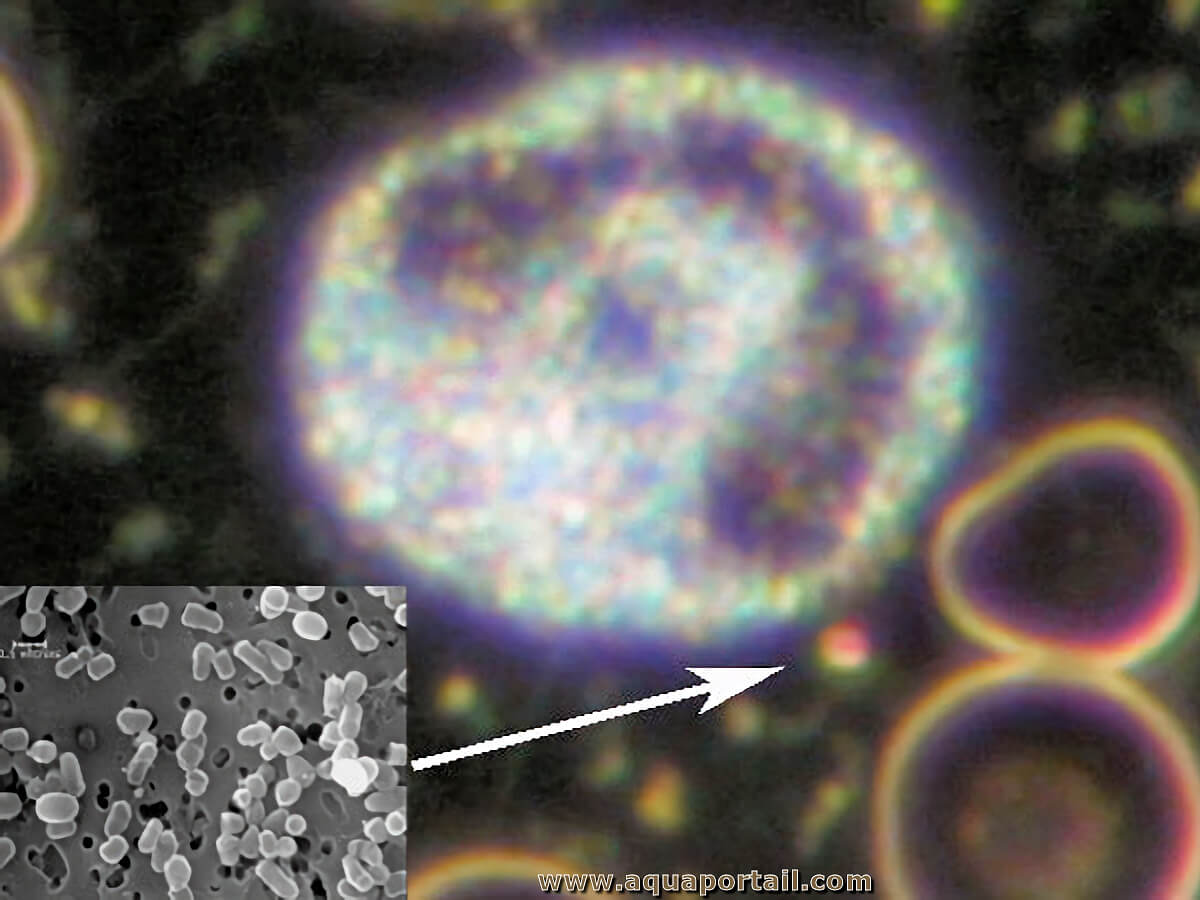
A nanobacterium is a submicron particle initially described as a hypothetical bacterial microorganism the size of a nanobe.
microbe

A microbe is a unicellular microorganism that can act as a vector for transmitting disease or induce fermentation.
bacterial artificial chromosome
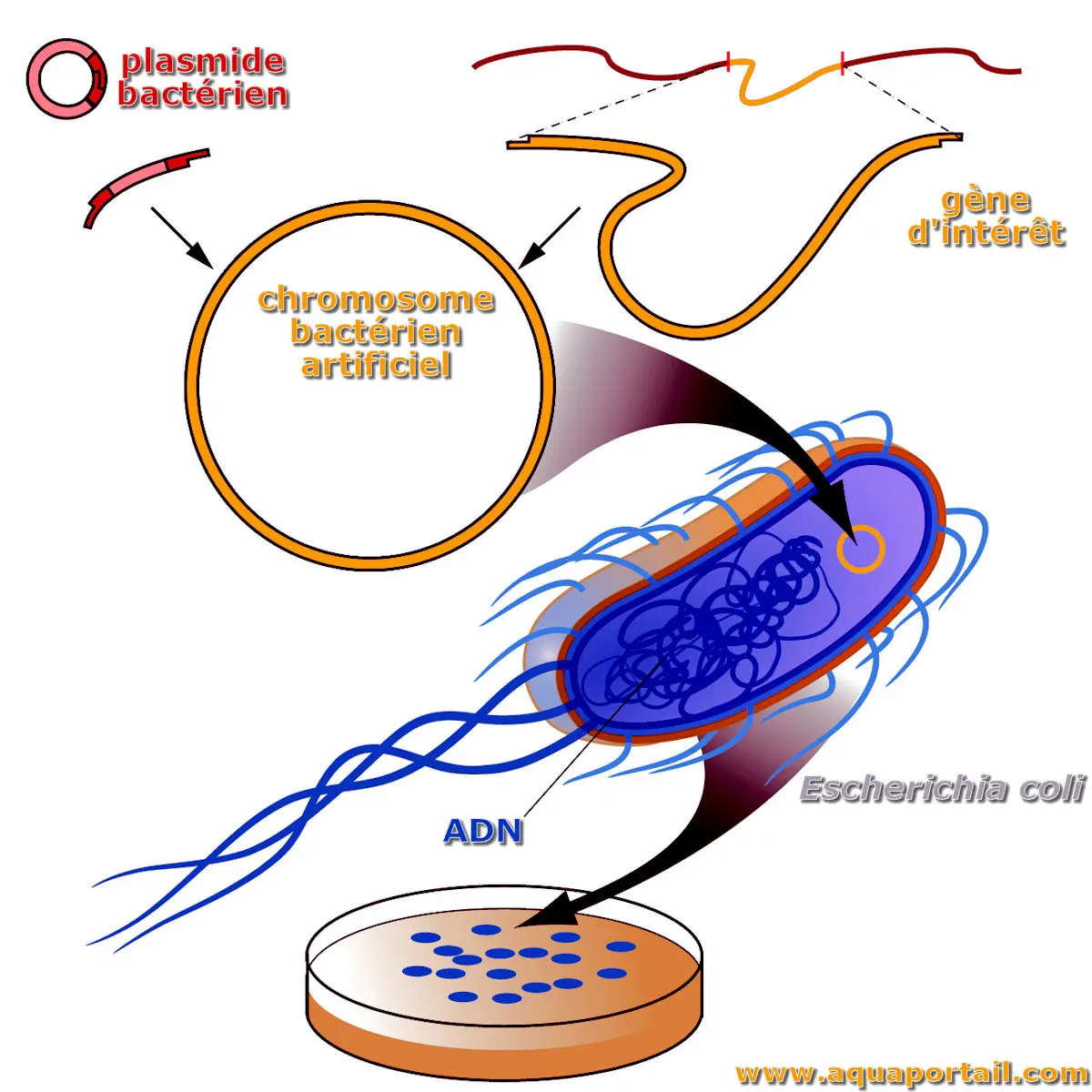
A bacterial artificial chromosome (BAC) is a DNA construct, based on a functional fertility plasmid or F-factor, used for transformation and bacterial cloning...
bacteriochlorophyll

A bacteriochlorophyll (BChl) is a pigment of photosynthetic eubacteria other than cyanobacteria, yet containing chlorophyll and able to carry...
Simple summary
A bacterium is a unicellular, generally microscopic microorganism belonging to the domain Bacteria. These organisms exist in many shapes and thrive in virtually all terrestrial environments, from ocean depths to the driest deserts. Some bacteria are essential for processes like nitrogen fixation or digestion, while others can cause diseases in humans, animals, or plants.
