Microbe
noun (n.)
Definition
A microbe is a unicellular microorganism that can act as a vector for transmitting disease or induce fermentation. This type of microorganism generally includes bacteria, protozoa, archaea, fungi, and various viruses.
Several microbes:

A microbe, also called a microorganism, is a unicellular living organism so small that it can only be observed under a microscope. Microbes encompass a wide diversity of species, notably bacteria, viruses, fungi, archaea, and protozoa. Their presence is nearly universal: they are found in almost all terrestrial environments, from soils and water to extreme habitats.
Explanations
Microbes are tiny living organisms present all around us. Also called microorganisms, they are most often too small to be visible to the naked eye. They live in water, soil, and air. The human body also hosts millions of these microbes, which is completely normal. Viruses are the smallest microbes.
✅ Scientists consider the term "microbe" to be simply another word for "microorganism," without the pathogenic connotation.
Microbes are highly diverse, encompassing all prokaryotes (bacteria and archaea) and various forms of eukaryotes. Pathogenic eukaryotes may include protozoa (such as amoebae), fungi and yeasts, and microscopic algae. Microbiologists group viruses and prions among microbial agents, though some consider them non-living (see living organism) and exclude them.
Microbes (salmonellae):

Microbes are microscopic organisms comprising primarily bacteria, yeasts, and viruses. The salmonella Salmonella typhimurium, responsible for salmonellosis (gastroenteritis), is a pathogenic bacterium.
Current estimates by microbiologists suggest that at least one billion different microbial species may exist on Earth, if not more.
Several forms of bacteria:
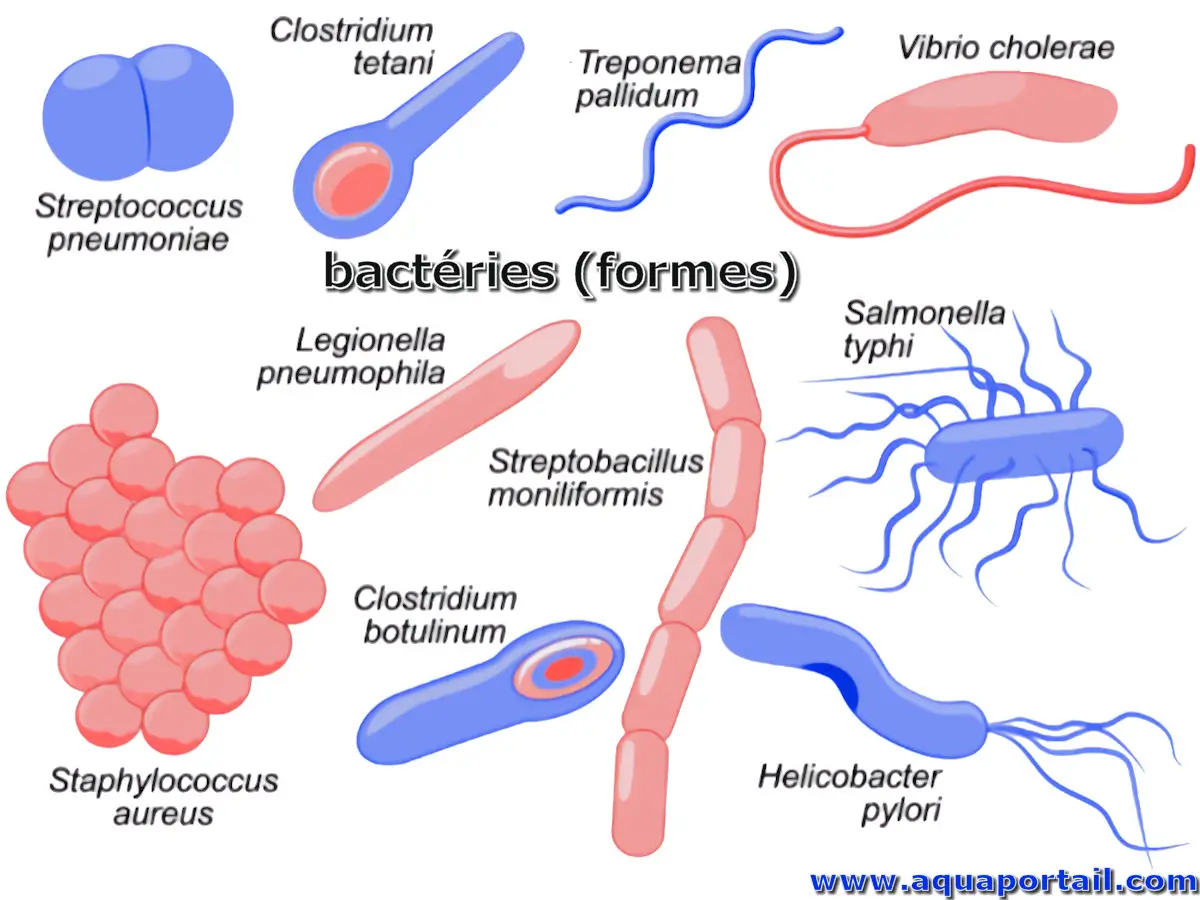
Bacteria are unicellular microbes that occur in many shapes and sizes, such as rods, spheres, or spirals.
A microbe can be destroyed by a microbicide or an antimicrobial.
Figuratively, a microbe refers to a person of markedly smaller size or lesser strength than another.
Synonyms, antonyms
Spanish translation: microbio
3 synonyms (similar meaning) for "microbe":
0 antonyms (opposite meaning).
Related words and expressions to MICROBE are directly connected by general or specific meaning.
The word MICROBE is listed on page 1 of words starting with M in the dictionary glossary.
Related to "microbe"
nanobacterium
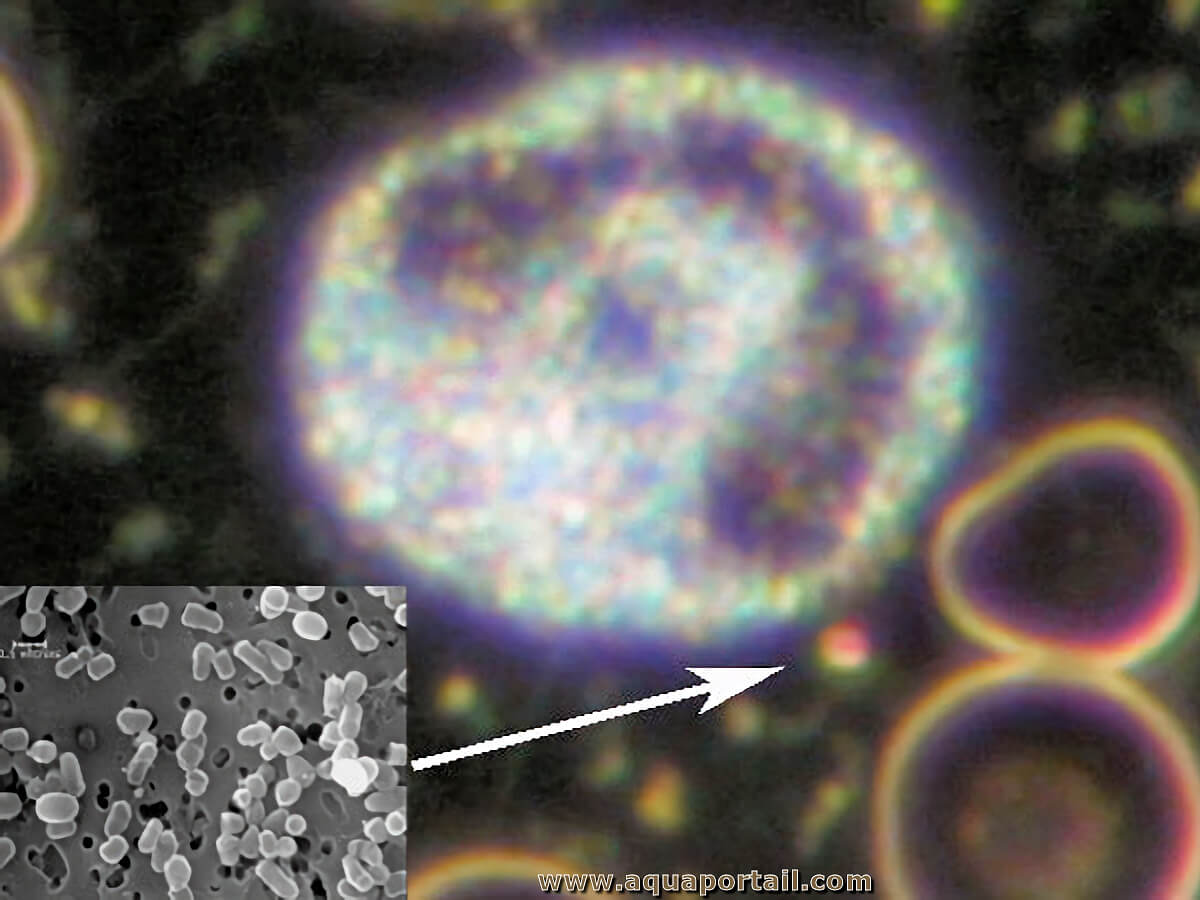
A nanobacterium is a submicron particle initially described as a hypothetical bacterial microorganism the size of a nanobe.
bacterium

A bacterium is a unicellular prokaryotic microorganism, primarily round, spiral, or rod-shaped, that generally lives in soil, water, organic matter...
madrepore

A madrepore (Madrepora) is a marine animal of the group of scleractinian corals possessing an external skeleton, typically an acropora and encompassing...
mangrove

A mangrove is a coastal salt-marsh biotic zone comprising specific plants, mangrove trees, and plant associations that grow in the intertidal zone...
Simple summary
A microbe is a tiny organism invisible to the naked eye that may include bacteria, viruses, fungi, as well as certain algae and protozoa. Microbes are present everywhere in the environment and participate in various processes, such as decomposition, nutrient cycling, and even human digestion. While some microbes can cause diseases, others are beneficial to ecosystems or human health.
