Nanobacterium
noun (n.)
Definition
A nanobacterium is a submicron particle initially described as a hypothetical bacterial microorganism the size of a nanobe. Nanobacteria were proposed as walled cellular structures far smaller than the lower size limit generally accepted for autonomous cellular life, typically around 200 nanometers for the smallest bacteria.
Nanobacteria:
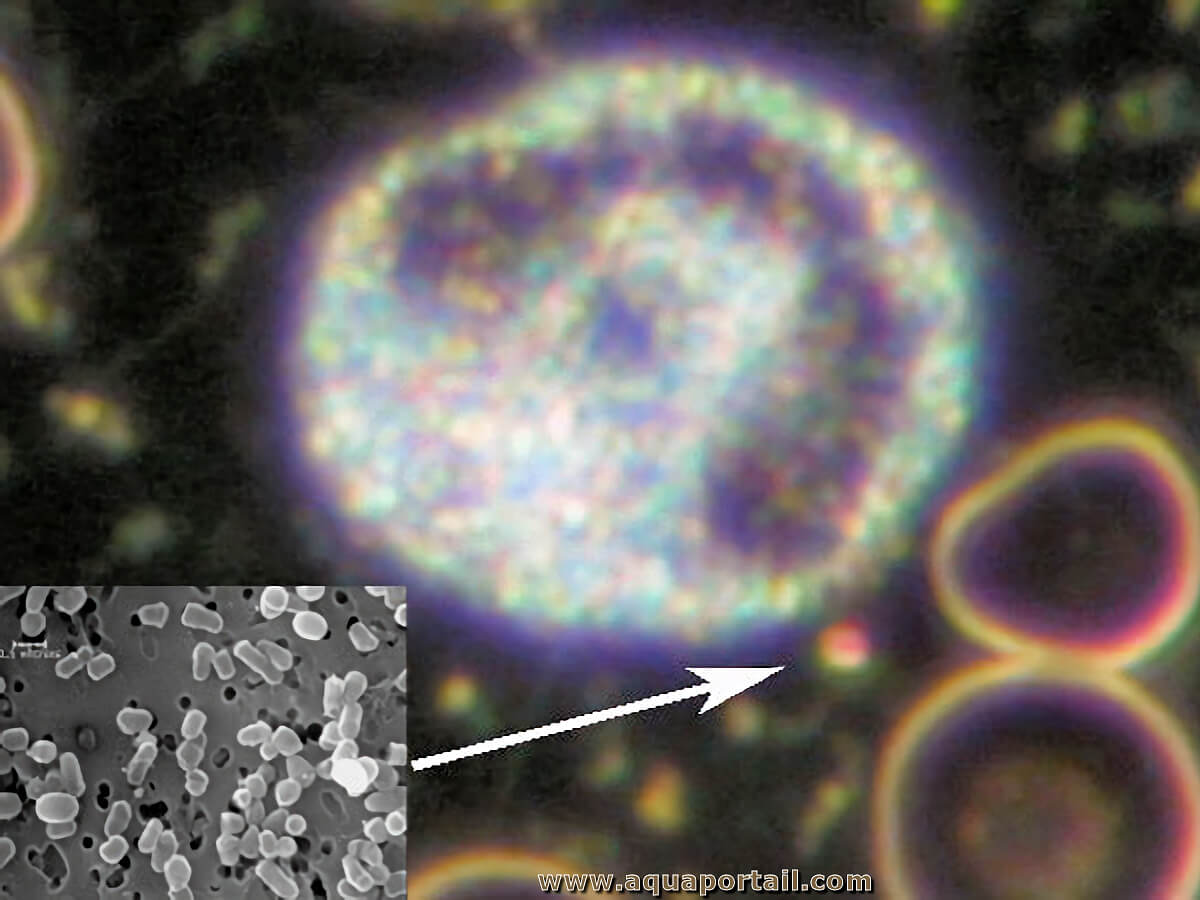
Nanobacteria are 100 times smaller than ordinary bacteria. The defining feature of nanobacteria is their variably thick coating of apatite.
Explanations
Nanobacteria were reported in the late 1980s and 1990s as tiny mineralized-wall structures observed in human and bovine blood as well as commercial cell-culture serum. They can precipitate apatite in media mimicking tissue fluids and glomerular filtrate, providing a model for in vitro studies of pathological calcification.
Originally based on nanoscale structures observed in geological formations (including the Martian meteorite ALH 84001), the status of nanobacteria proved highly controversial: some researchers initially proposed that they represented a novel class of living organisms capable of incorporating radiolabeled uridine, whereas the scientific consensus now attributes to them a purely abiotic nature (mineral-organic nanoparticles).
See also abiogenesis.
⭐ Nanobacteria lack a reproducibly sequenced genome of their own, leading microbiologists to conclude that they are not living organisms. However, early studies showed that they can grow and multiply via crystalline budding in cell-free media, mimicking cellular division.
Characteristics
The defining feature of nanobacteria is their variably thick coating of apatite (calcium phosphate).
Apatite is formed from soluble calcium and phosphate ions present in the surrounding medium. Under nutrient- or serum-limited conditions, these structures produce microscopic aggregates encased in the thick apatite shell mentioned above, which can grow larger than 1 mm in diameter.
Traces of nucleic acids or proteins occasionally detected in these particles actually derive from adsorption of molecules from the surrounding biological fluid rather than from an intrinsic genetic or protein-biosynthesis system.
Nanobacteria range in size from 20 to 500 nm, with the smallest capable of passing through sterilizing filters with 100 nm pore sizes.
Their morphology is often spherical (coccoid) or rod-shaped when viewed under scanning electron microscopy (SEM) or transmission electron microscopy (TEM).
Nanobacteria withstand extreme heat, gamma irradiation, and high salinity, while inducing apoptotic cell death when exposed to cultured mammalian cells.
Occurrence (distribution)
Nanobacteria (or calcifying nanoparticles) are detected in animal and human blood, as well as in tissue culture media, cell lines, and bile. Similar nanoscale structures have also been reported in Australian sandstones, the stratosphere, and certain meteorites.
Their distribution is typically investigated by imaging samples with scanning and transmission electron microscopy or by monitoring their progressive precipitation in cell-free media.
Pathogenic role of nanobacteria
Nanobacteria are now referred to as calcifying nanoparticles (CNPs) owing to their mineralizing properties. While early researchers suggested they represented a novel life form responsible for a broad spectrum of diseases, scientific consensus holds that they are far too small to house the molecular machinery required for life.
Nevertheless, multiple studies have explored the role of calcifying nanoparticles in disorders associated with pathological calcification processes.
Nanobacteria may act as crystallization nuclei in the formation of certain kidney stones. In 1998, Kajander and colleagues proposed a link between these particles and nephrolithiasis, reporting antibody-reactive calcified complexes in all kidney stones examined.
Periodontal diseases are associated with gum inflammation leading to gingivitis and periodontitis. Dental plaque—where large numbers of microorganisms accumulate on tooth surfaces—is the primary driver of periodontal disease; dental calculus (mineralized plaque) forms when plaque is not removed, and calcifying nanoparticles may contribute to this mineralization.
Detection and inhibition of nanobacteria
Nanobacterial complexes are immunogenic (due to incorporated serum proteins), and ELISA kits for detecting their antigens or antibodies have been developed. Their in vitro mineral proliferation is sensitive to several chemical and chemotherapeutic agents.
These include:
- 5-fluorouracil;
- trimethoprim;
- nitrofurantoin;
- cytosine arabinoside;
- 6-aminocaproic acid;
- trimethoprim-sulfamethoxazole;
- potassium cyanide;
- sodium azide.
These compounds interfere with mineral nucleation or metabolic processes in biological media.
Research
Research confirms that these particles exist and can proliferate through mineral self-assembly. However, the hypothesis that they are living entities has largely been discarded in favor of an abiotic model of self-propagating hydroxyapatite-protein complexes (involving serum proteins such as fetuin-A and albumin). In medicine, they continue to be studied for their involvement in kidney stone formation and vascular calcification.
Studies have linked calcifying nanoparticles to atherosclerosis, coronary artery calcification, and certain degenerative or neoplastic conditions (such as ovarian cancer), as well as cell-culture contamination. The influence of physiological conditions on calcium and phosphate precipitation is now well understood, and pharmaceutical manufacturers have been advised to ensure vaccines and blood-derived products are free of calcifying nanoparticles. Debate over whether they are alive or abiotic does not diminish their medical relevance in ectopic calcification research.
History
Olavi Kajander did not set out to discover mysterious particles implicated in calcifying diseases.
He was simply trying to determine why certain mammalian cell cultures in his laboratory kept dying regardless of how carefully they were maintained.
Thus, the Finnish biochemist and his colleagues examined some of their older cultures under an electron microscope in 1988 and spotted tiny particles—resembling bacteria yet 100 times smaller—seemingly thriving inside the dying cells.
Believing he had discovered a tiny new form of life, Kajander named the particles "nanobacteria" and published his findings, sparking one of the biggest controversies in modern microbiology.
At the heart of the debate was whether nanobacteria could genuinely represent a new form of life. Subsequent work demonstrated that a particle measuring just 20 to 200 nanometers in diameter cannot contain the genetic and ribosomal machinery necessary to sustain cellular life, confirming their identity as self-assembled mineral-organic complexes.
Synonyms, antonyms
Spanish translation: nanobacteria
2 synonyms (similar meaning) for "nanobacterium":
0 antonyms (opposite meaning).
Related words and expressions to NANOBACTERIUM are directly connected by general or specific meaning.
The word NANOBACTERIUM is listed on page 1 of words starting with N in the dictionary glossary.
Related to "nanobacterium"
nanobe
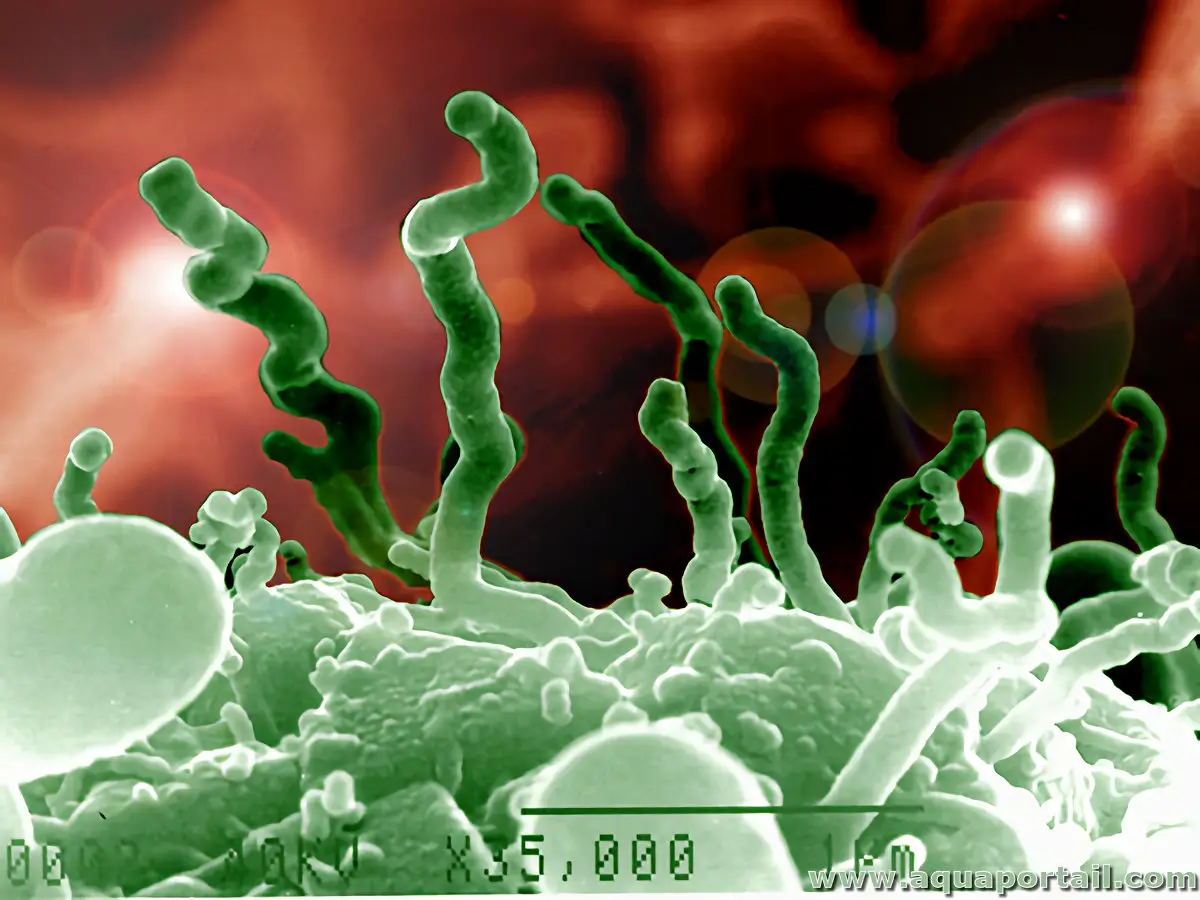
A nanobe is a tiny filamentous structure initially proposed as a hypothetical nanometer-scale microbe discovered in certain rocks and sediments, closely...
bacterium

A bacterium is a unicellular prokaryotic microorganism, primarily round, spiral, or rod-shaped, that generally lives in soil, water, organic matter...
natural environment

The natural environment is the environment of nature that characterizes a habitat area with an artificially unmodified biotope, integrating an ecosystem where...
