Nanobe
noun (n.)
Definition
A nanobe is a tiny filamentous structure initially proposed as a hypothetical nanometer-scale microbe discovered in certain rocks and sediments, closely related to the concept of nanobacteria. Some researchers hypothesized that nanobes might represent the smallest form of life, roughly one-tenth the size of the smallest known bacteria.
Nanobes under the microscope:
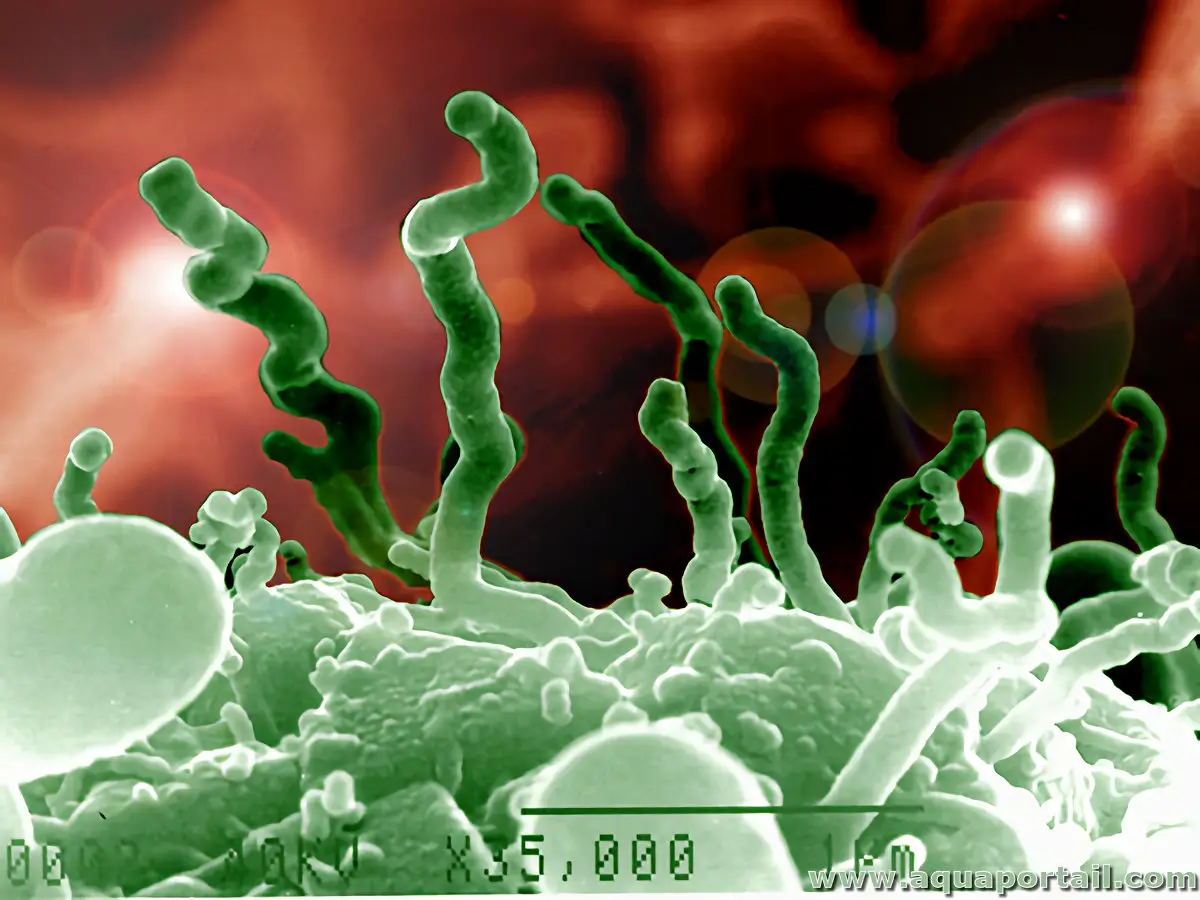
Nanobes are minute entities found in organisms and rocks.
Explanations
There is no conclusive evidence that these structures are living organisms, making their classification controversial. By a wide margin, most microbiologists regard the observed samples as abiotic crystalline mineral formations rather than living biotic entities.
See also abiogenesis.
Nanobacteria were proposed as the smallest walled cellular organisms on Earth, sparking extensive scientific debate. A nanobe measures just a few tens of nanometers in diameter (roughly one-tenth the size of a small bacterium), prompting biologists to point out that a structure of this scale lacks sufficient volume to house essential cellular machinery such as DNA, RNA, and ribosomes.
Whether nanobes are living entities remains doubtful, and this broader term does not necessarily imply a bacterial origin.
Although nanobes and nanobacteria are occasionally distinguished by context (geological versus biomedical), the two terms are frequently used interchangeably.
Nanobe-like structures have been reported in both biological specimens and deep rock cores, leading early proponents to speculate that such nanoscale filaments might be widespread.
Potential extraterrestrial occurrence has also been debated: the Martian meteorite ALH 84001 was hypothesized to contain fossil traces of nanobacteria, exhibiting microscopic elongated worm-like and ovoid mineral structures.
History
Sedimentary geologist Philippa Uwins of the University of Queensland, Australia, discovered nanobes in Jurassic and Triassic sandstones in 1996. She and her research team initially hesitated to call their nanobes "nanobacteria" until their origin and nature were better understood. Subsequent cytochemical testing indicated positive staining with nucleic acid dyes (DAPI, acridine orange, and Feulgen stain), and the structures appeared bounded by a membrane enclosing carbon-, nitrogen-, and oxygen-rich material.
In 1996, a team LED by David McKay at NASA's Johnson Space Center published a paper proposing potential nanobacterial microfossils in the Martian meteorite ALH 84001, which—if biogenic—would have implied ancient microbial life on Mars.
In 1998, Finnish researchers Olavi Kajander and Neva Çiftçioğlu published a study in the Proceedings of the National Academy of Sciences reporting the isolation, culture, and partial ribosomal RNA (rRNA) characterization of nanobacteria from human and bovine blood and commercial serum. Their cultured particles were coated with apatite, a calcium phosphate mineral found in teeth and bones. However, the molecular findings were later questioned when the sequenced rRNA proved nearly identical to that of Phyllobacterium myrsinacearum, a common bacterial contaminant in PCR reagents.
Furthermore, subsequent studies demonstrated that cell-free media spontaneously generate particles resembling nanobes and nanobacteria when inorganic calcium and phosphate salts interact with organic molecules or serum proteins.
Synonyms, antonyms
Spanish translation: nanobio
3 synonyms (similar meaning) for "nanobe":
0 antonyms (opposite meaning).
Related words and expressions to NANOBE are directly connected by general or specific meaning.
The word NANOBE is listed on page 1 of words starting with N in the dictionary glossary.
Related to "nanobe"
microbe

A microbe is a unicellular microorganism that can act as a vector for transmitting disease or induce fermentation.
nanobacterium
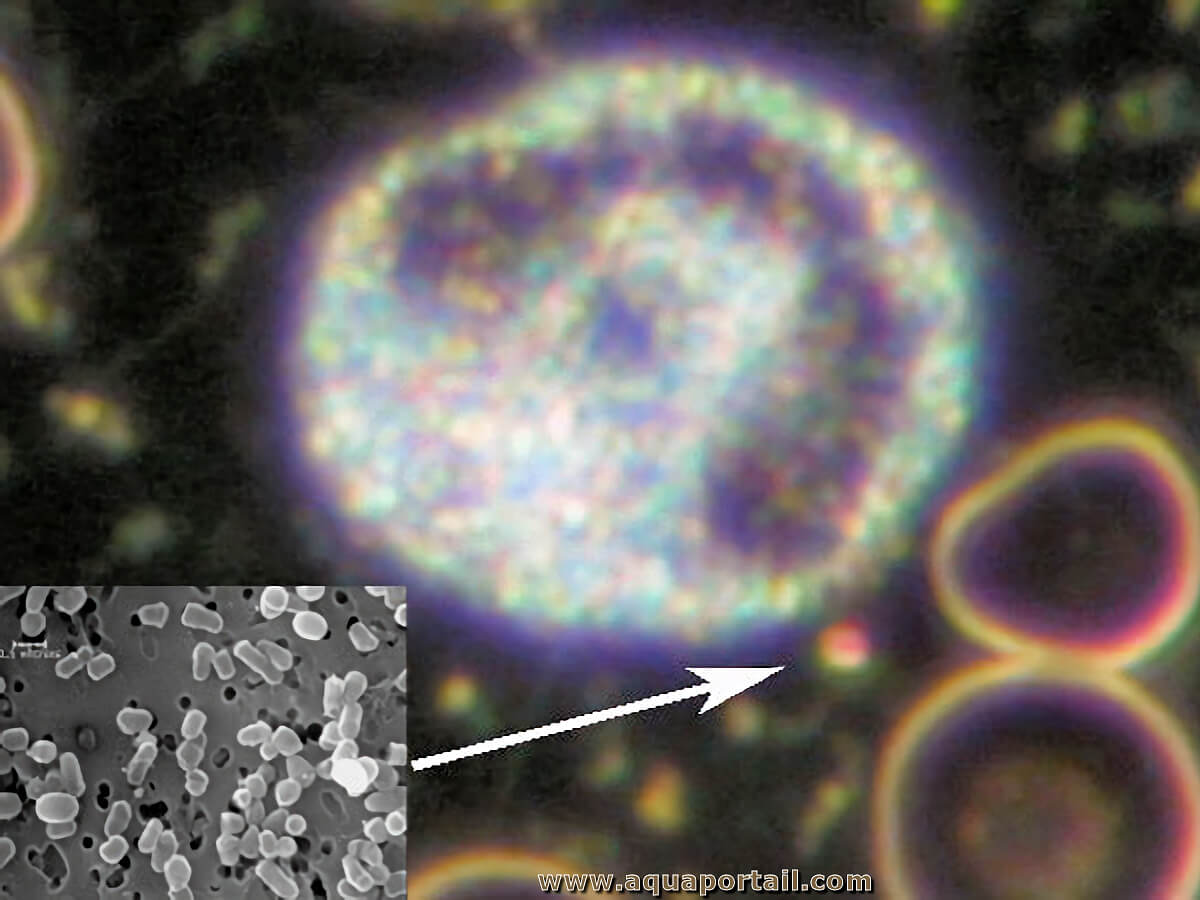
A nanobacterium is a submicron particle initially described as a hypothetical bacterial microorganism the size of a nanobe.
natural environment

The natural environment is the environment of nature that characterizes a habitat area with an artificially unmodified biotope, integrating an ecosystem where...
