Nauplius
noun (n.)
Definition
A nauplius is a planktonic larva characteristic of crustaceans, representing the first or second stage (naupliar stage) after egg hatching. Nauplii of brine shrimp, daphnia, and cyclops are ideal foods for fry. The nauplius is followed by the zoea, and by the cypris larval stage in Cirripedia.
A brine shrimp nauplius :

The brine shrimp nauplius Artemiidae often serves as a first food for rearing fry in aquariums and aquaculture. Here, the nauplius is feeding.
Explanations
The nauplius is also one of the larval development stages of decapod crustaceans in certain shrimps, the penaeids, and the subsequent larval stage is the metanauplius or orthonauplius, close to the paranauplius stage.
⭐ See in detail brine shrimp nauplii (including how to culture them).
Anatomy
Nauplii are characterized by the use of head appendages (the antennae) for swimming. The nauplius is also the stage at which a simple unpaired eye appears (as in Cyclops). For this reason, the eye is known as the naupliar eye, and is often absent in later developmental stages, although it is retained in the adult form in certain groups, such as notostracans.
The nauplius of a cyclops species:

Copepod nauplii are planktonic animals, denoting an immature developmental stage in the crustacean life cycle.
The body of the nauplius is divided into:
- the head,
- the telson,
- three pairs of appendages, which will become the antennules, antennae, and mandibles in the adult.
The thorax and abdomen are not developed in the nauplius larva. It has a roughly pear-shaped body and three pairs of cephalic appendages: antennules, antennae, and mandibles, with which it swims. The first pair is always uniramous (composed of a single branch), while the others may be biramous. It has a labrum covering the mouth and a simple median eye (naupliar eye), often absent in later developmental stages, though some groups retain it, as in Notostraca (triops).
The appearance of a nauplius varies across different crustacean groups. For example, in barnacles, there is a subtriangular dorsal shield, two bright frontal horns, and a few dorsal and ventral spines, whereas in facetotectans, the dorsal carapace has a faceted appearance. The copepod nauplius may be regarded as the paradigm of the "typical" nauplius.
Development
The larva undergoes a series of molts during growth; during development, segments are added between the mandibles and the terminal body region, the telson. These stages are designated by a Roman numeral indicating each phase starting with the youngest: nauplius I (or NI), nauplius II, nauplius III, etc. The final stage before metamorphosis (usually nauplius VI) is termed the metanauplius.
In many crustacean groups, the nauplius larva completes its developmental stages within the egg or inside the maternal brood pouch (as in Cladocera), from which a mature larva or even a juvenile specimen already resembling the adult emerges. Crustaceans with a free-swimming nauplius stage include Cirripedia, Facetotecta, Copepoda, and Anostraca, whereas in Decapoda (including crabs and shrimps), the nauplius is present only in the most primitive families such as Penaeidae and Sergestidae, with a zoea or adult-like juvenile hatching from the egg in other groups.
In euphausiids (krill), metamorphosis is prolonged and passes through stages subsequent to the metanauplius: the abdomen continues to segment, passing through three calyptopis phases, and then stages in which stalked eyes and pleopods (abdominal legs) develop in individuals already resembling the adult. The adult stage is reached after at least six developmental stages, as in the Antarctic krill Euphausia superba.
Biology
The nauplius may feed independently, generally on very small plankton (nanoplankton, microplankton) or detritus (planktotrophic nauplius), or rely solely on yolk reserves already contained in the egg (lecithotrophic nauplius). In cirripedes, for example, both species with planktotrophic nauplii and others with lecithotrophic nauplii occur.
Economic and ecological importance
Nauplius larvae constitute an important component of the marine food chain. Produced in abundance by Copepoda and Cirripedia crustaceans (mainly barnacles), they make up a significant portion of coastal meroplankton in spring (temporary zooplankton composed primarily of larvae). They contribute substantially to phytoplankton grazing and in turn serve as a food source for microorganisms.
In aquaculture, nauplius larvae hatched from Artemia salina eggs are an irreplaceable feed for rearing other crustacean and fish larvae. They are also widely used in aquariums, in both freshwater and saltwater setups.
Origin of the name (etymology)
The name Nauplius, Anglicized from the taxon published posthumously in 1785 by Otto Friedrich Müller (1730–1784), was established as a genus for an animal unknown at the time, which turned out to be copepod larvae.
However, already in the writings of the scholar Pliny the Elder, "Nauplius" was an aquatic animal that used its shell as a sail.
Synonyms, antonyms
Spanish translation: nauplio
4 synonyms (similar meaning) for "nauplius":
- metanauplius
- nauplius
- orthonauplius
- paranauplius
0 antonyms (opposite meaning).
Related words and expressions to NAUPLIUS are directly connected by general or specific meaning.
The word NAUPLIUS is listed on page 1 of words starting with N in the dictionary glossary.
Related to "nauplius"
nanobacterium
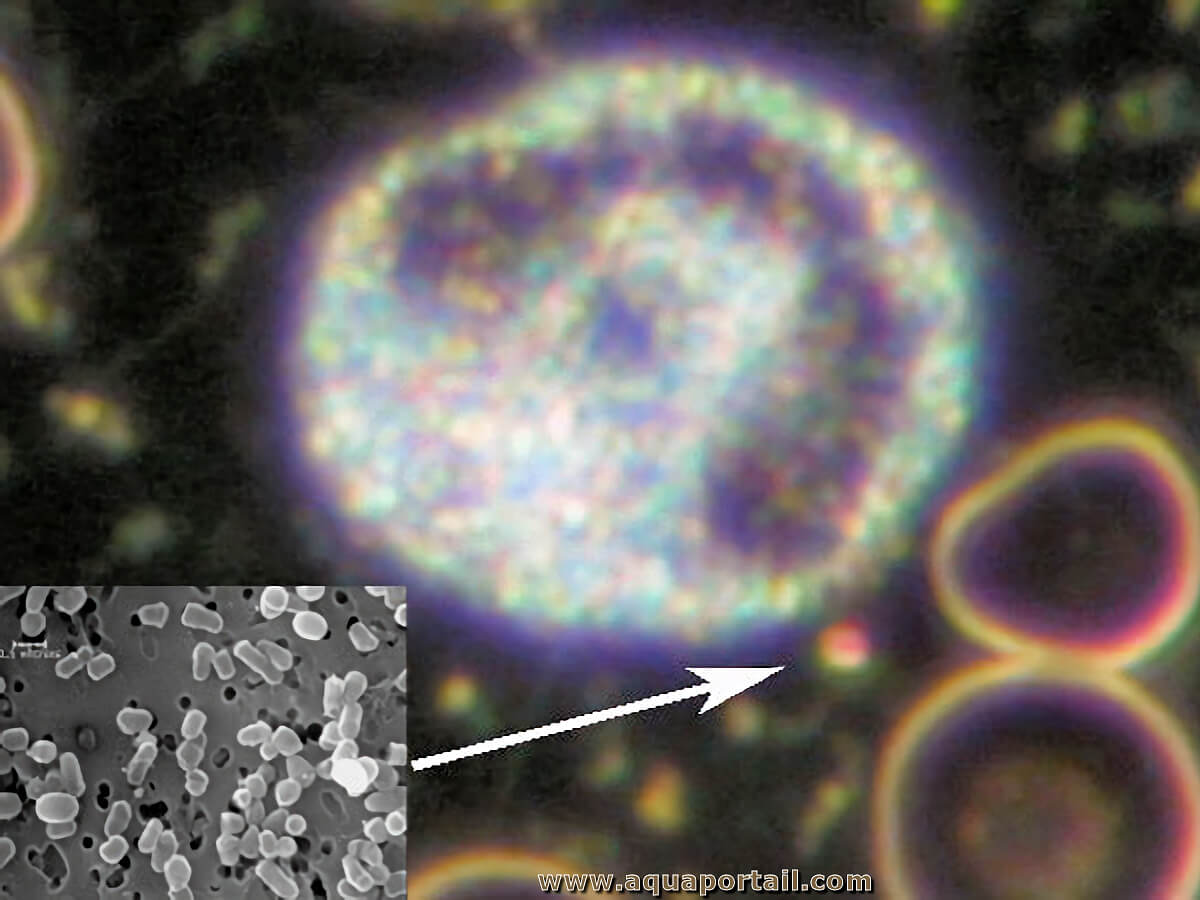
A nanobacterium is a submicron particle initially described as a hypothetical bacterial microorganism the size of a nanobe.
nanobe
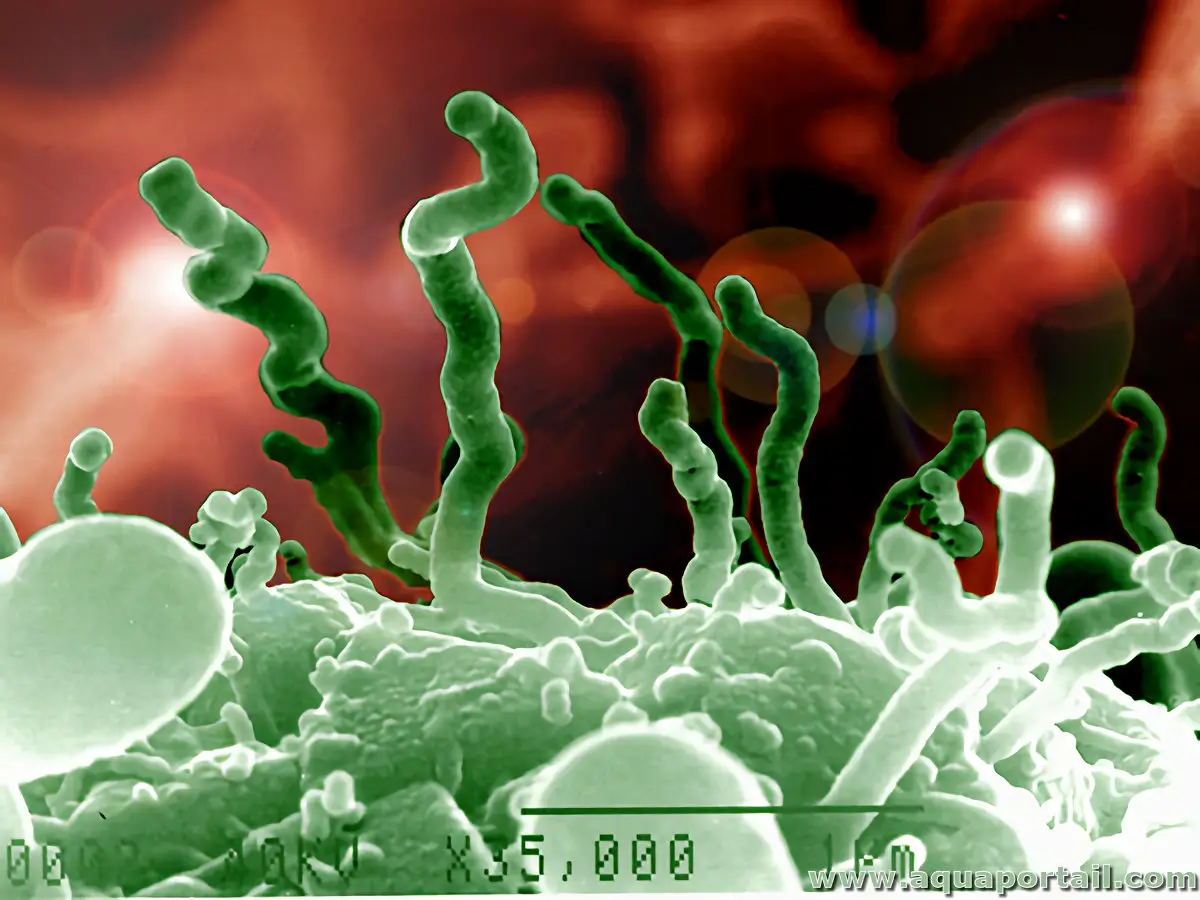
A nanobe is a tiny filamentous structure initially proposed as a hypothetical nanometer-scale microbe discovered in certain rocks and sediments, closely...
natural environment

The natural environment is the environment of nature that characterizes a habitat area with an artificially unmodified biotope, integrating an ecosystem where...
natural swimming pool

The principle of an ecological swimming pool, or natural swimming pool, is relatively simple : private swimming pools are becoming increasingly numerous...
