Brine shrimp
noun (n.)
Definition
Brine shrimp are small primitive crustaceans measuring about 1 cm (0.4 in) that inhabit salt marshes and salt pans, ranging from brackish to hypersaline waters worldwide. This aquatic animal serves as a prized live prey for many aquarium fish and is widely farmed in aquaculture, much like daphnia in freshwater.Two male Artemia salina together :

In the illustration, two male brine shrimp are distinguished by the shape of their head, whereas brine shrimp larvae, called nauplii, measure up to 3 mm (0.12 in). Brine shrimp play an important role in ecological studies and are frequently used in educational settings to demonstrate biological principles.
Explanations
The main species exploited in Europe, due to its geographic origin and natural range, is Artemia salina, whereas in amateur or commercial aquarium breeding, Artemia franciscana is preferred for its superior nutritional value and smaller size.
⭐ Of particular interest is culturing brine shrimp nauplii for rearing micro-fish.
Frozen brine shrimp are easier to use as fish food than live marine brine shrimp.
The earliest historical record of brine shrimp dates back to 982 AD from lake Urmia in Iran, although the first unambiguous account consists of the report and drawings made by Schlösser in 1756 from specimens collected in Lymington, England.
The worldwide coastal distribution of such a small benthopelagic crustacean species is partly explained by the brine shrimp's ability to avoid coexisting with most predators, such as marine fish, thanks to its capacity to survive in extremely high salinities up to 250‰, whereas average global ocean salinity is about 32‰.
Morphology and life cycle
In its natural environment, at certain times of the year, Artemia produces cysts (bioencapsulated eggs) that float at the water surface and are blown ashore by wind and waves. These cysts are metabolically inactive and do not develop as long as they remain dry. Upon immersion in seawater, the biconcave cysts hydrate, become spherical, and inside the shell, the embryo resumes its interrupted metabolism.
After about 20 hours (24 hours, depending on temperature), the outer cyst membrane bursts open and the embryo emerges, surrounded by the hatching membrane. While the embryo hangs beneath the empty shell (umbrella stage), nauplius development is completed, and shortly thereafter the hatching membrane ruptures (hatching proper) and the nauplius enters the free-swimming stage.
The first larval stage (instar 1; 400 to 500 µm long) is brownish-orange, with a red naupliar eye in the head region and three pairs of appendages: first antennae (sensory function), second antennae (locomotory and feeding function), and mandibles (food-uptake function). The ventral side is covered by a large labrum (food ingestion: transfer of particles from filtering setae into the mouth). The instar 1 larva does not feed because its digestive tract is not yet functional; it relies entirely on its yolk reserves.
After roughly 8 hours, the animal molts into the 2nd larval stage (instar 2). Small food particles (such as algal cells, bacteria, and detritus) ranging in size from 1 to 50 µm are filtered by the second antennae and ingested into the functional digestive tract.
The larva grows and differentiates through roughly fifteen molts. Paired lobular appendages appear in the trunk region and differentiate into thoracopods. Lateral compound eyes develop on both sides of the nauplius. From the 10th instar onward, major morphological and functional changes occur: the antennae lose their locomotory function and undergo sexual differentiation. In males, they develop into hooked claspers, whereas female antennae degenerate into sensory appendages. The thoracopods are now differentiated into three functional parts, namely telopodites and endopodites (locomotion and filter feeding) and membranous exopodites (gills).
Adult brine shrimp (about 1 cm / 0.4 in long) have an elongated body with two stalked compound eyes, a linear digestive tract, sensory antennae, and 11 pairs of functional thoracopods. The male possesses a paired penis in the posterior trunk region. The female brine shrimp is easily recognized by the brood pouch or uterus located just behind the 11th pair of thoracopods. Eggs develop in two tubular ovaries in the abdomen; once mature, they become spherical and migrate via two oviducts into the unpaired uterus.
Fertilized eggs normally develop into free-swimming nauplii (= ovoviviparous reproduction) released by the female. Under extreme conditions (such as high salinity or low oxygen levels), embryos develop only to the gastrula stage. At that point, they become enclosed in a thick shell (secreted by brown shell glands in the uterus), enter a state of metabolic arrest or dormancy (diapause), and are subsequently released by the female (= oviparous reproduction). In principle, both oviparity and ovoviviparity occur in all Artemia strains, and females can switch between reproductive modes from one reproductive cycle to the next.
Cysts generally float in high-salinity waters and wash ashore, where they accumulate and dry out. Following this dehydration process (desiccation), the diapause mechanism is generally deactivated; the cysts are now quiescent and can resume embryonic development when hydrated under optimal hatching conditions.
Under optimal conditions, brine shrimp can live for several months, grow from nauplius to adult in just 8 days, and reproduce at a rate of up to 300 nauplii or cysts every 4 days.
Ecology and natural distribution
Artemia populations occur in roughly 500 natural salt lakes and man-made salt pans scattered across tropical, subtropical, and temperate climate zones, along coastlines as well as inland. This list remains provisional, as further surveys are expected to uncover many more Artemia biotopes worldwide. The distribution of Artemia is discontinuous: not all highly saline biotopes are inhabited by them. Although these micro-shrimp thrive very well in natural seawater, they cannot migrate from one saline biotope to another via the oceans, as they depend on physiological adaptations to high salinity to avoid predation and competition with other filter feeders.
Their physiological adaptations to high salinity provide a highly effective ecological defense against predation, as brine shrimp possess:
- a highly efficient osmoregulatory system;
- the ability to synthesize high-affinity respiratory pigments to cope with low O2 levels at high salinities;
- the capacity to produce dormant cysts when environmental conditions threaten species survival.
Brine shrimp are therefore found only at salinities where predators cannot survive (from 70 g/L onward). Due to extreme physiological stress and water toxicity, Artemia dies at salinities approaching NaCl saturation, i.e., above 300 g/L.
Different geographic strains have adapted to widely fluctuating conditions regarding temperature (6–35 °C / 43–95 °F), salinity, and ionic composition of the biotope. Thalassohaline (hyperhaline) waters are concentrated marine waters with NaCl as the dominant salt. They make up most, if not all, coastal Artemia habitats where brine shrimp thrive through seawater evaporation in salt pans. Other thalassohaline habitats lie inland, such as the Great Salt Lake in Utah, USA. Athalassohaline biotopes are situated inland and have an ionic composition differing markedly from natural seawater: these include sulfate waters (e.g., Chaplin Lake, Saskatchewan, Canada), carbonate waters (e.g., Mono Lake, California, USA), and potassium-rich waters (e.g., several lakes in Nebraska, USA).
Brine shrimp are non-selective filter feeders of organic detritus, microscopic algae, and bacteria. Artemia biotopes generally exhibit a very simple trophic structure and low species diversity; the absence of predators and food competitors enables brine shrimp to form monocultures. Because high salinity is the primary determinant of Artemia presence, other parameters (temperature, primary food production, etc.) at most affect population abundance and may occasionally cause temporary absence of the species.
Since brine shrimp are incapable of active dispersal, wind and waterfowl (particularly flamingos) are the most important natural dispersal vectors; floating cysts adhere to birds'feet and feathers, and when ingested, remain intact for at least two days in the avian digestive tract. Consequently, the absence of migratory birds likely explains why certain suitable areas (such as salt pans along the northeastern coast of Brazil) are not naturally inhabited by brine shrimp.
Alongside natural cyst dispersal, deliberate human inoculation into solar saltworks was common practice in the past. Since the 1970s, humans have been responsible for several introductions of Artemia sp. in South America and Australia, either to enhance salt production or for aquaculture. Additionally, temporary brine shrimp populations occur in tropical regions with distinct dry and wet seasons (monsoon climates) via inoculation into seasonal salt operations (e.g., in Central America and Southeast Asia).
Synonyms, antonyms
Spanish translation: artemia
5 synonyms (similar meaning) for "brine shrimp":
- Artemia franciscana
- Artemia pulex
- Artemia salina
- brine shrimp
- microcrustacean
0 antonyms (opposite meaning).
Related words and expressions to BRINE SHRIMP are directly connected by general or specific meaning.
The expression BRINE SHRIMP is listed on page 1 of words starting with B in the dictionary glossary.
Related to "brine shrimp"
daphnia
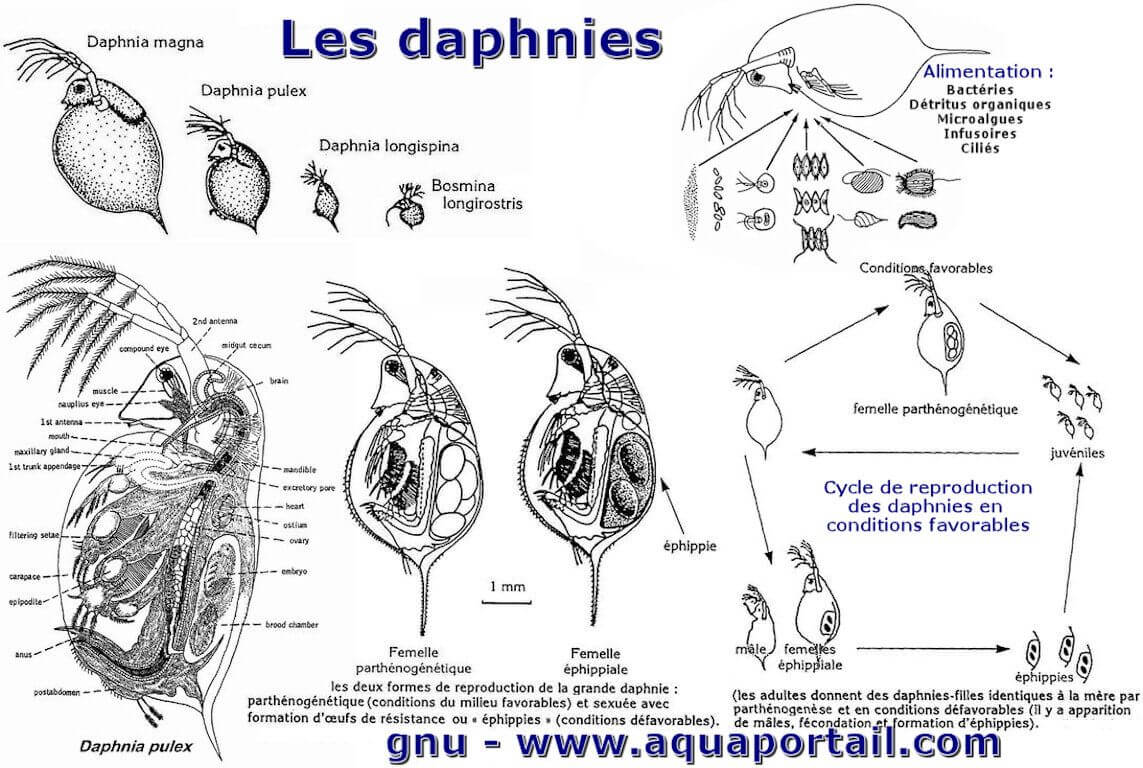
Daphnia is a planktonic branchiopod crustacean of the family Daphniidae, forming a dominant portion of freshwater plankton.
bacterial artificial chromosome
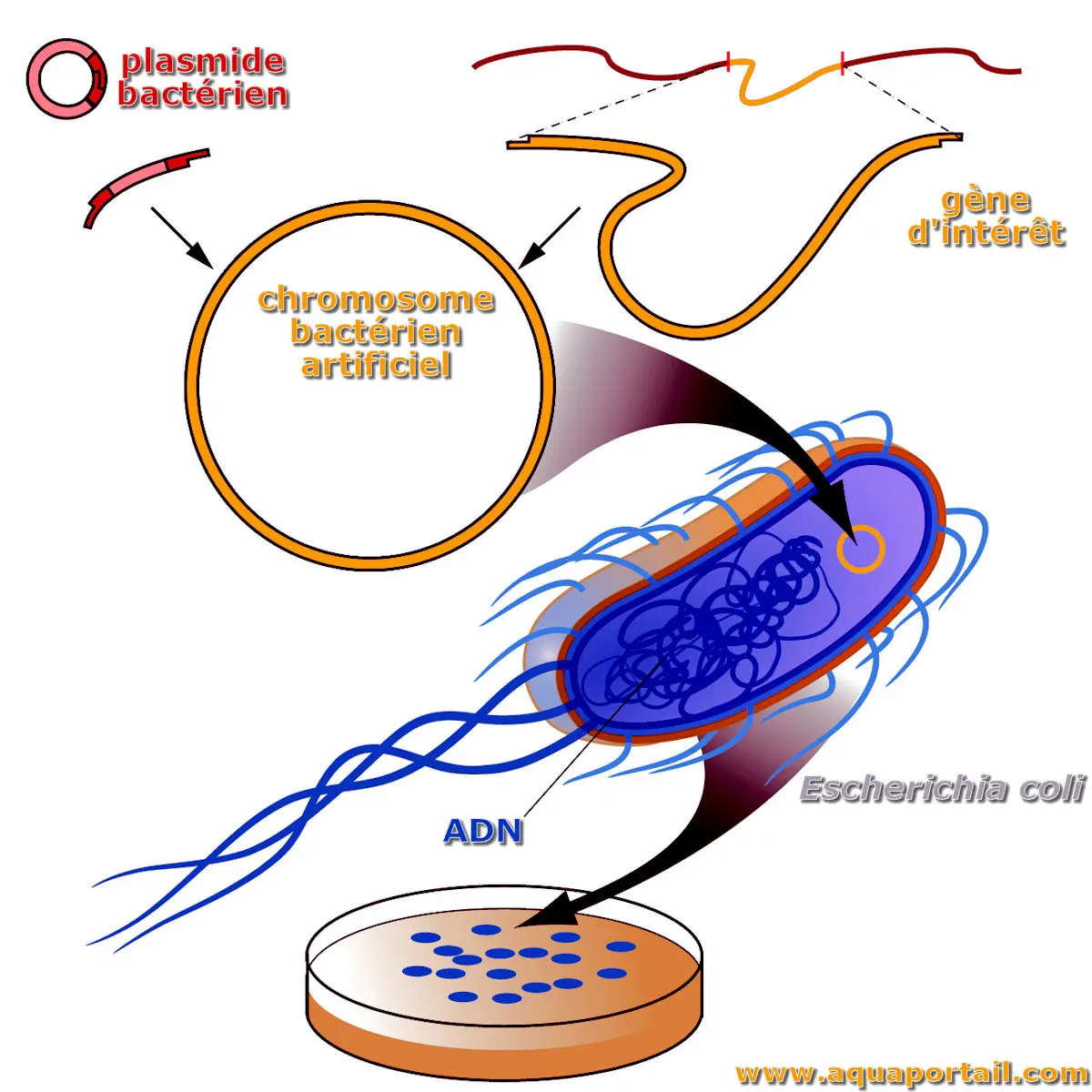
A bacterial artificial chromosome (BAC) is a DNA construct, based on a functional fertility plasmid or F-factor, used for transformation and bacterial cloning...
bacteriochlorophyll

A bacteriochlorophyll (BChl) is a pigment of photosynthetic eubacteria other than cyanobacteria, yet containing chlorophyll and able to carry...
bacteriorhodopsin
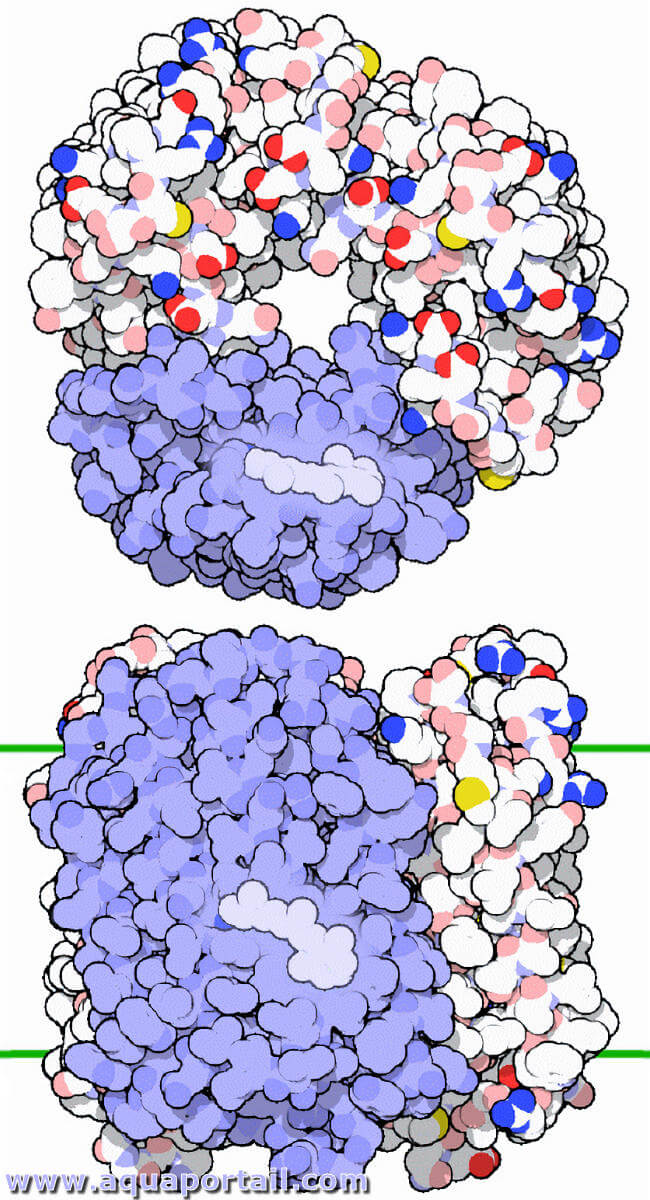
Bacteriorhodopsin (or proteorhodopsin) is a pigment of extreme halophilic photosynthetic archaebacteria.
Simple summary
Brine shrimp are small aquatic crustaceans belonging to the genus Artemia. Often found in saltwater environments such as salt pans and salt lakes, they are able to thrive in high-salinity conditions where few other organisms can survive. Brine shrimp are widely used as feed in the aquaculture industry and as live food for fish and other marine animals in aquariums due to their nutritional value.
