Embryo
noun (n.)
Definition
An embryo is a developing organism prior to hatching (oviparous animals), prior to birth (viviparous animals), or prior to germination (plant germs). It consists of a group of undifferentiated diploid embryonic cells derived from a zygote. The embryonic period begins with the fertilization of an egg cell or, in parthenogenetic or gynogenetic organisms, the initiation of cell division.
A dolphin embryo:

Like all mammals, the dolphin gestates an embryo in its womb. It is during the embryonic phase that the foundations of all the body's major organ systems are established.
Explanations
In oviparous animals, the embryonic period ends with hatching or the first defined larval stage. The embryonic period, with its successive stages, plays a vital role in brain development.
In biology, an embryo is an unborn or unhatched offspring in the process of development, defining embryogenesis and then organogenesis during embryonic stages. The quarter-embryo technique is used in species cloning.
In humans, from the ninth week onward, the embryo becomes a fetus. A baby passes through several developmental stages, starting from a fertilized egg, which develops into a blastocyst (weeks 1 to 2), an embryo (weeks 3 to 8), and then a fetus.
An amniote embryo:

The embryo of an amniote (terrestrial tetrapod vertebrate) develops inside an internal sac protected by a chorion and filled with amniotic fluid.
In botany, the embryo is a group of cells derived from the zygote that will give rise to the seedling (along with its cotyledons), inside the archegonium or within the seed.
Quarter embryo
A quarter embryo (demi- or quarter-embryo), in species cloning, is a portion of an embryo (at the morula stage) bisected into four nearly equal parts to be transferred into a recipient female for reproduction.
The viability of demi-embryos or quarter-embryos in cattle has been extensively studied.
It is a reproductive biotechnology technique in mammals for embryo transfer.
An embryo (an excellent-quality late morula) is dissected into four "quarters" in equal portions using a simplified micromanipulation procedure. Each quarter embryo is then loaded into a 0.25 mL (0.0085 fl oz) straw and non-surgically transplanted into four recipient females.
Synonyms, antonyms
Spanish translation: embrión
10 synonyms (similar meaning) for "embryo":
1 antonym (opposite meaning):
Related words and expressions to EMBRYO are directly connected by general or specific meaning.
The word EMBRYO is listed on page 1 of words starting with E in the dictionary glossary.
Related to "embryo"
aplanospore

An aplanospore is a non-swimming spore (as opposed to a planospore or a zoospore). Such spores lack flagella but may possess features of swimming cells such...
archaeospore

In red algae, an archaeospore is the contents of an ordinary vegetative cell which, released without prior mitosis, functions as a spore.
autospore

An autospore is each of the non-motile spores (aplanospores) produced by division and differentiation of the contents of a coccoid unicellular organism.
auxospore
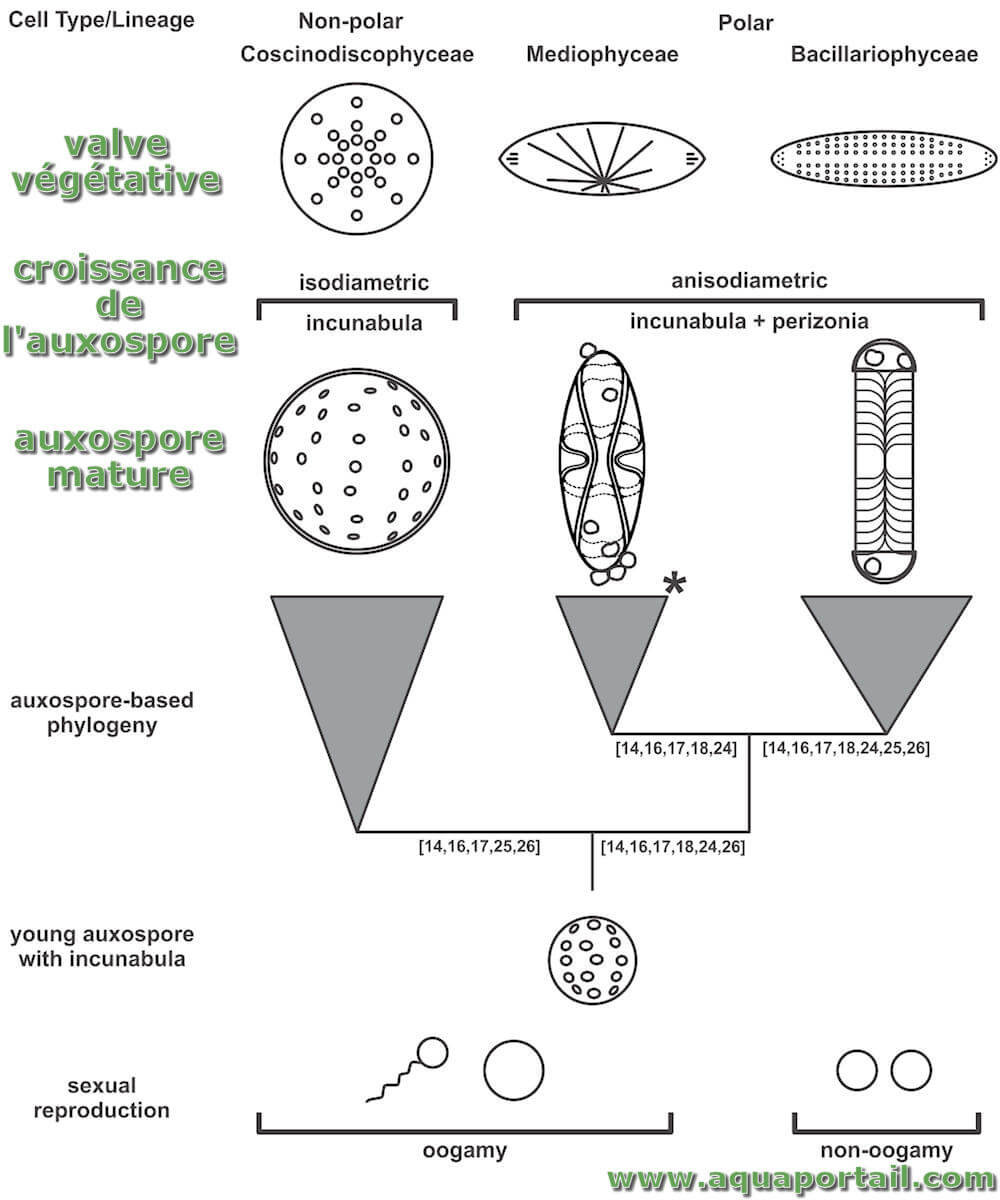
An auxospore is a reproductive cell in diatoms generally resulting from the union of two smaller cells or their contents and associated with the rejuvenation...
Simple summary
An embryo corresponds to the early developmental stage of an organism, particularly in sexually reproducing animals. In vertebrates, this stage occurs after fertilization, when the zygote begins dividing and differentiating, forming the foundational structures and organs required for further development. In humans, the embryonic period extends from fertilization through the end of the eighth week, at which point the organism transitions to the fetal stage.
