Endolith
noun (n.)
Definition
An endolith is an endolithic organism that grows inside rocks or lives within rock pores and fissures. The endolithic lifestyle occurs exclusively among microorganisms: bacteria, archaea, and certain lichens, the latter representing a symbiosis between fungi and algae.
For example, cyanobacteria that bore into limestone (petricolous and calcicolous cyanobacteria) become endoliths.
An endolith from Antarctica:
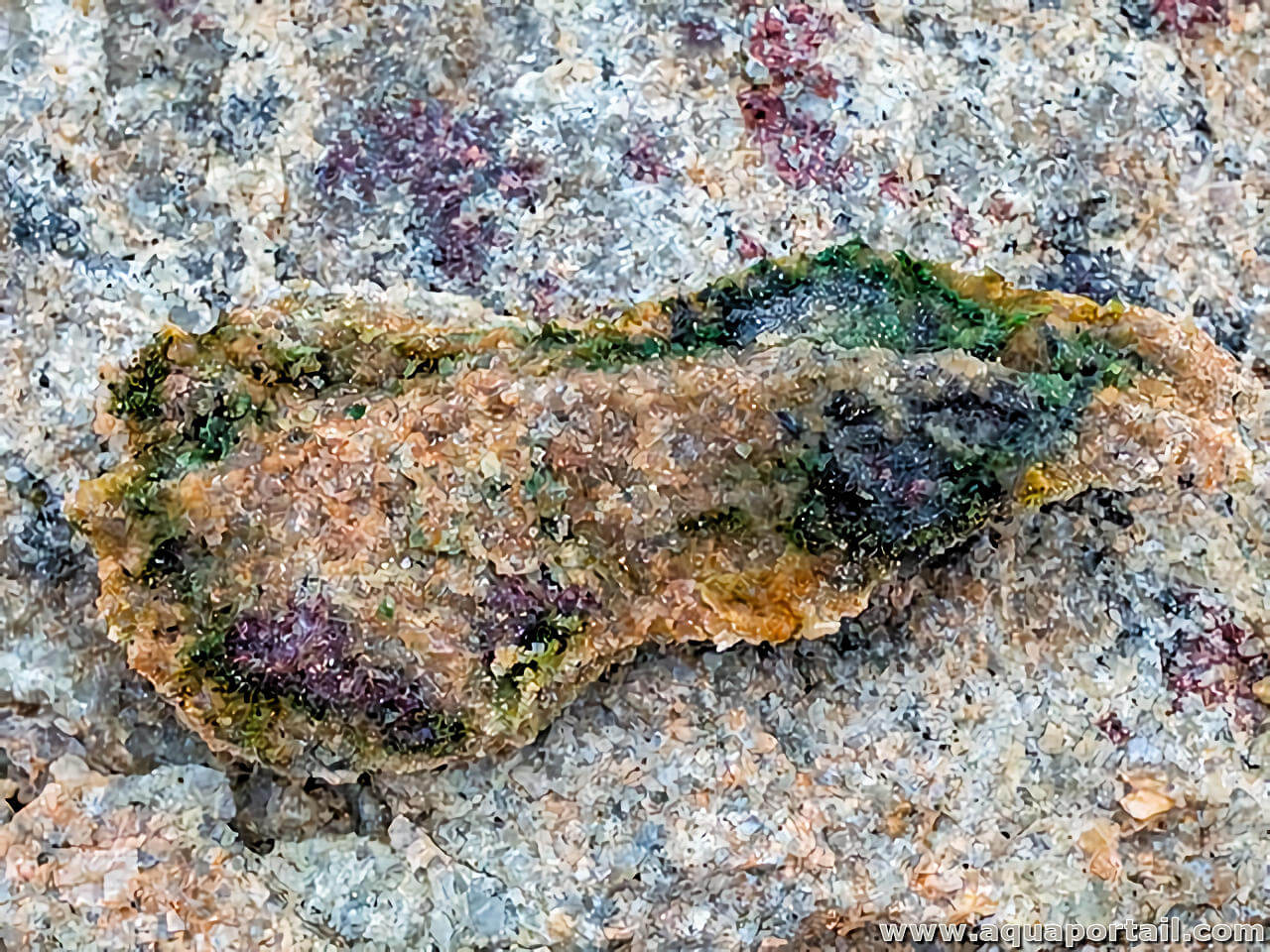
A cryptic endolith (cryptoendolith) is an endolithic, extremophilic life form visible as a green layer a few millimeters thick inside a light-colored rock. The rock, originating from Antarctica, has been split open.
Explanations
Endoliths generally live lithotrophically, meaning they derive their vital energy from transforming inorganic compounds within colonized rocks, such as sulfur, iron, and manganese, as well as uranium, arsenic, and others in certain cases.
In addition, phototrophic—that is, photosynthetic—endoliths exist. This is no contradiction, as sunlight can penetrate certain rocks to a depth of several millimeters; quartz-bearing crystals such as granite or sandstone in particular allow photosynthesis inside rock. The most common phototrophic endoliths are lichens, alongside cyanobacteria such as Chroococcidiopsis.
Iron- and sulfur-oxidizing bacteria are of major importance because iron and sulfur are abundant elements in Earth's crust, and many minerals occur as sulfide compounds. Common iron-sulfur minerals include pyrite and marcasite. Bacteria such as Acidithiobacillus ferrooxidans and Leptospirillum ferrooxidans can oxidize iron and sulfur under aerobic conditions. Microorganisms constantly compete with spontaneous chemical reactions, yet they possess enzymes that dramatically accelerate these reactions inside the cell by lowering activation energy; endoliths are thus responsible for accelerated weathering and bioerosion.
Chemical oxidation of iron-sulfur minerals is catalyzed by trivalent iron. The resulting thiosulfate is unstable in acidic solutions and hydrolyzes into sulfate and other sulfur species. Divalent iron and reduced sulfur compounds then serve as potential energy sources for chemolithotrophic microorganisms, which regenerate the oxidizing agent Fe3+ and thereby accelerate the reaction. Within a short time, substantial amounts of pyrite can be oxidized via this process. The sulfuric acid generated lowers the pH and in turn dissolves other rock minerals. Leachates from mines or flooded open-pit mines are therefore often strongly acidified, with pH values of 2 to 3, and laden with dissolved heavy metals. This effect is harnessed in bioleaching, a specialized mining process for low-grade ores in which endoliths act as biocatalysts.
Novel bacteria and archaea have been isolated from the deepest mines in the world. Today, the deep biosphere is recognized as a largely unexplored habitat on Earth containing a significant fraction of our planet's biomass in the form of microorganisms. However, these microorganisms tend to grow slowly because the underlying redox processes yield little energy. The most remarkable feature of the lithotrophic lifestyle of endolithic organisms, however, is that they are the only organisms capable of living completely independent of solar energy: many can grow autotrophically, fixing carbon dioxide from their surroundings and synthesizing organic matter solely using chemical energy from purely inorganic compounds. Theoretically, such organisms could also exist on other celestial bodies.
The transition from endolithic organisms to soil-dwelling organisms is often gradual. Isolating and characterizing endoliths is frequently difficult because they occur at low cell densities, grow slowly, and have highly specific environmental requirements such as temperature, pH, mineral composition, and oxygen concentration.
See also oolith, otolith, theodolite.
Endolithic
In botany and lichenology, an endolithic thallus refers to a crustose lichen thallus almost completely embedded within rock, growing inside a generally calcareous mineral substrate. For algal species, see endolithic species.
Endolithic trace
In botany, an endolithic trace refers to a crustose lichen thallus nearly enclosed within rock, developing inside a typically calcareous mineral substrate. For algal species, see endolithic species and endolith.
Endolithic species
An endolithic species—living inside a calcareous mineral substrate—occurs among algae: Rhodophyceae (red algae), Chlorophyceae (green algae), and Cyanophyceae (cyanobacteria or blue-green algae). Cyanobacteria, as pioneer species, bore the initial micro-galleries.
Like all algae, endolithic species operate strictly by chemical dissolution, presumably utilizing enriched respiratory carbonic acid. Green algae of the genus Ostreobium (Siphonales) inhabit the calcareous skeleton of corals.
Coral polyp tissues continuously deposit calcareous skeleton enlarging the colony, while an algal band located immediately beneath the growing layer instantly dissolves part of this calcium carbonate, often forming a visible green band. Ostreobium also bores into other calcareous substrates (mollusk shells, etc.) as deeply as light required for assimilation penetrates.
Synonyms, antonyms
Spanish translation: endolito
0 synonyms (similar meaning) for "endolith".
0 antonyms (opposite meaning).
Related words and expressions to ENDOLITH are directly connected by general or specific meaning.
The word ENDOLITH is listed on page 1 of words starting with E in the dictionary glossary.
Related to "endolith"
E=mc2

The formula E=mc2 (E = m. c²) is a mass-energy equivalence equation according to the theory of relativity developed by Albert Einstein. It expresses that...
Ecdysozoa

Ecdysozoans, of the superphylum Ecdysozoa, are protostomes undergoing ecdysis within Bilateria.
echinoderm
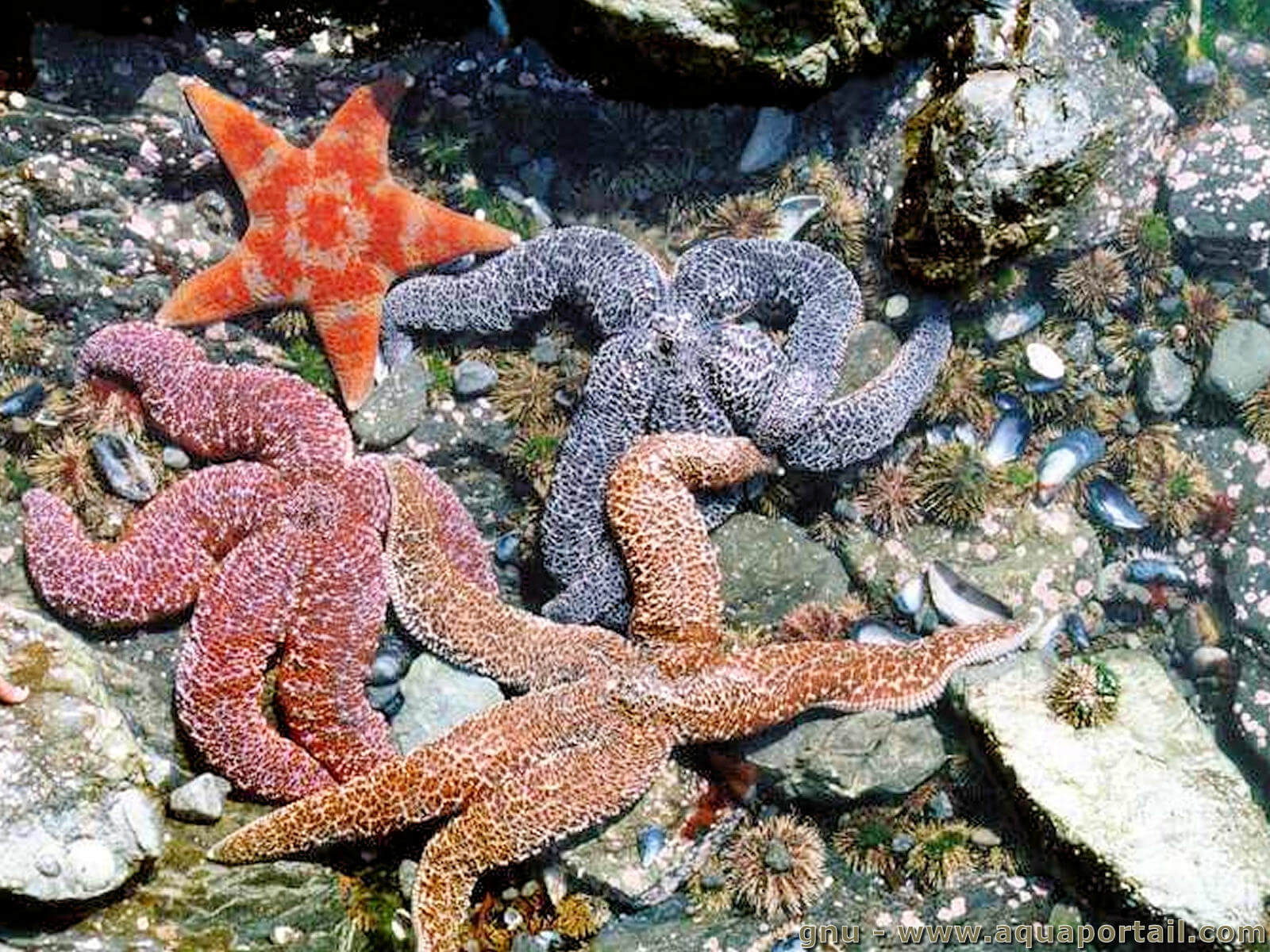
An echinoderm belongs to a lineage of invertebrates, the phylum Echinodermata, found exclusively in the world's oceans : starfish, brittle stars, sea urchins...
eco-grazing

Eco-grazing is ecological grazing carried out with small ruminants on a meadow or green space in an urban environment.
