Aerobic
adjective (adj.)
Definition
An aerobic organism can live only in the presence of oxygen, in an environment containing molecular oxygen O2. It requires oxygen for its development, even in small amounts.
Aerobic and anaerobic types:
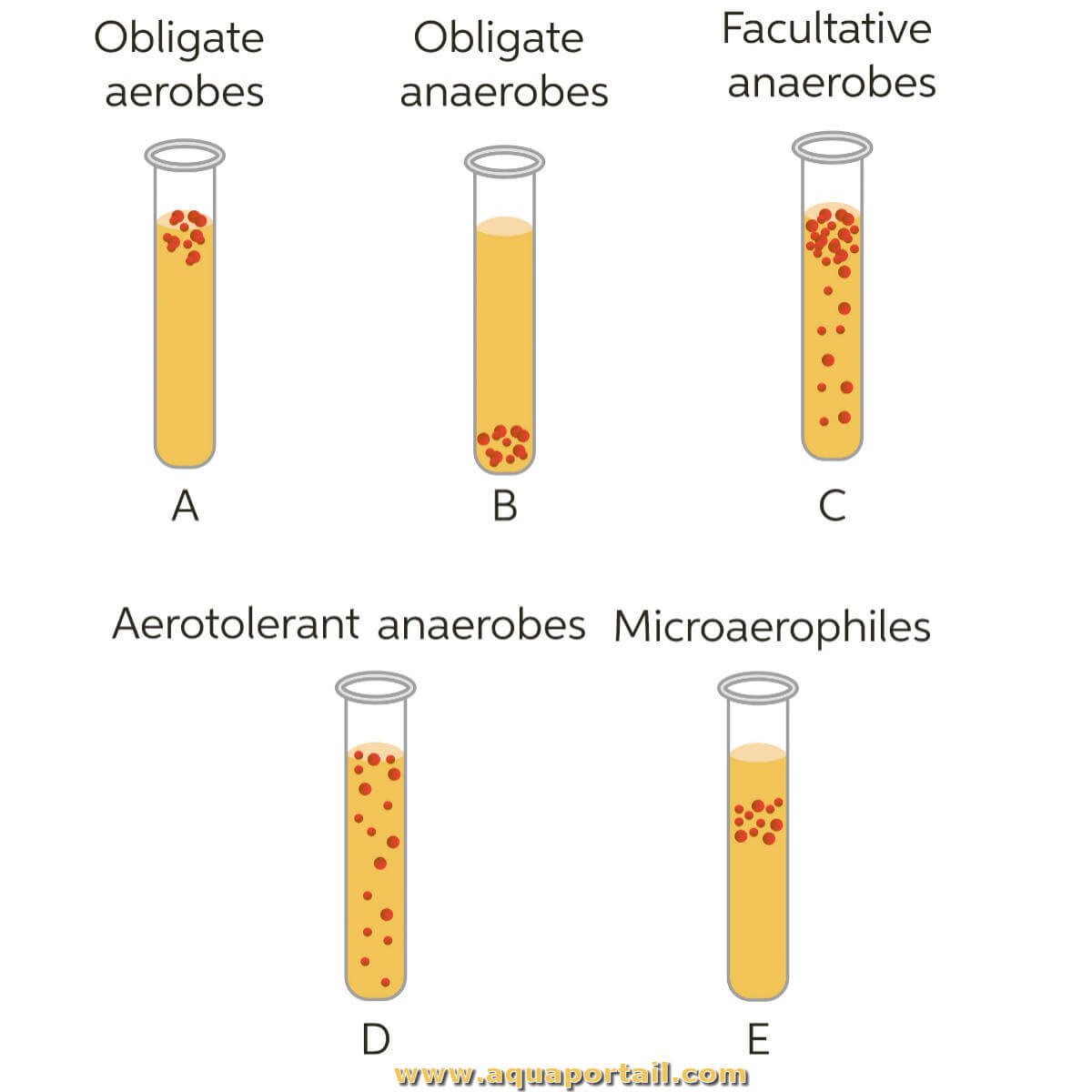
Aerobic organisms derive their energy from reactions that require oxygen, and there is no way for these organisms to survive without oxygen. They carry out a process called cellular respiration, which is the oxidation of molecules such as sugars and fats to produce the energy required for their growth and development.
Explanations
There are organisms known as facultative aerobes that can survive without much oxygen by carrying out fermentation or anoxic respiration: these are aero-anaerobes.
Aerobic contrasts with anaerobic. See also obligate aerobic organism and aerobiosis.
The vast majority of living beings lead an aerobic life in which oxygen is essential to produce biochemical energy. It therefore describes a condition or process in which gaseous oxygen is present or required.
Aerobic organisms obtain their growth energy from aerobic respiration.
Aerobic organisms are generally found in environments where oxygen is readily available, such as air, water, or soil. Most animals, plants, and many bacteria are examples.
✅ Microaerophiles are microorganisms that require oxygen to survive. Oxygen is therefore essential to them, up to a certain threshold beyond which oxygen becomes toxic to their survival. They typically require a very low oxygen concentration, generally between 2 and 10%, and higher oxygen levels can be harmful to them.
Synonyms, antonyms
Spanish translation: aerobio, aeróbico
3 synonyms (similar meaning) for "aerobic":
- facultative aerobe
- obligate aerobe
- strict aerobe
1 antonym (opposite meaning):
Related words and expressions to AEROBIC are directly connected by general or specific meaning.
The word AEROBIC is listed on page 1 of words starting with A in the dictionary glossary.
Related to "aerobic"
anaerobic

An anaerobe is a microorganism living in an environment devoid of molecular oxygen, with an absence of O₂.
abiotic

In biology and ecology, abiotic refers to what is not biotic, that is, not part of living beings.
aboral

Aboral refers to what is situated away from or opposite the mouth in zoology, and especially in marine biology.
absence

Absence refers to non-presence at an expected location, or the complete non-existence of something.
Simple summary
An aerobic organism is an organism that requires oxygen to survive and grow. It relies on oxygen to perform cellular respiration, a process that generates energy by breaking down nutrients such as glucose.
