Concentration
noun (n.)
Definition
Concentration (geographic) is the clustering of numerous elements around a central location.Concentration (mental) is the act of focusing one's intellectual attention on a single thing or task.
Concentration (chemical) is the relative amount of a given substance contained within a specific volume.
Increasing concentrations:

Mass concentration—like molar concentration, molality, and mass fraction—is a quantity used to measure the concentration of a solute in solution. It is the ratio of the mass of a solute present in the solution to the volume of the solution, indicating how much solute is contained in a given volume of solution.
Explanations
Chemical concentration is the process of increasing the strength of a solution by removing water or another diluent, or by selective accumulation of atoms or molecules. A high concentration of a substance in a solution means its amount is large relative to the volume; in a liquid, concentration is the amount of solute per unit volume of solution. See also molar concentration.
Intellectual concentration is the mental capacity to focus attentively on what one is doing and nothing else. Having good concentration means being attentive.
Geographic concentration is a compact gathering of individuals around a "center," tight clustering of objects, or aggregation of groups in a single locality.
Synonyms, antonyms
Spanish translation: concentración
6 synonyms (similar meaning) for "concentration":
- agglomeration
- aggregation
- centralization
- cluster
- gathering
- herd
3 antonyms (opposite meaning):
- dilution
- distraction
- inattention
Related words and expressions to CONCENTRATION are directly connected by general or specific meaning.
The word CONCENTRATION is listed on page 1 of words starting with C in the dictionary glossary.
Related to "concentration"
bio-purification
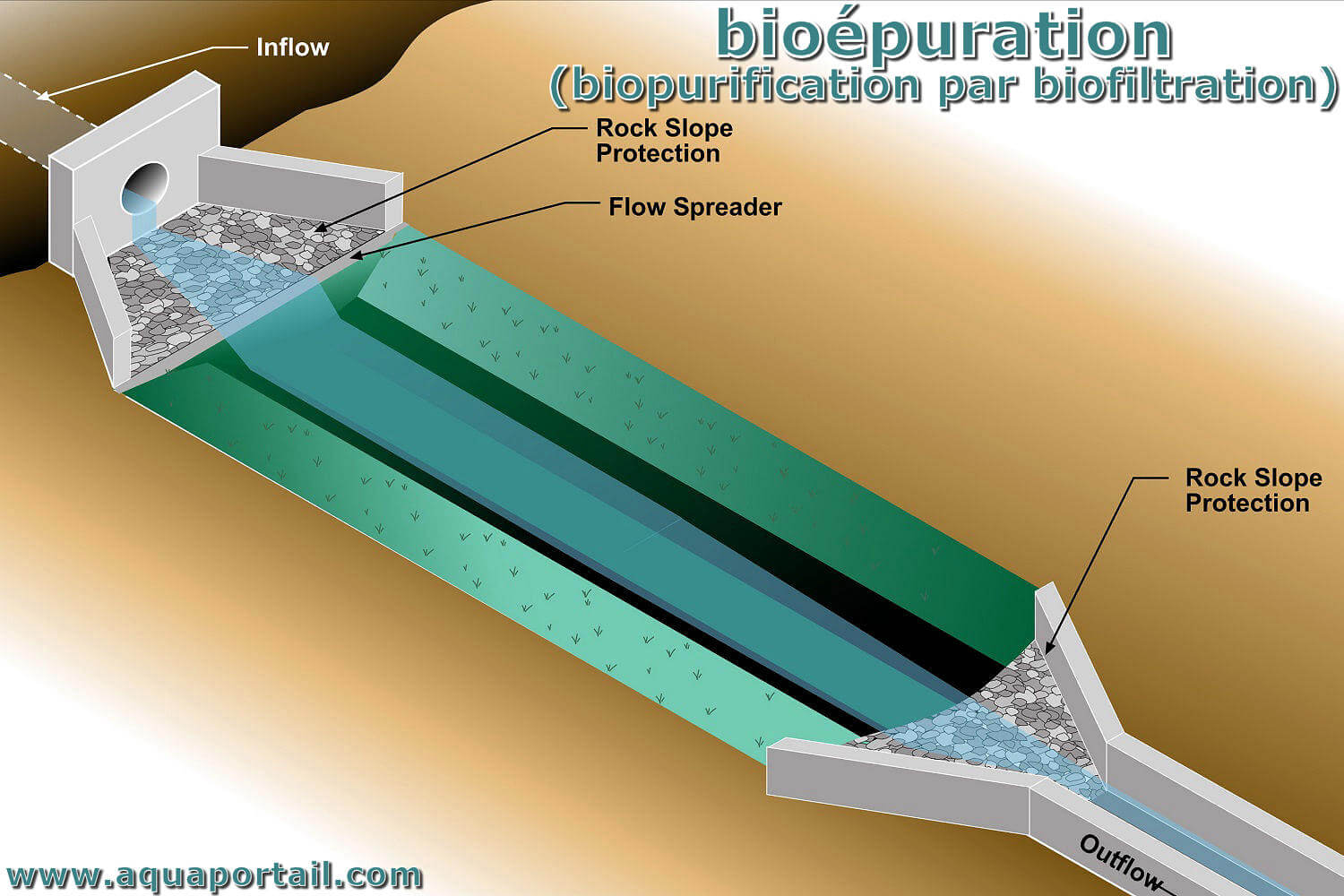
Bio-purification (biodepuration) refers to harnessing living organisms—such as plants, fungi, and symbiotic bacteria—to reduce pollution in an environment.
civilization

A civilization is generally defined as an advanced state of human society containing highly developed forms of government, culture, industry, and social...
cohabitation

Cohabitation is the simultaneous coexistence of several elements, similar or different, in the same place (habitat) over the same (extended) period.
conflagration

A conflagration is a violent, large-scale fire with gigantic flames spreading over a vast area.
Simple summary
A concentration is a measure of the amount of a constituent within a solution. The concentration of a chemical substance expresses the amount of a substance present in a mixture, and there are many ways to express concentration.
[imgdef]
Explanations
Chemists use the term solute to describe the substance of interest and the term solvent to describe the medium in which the solute is dissolved. For example, in a can of soda (a solution of sugar in carbonated water), sugar is the solute dissolved in carbonated water (the solvent); in general, the component present in the largest amount is called the solvent.
Expressing concentrations
There are many ways to express concentrations. Some of the most common concentration units include:- mass per unit volume (mass concentration): for example, milligrams per milliliter (mg/mL) or milligrams per cubic centimeter (mg/cm3). Note that 1 mL = 1 cm3 (and cm3 is sometimes written "cc"; see units of volume and units of mass). Mass per unit volume is convenient for expressing the solubility of a material in water or a specific solvent, such as "the solubility of substance X is 3 grams per liter."
- mass percentage (weight percentage): the mass of the solute divided by the total mass of the solution, multiplied by 100%. The mass of the solution equals the mass of the solute plus the mass of the solvent. For example, a solution made of 30 grams of sodium chloride and 70 grams of water is 30% sodium chloride by mass. To avoid confusion over whether a concentration is by weight or by volume, the label "w/w" (weight/weight) is often appended, as in "10% potassium iodide solution in water (w/w)."
- volume percentage (volume concentration): typically used for mixtures of liquids. Volume percentage is the volume of a component divided by the total volume (or sum of initial component volumes), multiplied by 100%. If we mix 30 mL of ethanol and 70 mL of water, the nominal volume percentage is 30%, although the final volume of the solution will not be strictly 100 mL (though close) because ethanol and water molecules interact differently with each other than with themselves. To avoid confusion between weight and volume percentage, it may be labeled "30% ethanol in water (v/v)," where v/v stands for "volume/volume."
- molarity (molar concentration): the number of moles of solute dissolved in one liter of solution. For example, 90 grams of glucose (molar mass = 180 g/mol) correspond to 0.50 mol of glucose; if we place 0.50 mol of glucose in a flask and add water up to a total volume of 1 liter (1 L), we obtain a 0.50 M solution. Molarity is usually denoted with an italicized capital M, i.e., a 0.50 M solution or in units of mol/L. Molarity is defined per liter of solution, not per liter of solvent! Molarity shifts slightly with temperature because solution volume changes with temperature.
- normality: closely related to molarity, but expressing the number of molar/reaction equivalents per liter of solution. Units are given in eq/L or an italicized capital N, as in 1.4 N. Normality is typically used when a substance has more than one reactive equivalent in a specified reaction, such as protons in acid-base reactions, electrons in redox reactions, or precipitation reactions. For example, sulfuric acid has two ionizable protons (H+) that can participate in neutralizing a base such as sodium hydroxide (NaOH); thus a 1 M (1 mol/L) sulfuric acid solution is 2 N in normality for complete neutralization.
- molality: the number of moles of solute dissolved in one kilogram of solvent (mol/kg). Note the two key differences between molarity and molality: molality uses mass rather than volume and uses solvent rather than solution. Unlike molarity, molality is independent of temperature because mass does not change with temperature. Dissolving 90 grams of glucose (0.50 mol) in 1 kilogram of water yields a 0.50 molal solution, usually denoted by an italicized lowercase m, i.e., 0.50 m. Note: "m" can have other meanings on safety data sheets, so read the context carefully.
- parts per million (ppm): functions like a mass percentage but is more convenient when only a small amount of solute is present. By definition, 1 ppm is the mass of the component in solution divided by the total mass of the solution multiplied by 106 (one million)—for example, 1 gram per million grams (1 mg/kg). Because the density of water is roughly 1 g/mL (1 kg/L) and only a tiny amount of solute is added, a dilute aqueous solution at such low concentration has a density near 1 g/mL, so 1 ppm generally corresponds to about 1 milligram of solute per liter of solution. Finally, 1% = 10,000 ppm, so a concentration of 300 ppm equals (300 / 10,000) = 0.03% by mass.
- parts per billion (ppb): works like ppm above, multiplying by 109 (one billion, roughly 1 µg/kg or 1 µg/L in dilute aqueous solution).
- parts per trillion (ppt): works like ppm and ppb except multiplying by 1012 (one trillion, roughly 1 ng/kg or 1 ng/L in dilute aqueous solution, or 1 mg per metric ton). Parts per quadrillion (ppq) (10-15) also exist. ✅ Few if any solutes are harmful at concentrations as low as 1 ppt. 🚩 Note: "ppt" is sometimes used as a laboratory shorthand for precipitate, which is unrelated.
