Cnidarian
noun (n.)
Definition
Cnidarians (phylum Cnidaria) are multicellular animals with a simple organization, characterized by the presence of stinging capsules (nematocysts). They inhabit coastal zones, the seabed, and the open sea, as well as certain freshwater environments.
The Portuguese man o' war is a cnidarian:

Members of the genus Physalia are cnidarians that are very dangerous to humans upon contact with their tentacles.
Explanations
Cnidarians, or coelenterates, constitute a lineage, a phylum of invertebrates grouping together corals, jellyfish, sea anemones, and related animals (such as hydras). Their life cycle includes a sessile phase, the polyp, and a free-swimming phase: the medusa. Not all species pass through both stages.
Planktonic elements producing bioluminescence belonging to cnidarians are large scyphozoan jellyfish, hydrozoan jellyfish, and siphonophores. About sixty species are recognized as bioluminescent to date.
✅ A cnidarian is a stinging-celled animal that uses nematocysts for food capture, hunting, and defense. The phylum Cnidaria includes sea anemones, corals (hard corals and soft corals), hydroids and hydrozoans (including hydras and hydroids native to Central European streams and rivers), jellyfish, siphonophores, and other groups. Certain cnidarians (for example, Polypodium hydriforme, which is an endocytic parasite of sturgeon eggs, and myxozoans) are parasites.
✅ An acnidarian organism, as opposed to cnidarians, lacks stinging cells, meaning cnidocytes are absent from a tentacle.
Anatomy and biology
Cnidarians possess tissues and organs like all animals. They consist of two cell layers, the outer epidermis or ectoderm and the inner gastrodermis or endoderm. Between the two lies the mesoglea (not to be confused with the mesoderm). Sometimes the mesoglea is considered a third germ layer, though it has nothing in common with the mesodermal blastemas of higher metazoans.
The gastrodermis lines the "stomach" of cnidarians, the gastric space (gastrovascular cavity). It has only a single opening through which not only is food ingested, but waste is also excreted. At the same time, it serves as a hydrostatic support skeleton alongside the mesoglea. Hard-skeleton corals, on the other hand, are found only in polyps that specifically deposit calcium carbonate (for example, scleractinians, as well as certain octocorals Octocorallia).
A true system of blood vessels is absent in cnidarians. Gas exchange occurs by diffusion and also plays a role in preprocessing and simultaneously in nutrient distribution and removal of metabolic end products, known as the gastrovascular system: it comprises the central cavity, the gastric space, and its extensions into the polyp tentacles. The gastrovascular system thus performs two functions: digestion and internal transport. Food particles are mainly absorbed by nutritive cells of the gastrodermis.
Cnidarians possess true nerve cells forming a diffuse nerve net that shows little centralization. concentrations of nerve cells occur in polyps around the mouth (hypostome), on the tentacles, and on the stalk; in true jellyfish, a nerve ring exists around the bell margin. Even though in many cases a specialized direction of signal transmission has not yet been demonstrated, the interconnection of nerves via "gap junctions" enables certain species to achieve high conduction speeds, with a variety of neuropeptides allowing modulation of excitations. It was long assumed that cnidarians belonged to diploblasts, two-layered animals. Recent research suggests that cnidarians appear to possess mesodermal precursors in addition to ectoderm and endoderm. Among other things, jellyfish musculature develops from these tissues.
The defining feature of cnidarians is a specialized cell type, the cnidocyte. Cells of this type are located on the tentacles around the mouth and contain the characteristic stinging capsules (nematocysts or cnidocysts). These contain a spirally coiled stinging thread that is explosively discharged upon contact stimuli and injects highly toxic substances into the victim, quickly killing or at least paralyzing it. Stinging cells serve both for capturing prey and for defense against predators.
✅ All cnidarians possess cnidocytes.
"I" cells, or interstitial cells, are another important cell type. They are pluripotent cells, meaning they can differentiate into other cell types such as gametes, gland cells, or nerve cells, though not into epitheliomuscular cells. The latter can only arise from their own kind. Thanks to this system, many cnidarians have an enormous capacity for regeneration. In particular, freshwater polyps of the genus Hydra are used in research as models for patterning processes. Interstitial cells are restricted to hydrozoans and absent in other cnidarians.
The two most important body forms are polyps and medusae, which may occur at different life stages within the same species, meaning they hold no systematic rank.
⭐ Polyps are firmly anchored to the substrate by what is called the basal disc, although some species can also move in curious slow-motion somersaults. Naturally, their tentacles point upward, away from the substrate. Polyps often exist in large colonies. In summary, a polyp consists of: a basal disc, the proximal (aboral) end of the body, a column (scape), and the peristome with the single body opening, surrounded by tentacles. Within the major groups, there are characteristic differences in the septa, which subdivide the gastric cavity into individual gastric pouches. Relatively simple Cubozoa and Hydrozoa are built without septa.
Medusae can be readily derived from polyps by inversion, with the exumbrella facing upward and the mouth facing downward on the subumbrella.
⭐ Medusae, also called solitary pelagic forms, have a hat- or bell-shaped appearance and drift passively in ocean currents. The tentacles hang freely. However, by coordinating muscular contractions against the water contained in the gastric cavity, they can also move actively using jet propulsion.
Cnidarians vary greatly in size: most species measure only a few millimeters to a few centimeters. Conversely, large jellyfish can reach two meters (6.6 ft) in diameter, and the polyps of certain solitary hydrozoans Branchiocerianthus can reach the same length. In certain pneumatophore-bearing species, tentacles reach thirty meters (98 ft) in length in siphonophores of the genus Physalia (see also velellas and porpitas), notably the Portuguese man o' war.
Synonyms, antonyms
Spanish translation: cnidario
2 synonyms (similar meaning) for "cnidarian":
0 antonyms (opposite meaning).
Related words and expressions to CNIDARIAN are directly connected by general or specific meaning.
The word CNIDARIAN is listed on page 1 of words starting with C in the dictionary glossary.
Related to "cnidarian"
coral

A coral is a marine polyp animal living inside a rigid cup composed of calcium carbonate that it secretes itself (in stony corals).
hexacorallian
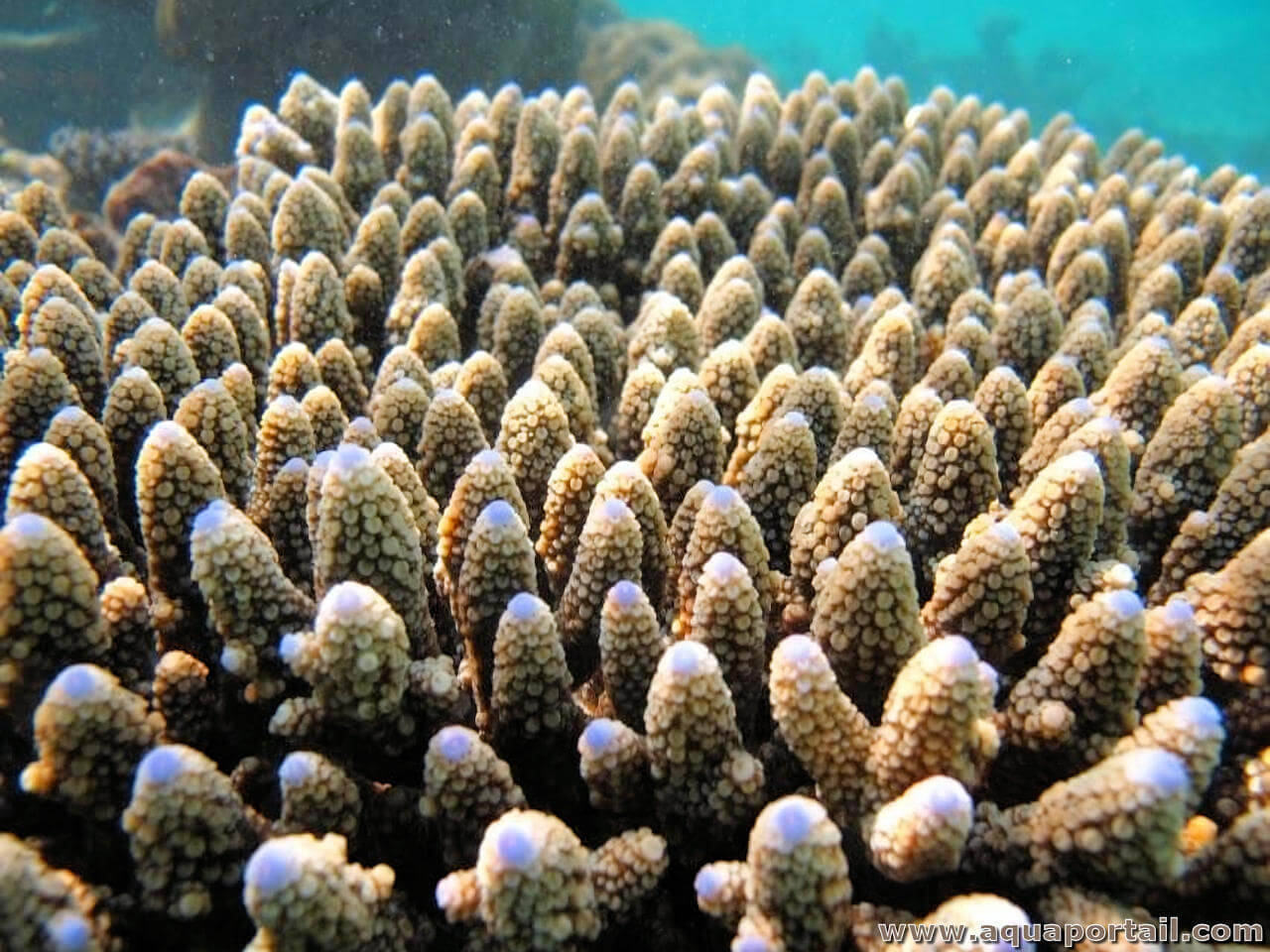
A hexacorallian is a cnidarian belonging to the anthozoan subclass Hexacorallia, in which each polyp is characterized by 6 tentacles (or a multiple...
madrepore

A madrepore (Madrepora) is a marine animal of the group of scleractinian corals possessing an external skeleton, typically an acropora and encompassing...
octocorallian

An octocorallian is a member of the phylum Cnidaria and the anthozoan subclass Octocorallia, characterized by 8 pinnate tentacles surrounding the polyp's...
Simple summary
Cnidarians constitute a diverse group of aquatic animals found primarily in marine environments. They are characterized by specialized cells called cnidocytes, which contain stinging structures used for capturing prey and defense. The phylum Cnidaria includes species such as jellyfish, corals, sea anemones, and hydras. Cnidarians generally exhibit a simple body plan with a central digestive cavity and can exist in two main forms: the polyp (attached to the substrate) and the medusa (free-swimming).
