Ciliate
noun and adjective (n. / adj.)
Definition
Ciliates of the phylum Ciliophora (or Ciliata) are unicellular eukaryotic aquatic protozoans characterized by abundant hair-like organelles called cilia, which form an organized ciliature used for locomotion and sensory perception.
A ciliate, Paramecium caudatum:
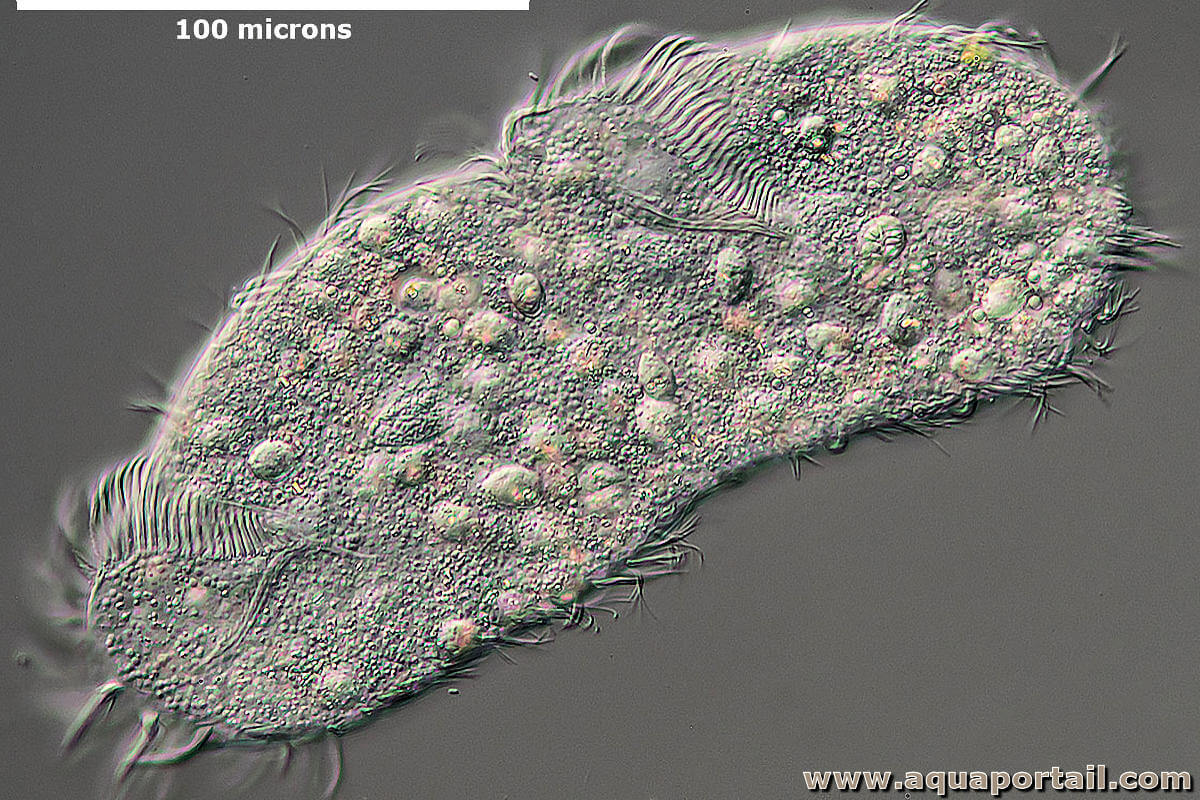
The ciliate Paramecium caudatum is a paramecium belonging to the phylum Ciliophora and the class Oligohymenophorea.
Explanations
Ciliates exhibit nuclear dimorphism with two distinct types of nuclei (a macronucleus and a micronucleus) and a mouth-like opening called the cytostome. Cilia are used for swimming and crawling, as well as tactile sensing, surface attachment, and feeding; well-known ciliates include paramecia and infusorians.
Ciliophora represents a major group of protists found almost anywhere water occurs—in lakes, ponds, oceans, rivers, and moist soils. Roughly 3,500 to 4,500 species have been described, with total extant species estimated around 30,000. Ciliates include numerous ectosymbiotic and endosymbiotic species, as well as obligate and opportunistic parasites.
Ciliate species range in size from as little as 10 µm up to 4 mm in length and include some of the most morphologically complex protozoans.
Most ciliates are heterotrophic, feeding on smaller organisms such as bacteria and microalgae, as well as organic detritus swept into the oral groove by modified oral cilia. This oral apparatus typically comprises a series of membranelles on the left side of the cytostome and a paroral membrane on the right, both arising from polykinetids (clusters of cilia linked by basal fibrillar structures).
Food particles are swept by cilia through the cytostome into the cytopharynx, forming digestive food vacuoles. Feeding modes vary widely, however: some ciliates lack a mouth and absorb nutrients via osmotrophy, whereas others are raptorial predators feeding on other protozoans and especially other ciliates. Several ciliates parasitize animals, though only one species, Balantidium coli, is widely recognized as a human pathogen.
Ciliates reproduce asexually through various forms of cell division. During binary fission, the micronucleus undergoes mitosis while the macronucleus elongates and divides via amitosis (except in a few taxa whose macronuclei cannot divide); the cell then cleaves in two, with each daughter cell receiving a copy of both nuclei.
Typically, the cell divides transversely, with the anterior half of the ciliate (the proter) forming one individual and the posterior half (the opisthe) forming the other. Other modes of division occur in certain groups, including budding, strobilation (multiple sequential divisions along the cell axis producing a chain of zooids), and palintomy (rapid successive divisions, usually within a cyst).
Cell division may occur spontaneously as part of the vegetative cell cycle, or follow self-fertilization (autogamy) or conjugation, a sexual process in which compatible ciliates pair and exchange micronuclear genetic material.
Synonyms, antonyms
French translation:
ciliéSpanish translation: ciliado
2 synonyms (similar meaning) for "ciliate":
0 antonyms (opposite meaning).
Related words and expressions to CILIATE are directly connected by general or specific meaning.
The word CILIATE is listed on page 1 of words starting with C in the dictionary glossary.
Related to "ciliate"
unifoliate

A unifoliate (or unifoliolate) plant bears compound leaves reduced to a single leaflet attached at the tip of the petiole.
cactus

A cactus is a thick, fleshy plant that grows in many hot, dry regions of the world. Cacti do not have leaves, and many are covered with spines.
caecilian

A caecilian (gymnophione) is a limbless, burrowing, worm-like amphibian whose legs are vestigial or absent.
cancer
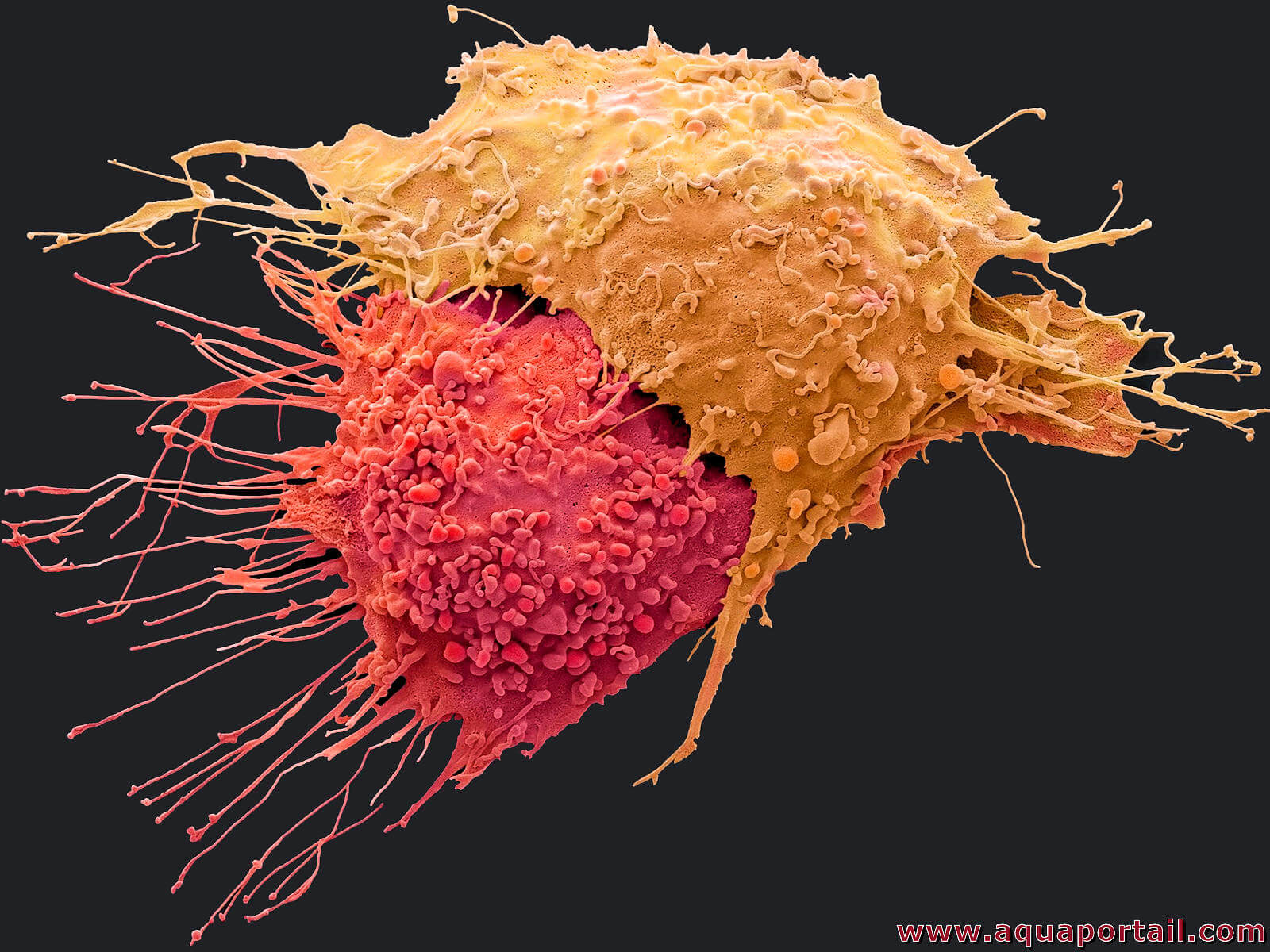
Cancer is a disease in which certain cells of the body grow uncontrollably and spread to other parts of the body.
