Chlamydospore
noun (n.)
Definition
A chlamydospore is a thick-walled resting spore produced by several groups of fungi, including ascomycetes, basidiomycetes, and various species of Mortierellales. It represents a dormant life-cycle stage capable of surviving unfavorable environmental conditions such as drought or extreme heat.
Chlamydospores in Candida dubliniensis and C. albicans:

Whole-transcriptome sequencing identifies markers specific to chlamydospores in Candida dubliniensis and Candida albicans.
Explanations
Chlamydospores are typically dark-colored, spherical, and smooth-walled. They may be unicellular or multicellular, with adjacent cells connected by septal pores.
Chlamydospores arise predominantly from asexual reproduction—in which case they are classified among conidia as chlamydoconidia—or rarely from sexual reproduction. Among rust fungi (Pucciniales), the teliospore serves an analogous overwintering resting function.
⭐ A chlamydospore is an asexually formed fungal spore serving primarily for long-term survival and persistence rather than dispersal. It is characterized by a markedly thickened cell wall and a regular, mostly spherical or ellipsoidal shape. Chlamydospores can endure prolonged nutrient deprivation without losing viability; because they are formed asexually, they are often grouped under conidia. Gemmae serve a comparable survival role but lack a regular shape, and because the terms are occasionally used interchangeably, strict boundaries vary across mycological literature.
Chlamydospores sensu stricto develop through the transformation of existing hyphal cells: cellular cytoplasm condenses locally and secretes a regular, thick, often pigmented inner wall while retaining the original hyphal wall as an outer coat. The chlamydospore is not actively discharged from the mycelium, remaining attached to adjacent hyphal cells until surrounding cells desiccate, die, or lyse. Once favorable conditions return, the chlamydospore germinates into a new mycelium.
The term chlamydospore reflects both its persistence role and regular morphology: unlike typical conidia, chlamydospores are not adapted for rapid dispersal, and unlike gemmae, they develop a uniform spherical geometry. Some mycologists treat chlamydospores as a specialized type of thalloconidium, whereas aleuriospores—which possess a distinct detachment mechanism for dispersal—are occasionally conflated with chlamydospores.
Depending on their position along the mycelium, chlamydospores fall into three categories:
- terminal chlamydospores, formed at the apical tip of a hyphal filament;
- intercalary chlamydospores, formed within intermediate segments of a hypha (often difficult to distinguish from gemmae);
- lateral or stalked chlamydospores, formed on short side branches of a hypha.
Synonyms, antonyms
Spanish translation: clamidospora
0 synonyms (similar meaning) for "chlamydospore".
0 antonyms (opposite meaning).
Related words and expressions to CHLAMYDOSPORE are directly connected by general or specific meaning.
The word CHLAMYDOSPORE is listed on page 1 of words starting with C in the dictionary glossary.
Related to "chlamydospore"
aplanospore

An aplanospore is a non-swimming spore (as opposed to a planospore or a zoospore). Such spores lack flagella but may possess features of swimming cells such...
archaeospore

In red algae, an archaeospore is the contents of an ordinary vegetative cell which, released without prior mitosis, functions as a spore.
autospore

An autospore is each of the non-motile spores (aplanospores) produced by division and differentiation of the contents of a coccoid unicellular organism.
auxospore
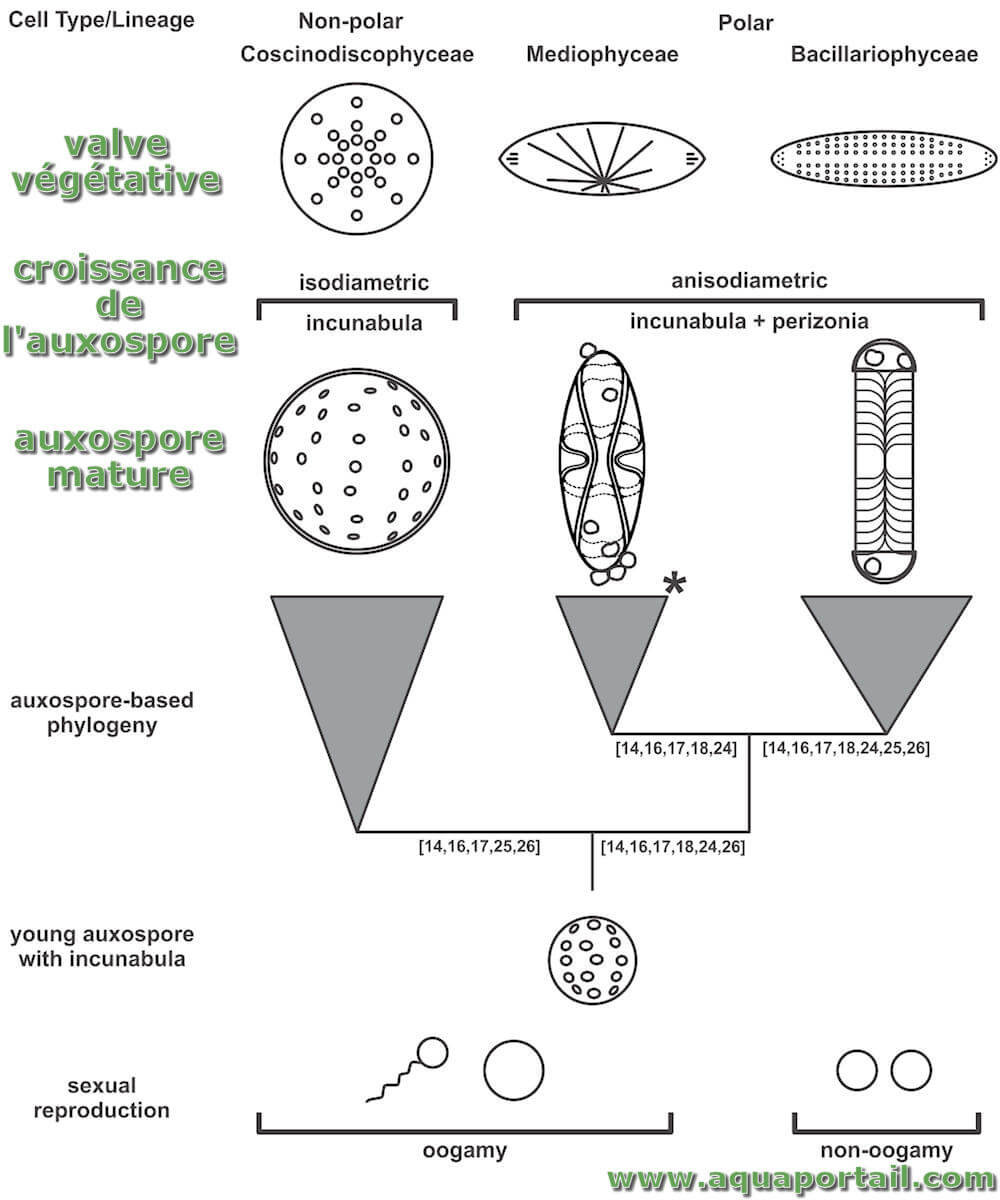
An auxospore is a reproductive cell in diatoms generally resulting from the union of two smaller cells or their contents and associated with the rejuvenation...
